Climate resilient city Brno-Štýřice


Project idea
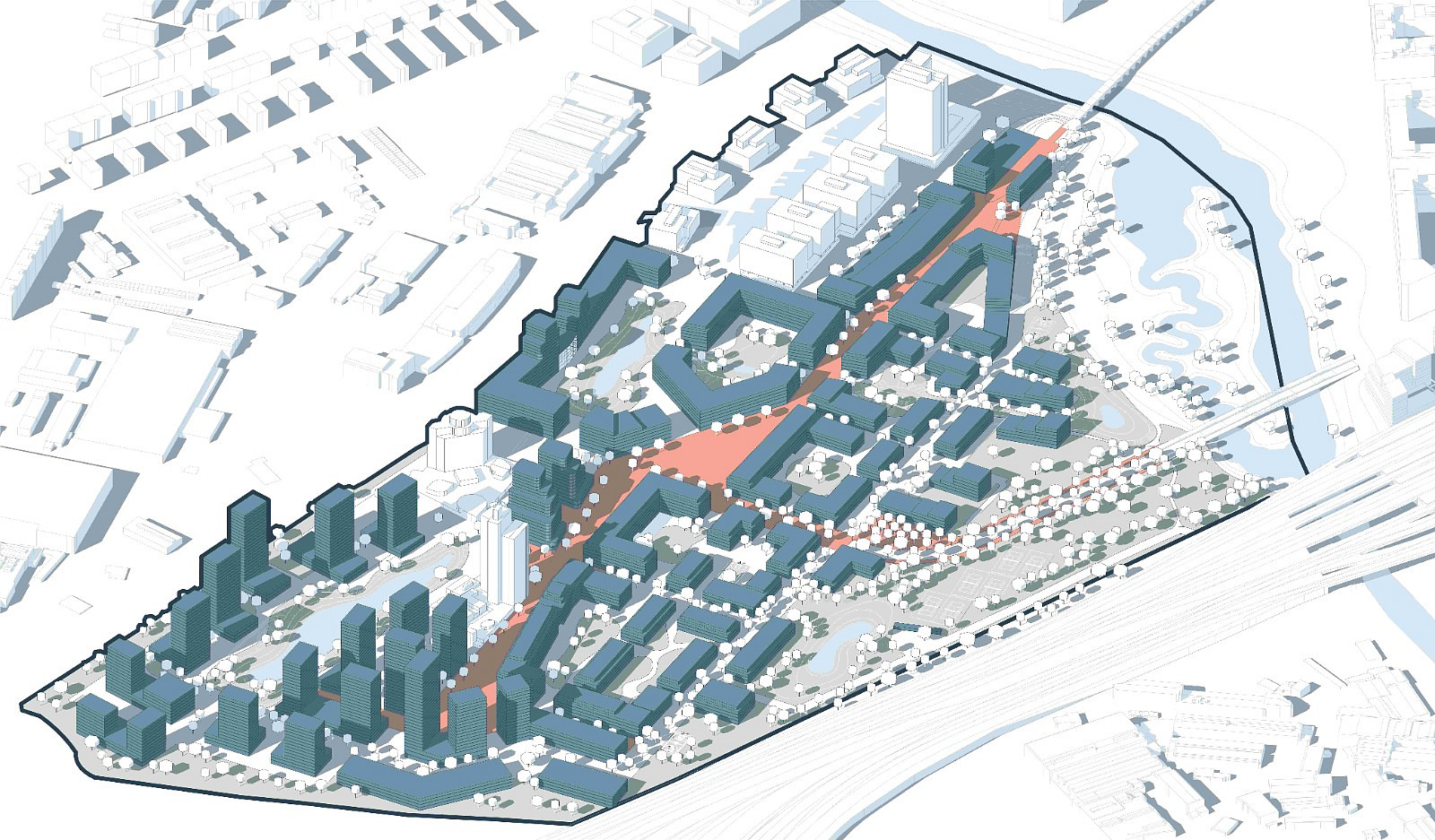
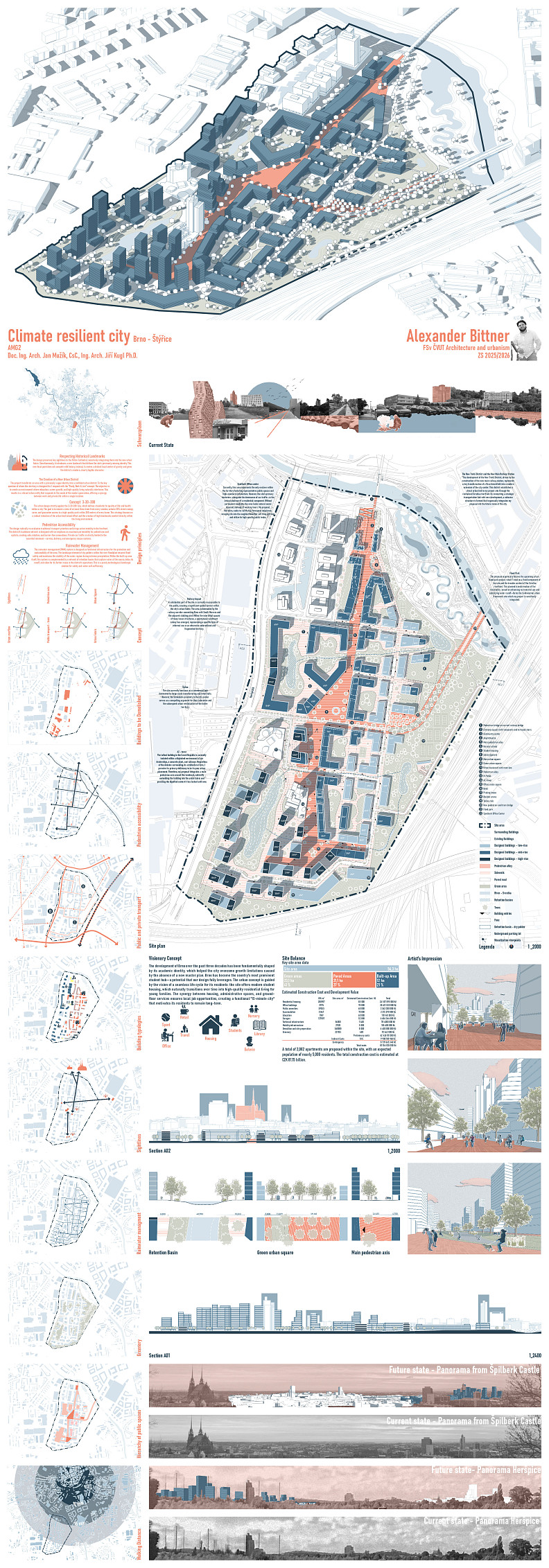
The project presents a vision of a modern district that harmonizes high-density living with historical context and environmental responsibility. The design is built upon three fundamental pillars:
Respect for the Horizon: High-rise structures are strategically positioned to complement the urban skyline without disrupting the views of the city's historical landmarks. This verticality allows for efficient land use while preserving the visual integrity of the historic core.
Car-Free Urbanism: At the heart of the proposal is the creation of an extensive network of car-free pedestrian routes. The priority is safe and seamless pedestrian movement, transforming the street from a transit artery into a living space for the community.
Active Water Management: The project integrates "Sponge City" principles. Rainwater is managed directly within the streets through polders and retention areas, which serve not only to cool the microclimate but also as aesthetic and recreational elements of the public realm.
Project description
The design for the new Štyřice district is rooted in a vision of creating an autonomous and sustainable urban entity built on the "Study-Live-Work" principle. This concept defines a life cycle where residents can evolve from students to professionals and families within a single location. Through this functional diversity, the project radically reduces the need for daily commuting, thereby significantly lowering the overall carbon footprint.
The urban layout is strictly derived from pedestrian accessibility and the strategic alignment of sightlines. The design respects and emphasizes visual links to city-wide landmarks (Špilberk, Petrov) as well as newly created local landmarks within the district. A central pedestrian axis serves as the main artery, connecting the new railway station with Brno's historic center. The highest concentration of public amenities and services is strategically positioned along this route.
The site is conceptually divided into three specific sectors:
The Northern Gateway: This section capitalizes on its proximity to the historic core, defined by iconic views of Špilberk Castle and Petrov Cathedral. A new pedestrian bridge creates a direct link to the city center, while the ground floor levels seamlessly transition into the recreational areas of the flood park.
The Central Social Core: The heart of the district featuring the main square and a landmark gallery and library complex. It is directly adjacent to student housing and residential blocks with semi-public courtyards. A "green finger" featuring a dry polder penetrates deep into this area, serving as a retention zone that connects the district center to the riverside flood park. The secondary "Under the Trees" square provides a more intimate atmosphere.
The Southern Administrative-Residential District: Characterized by higher density and high-rise buildings that form the district's modern silhouette. In this zone, administrative functions prevail over residential use, creating a prominent business hub in direct proximity to the southern sports facilities. This sector is integrated into the blue-green infrastructure system through two additional retention basins and polders. To the east, it expands into the flood park, hosting a tennis club.
Technical information
The project is designed as a technologically advanced urban unit with an emphasis on climate stability and intelligent resource management.
1. Water Management (Sponge City):
Decentralized Retention: A system of cascading elements (green roofs - street swales - dry polders - central basins).
Infiltration Capacities: The use of semi-permeable surfaces in the public realm and open, continuous polders capable of handling 100-year rain events without overloading the municipal sewage system.
Recycling: Provisions for using greywater for the irrigation of public greenery within the administrative park.
2. Mobility and Transport:
Vertical Separation: All transit and residential vehicular traffic is directed into underground collectors and parking facilities located beneath the block structures.
Micromobility: Prioritization of zero-emission transport (cycle paths, shared scooters) integrated directly into the central pedestrian axis.
Connectivity: Barrier-free connection to the city-wide public transport network and the future high-speed railway terminal.
3. Energy and Urban Planning:
Microclimate: Strategic positioning of high-rise buildings and green corridors promotes natural airflow and eliminates the urban heat island effect.
Density and Efficiency: A compact, high-density city model in the southern sector minimizes the demands on utility grids and infrastructure.
Documentation
Created in:


Copyright © 2026 INSPIRELI | All rights reserved. Use of this website signifies your agreement to the Terms of Use, Privacy Policy, and use of cookies.