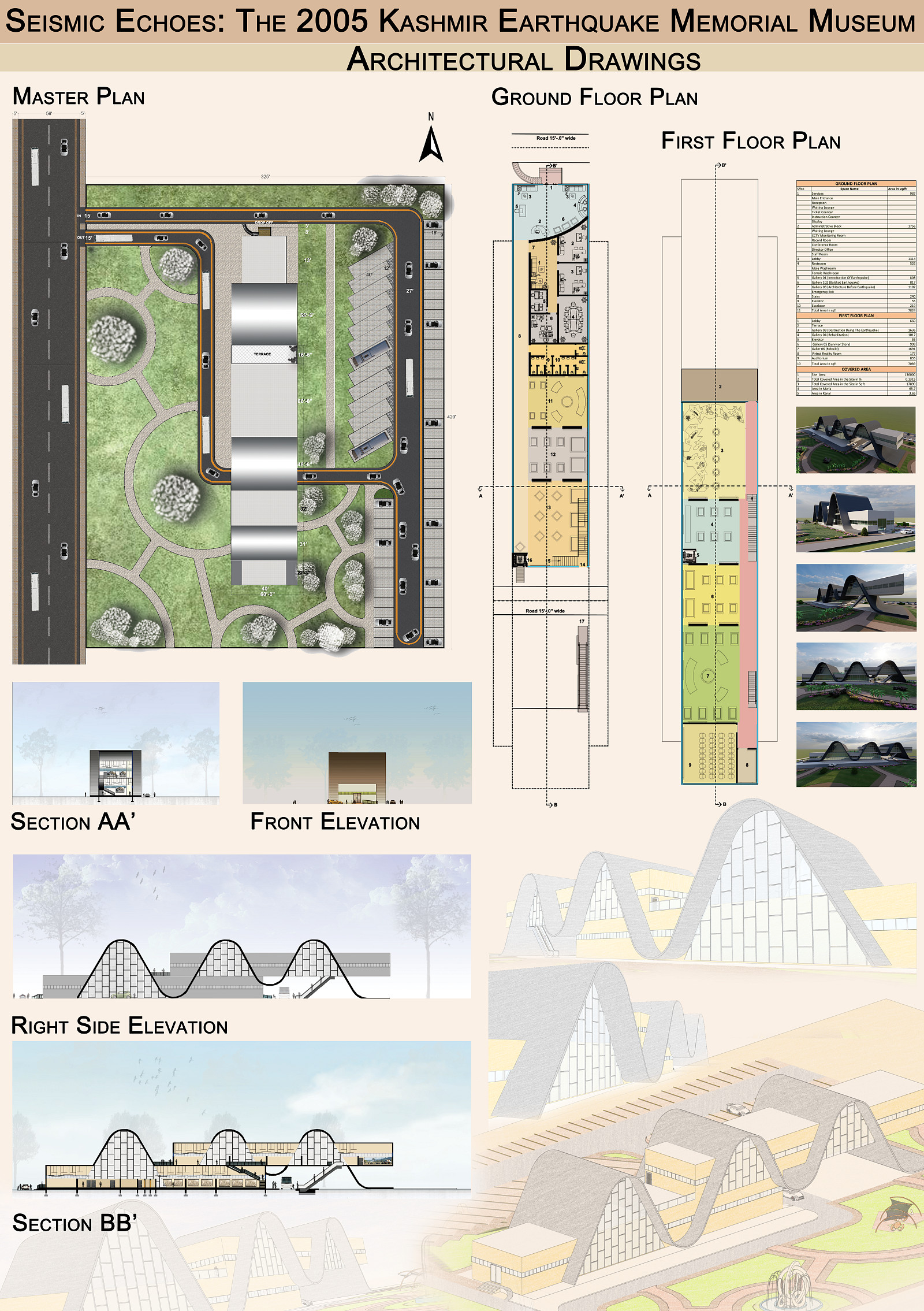
Seismic Echoes: The 2005 Kashmir Earthquake Memorial Museum


Project idea
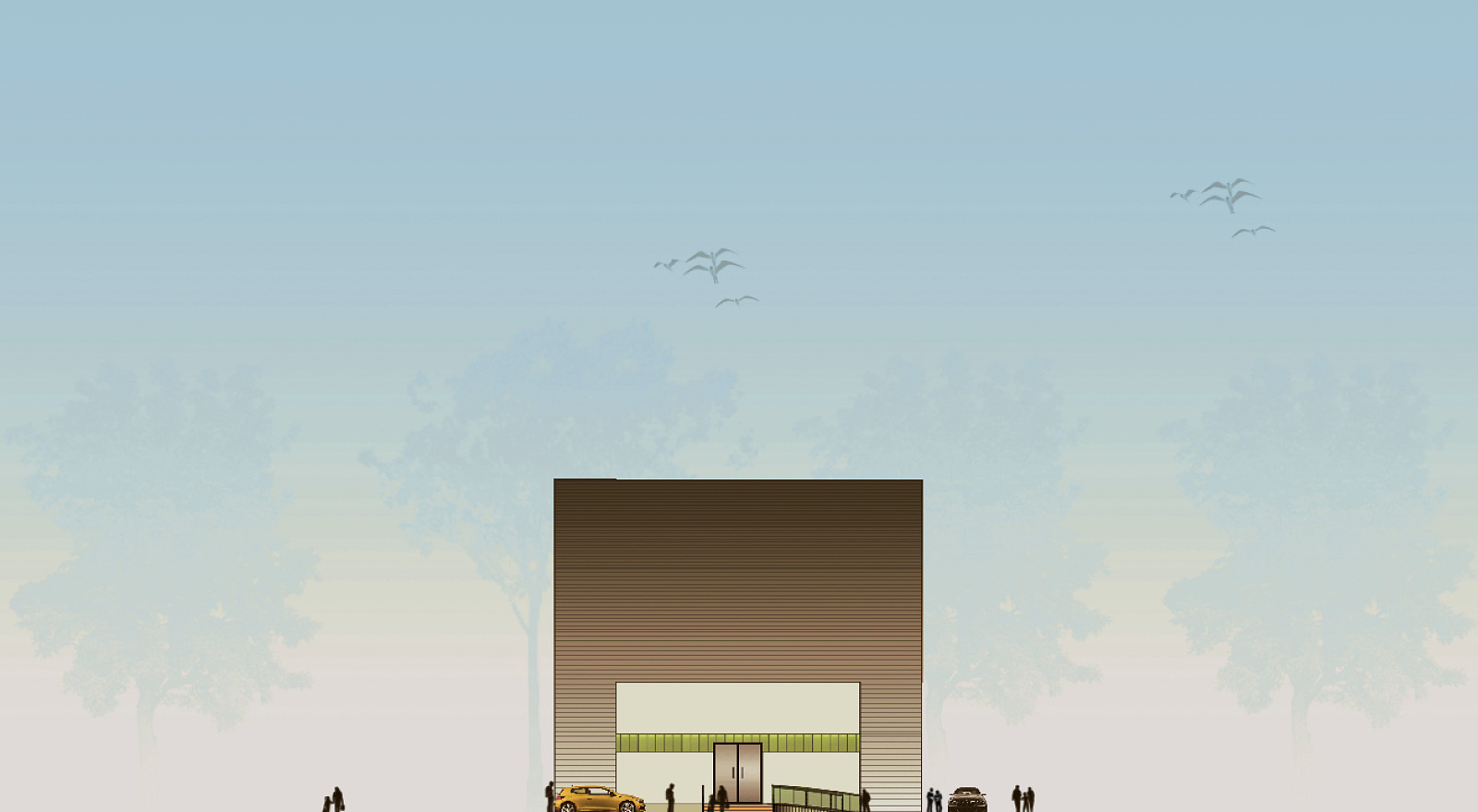
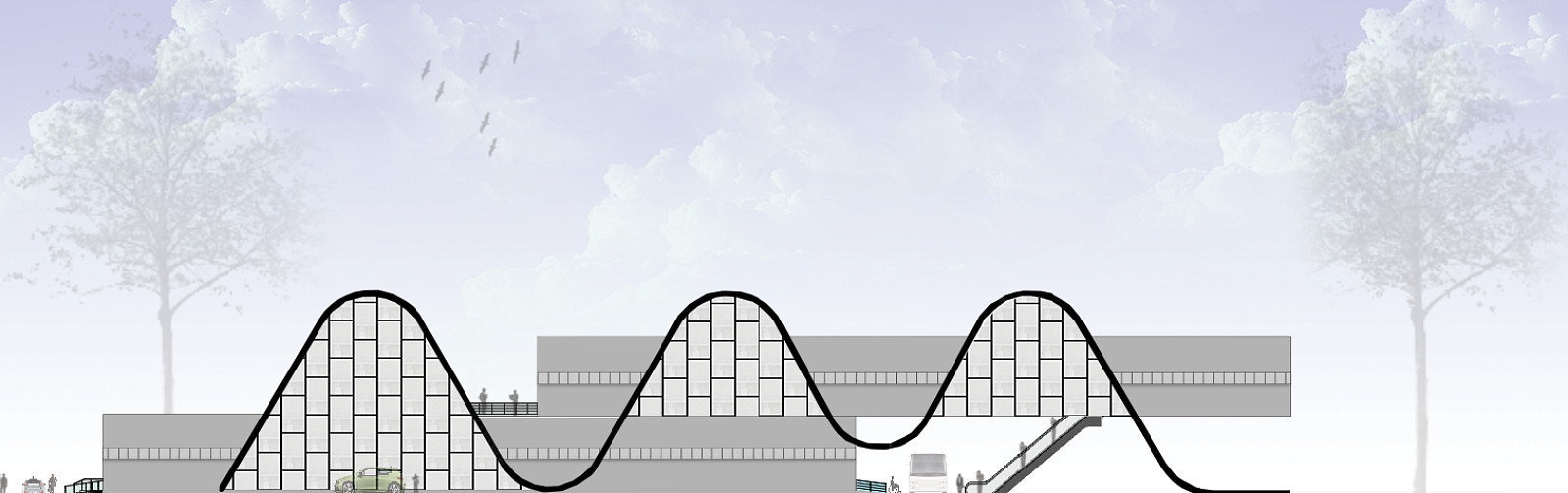
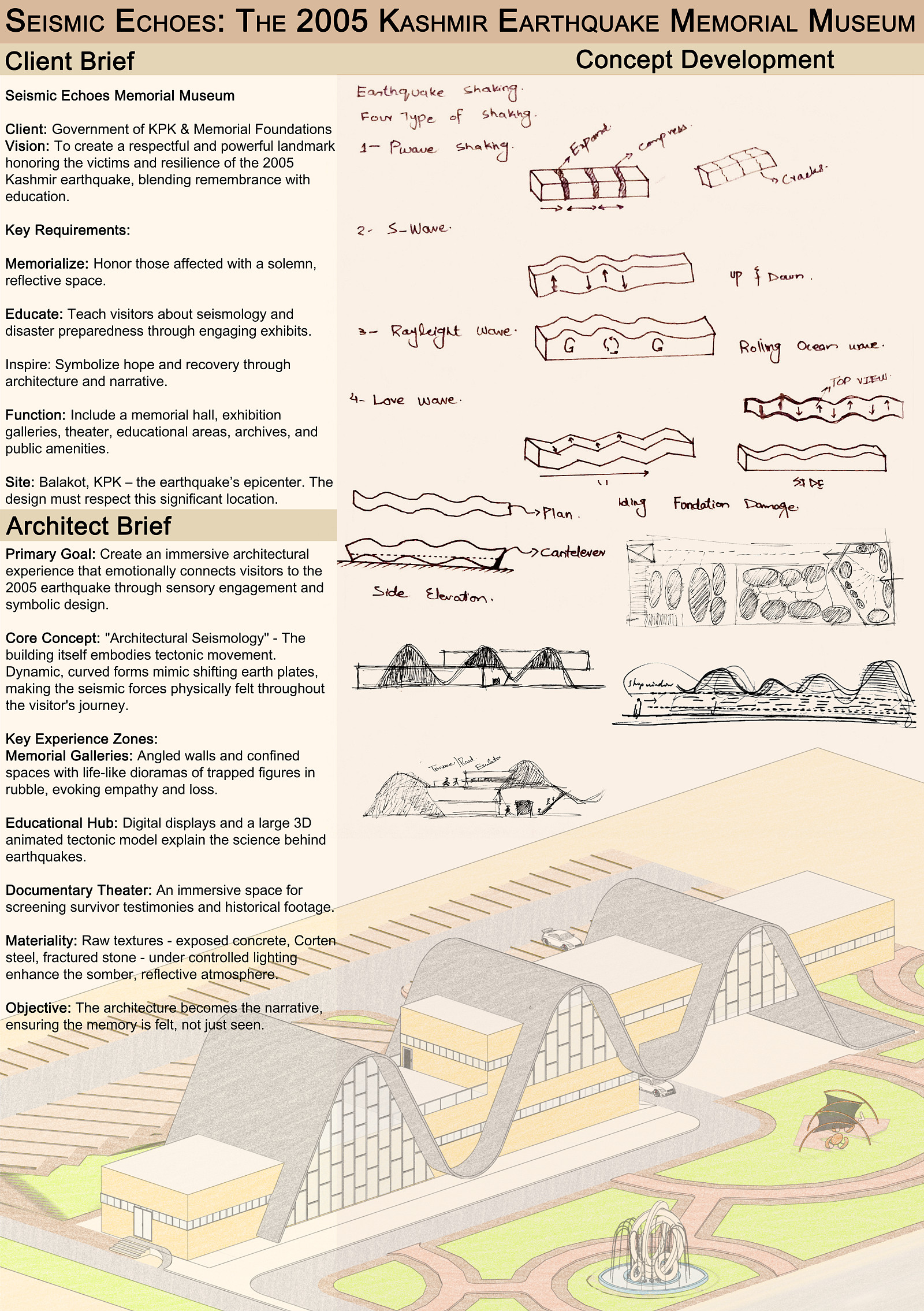
• Concept: Architectural Seismology.
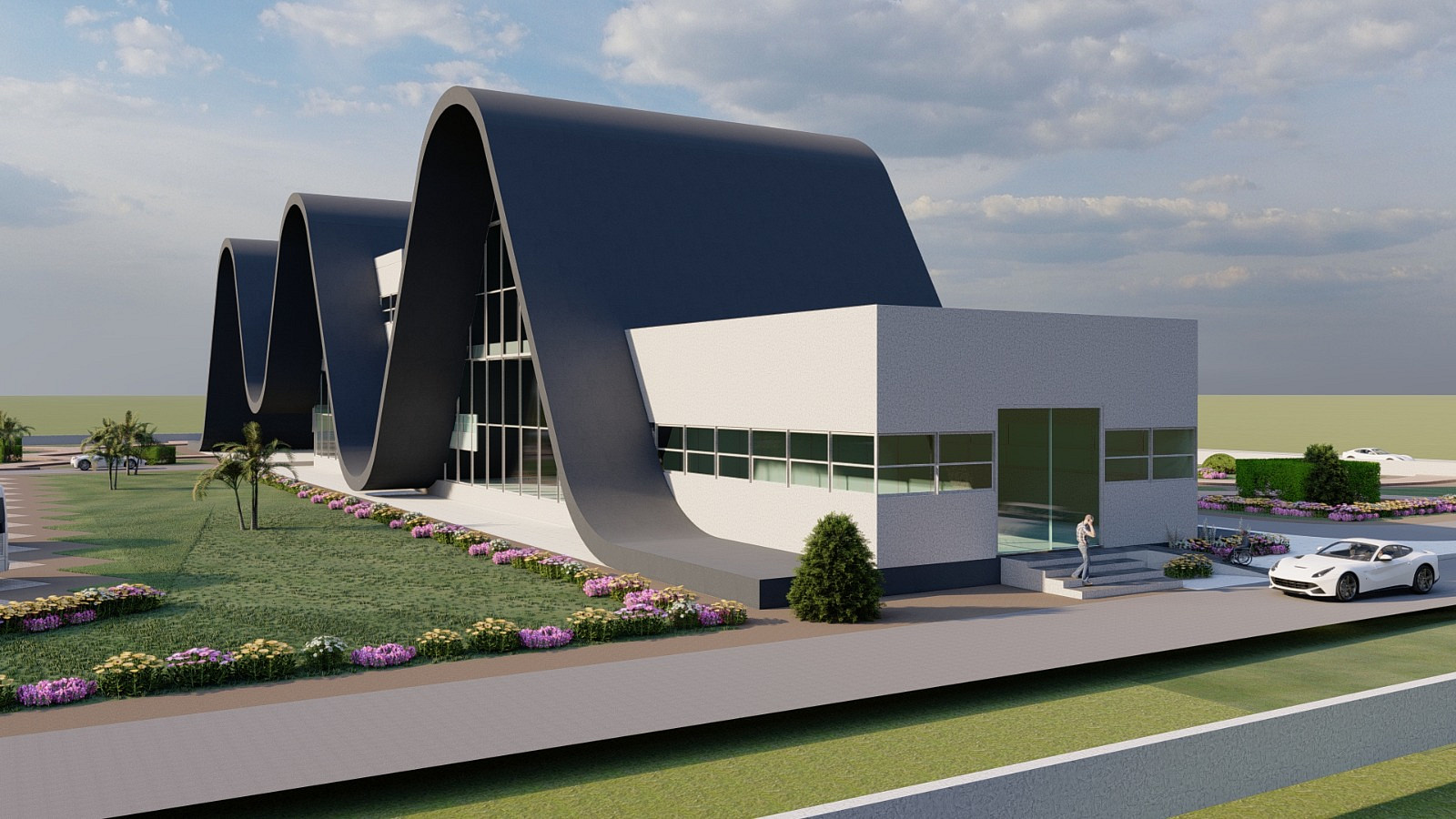
• Inspiration: Inspired by tectonic plate movement and earthquake fissures, translated into architectural form with curved, shifting planes.
• Connection: Establishes a direct connection between the museum's purpose and the natural phenomenon.
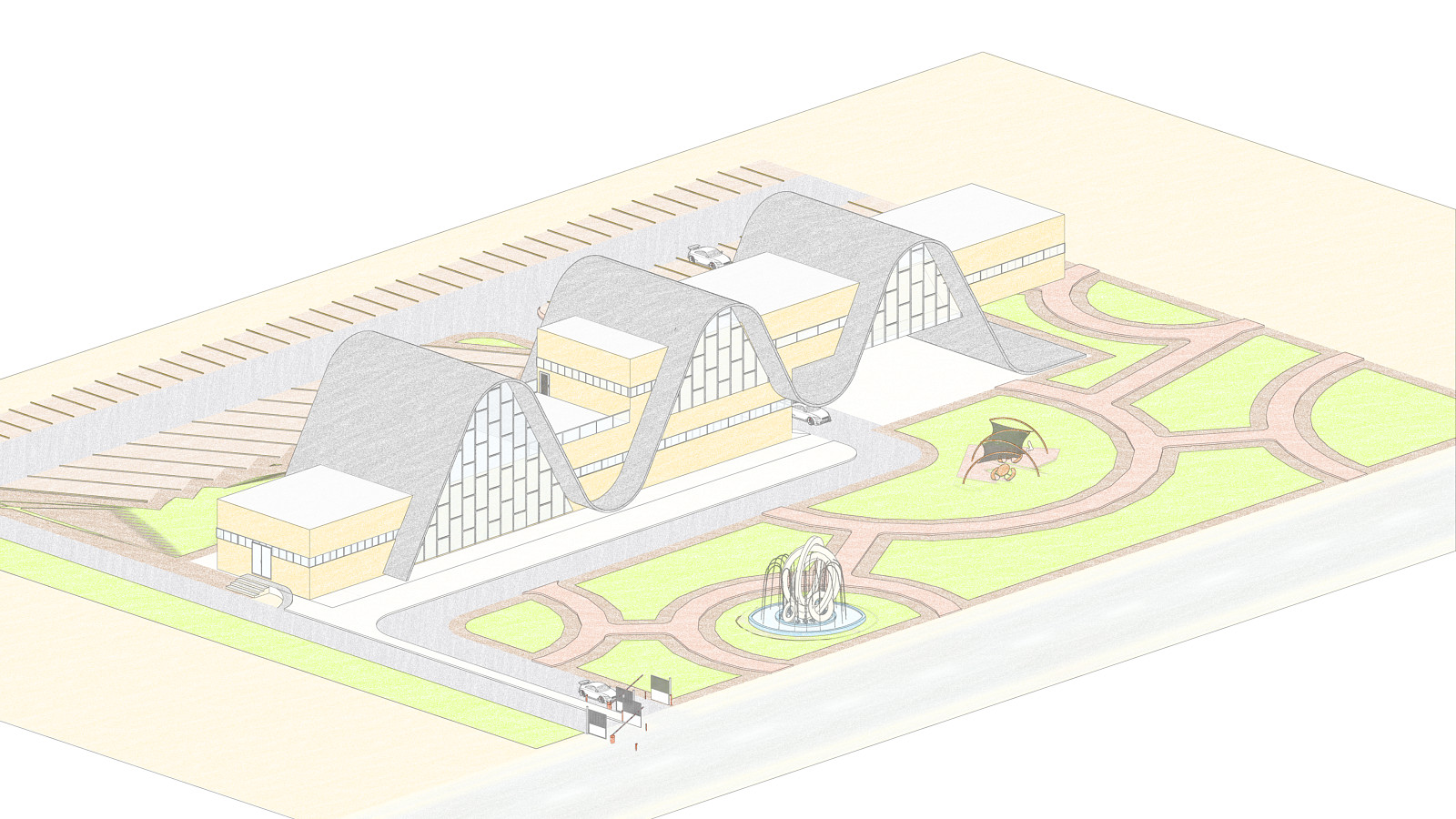
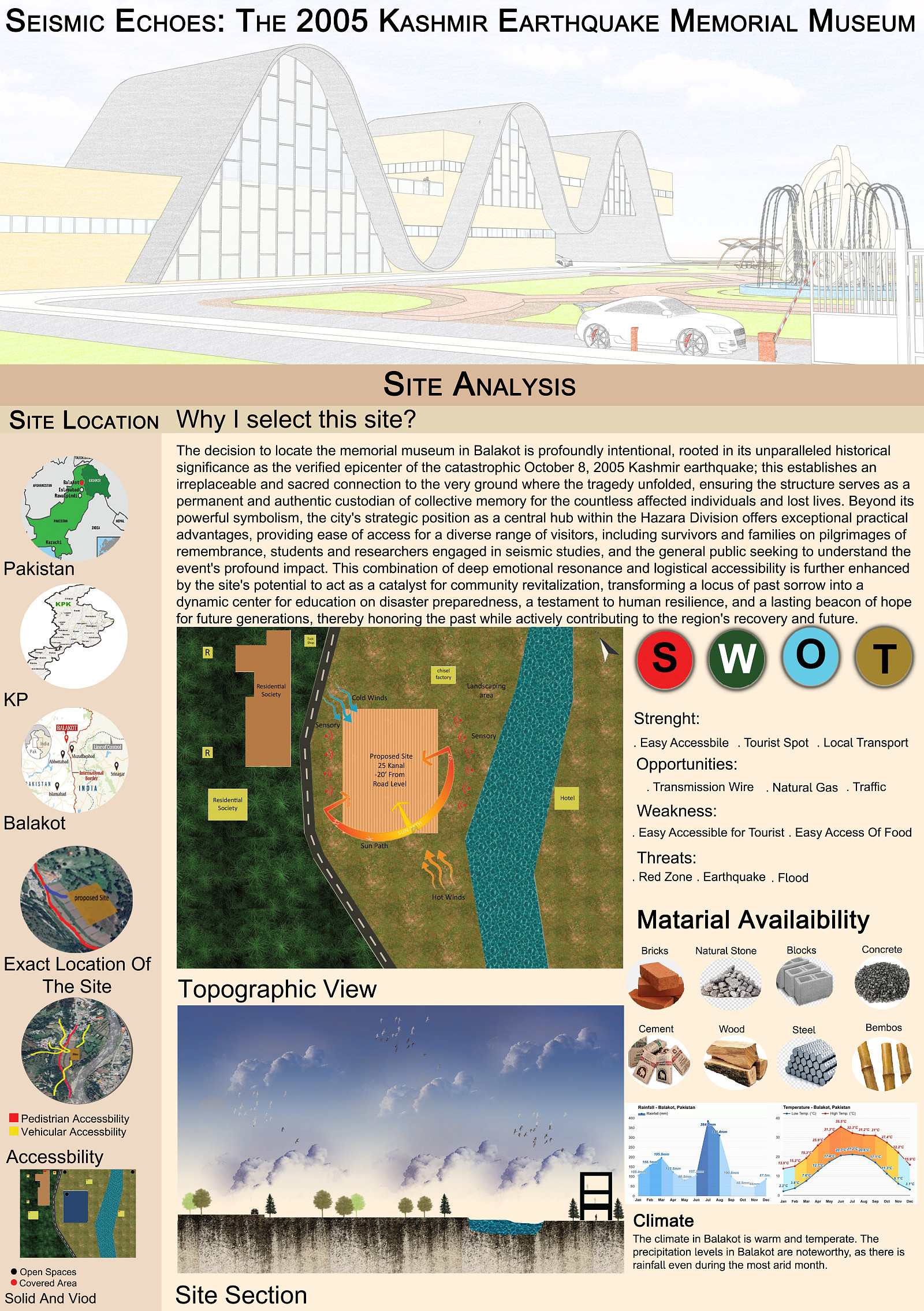
• Master Plan: Seamlessly blends the building with the terrain, positioning it as a permanent landmark in Balakot.
• Site Features: Includes clear access points, landscaped memorial spaces, and outdoor reflection zones.
Project description
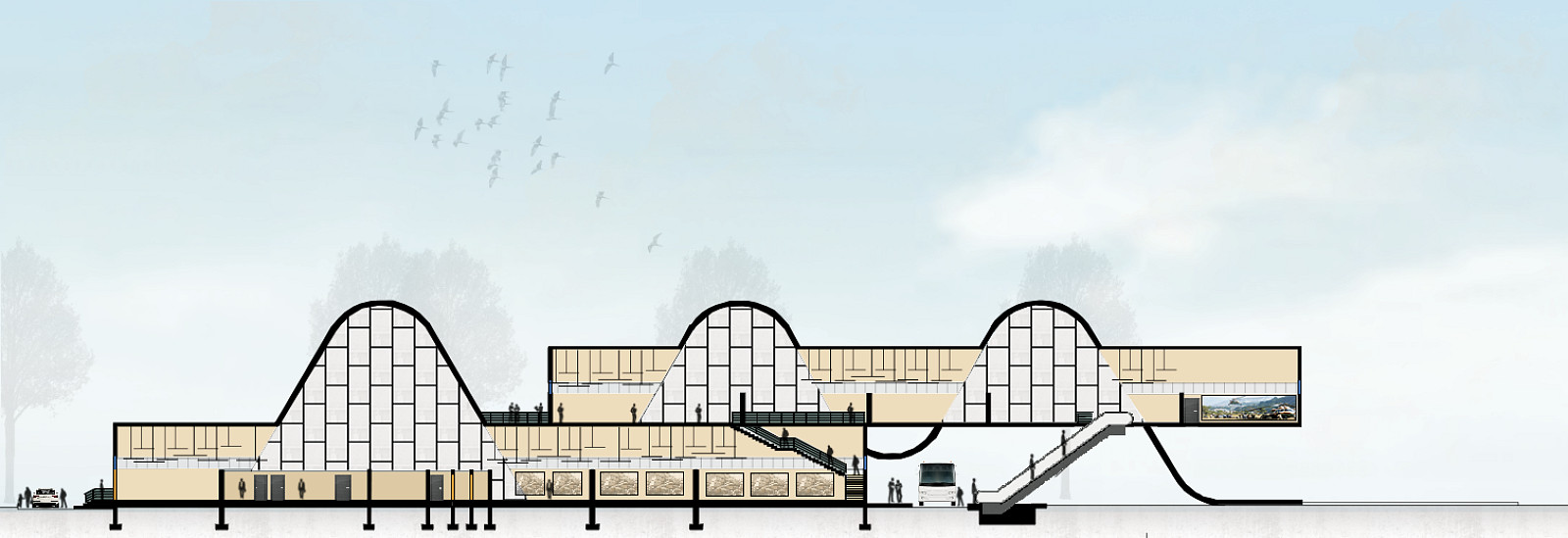
The visitor path is designed as a narrative experience:
1. Entry
2. Memorial Galleries: Features a somber atmosphere and a diorama of trapped figures integrated into the architecture to evoke empathy and reflection.
3. Educational Core: Transition to light and clarity through interactive spaces, digital tectonic models, and animated visualizations.
4. Theater: For narrative immersion.
5. Contemplation Space: A final garden symbolizing hope, resilience, remembrance, and inspiration.
Technical information
Materiality & Structure
• Material Palette: Raw and resonant materials including Exposed Concrete, Corten Steel, Glass, Local Stone, and Aluminum.
• Lighting: Task lighting enhances galleries, while spatial lighting defines the overall atmosphere.
• Philosophy: "The victims deserve a structure that is as resilient as their memory. Modern materials allow us to create not just a museum, but an icon of strength, permanence, and remembrance".


Copyright © 2026 INSPIRELI | All rights reserved. Use of this website signifies your agreement to the Terms of Use, Privacy Policy, and use of cookies.