The Nest Child Center

Project idea
In the dense urban fabric of Cairo, children often find themselves confined to the rigid structures of home and school, with little access to dedicated "third places" that foster creativity and self-reliance. This project addresses the critical need for a specialized environment where architecture acts as a muse, sparking curiosity and steering youth away from unproductive habits through immersive learning. Inspired by the concept of "Architecture as a Catalyst," the center provides a sanctuary for children to explore their potential, develop civic pride, and engage with their heritage in a space designed exclusively for their scale and wonder.
Project description
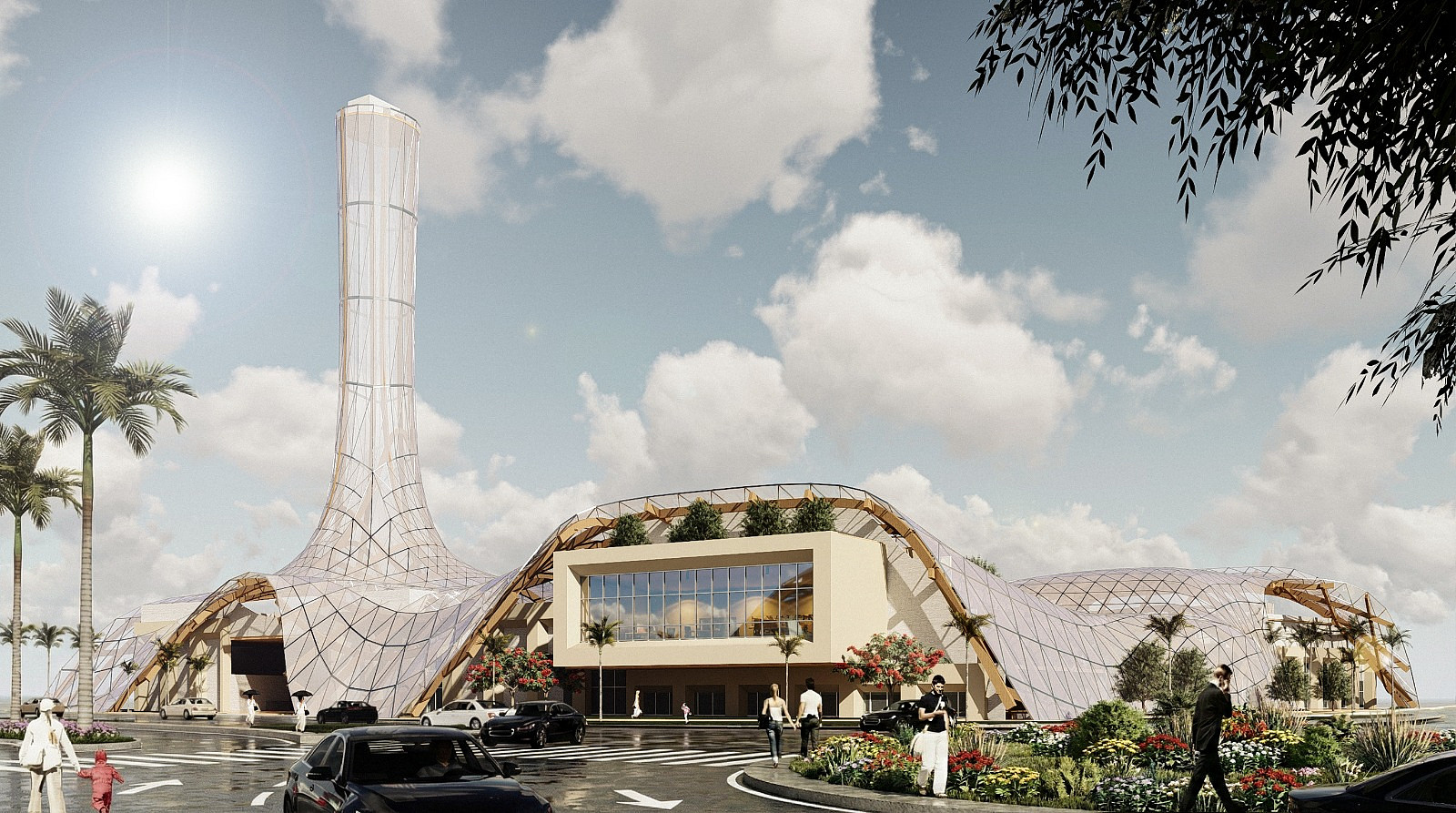
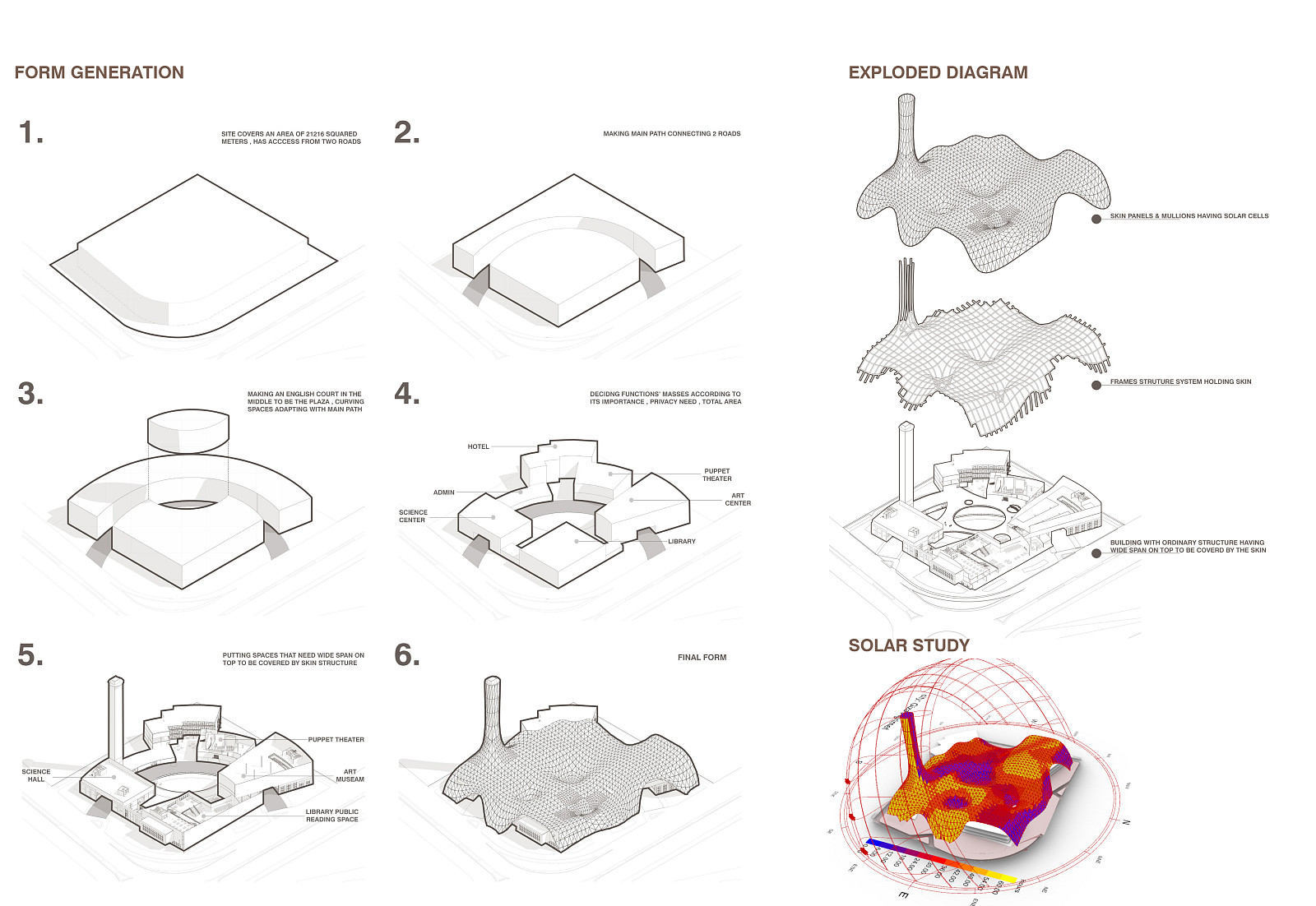
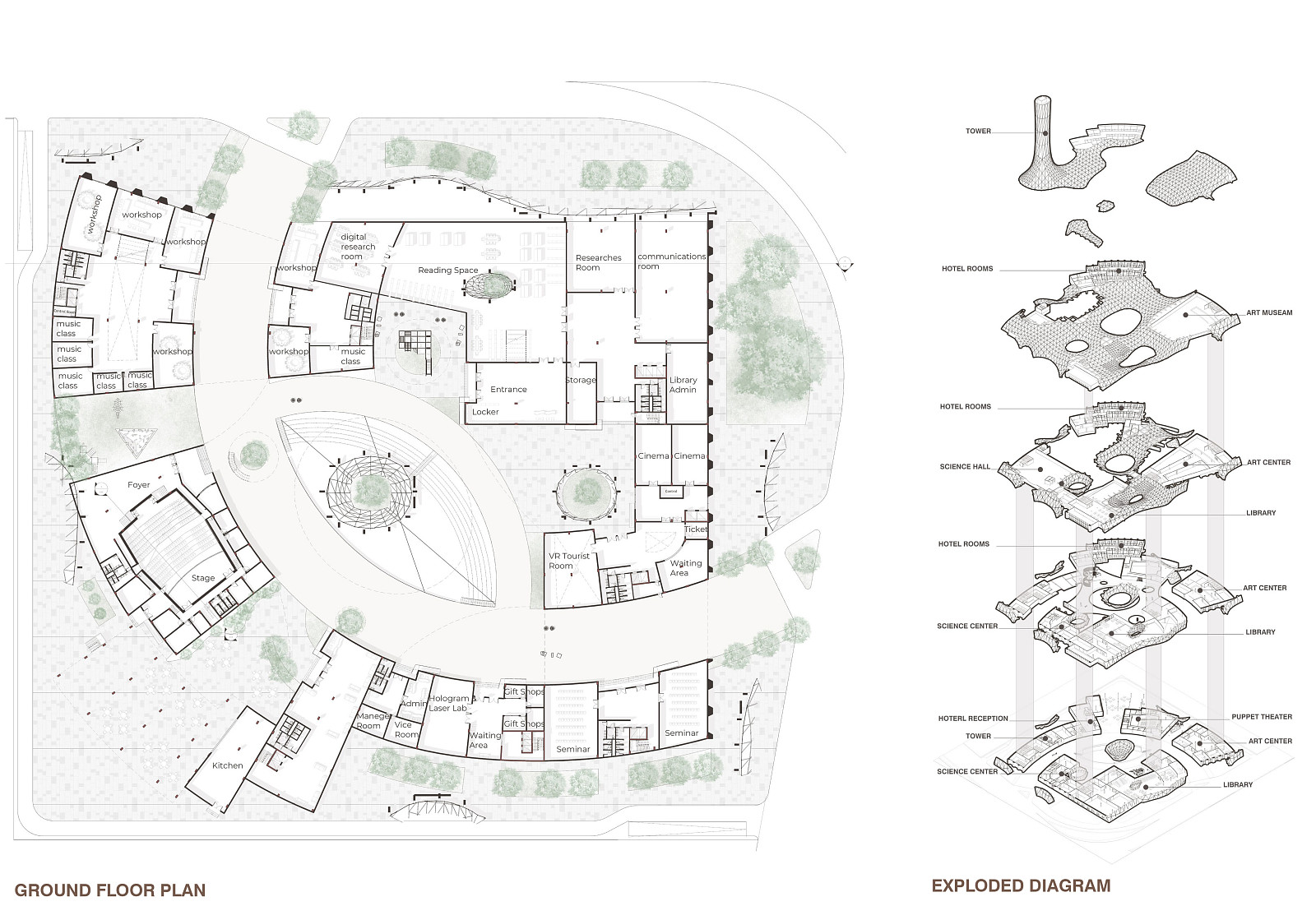
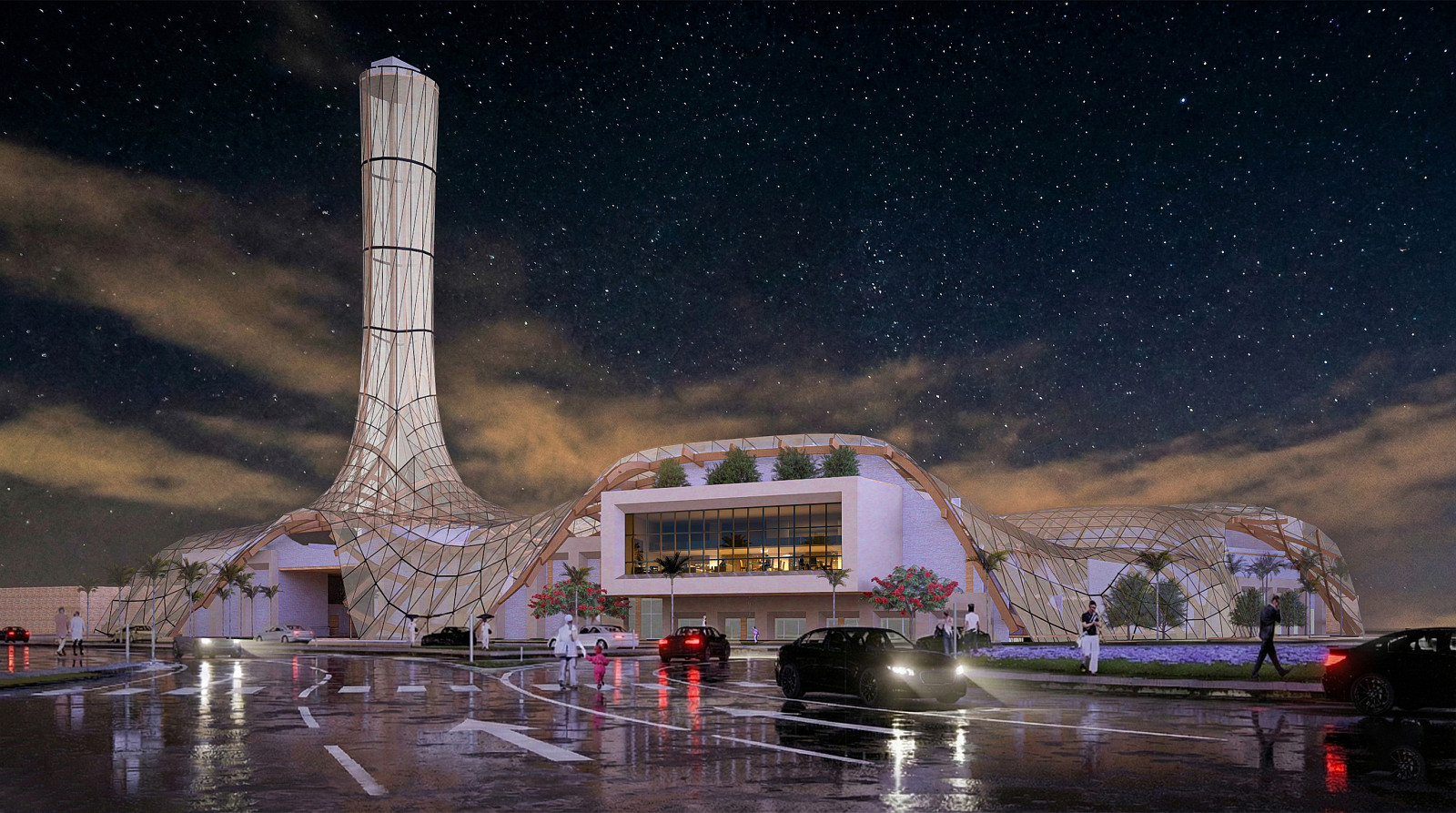
The project is a large-scale architectural landmark defined by a fluid, organic form that serves as a visual attractor for the surrounding community. It consists of several interconnected hubs:
Art & Science Centers : Specialized zones for hands-on experimentation and creative expression.
Library & Puppet Theater : Spaces dedicated to storytelling, traditional Egyptian performance arts, and knowledge acquisition.
Hostel for Children : A residential component that allows for immersive, multi-day educational retreats.
The Tower : A signature 80-meter tower that establishes the project as a visible landmark in the Cairo skyline, drawing visitors into a unique, multi-level user experience centered on discovery.
Technical information
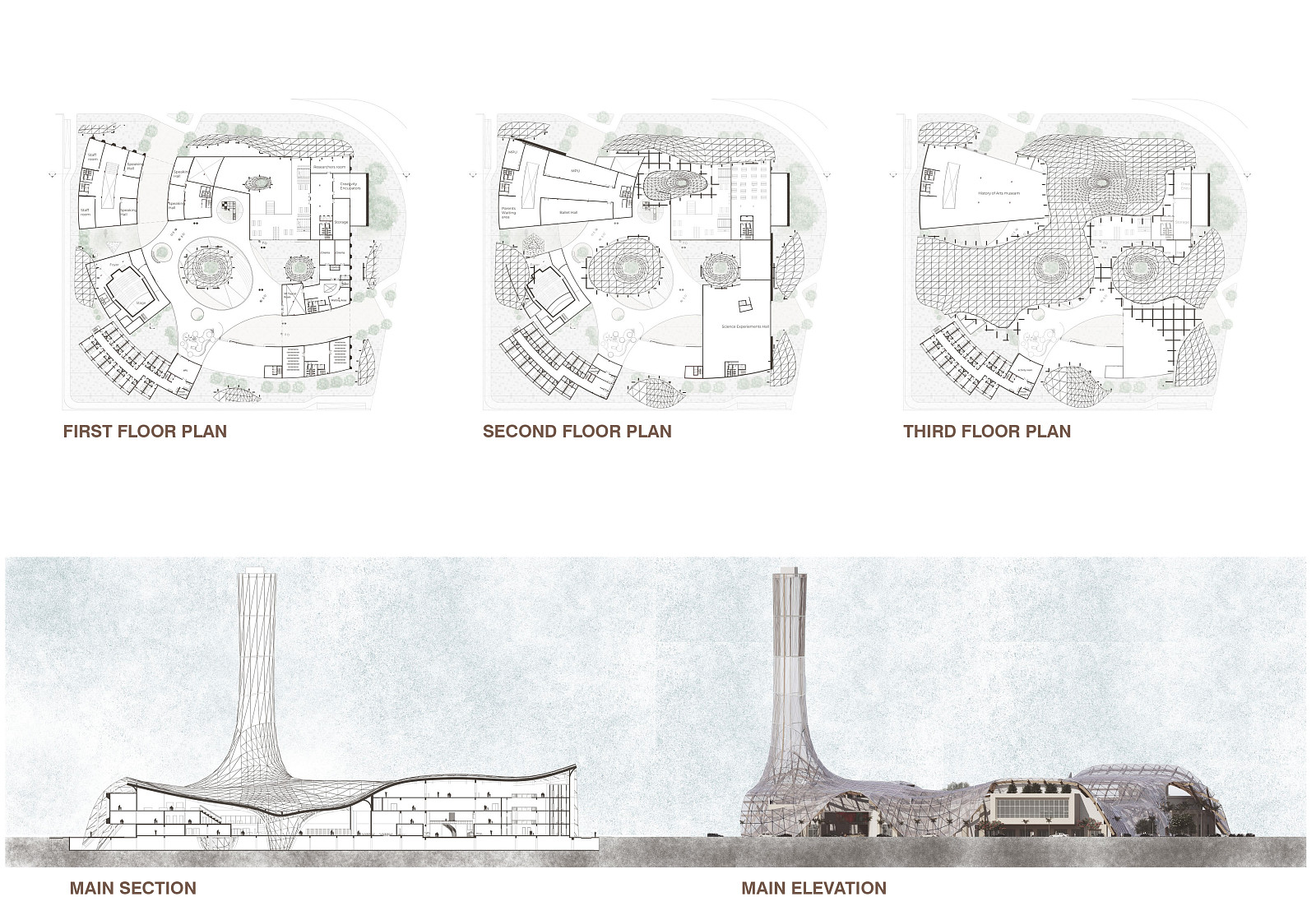
The project utilizes a complex parametric skin that enables its unique, undulating geometry.
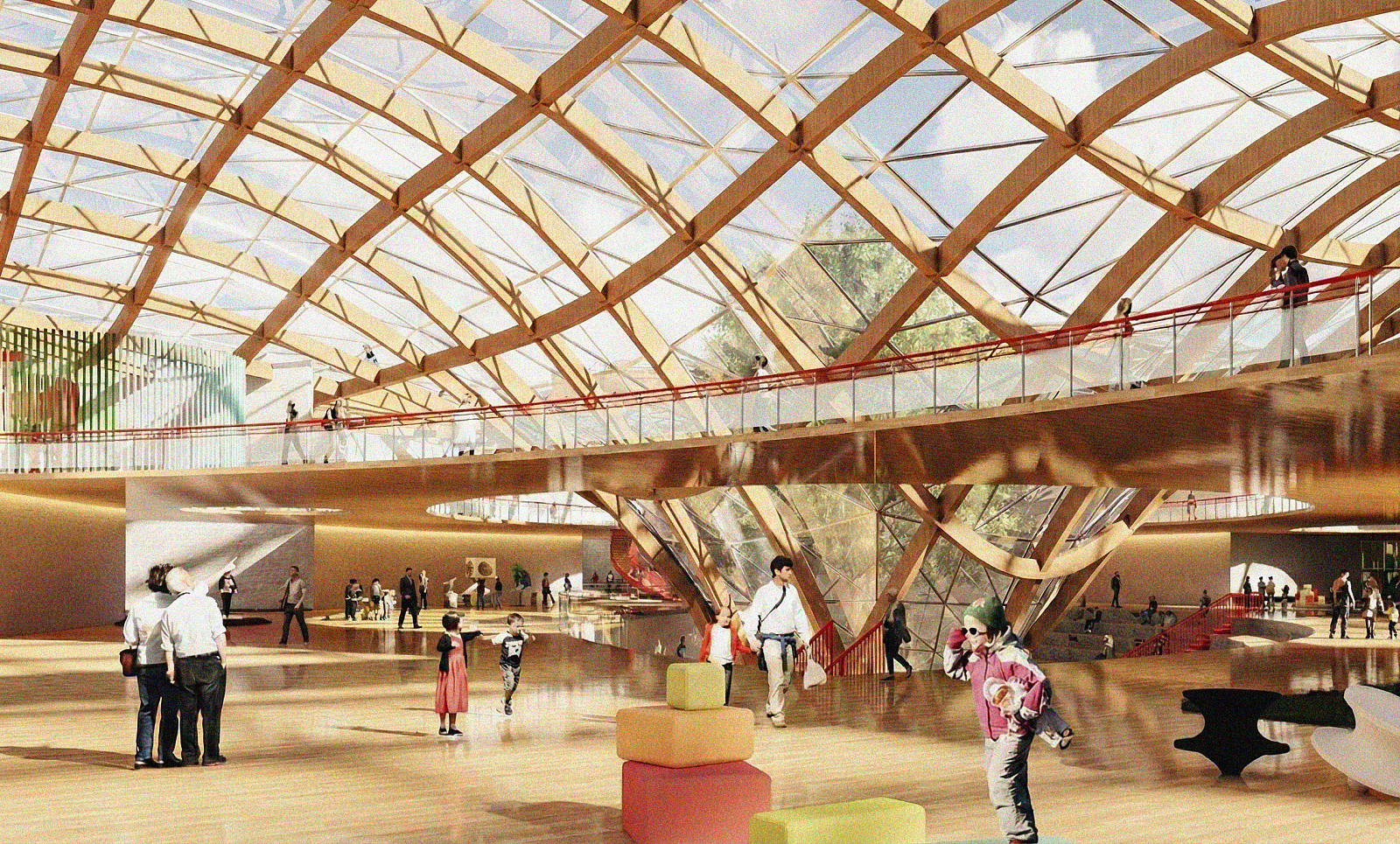
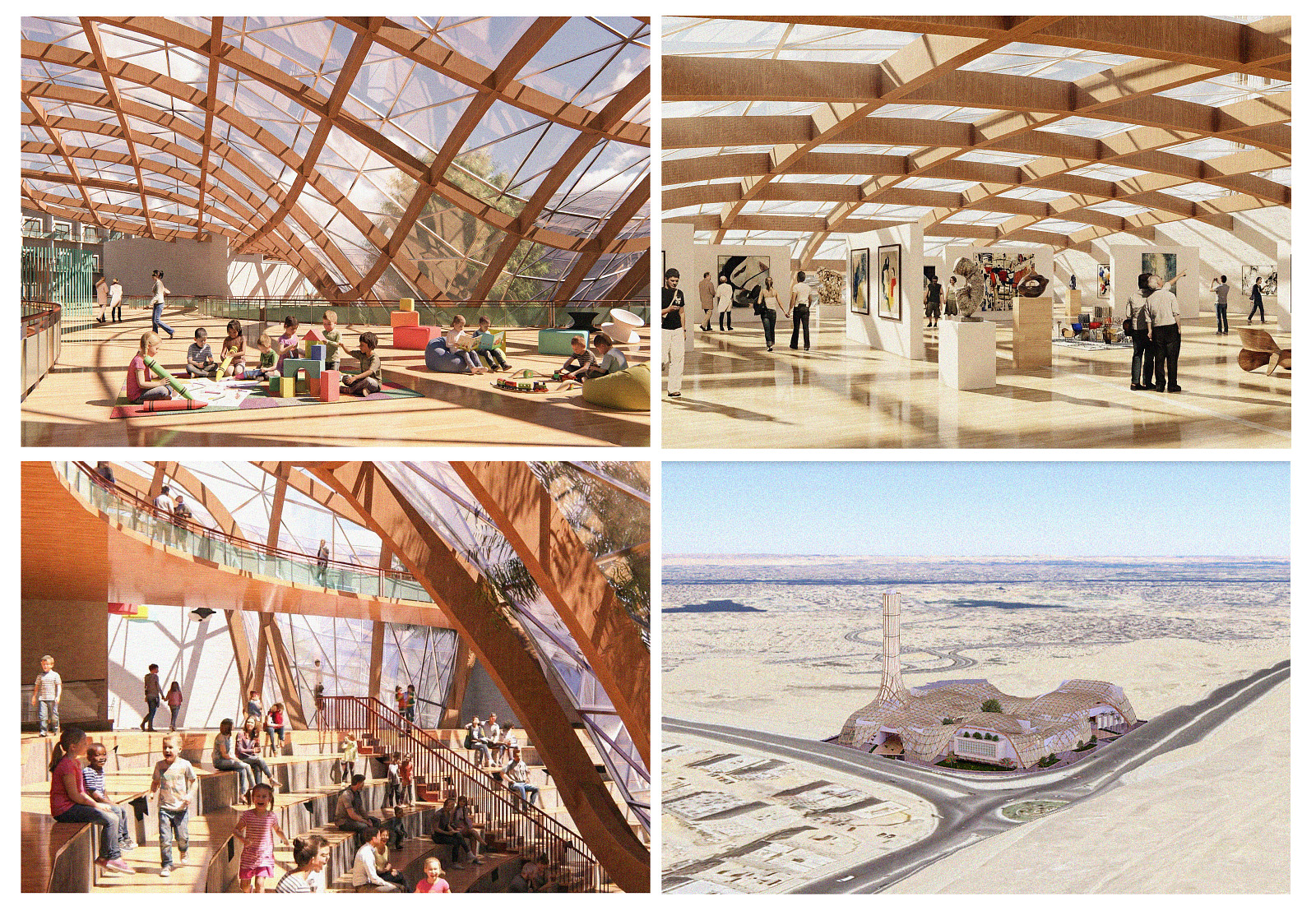
Structure: The primary structural system features a timber grid-shell (as seen in the interior renders), which provides a warm, natural aesthetic while demonstrating advanced geometric principles.
Materiality: The skin is a hybrid of high-performance glazing and lightweight cladding, optimized for thermal comfort and natural daylighting within the Egyptian climate.
Spatial Design: The interior is organized around a series of mezzanines and "living steps" that function as an informal amphitheater, encouraging vertical movement and visual transparency between different educational zones.

Copyright © 2026 INSPIRELI | All rights reserved. Use of this website signifies your agreement to the Terms of Use, Privacy Policy, and use of cookies.