CONFLUX


 Assist. Prof. Dr. Gizem Özkan Üstün (Ph.D.)
Project idea
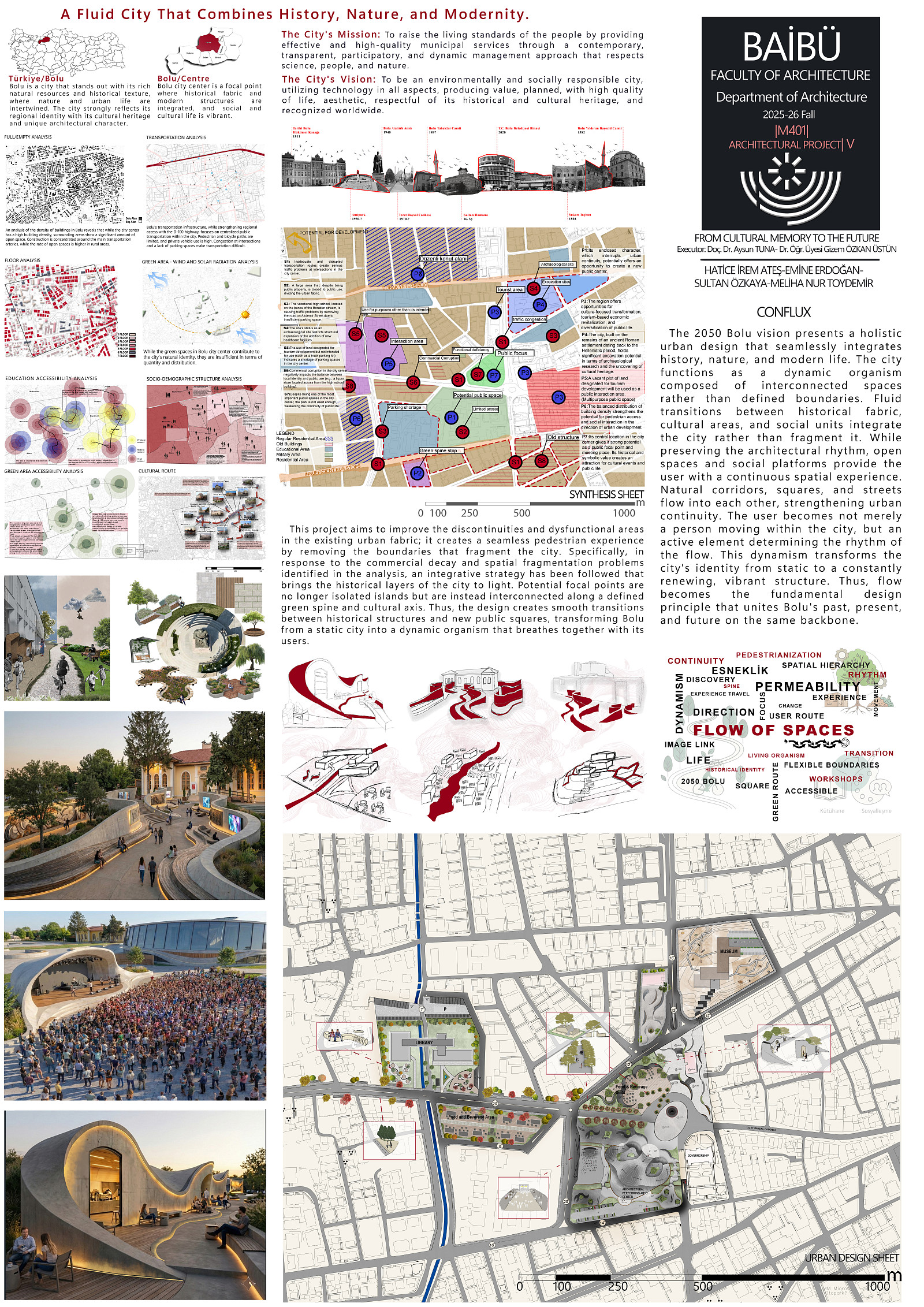
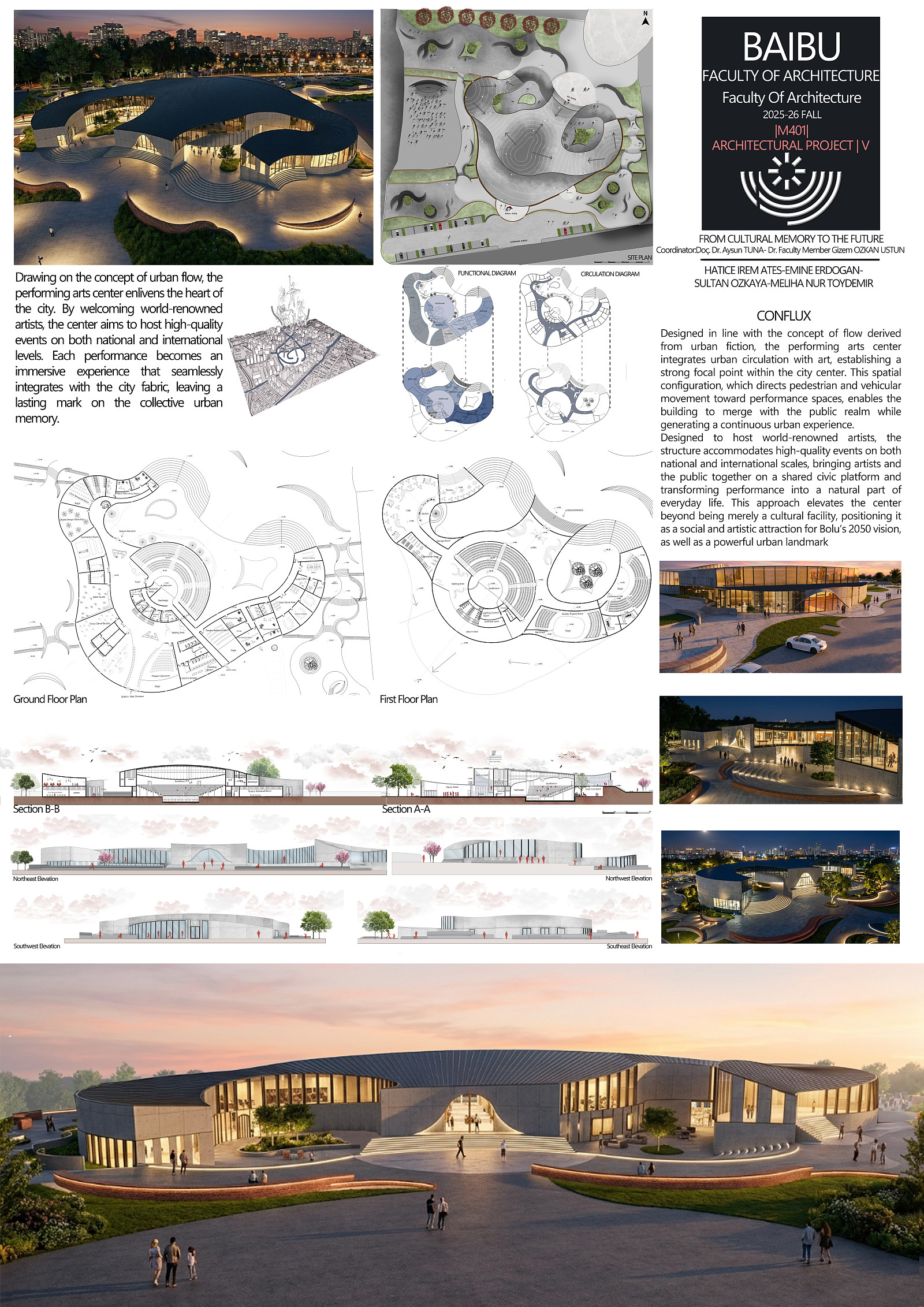
The 2050 vision of Bolu presents a holistic urban configuration that merges history, nature, and modern life within a seamless flow. The city operates like a dynamic organism composed of interconnected spaces rather than rigid boundaries. Fluid transitions established between the historical fabric, cultural zones, and social units integrate the city instead of fragmenting it. While the architectural rhythm is preserved, open spaces and social platforms provide the user with an uninterrupted spatial experience. Natural corridors, squares, and streets flow into one another, strengthening urban continuity. In this framework, the user is not merely someone moving through the city, but an active element determining the rhythm of the flow. This mobility transforms the city's identity from a static state into a constantly renewing, living structure. Thus, "flow" becomes the fundamental design principle that unites Bolu’s past, present, and future on a single backbone. This concept of flow, fed by the urban structure, aims to vitalize the performing arts center that embraces the city center. The center intends to host high-quality national and international events by welcoming world-renowned artists; the artists, in turn, transform their performances into an experience that integrates with the city and leaves a mark on the collective public memory.
Project description
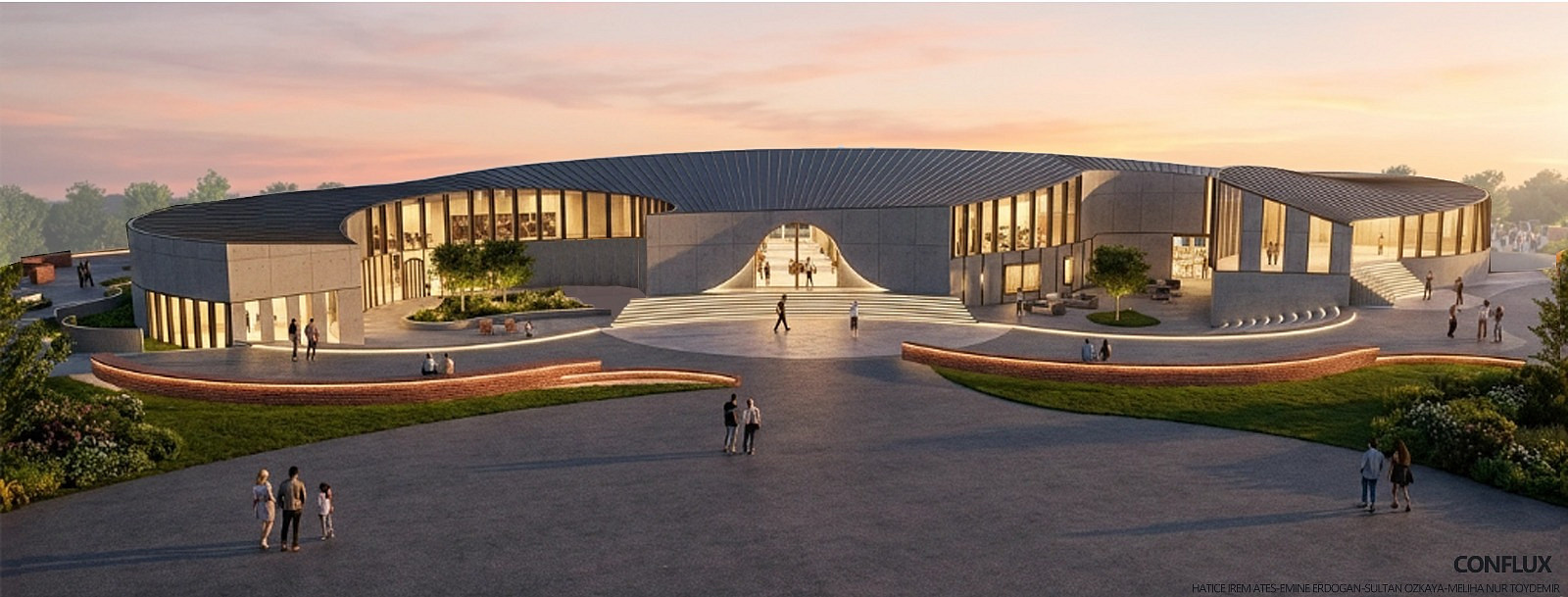
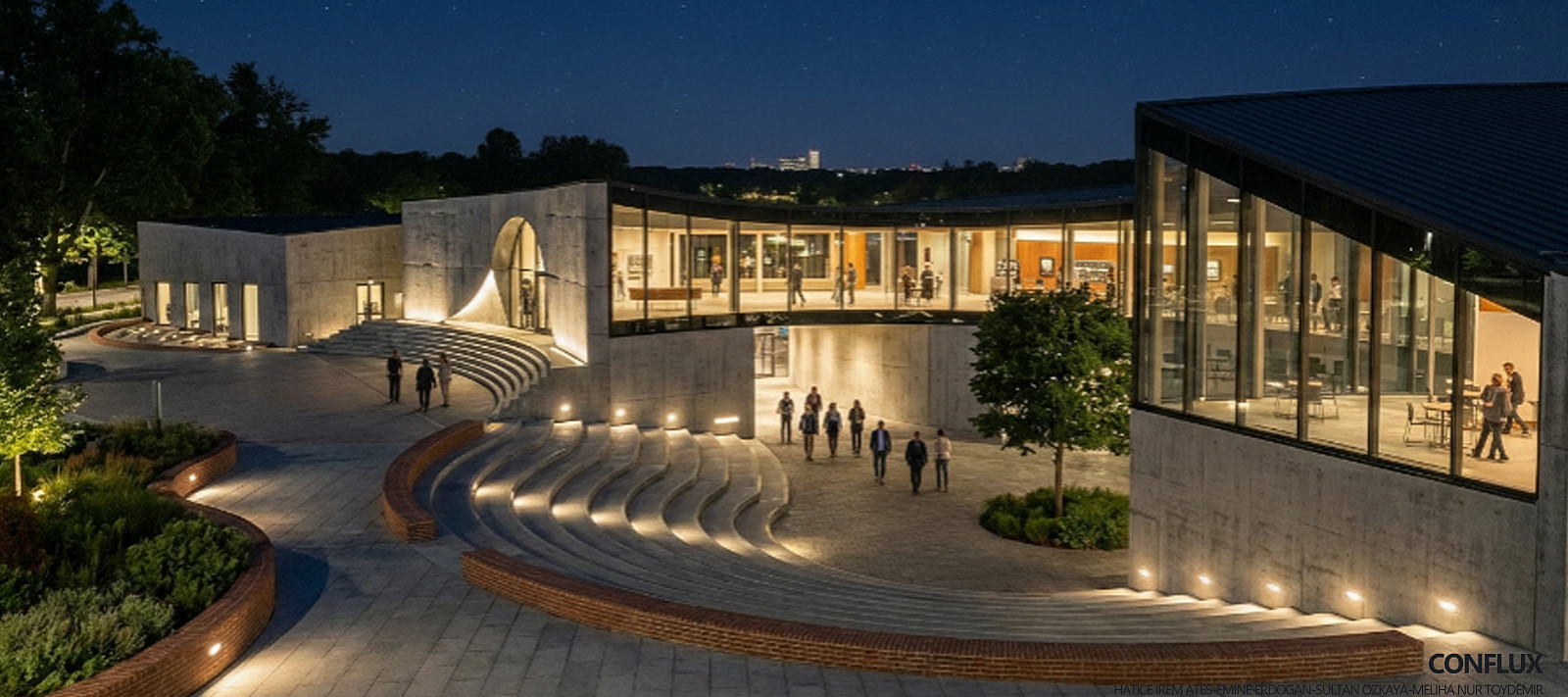
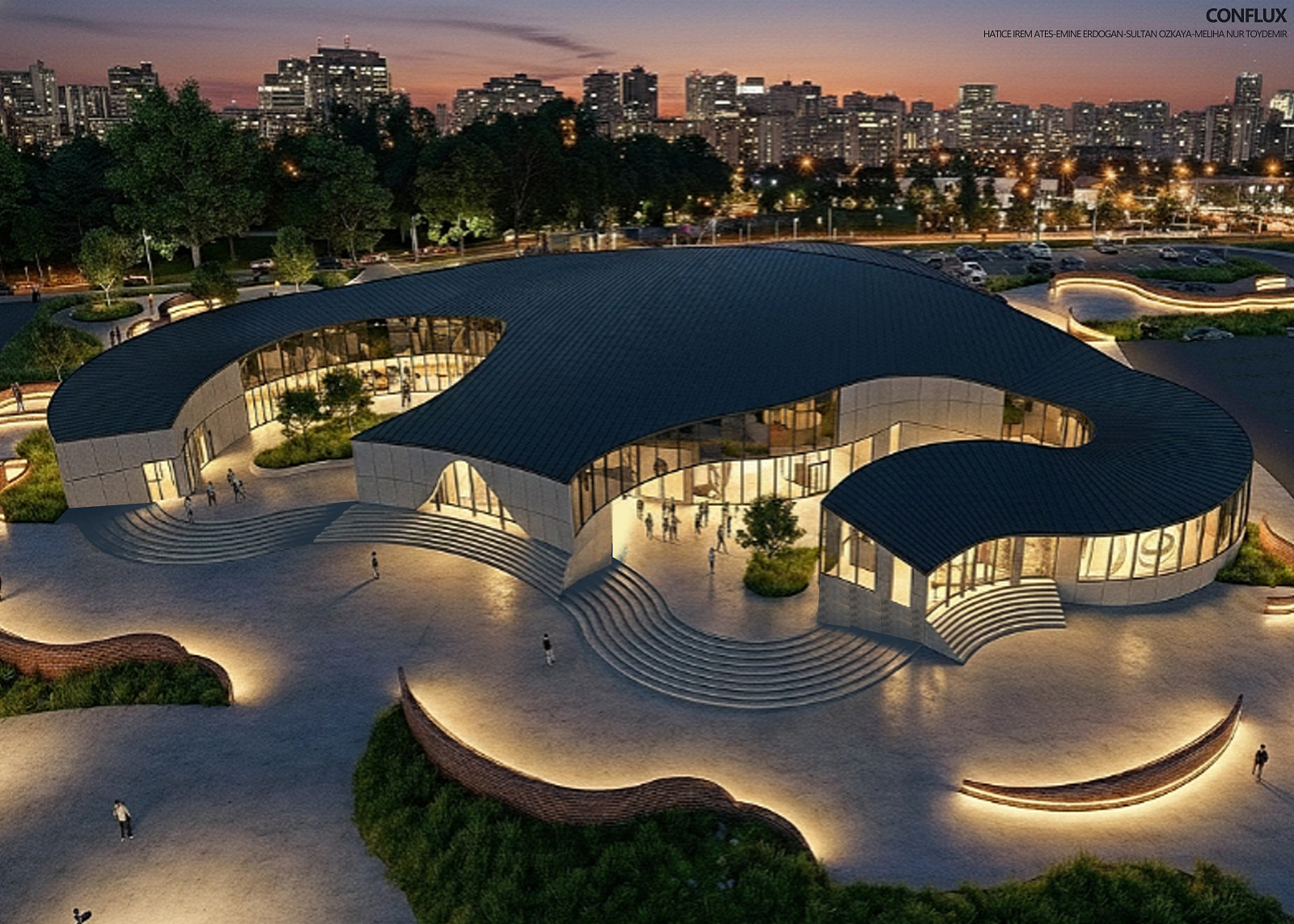
The project is shaped by two primary entrances: an upper entrance at the +2.00 level and a lower entrance at the 0.00 level. To maintain a pedestrian-oriented flow, vehicle access is excluded from the northern facade and strategically positioned in the southern section via dedicated parking areas. Addressing the urban deficiency of a permanent open-air concert venue in Bolu—which currently relies on the insufficient space in front of the Municipality—the western part of the parcel has been designated as a specialized concert zone. To manage the 2-meter site slope, we employed landscaped embankments (slopes). This topographical manipulation not only softens the gradient but also helps define open-air spaces like the concert arena. On the eastern facade, exhibition walls—echoing the city square's character—are utilized to ensure the continuity of the "urban flow." In venues such as concert and conference halls, artificial lighting is prioritized to ensure visual focus and total light control. To avoid large, opaque, and monotonous facades that would block natural light from the rest of the building, we strategically positioned the concert hall at the core of the structure. This layout serves a dual purpose: it shields the exterior facades from blank, windowless surfaces and enhances the accessibility of this primary focal point from all directions.
The spatial organization around this central core is meticulously designed to meet specific operational requirements. This includes the segregation of circulation paths, such as dedicated entrances for artists and the distinct separation between educational wings and conference zones. By tailoring these transitions to the building's needs, we ensure a seamless yet organized functional hierarchy within the "flow."
Technical information
The structure is supported by I-profile steel members, providing a robust yet slender framework. For the roofing system, steel space-frame elements were utilized to maintain the concept of "flow" beyond the building's interior. This structural choice enables a flexible and lightweight aesthetic, ensuring that the architectural continuity persists seamlessly on the exterior.

Copyright © 2026 INSPIRELI | All rights reserved. Use of this website signifies your agreement to the Terms of Use, Privacy Policy, and use of cookies.