OKOMU


Project idea
From Chaos to Wholeness...Let me introduce to you OKOMU.
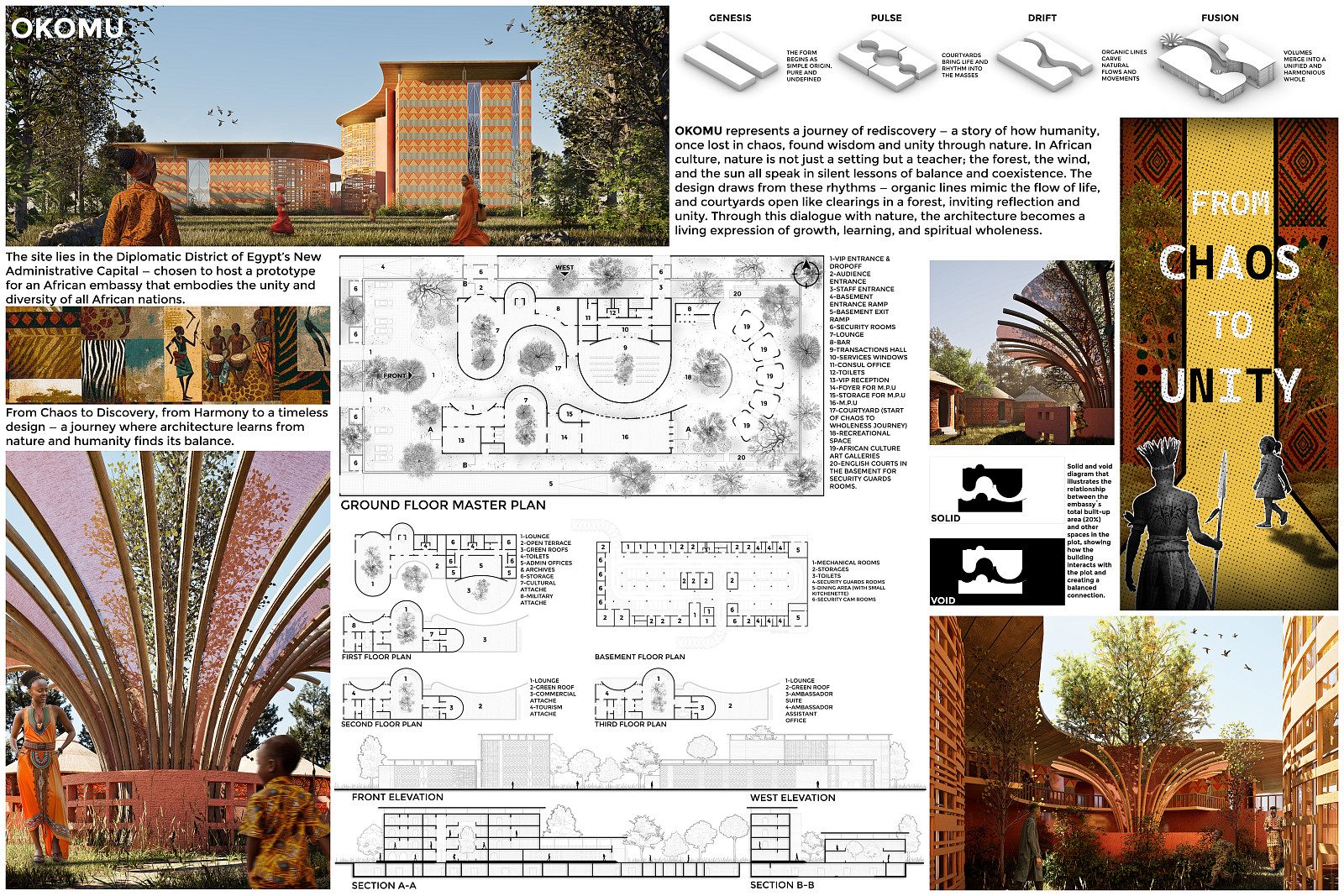
OKOMU is a prototype African Embassy Complex located in the Diplomatic District of Egypt’s New Administrative Capital. The project is conceived as a flexible diplomatic model that can represent different African nations while expressing a shared continental identity rooted in culture, nature, and collective memory.
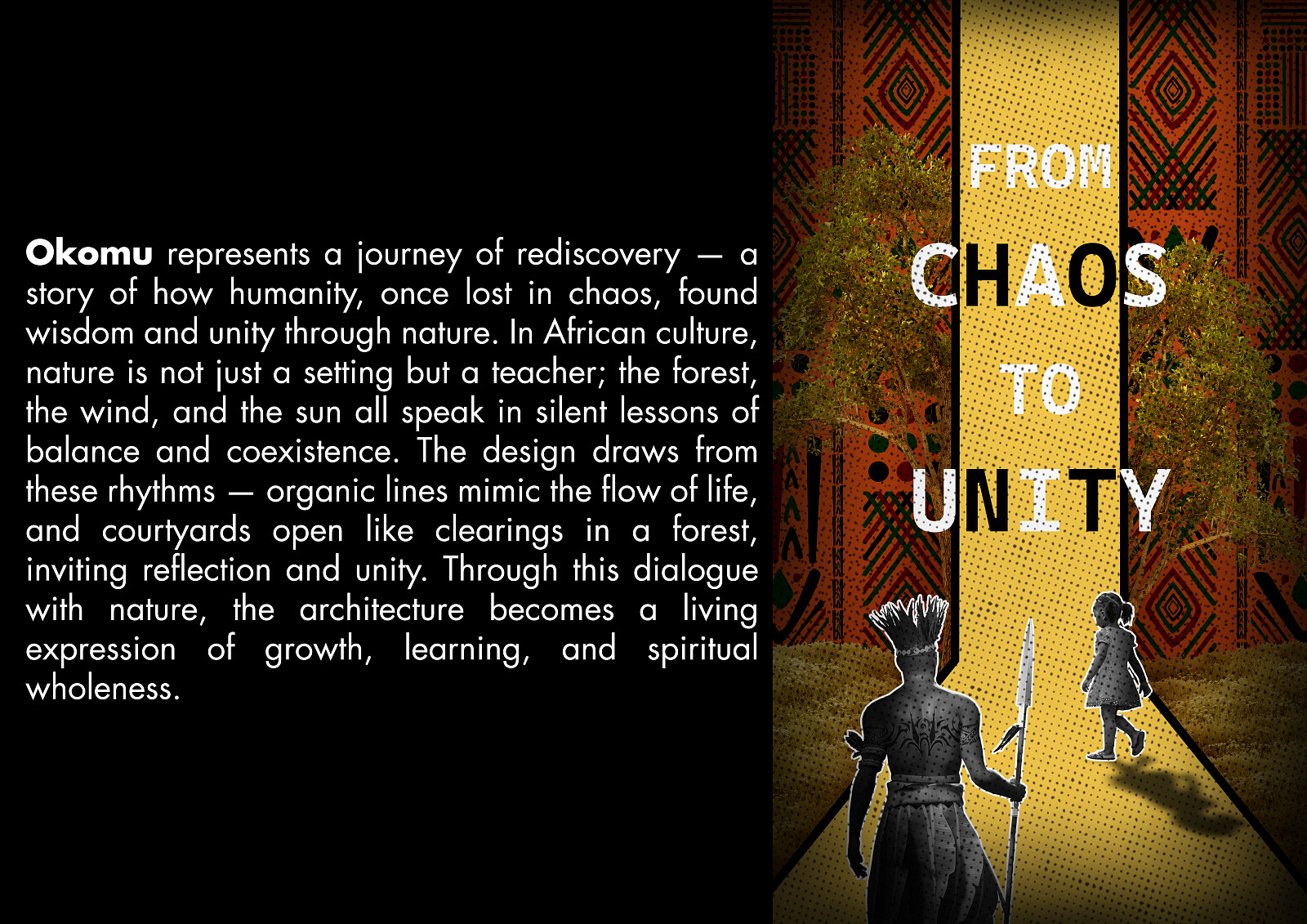
The concept is inspired by the chaotic journey of the African human, a journey from chaos toward unity and wholeness through learning from nature. In African culture, nature is not a background but a guide that teaches balance, adaptation, and coexistence. This idea shapes the architectural language of the project, where design decisions emerge from natural logic rather than rigid form-making.
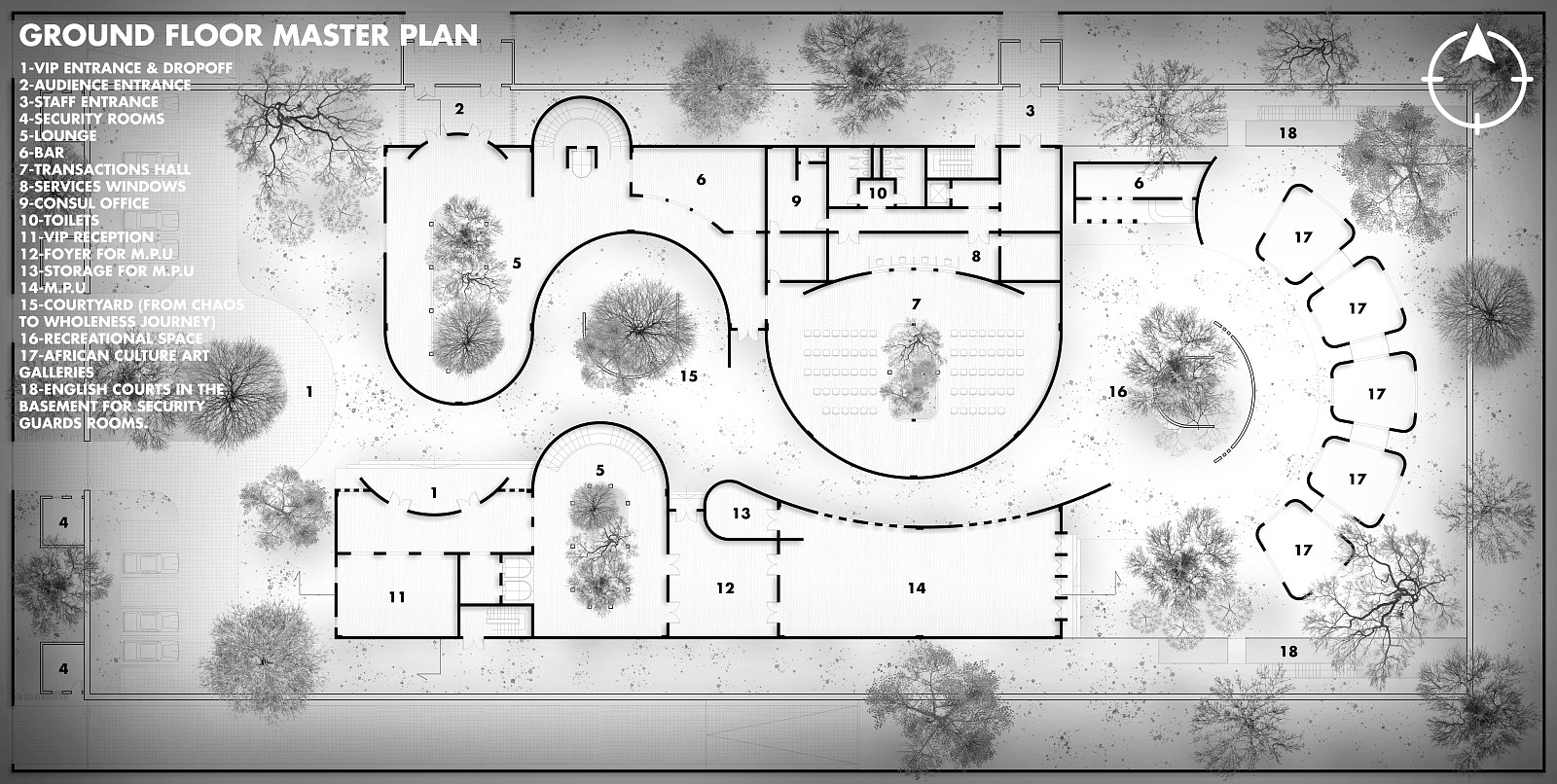
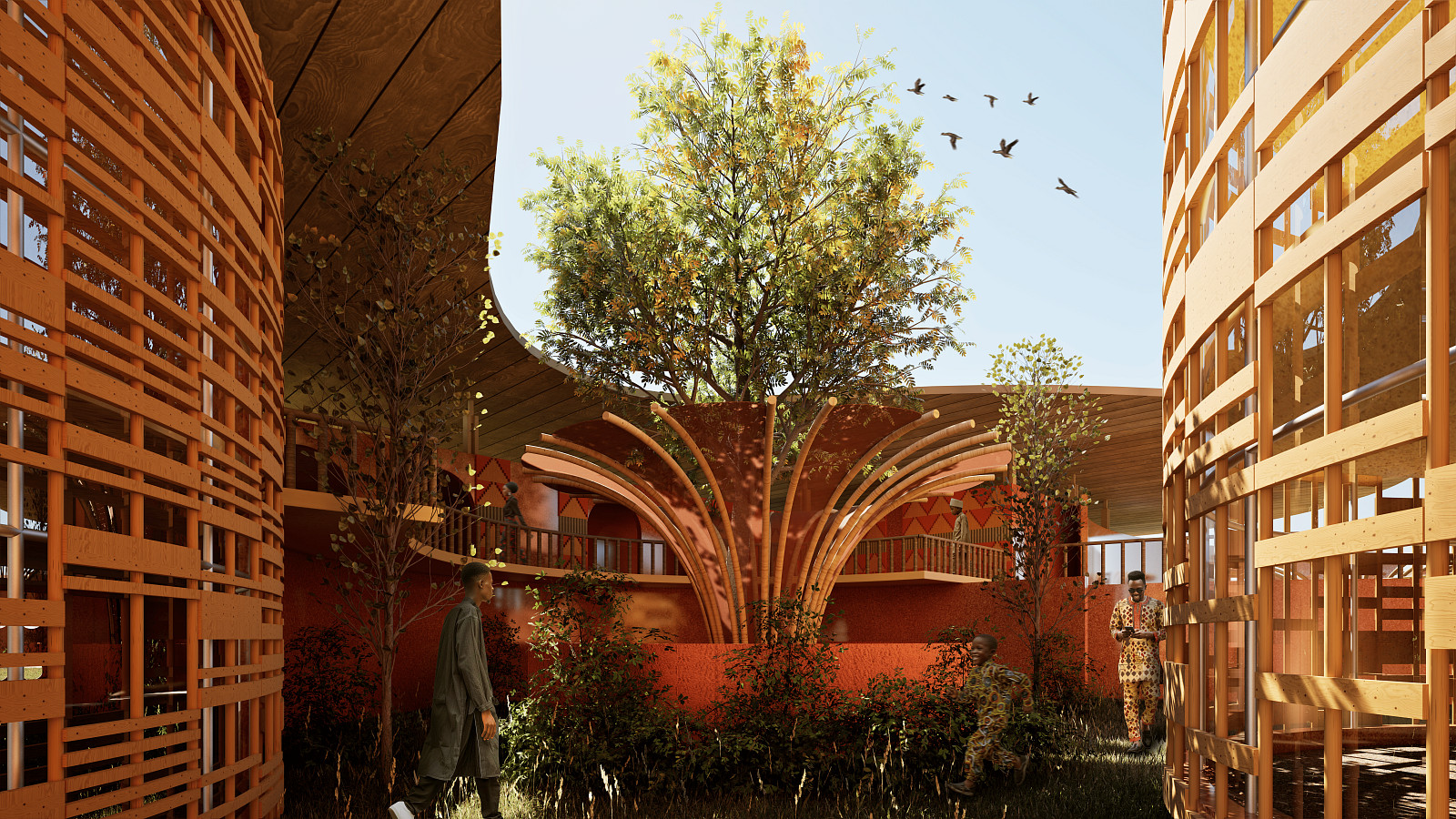
The embassy is organized through a sequence of internal courtyards that act as spatial, social, and climatic anchors. These courtyards create a gradual transition from public to semi-public and secure diplomatic zones, ensuring clarity of movement, security, and privacy. Organic lines define circulation paths, reflecting natural growth and reinforcing the idea of a continuous journey through space. It is an embassy that is deeply connected to African identity. By integrating nature, culture, and architecture, the project proposes a contemporary prototype that represents Africa not as a single image, but as a shared narrative of growth, learning, and unity.
Project description
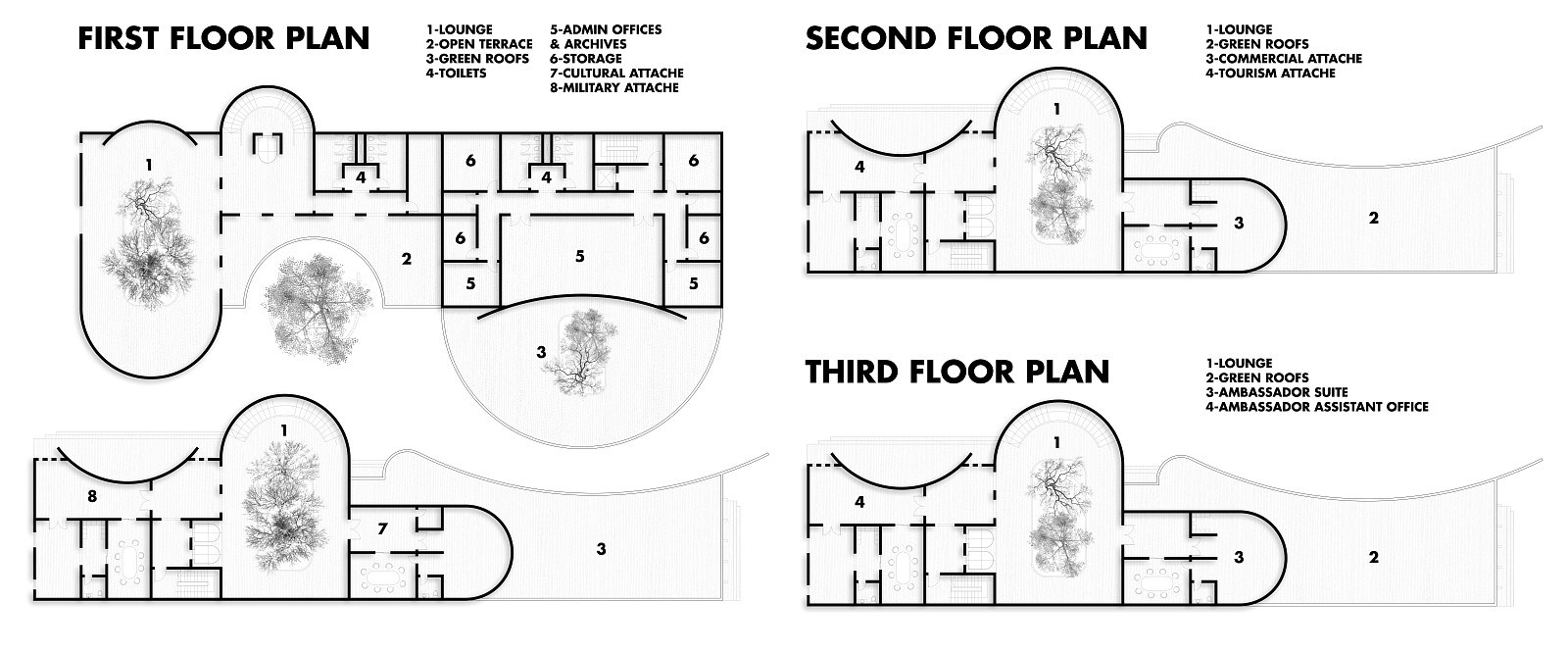
The project solution is based on a clear separation of functions and circulation to ensure efficiency, security, and spatial clarity within the embassy complex. The embassy is divided into two main buildings: a Consular Building and a Political Building. The consular building accommodates daily embassy operations, with access provided for visitors and staff. In contrast, the political building is reserved for the ambassador, diplomats, and political representatives, ensuring a secure and controlled environment.
The separation between the two buildings is not only functional but also conceptual. Organic circulation paths connect the complex, beginning as narrow, compressed routes that symbolize chaos, uncertainty, and the human search for life and meaning. As movement progresses, these paths gradually widen, opening into courtyards that represent unity, clarity, and wholeness. This spatial transition reflects the African human journey toward balance through nature.
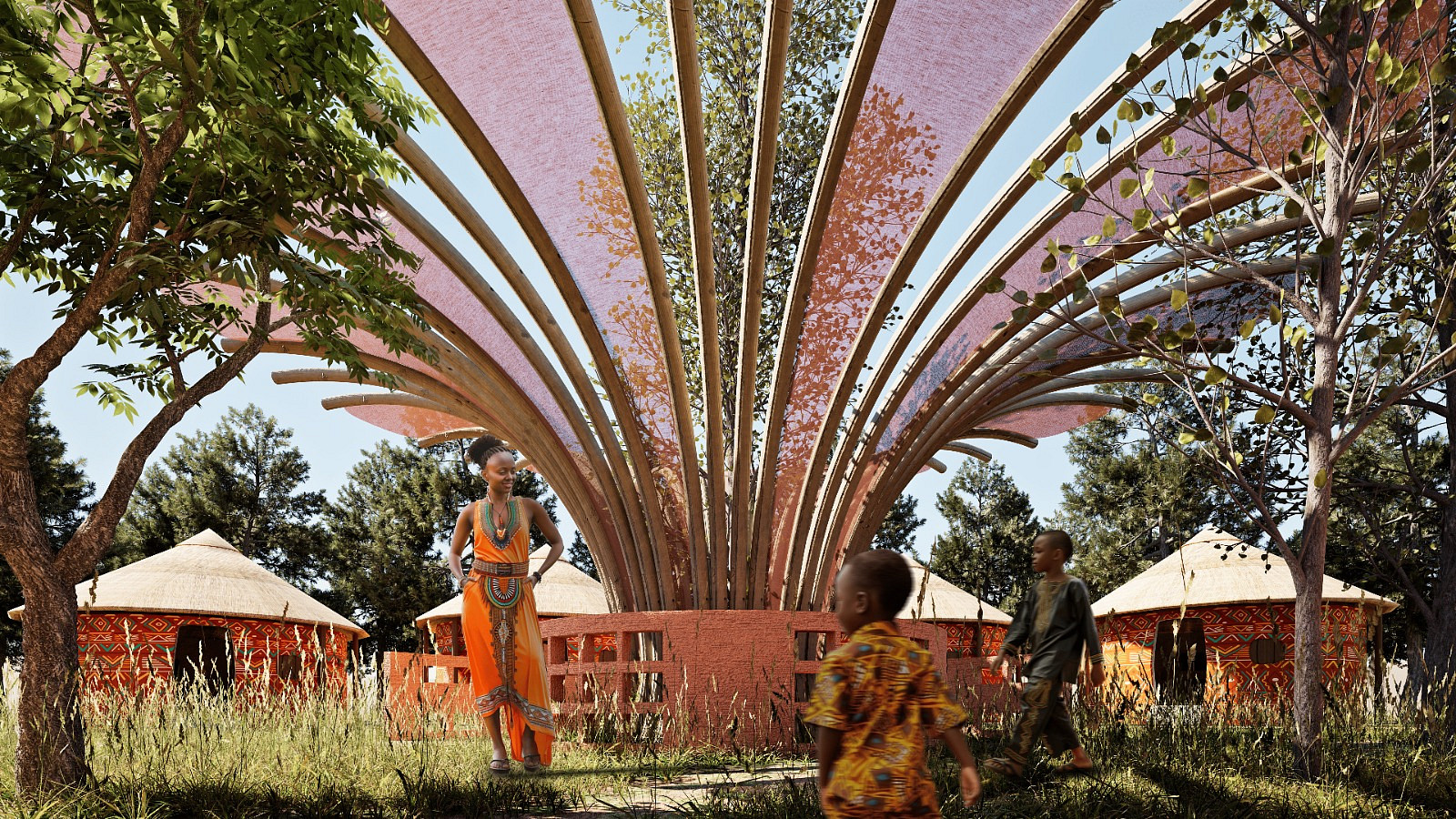
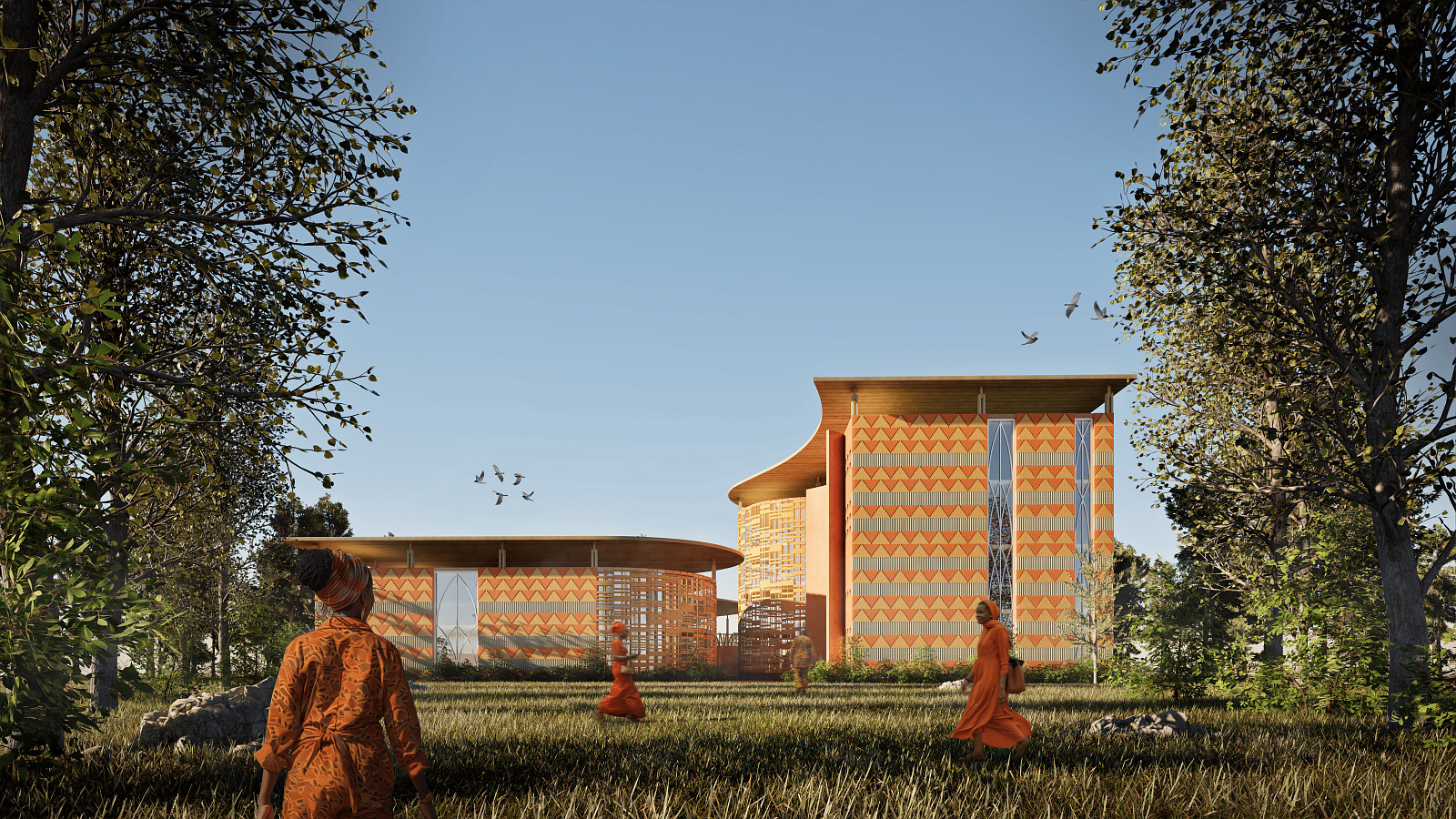
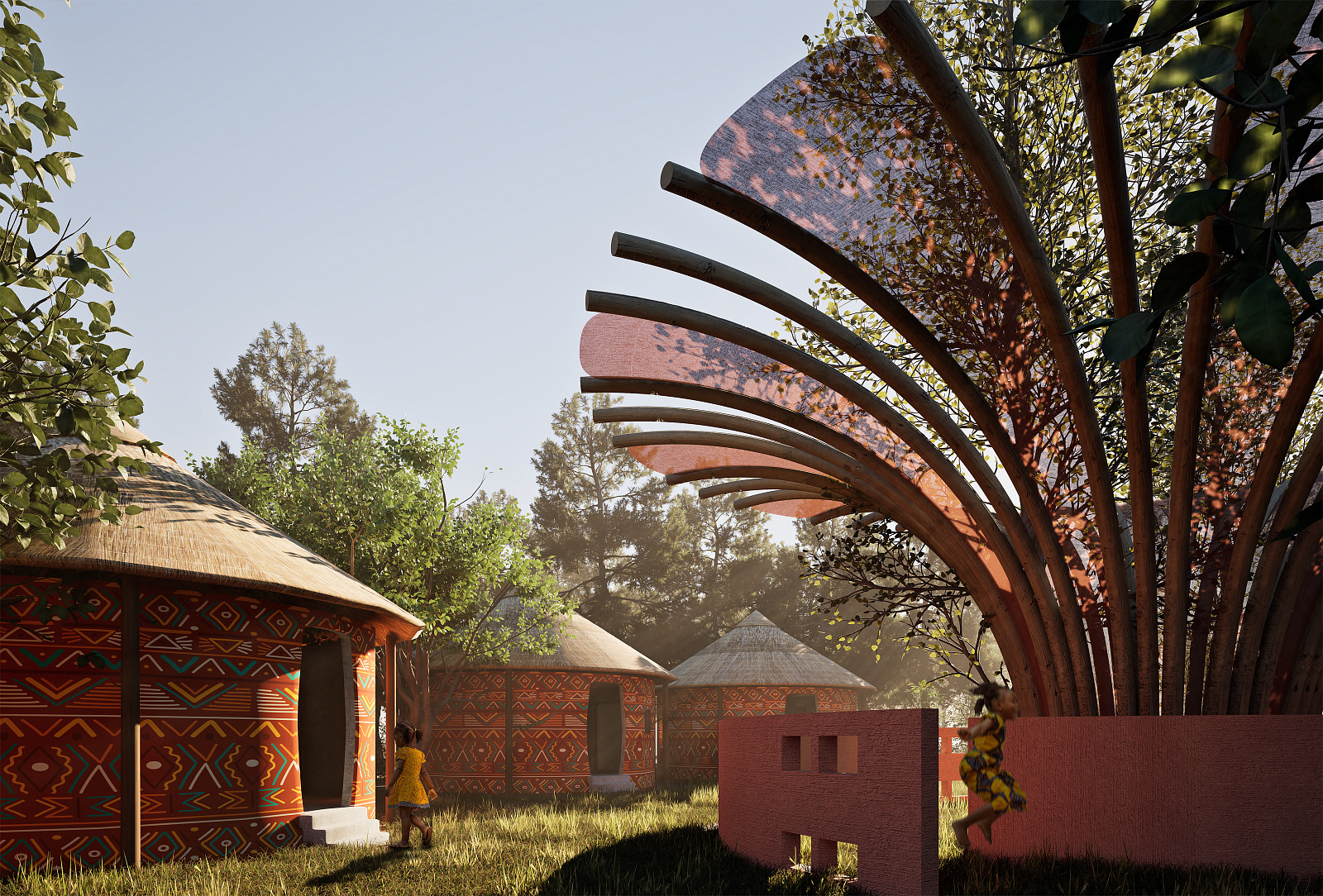
Courtyards and building forms incorporate Pan-African patterns and geometries derived from traditional African culture. The use of lightweight, sustainable materials reinforces a close relationship with nature and reflects the adaptive, resource-conscious spirit of African architecture. The journey concludes at a series of culturally inspired huts positioned as the final destination within the site. Each hut tells a story — representing African history, identity, and cultural diversity — transforming the embassy into not only a diplomatic space, but also a living narrative of Africa’s collective memory.
Technical information
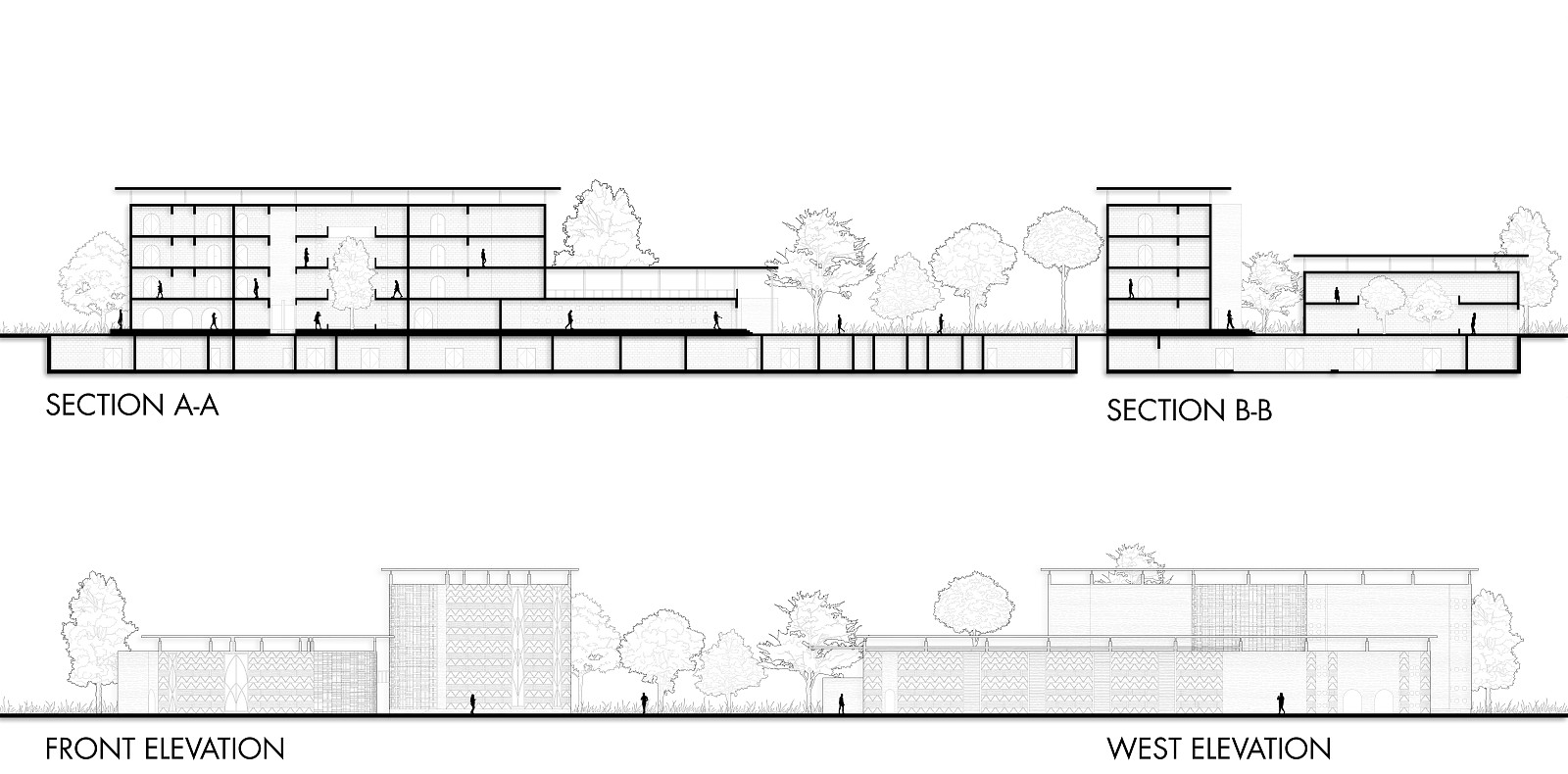
The project is designed as a low-rise embassy complex consisting of two main buildings with a maximum height of 4 floors above ground, supported by a basement level for parking and services. The structural system is based on a reinforced concrete waffle slab, allowing larger spans, flexible interior layouts, and compatibility with organic architectural forms. The building envelope integrates lightweight, locally inspired materials and passive design strategies, including shaded courtyards and controlled openings, to enhance thermal comfort and energy efficiency. Circulation systems are clearly separated to support different user groups while maintaining security and operational efficiency. The design ensures adaptability, constructability, and long-term durability within varying African contexts.

Copyright © 2026 INSPIRELI | All rights reserved. Use of this website signifies your agreement to the Terms of Use, Privacy Policy, and use of cookies.