Spatial Process


Project idea
This project was developed as part of a studio course at the university, focusing on an abstract exploration of space and composition. The initial phase of the work was dedicated to the study of an architect who serves as a personal source of inspiration. I chose the Italian architect Carlo Scarpa, whose work is characterised by a sensitive dialogue between old and new, an exceptional attention to detail, and a holistic approach to space-making.
What fascinates me most about Scarpa’s architecture is his ability to harmonise the environment not only through architectural elements, but also through natural components such as water and light. His work demonstrates a deep understanding of materiality, proportion, and atmosphere, where every detail plays a meaningful role within the whole.
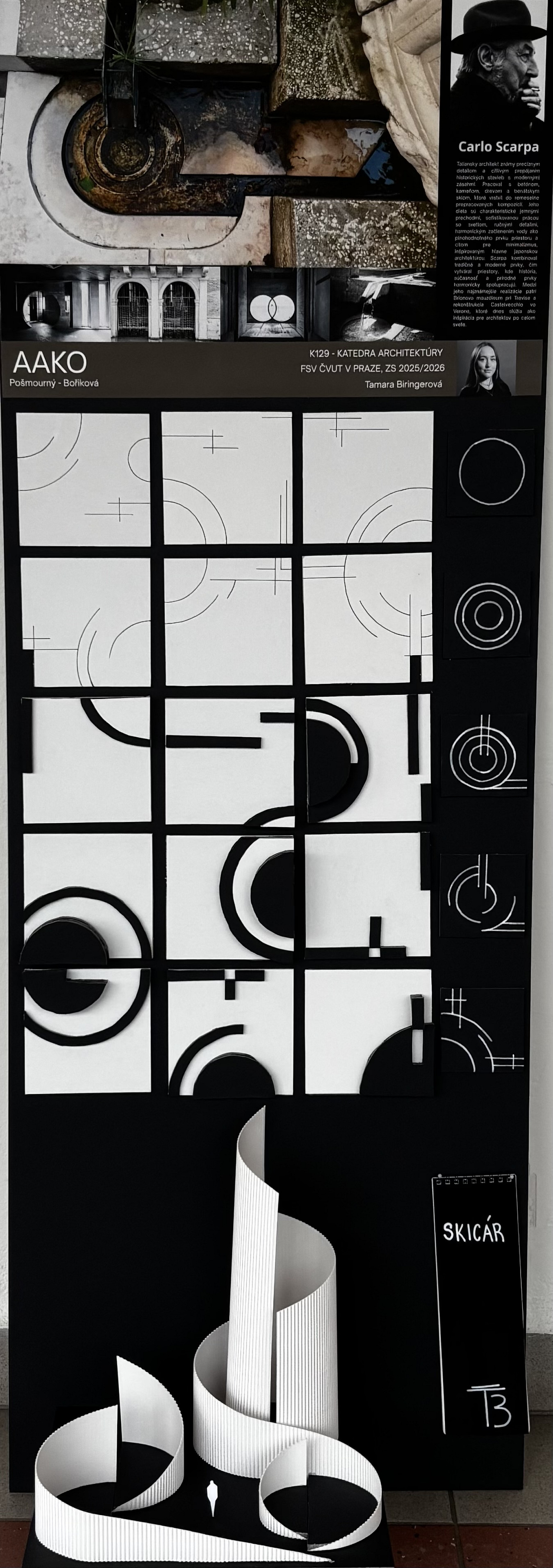
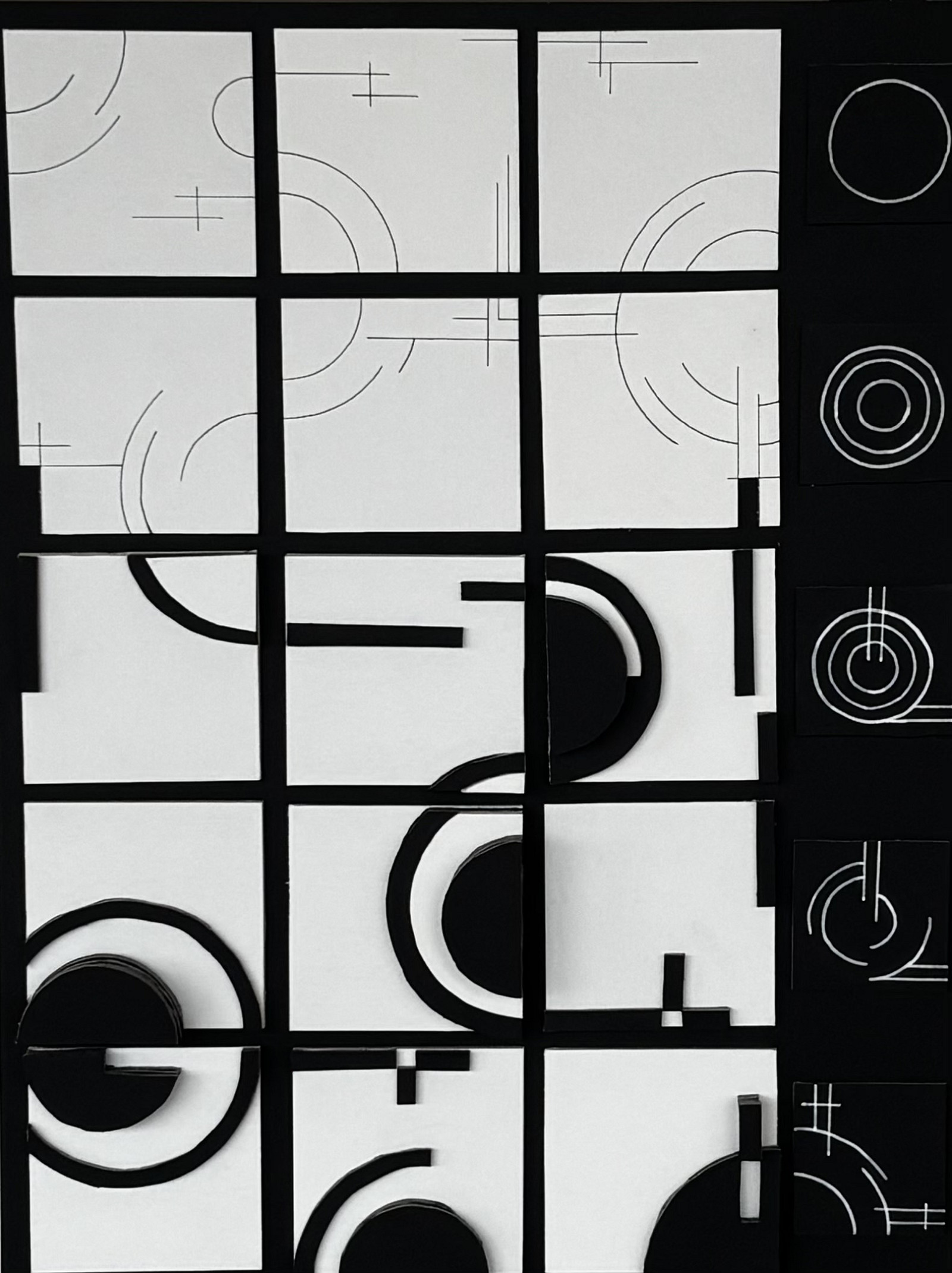
A particular point of interest for this project was Scarpa’s use of curves, especially as expressed in a small-scale detail — a water drainage element in one of his architectural works. This seemingly minor component became the core reference of my design process. I studied its structure over several months, analysing its geometry and spatial logic.
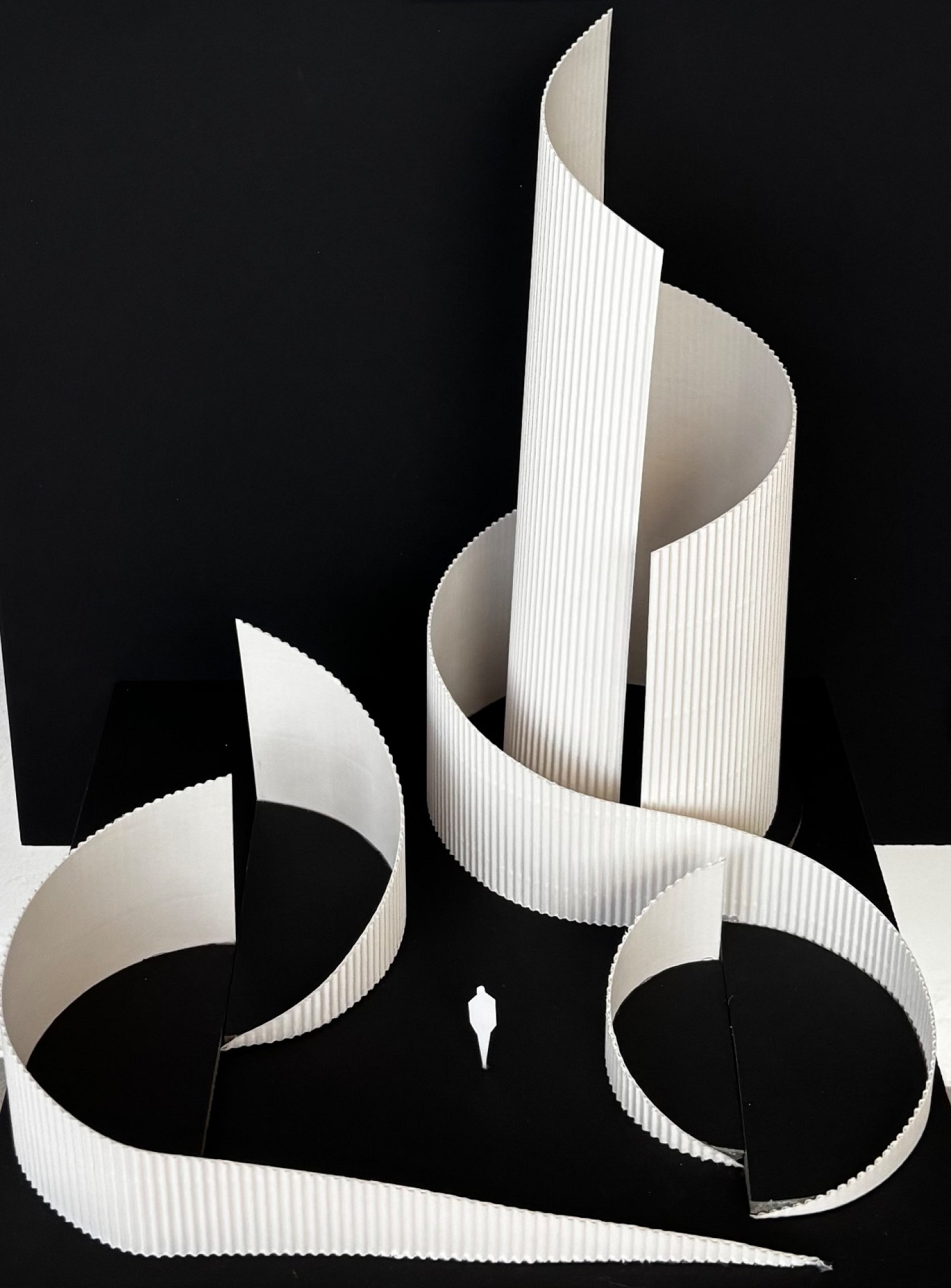
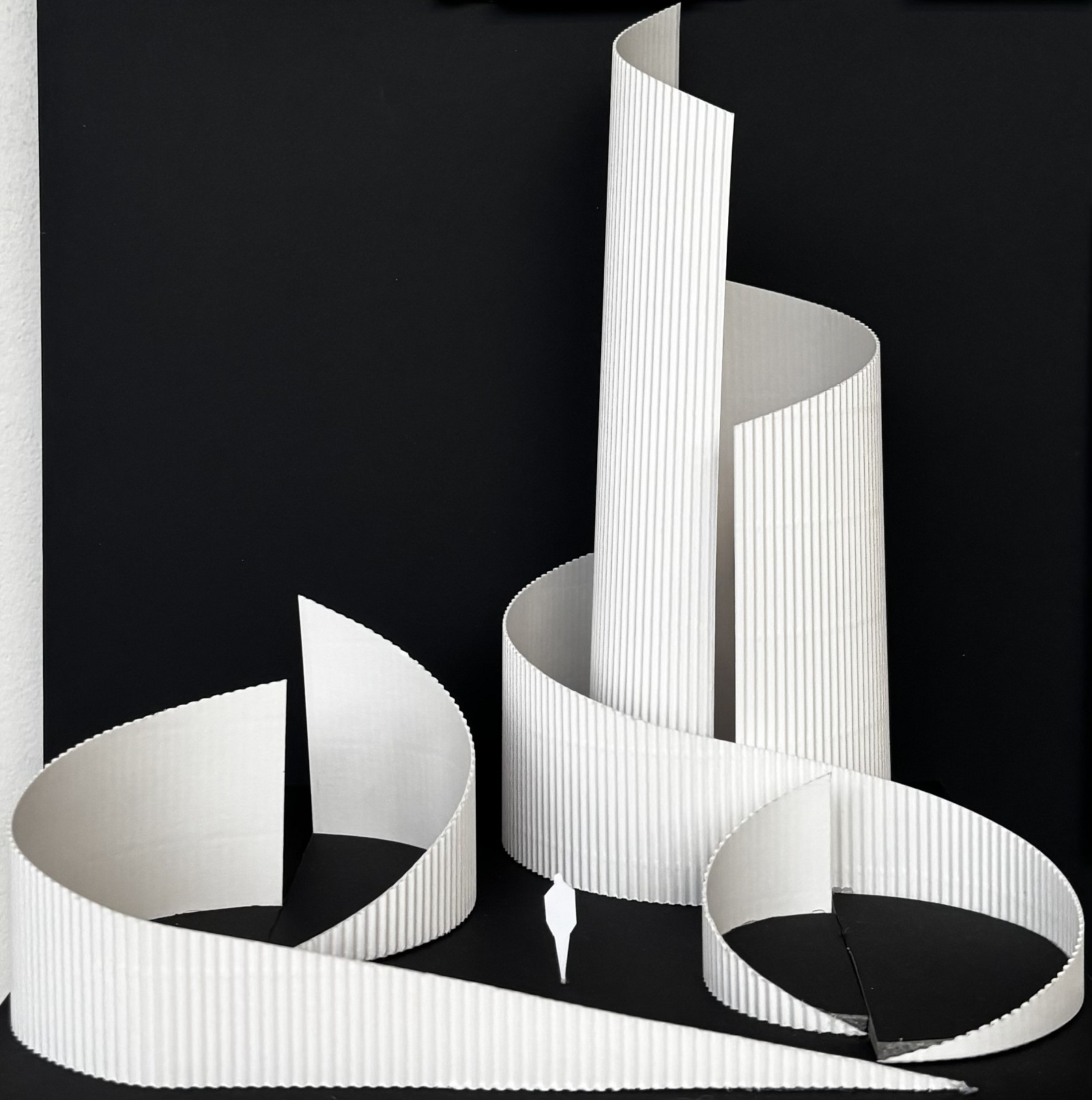
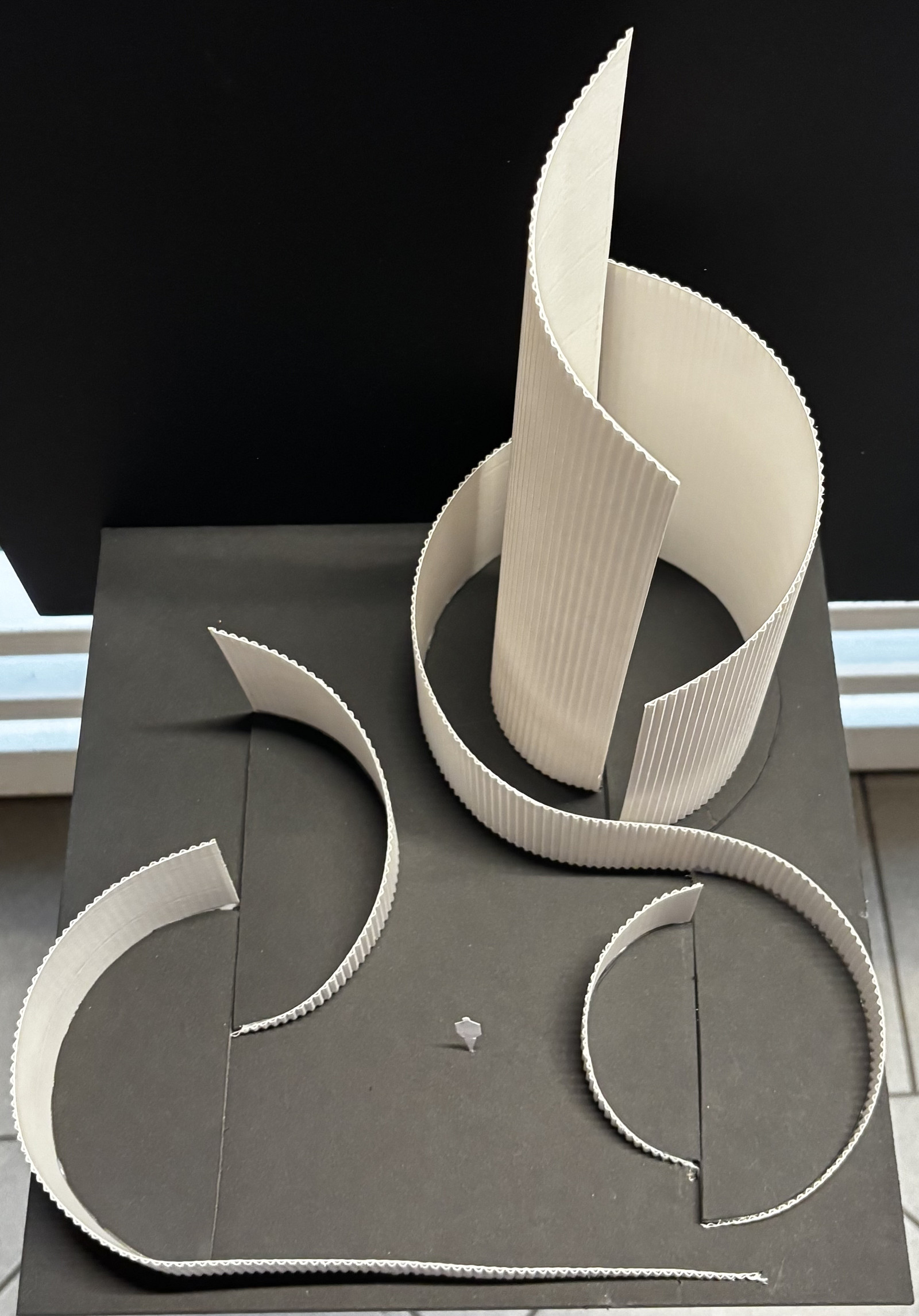
Through an intuitive process of “playing” with lines, I translated this detail into a series of abstract compositions and paths. These explorations gradually evolved into spatial relationships that ultimately formed the conceptual and formal basis for the final physical model.
Project description
What fascinates me most about Scarpa’s architecture is his ability to harmonise the environment not only through architectural elements, but also through natural components such as water and light. His work demonstrates a deep understanding of materiality, proportion, and atmosphere, where every detail plays a meaningful role within the whole.
A particular point of interest for this project was Scarpa’s use of curves, especially as expressed in a small-scale detail — a water drainage element in one of his architectural works. This seemingly minor component became the core reference of my design process. I studied its structure over several months, analysing its geometry and spatial logic.
Through an intuitive process of “playing” with lines, I translated this detail into a series of abstract compositions and paths. These explorations gradually evolved into spatial relationships that ultimately formed the conceptual and formal basis for the final physical model.
Technical information
The project is an abstract spatial model developed within an academic studio framework. Its design is based on the analytical study of a selected architectural detail from the work of Carlo Scarpa. Through iterative line-based explorations and compositional transformations, the original reference was translated into a spatial structure. The final model represents a synthesis of process, geometry, and spatial relationships derived from the initial architectural detail.

Copyright © 2026 INSPIRELI | All rights reserved. Use of this website signifies your agreement to the Terms of Use, Privacy Policy, and use of cookies.