Encounters with the City: Transit Beyond Efficiency


Project idea
This thesis approaches movement not as a logistical exercise but as a lived, bodily experience embedded within the city in Bandra Kurla Complex (BKC), Mumbai. It unfolds within a district designed for speed, order, and financial efficiency, yet marked by moments of friction, waiting, and quiet improvisation. Beneath its wide roads and glass towers, BKC reveals an absence not of infrastructure, but of spaces that acknowledge the pedestrian as a human presence rather than a residual user. At its heart, the thesis proposes that the ordinary employee deserves as much architectural attention as the boardroom, and that the human scale must be reinstated in the imagination of the global city.
Project description
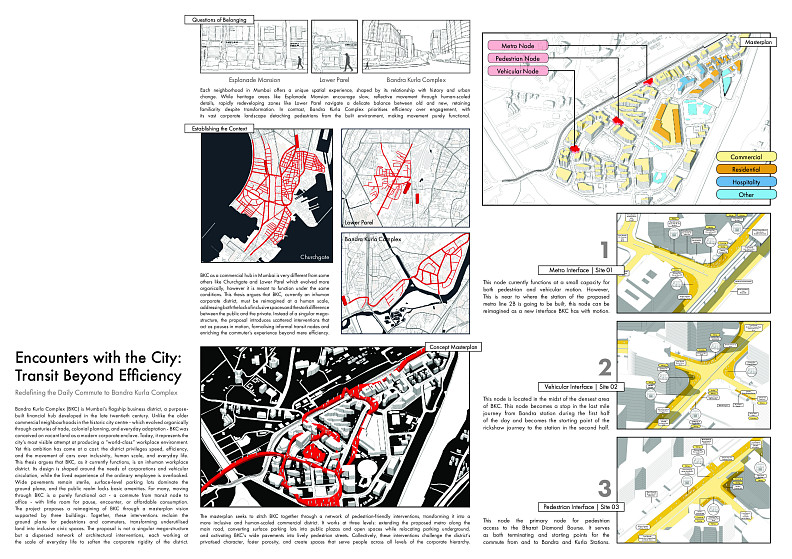
The research traces Mumbai’s transit systems as layered urban conditions shaped by routine, negotiation, and everyday adaptation. Through case studies of Churchgate, Lower Parel, and Bandra, the thesis observes how transit spaces intertwine with commerce and stretch beyond their intended function, becoming places to pause, gather, trade, and linger. These moments of occupation transform movement into encounter, and infrastructure into civic space.
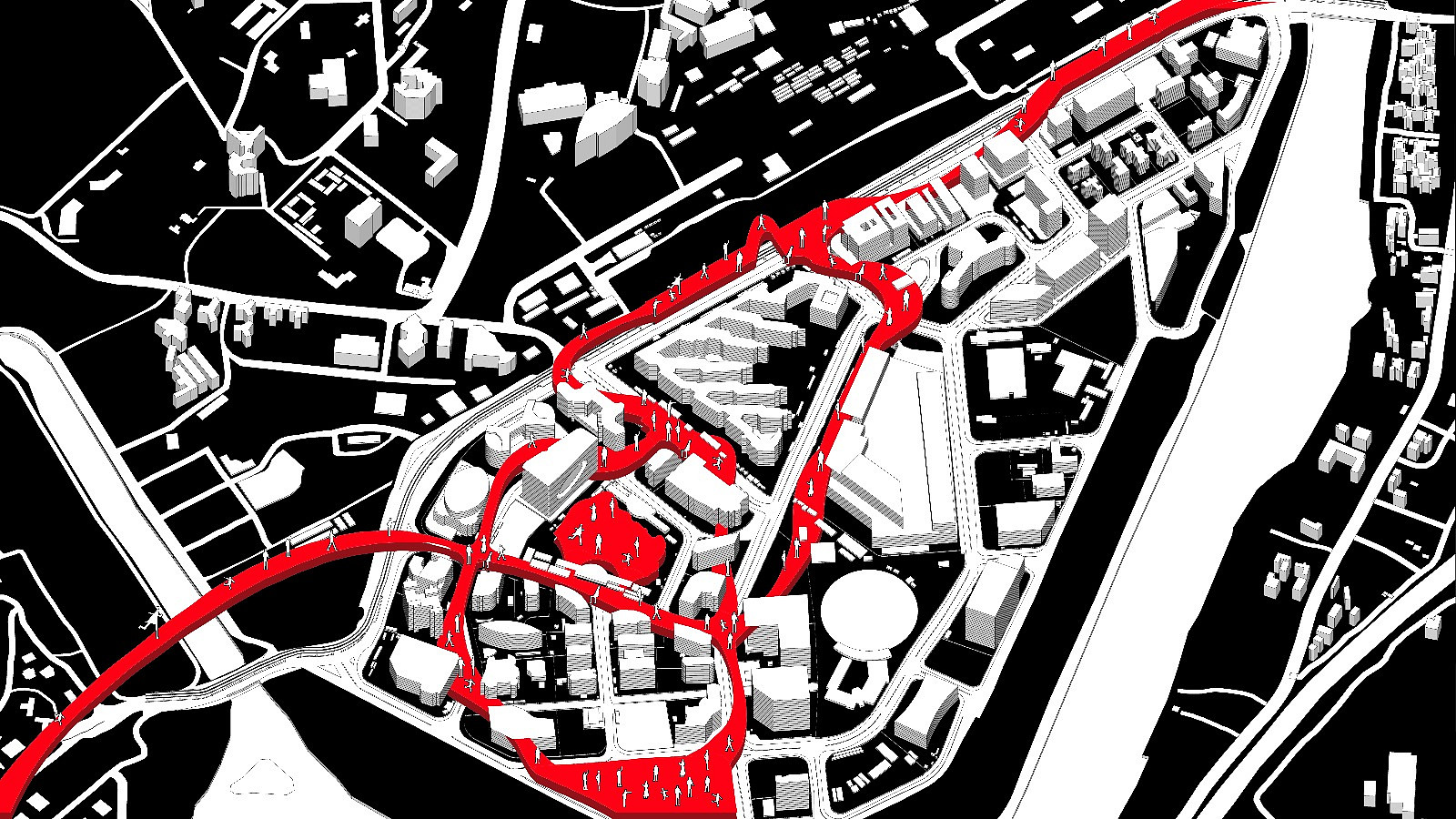
Responding to this understanding, this thesis proposes three buildings, as a part of a larger masterplan, each addressing transit and the human as equals, in this otherwise alienating commercial district. The metro, the vehicular and the pedestrian, form three interfaces transit has with BKC, and consequently the city. This thesis builds on these nodes, allowing the commuter to slow down, pause, interact and engage with the city and each other.
Technical information
The proposal, comprising of three buildings primarily uses reinforced cement concrete and steel as primary construction materials, owing to the very urban context it sits in. Additionally, this project looks at sites in a commercial district which boasts of extremely high footfalls and life which is fast, causing the construction and design to adapt to one which can be executed with minimal disruption to the pulse of the workplaces it caters to.
Documentation

Copyright © 2026 INSPIRELI | All rights reserved. Use of this website signifies your agreement to the Terms of Use, Privacy Policy, and use of cookies.