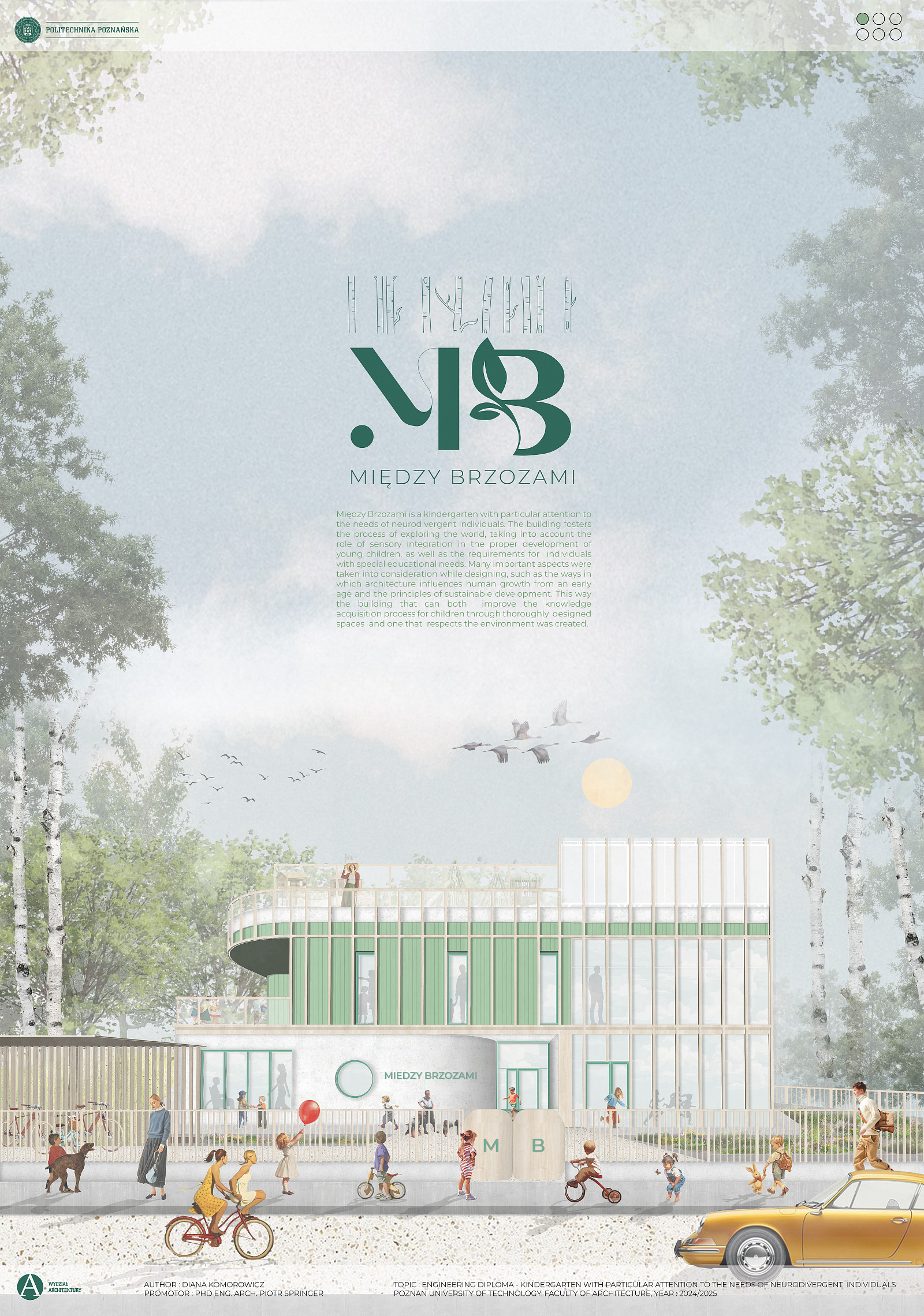
Kindergarten with particular attention to the needs of neudivergent individuals on Bohaterów Westerplatte street in Poznań


Project idea
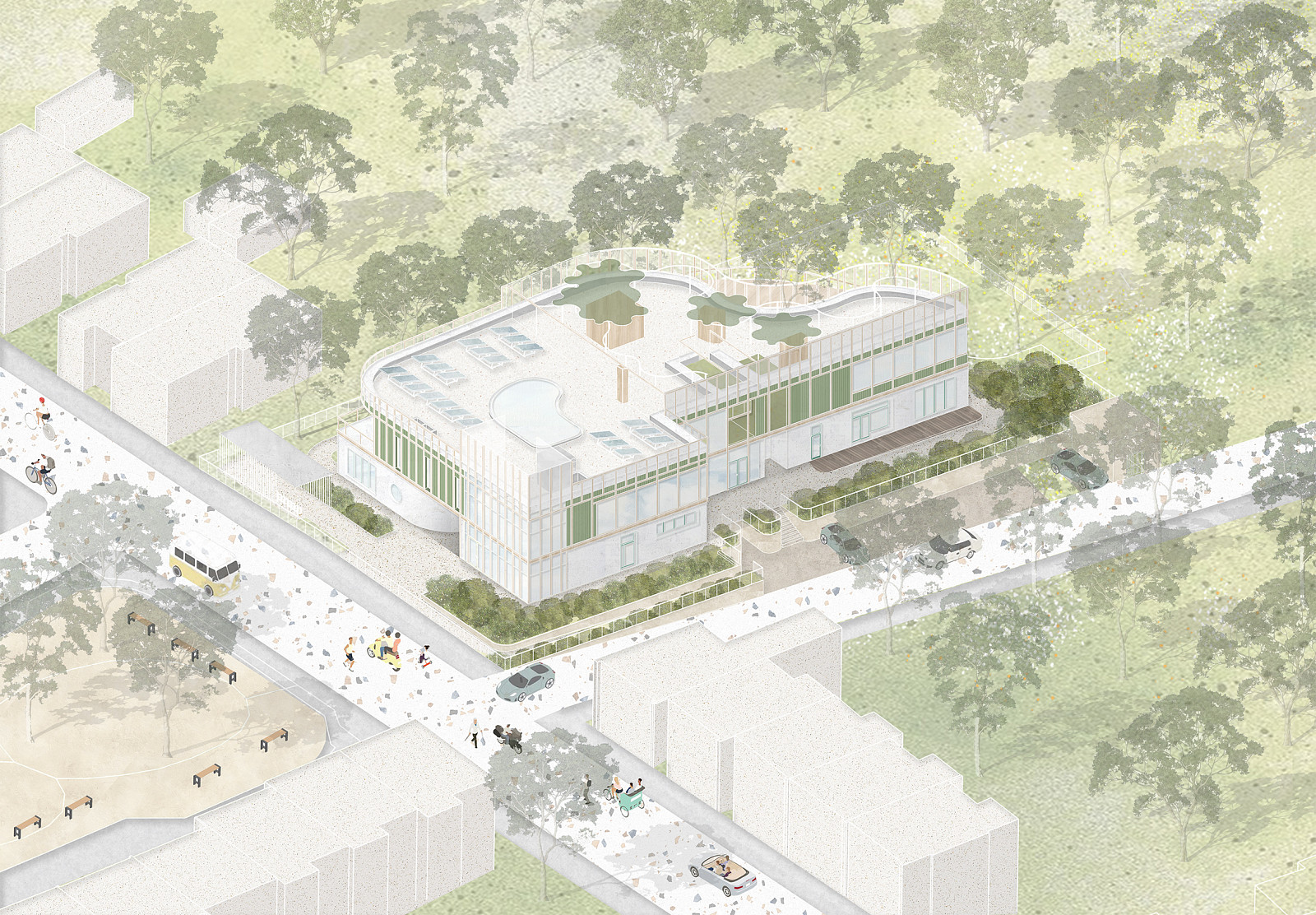
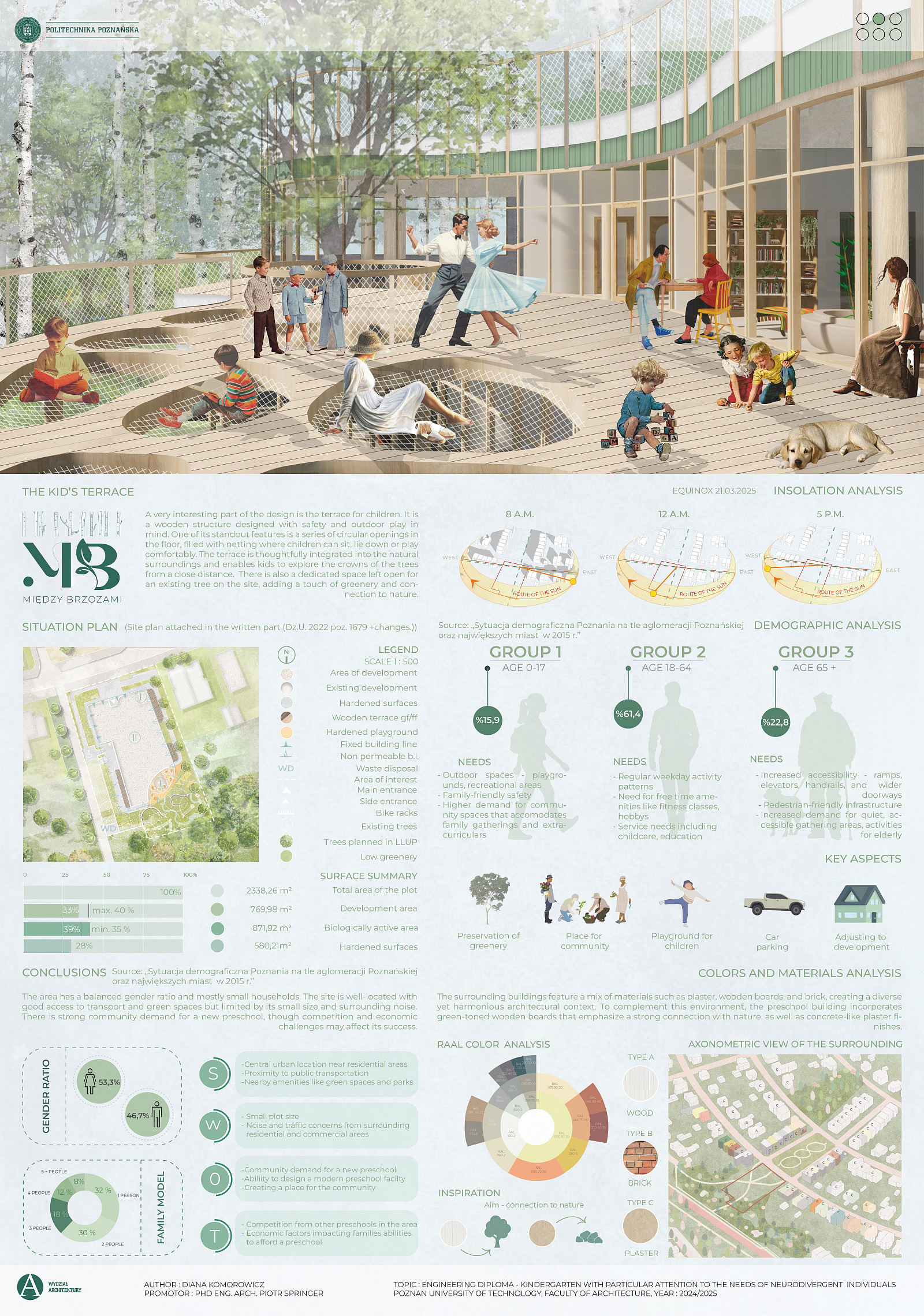
The engineering project “Between the Birches” is a conceptual vision of a kindergarten located in Poznań, at Bohaterów Westerplatte Street, designed in response to the needs of neurodiverse children and children with special educational requirements. The name and character of the project are derived from the natural context of the site – a group of birch trees growing in the southern part of the plot, directly connected to the Świerczewski Forest complex.
Instead of subordinating nature to architecture, the project adopts an opposite approach, in which the building adapts to the surrounding landscape. The existing birch trees become a key element of the design, shaping both the spatial layout and the architectural expression of the kindergarten.
Birches serve as a symbolic and conceptual reference, inspiring the form, material choices, and overall atmosphere of the building. They support the main idea of creating a safe, sensory-friendly environment closely connected to nature, where architecture responds to the emotional, cognitive, and sensory needs of children.
Project description
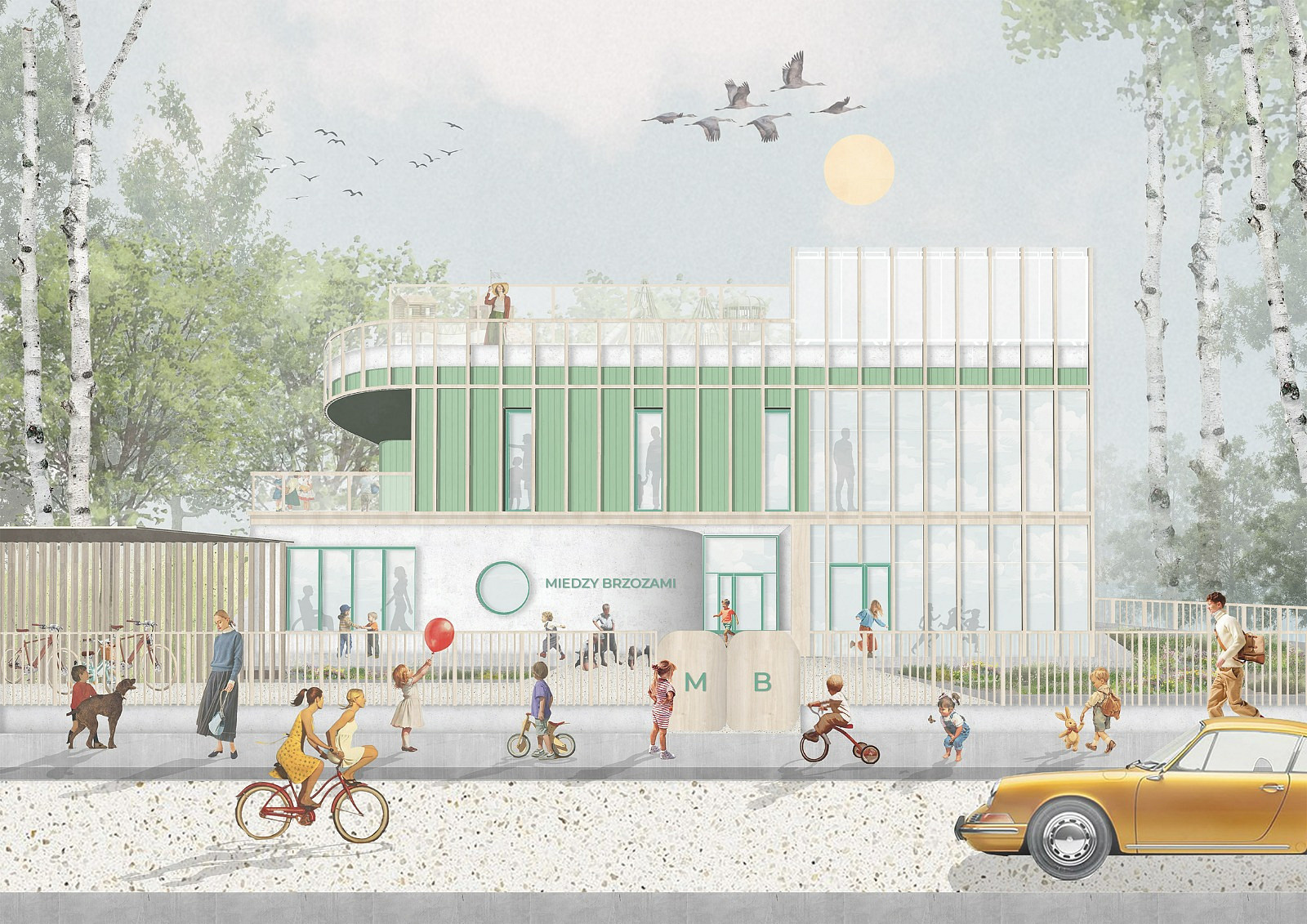
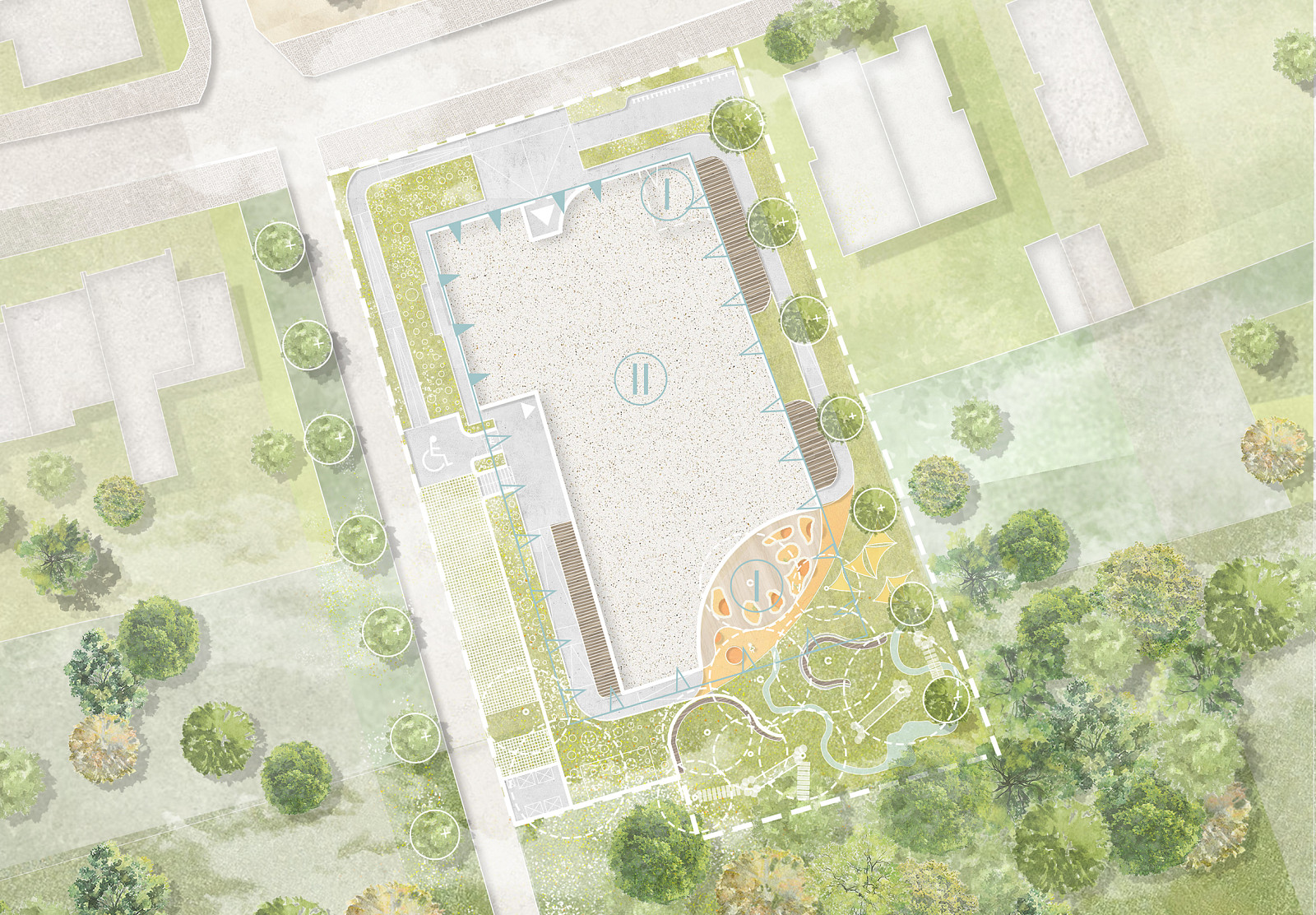
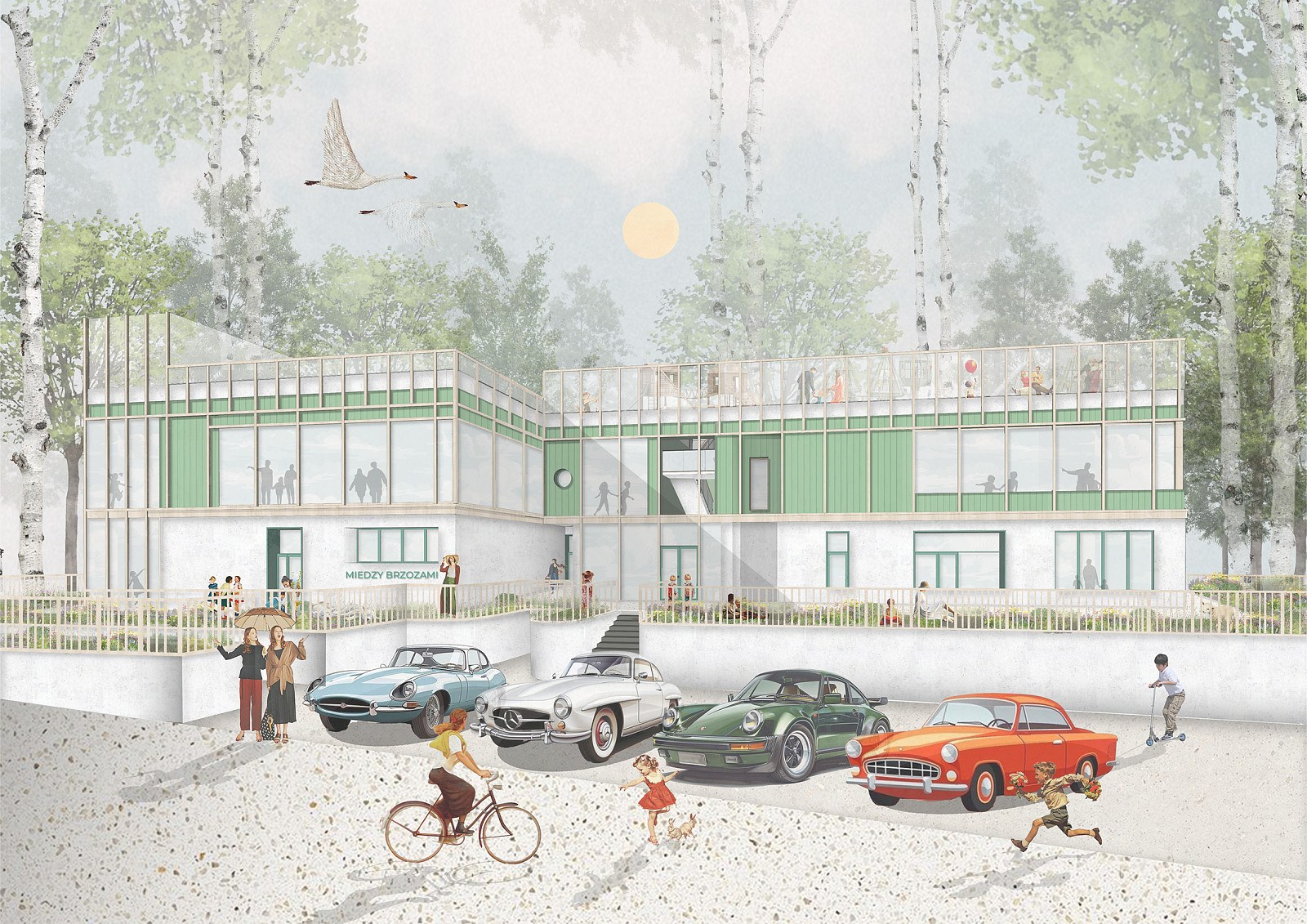
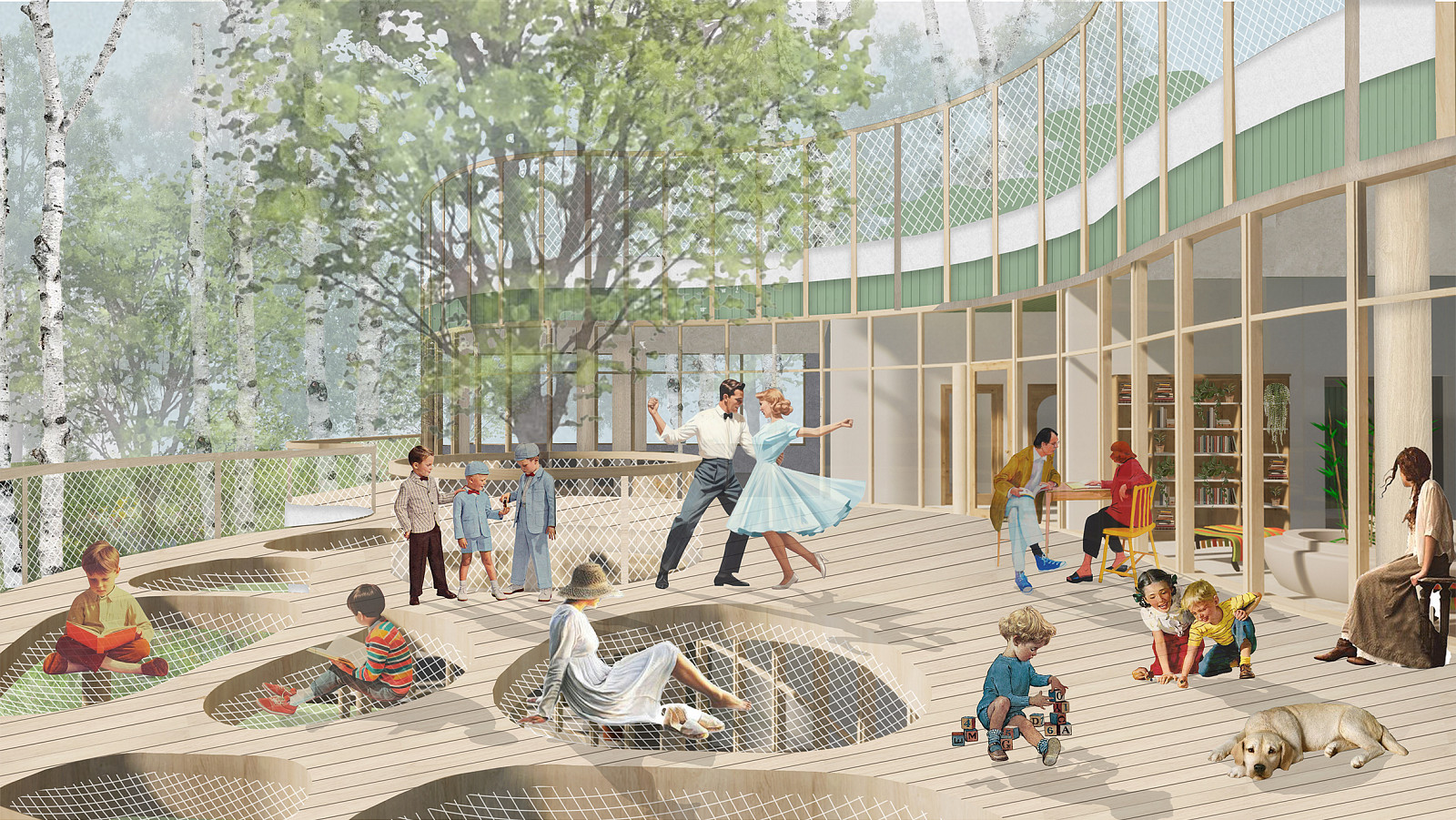
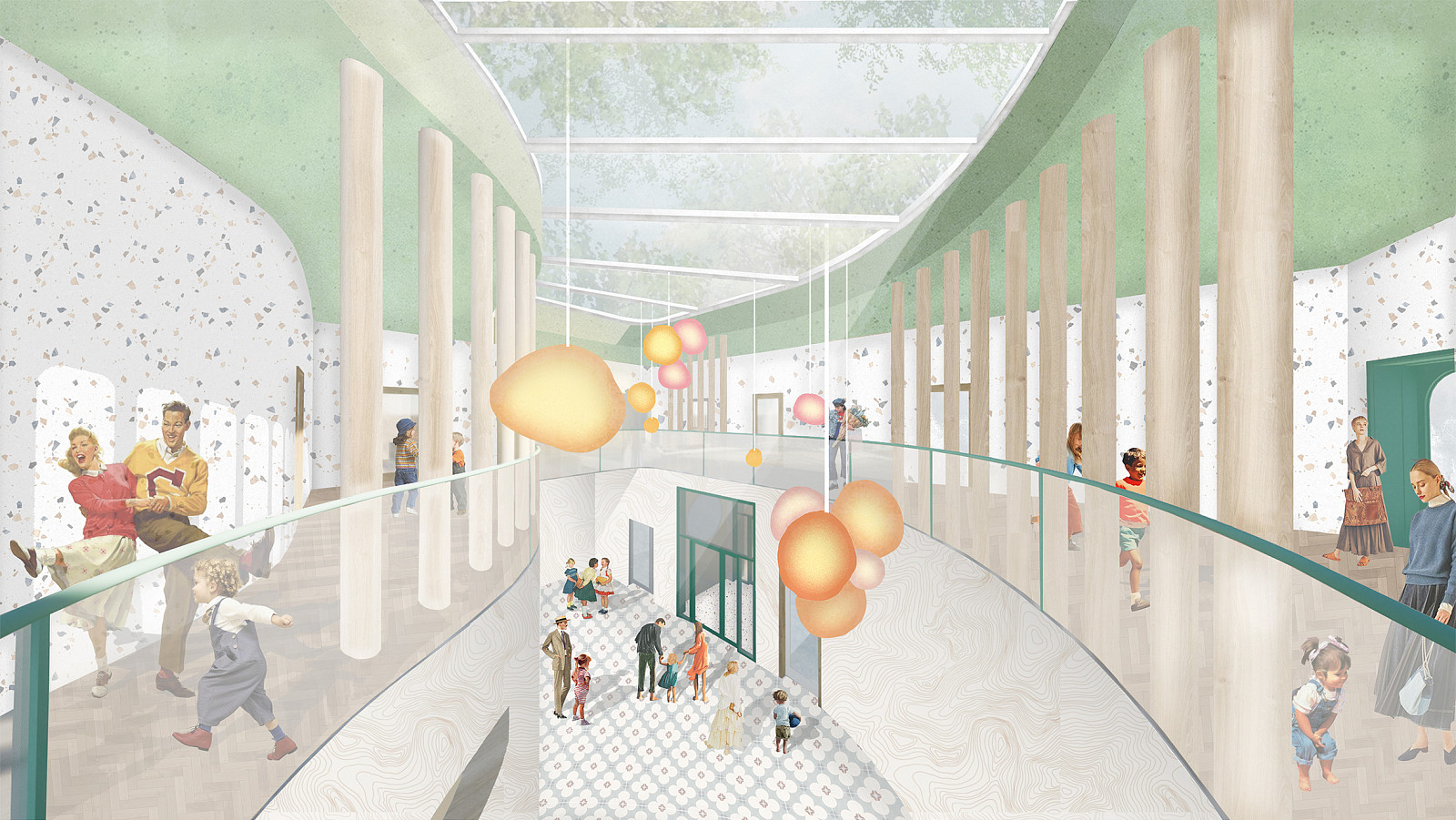
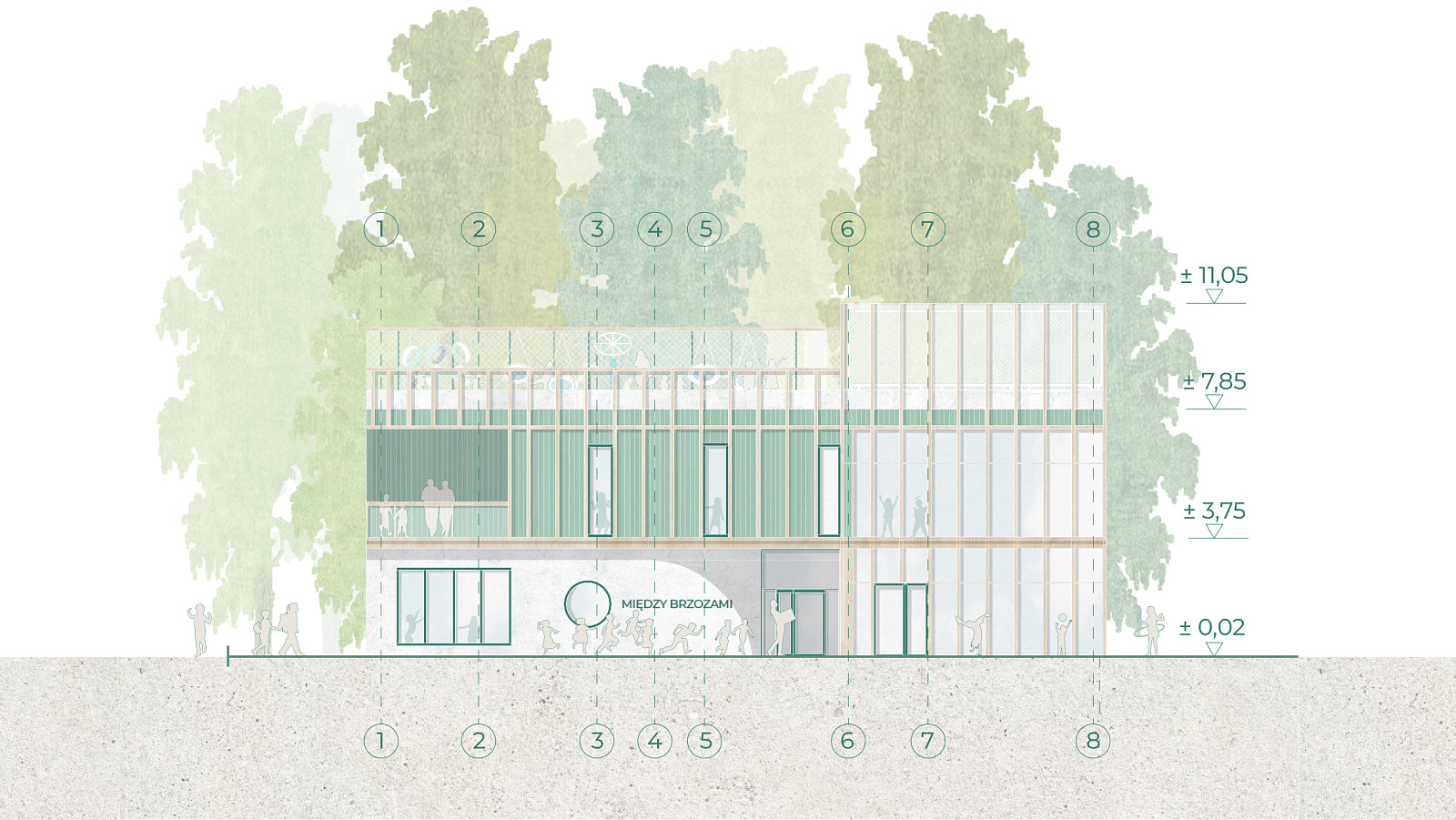
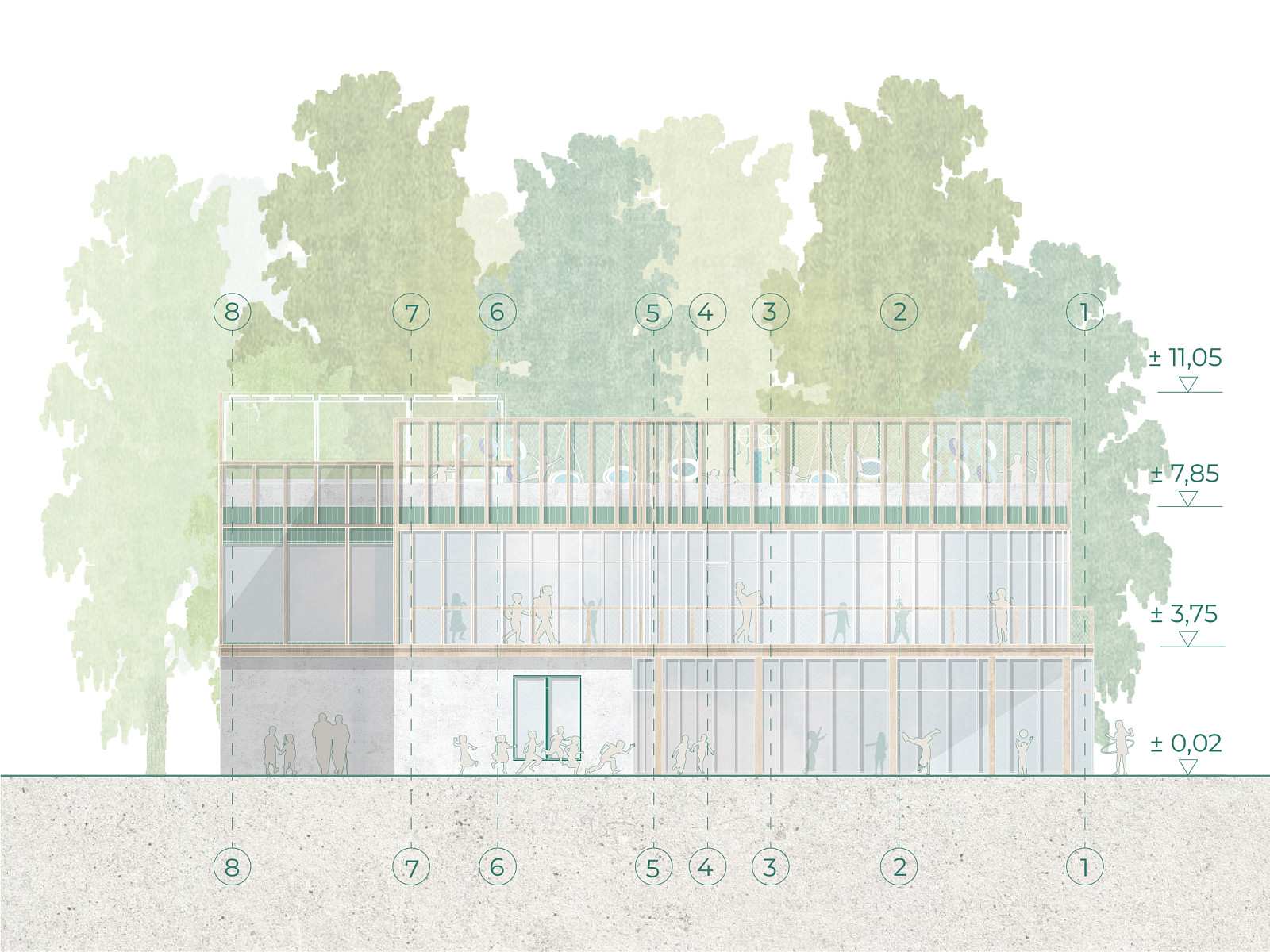
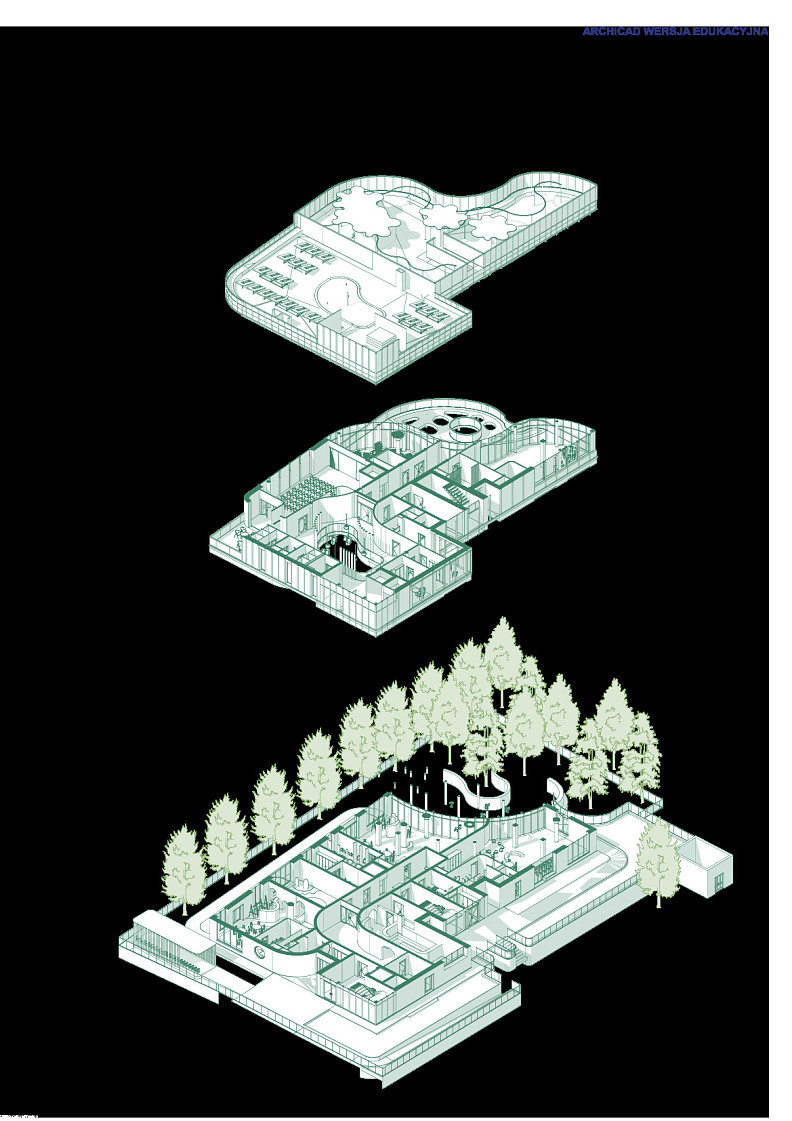
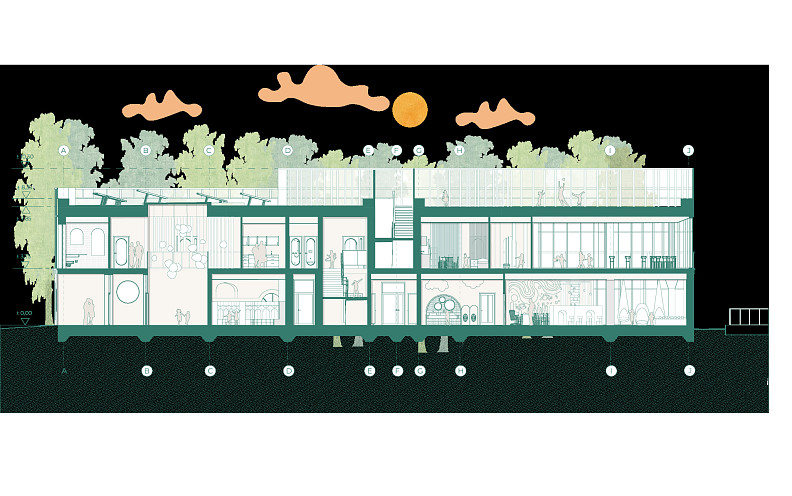
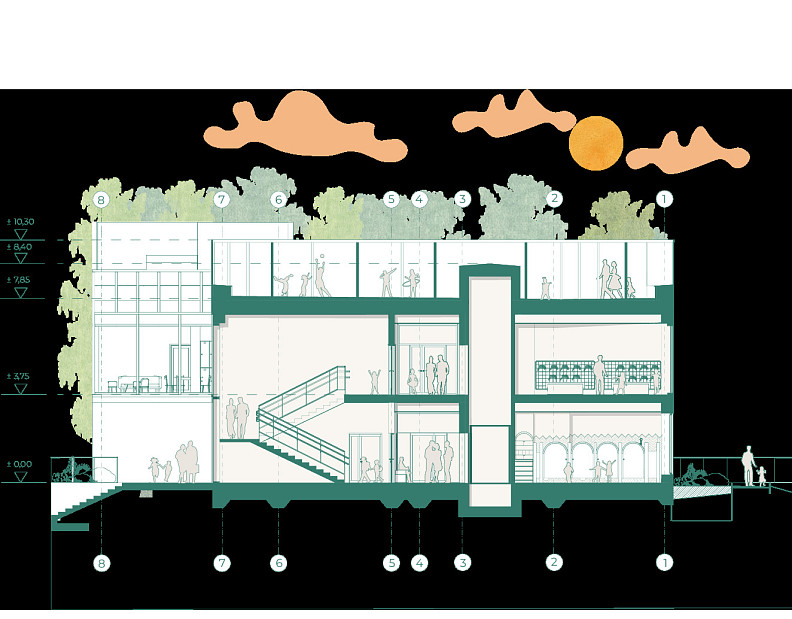
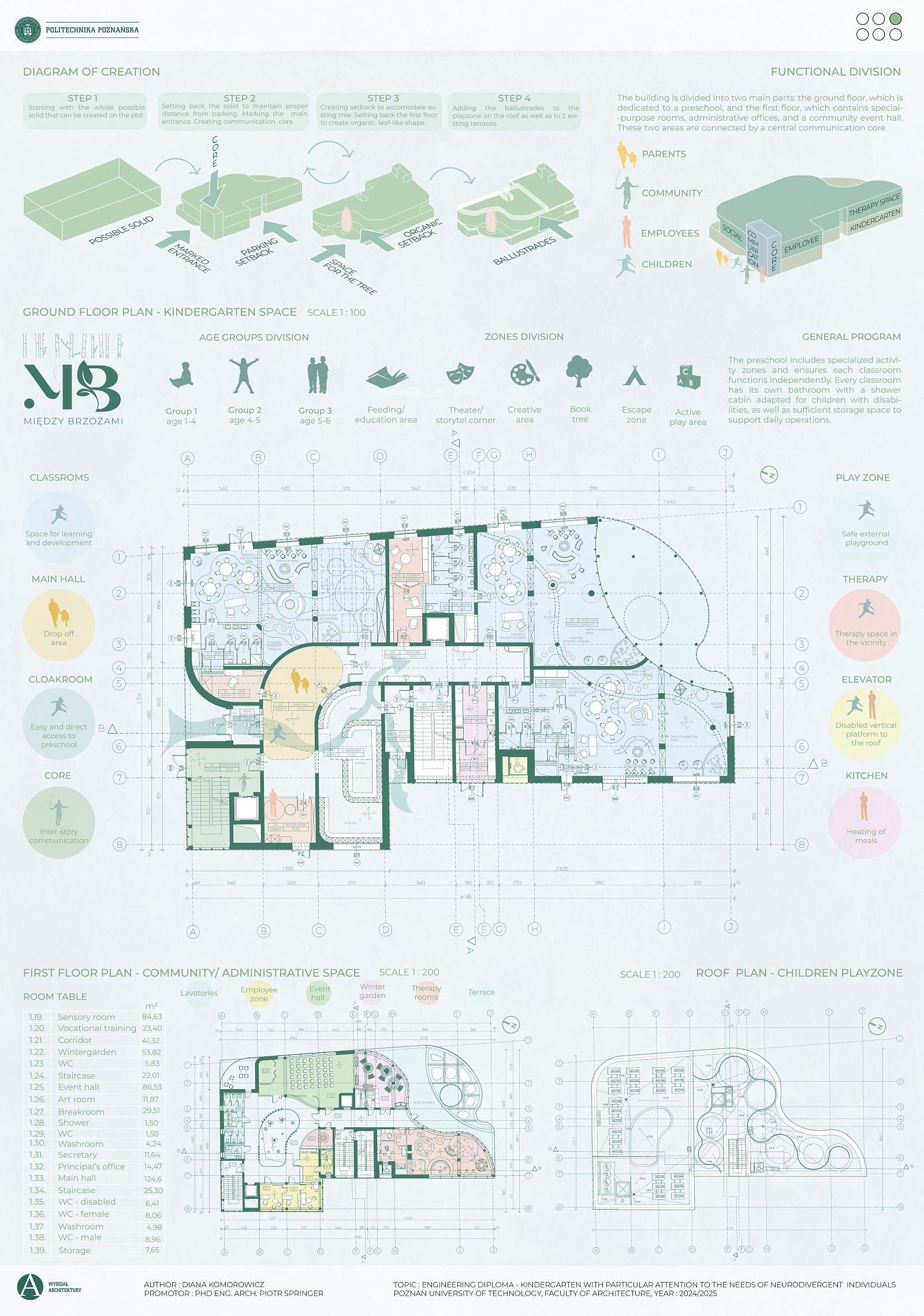
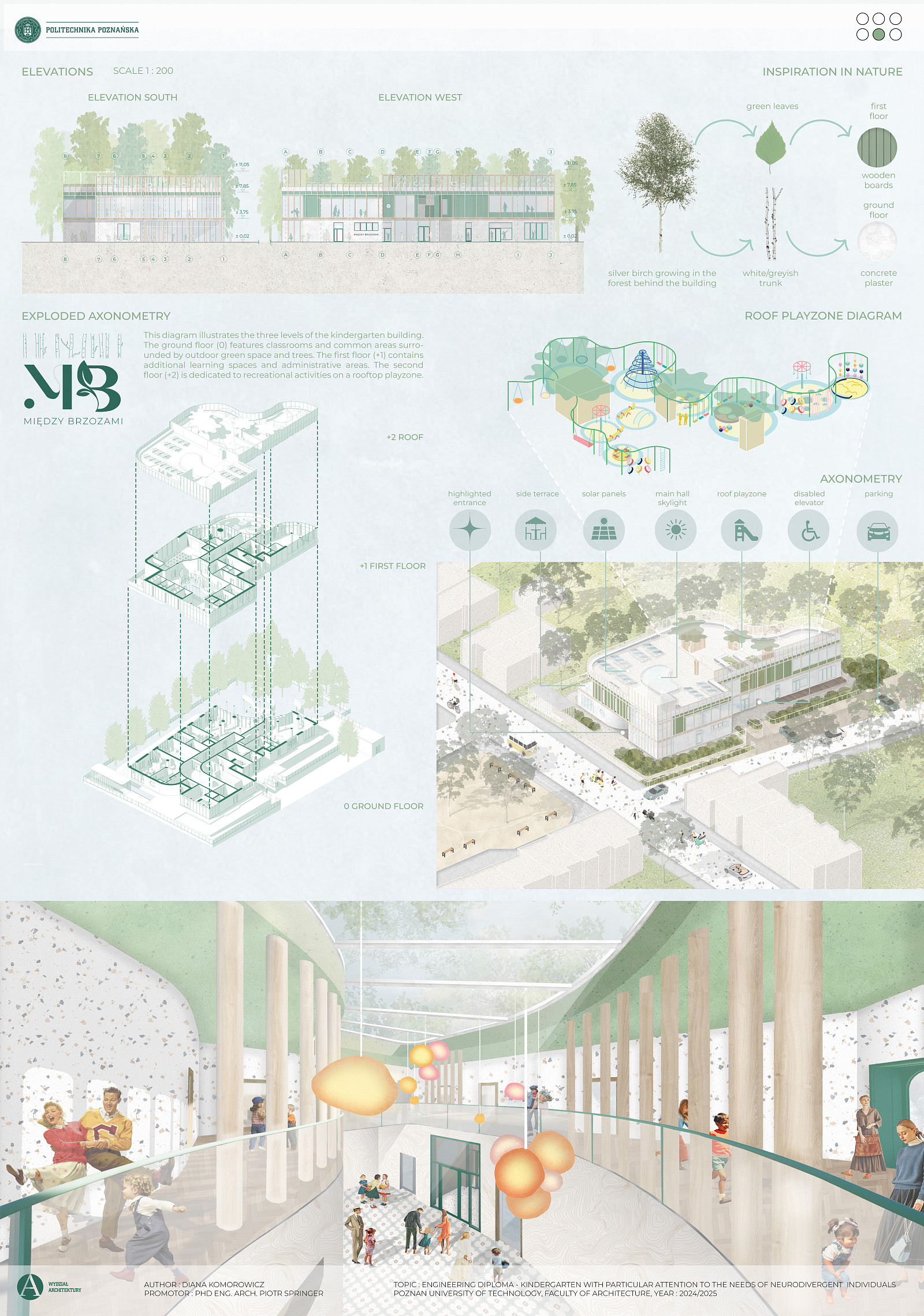
The form of the building was developed through a continuous dialogue with the existing context. On the ground floor, the northern façade is recessed, creating a welcoming entrance zone and a central hall with a height of two storeys, illuminated by a roof skylight. From the southern side, the building volume becomes rounded in order to preserve an existing tree, while the upper floor develops an organic, fluid form with a viewing terrace. The roof, apart from technical areas, is designed as a safe play zone with swings and climbing structures, protected by a 2.5-metre-high balustrade. As a result, each level of the building becomes a space of direct contact with nature.
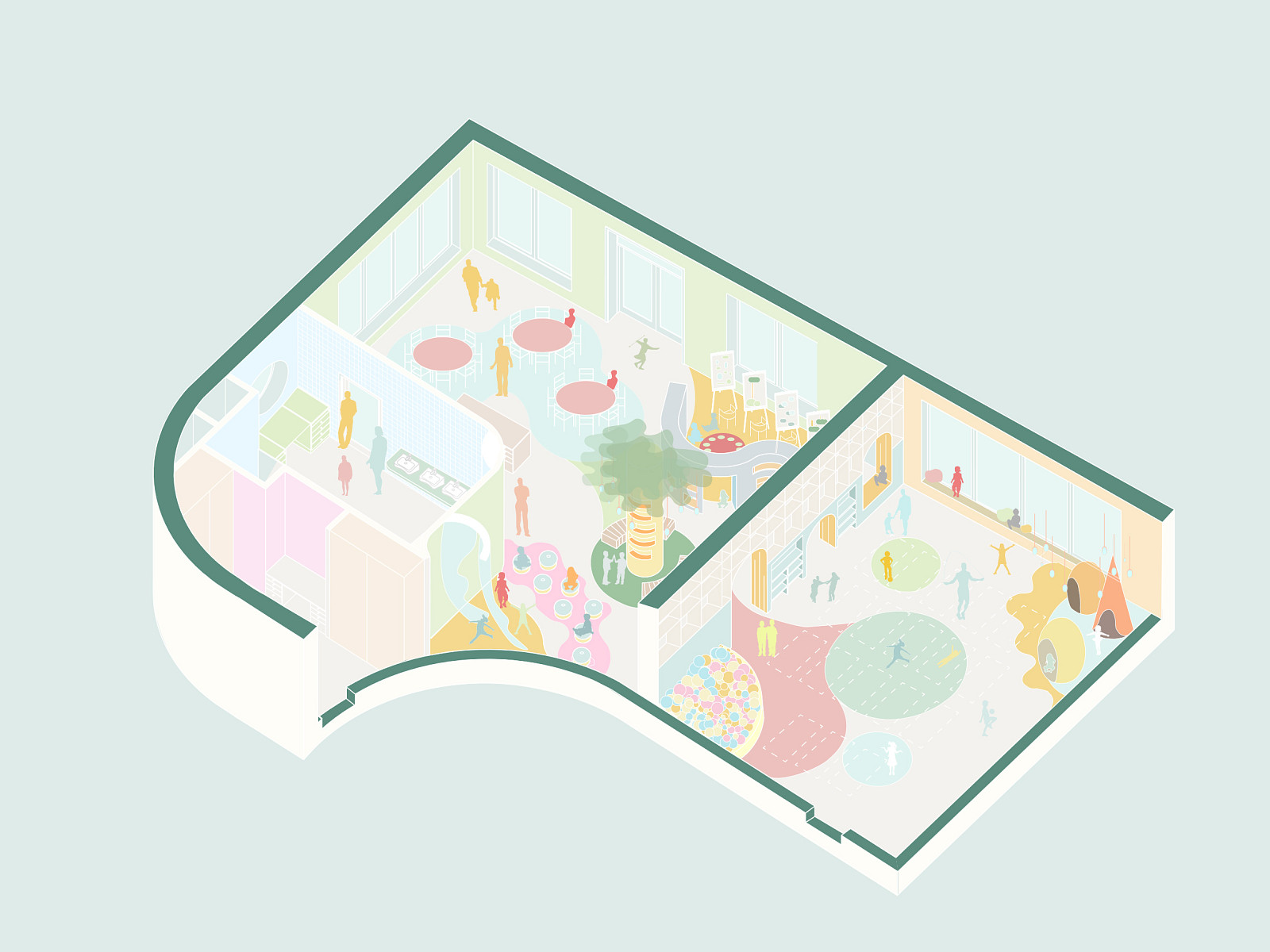
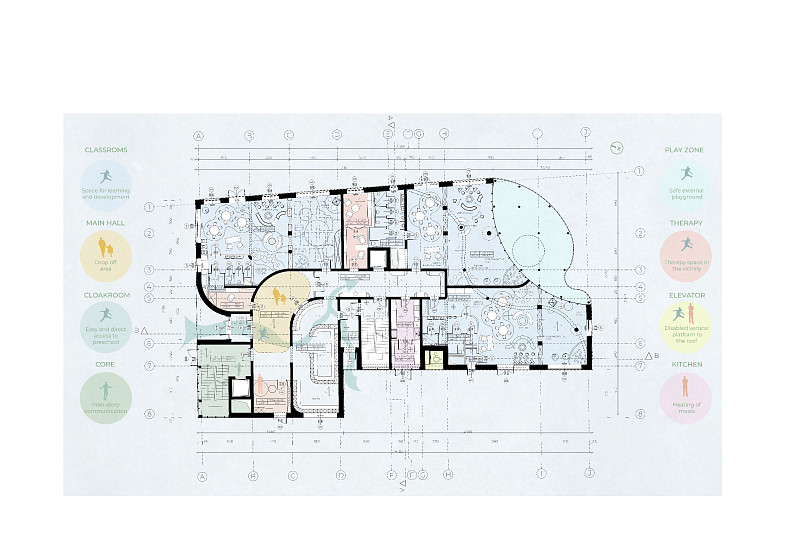
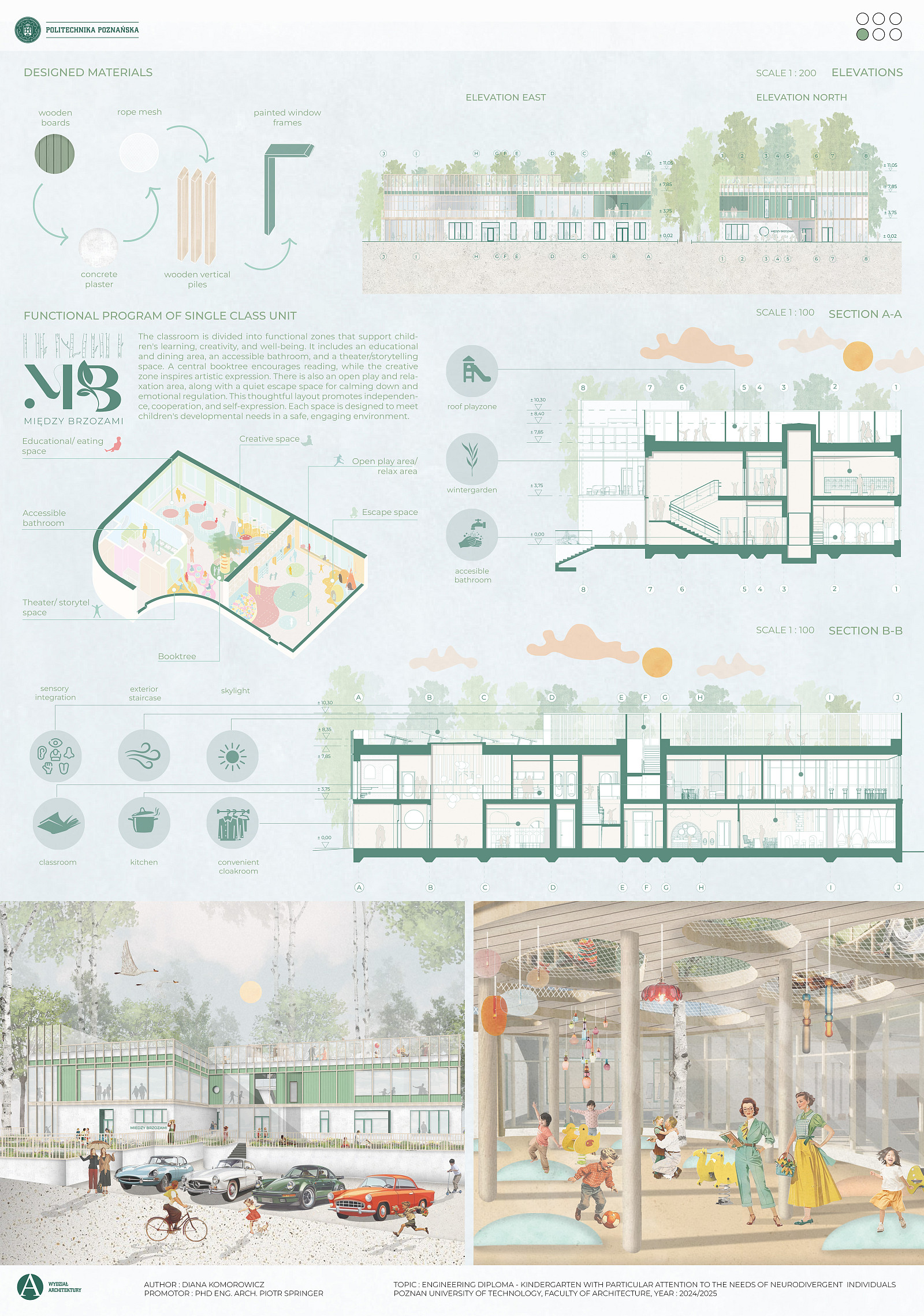
Functionally, the building is divided into three main zones. The ground floor accommodates the kindergarten unit, including three classrooms with individual bathrooms, a therapy room, a cloakroom, and technical facilities. Each classroom is designed to respond to diverse needs, with a clear division into functional zones: an educational and dining area, a creative zone, and a dedicated quiet zone that allows temporary isolation and rest in cases of sensory overstimulation.
The first floor contains administrative functions such as the director’s office, secretariat, and staff facilities, as well as spaces open to the local community, including an event hall, a winter garden, and a set of therapeutic rooms. These include a sensory integration room, an art therapy room, and a practical activities workshop. A central communication core connects all levels of the building, enabling independent access for visitors to public areas without interfering with spaces dedicated to children.
Materials and colours directly reference the birch landscape. The ground floor is finished with a light plaster imitating concrete, while the upper floor is clad in wood in a green shade, evoking the colour of tree canopies. Vertical wooden elements placed at 90 cm intervals create a rhythmic façade and seamlessly connect with terrace and roof balustrades, giving the building a light and coherent architectural expression integrated with the natural surroundings.
An essential aspect of the project is full accessibility for people with disabilities. The design includes step-free access, wide corridors, lifts with Braille signage, contrasting finishes, induction loops, and designated quiet spaces. Each floor is equipped with accessible sanitary facilities, and the interior layout supports intuitive and comfortable movement for users with different physical and sensory needs.
Technical information
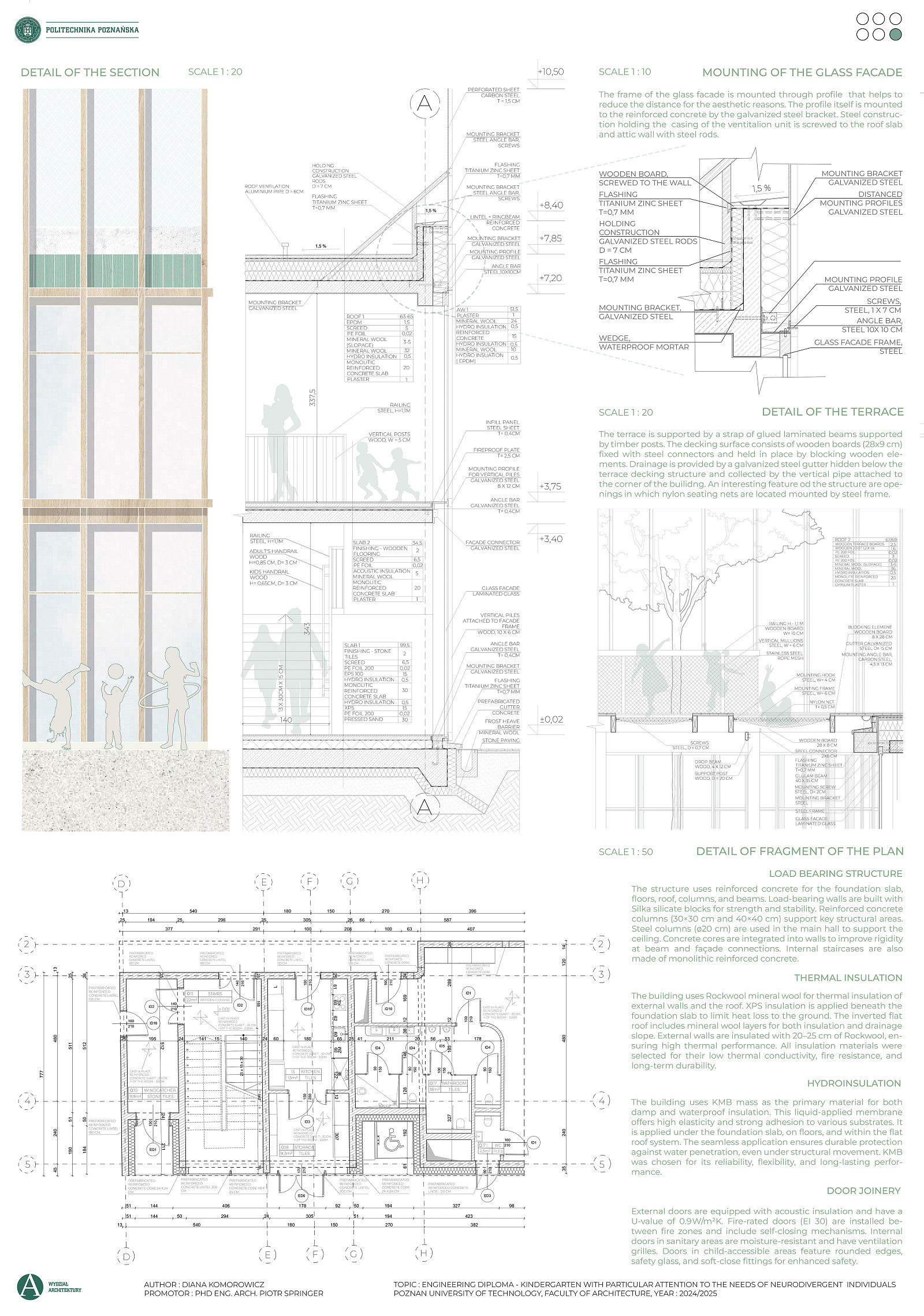
The building is designed as a reinforced concrete structure with a clear and rational structural layout based on a grid of load-bearing walls and columns. Loads are transferred to a foundation slab and carried vertically through the structure to a flat roof constructed as a monolithic reinforced concrete slab. The overall structural stiffness is ensured by reinforced concrete ring beams located at the level of the first floor and the roof.
Foundations
The building is founded on a reinforced concrete foundation slab insulated with XPS thermal insulation. The foundation system ensures proper thermal performance, moisture protection, and structural stability. Damp-proofing and waterproofing are provided using KMB mass, creating a continuous and elastic protective layer.
Structural Walls and Columns
Both load-bearing and partition walls are constructed using silicate blocks, selected for their durability and good acoustic properties. External walls are thermally insulated with mineral wool, achieving high energy efficiency standards. Reinforced concrete columns with cross-sections of 30 × 30 cm and 40 × 40 cm are used in areas requiring additional structural support, such as near glazed façades and overhanging sections. In the central two-storey hall, wooden columns with steel cores support the ceiling structure, combining structural performance with architectural expression.
Floor Slabs
All floor slabs are designed as cast-in-place reinforced concrete slabs. Suspended ceilings are applied to conceal installations and improve visual quality. Acoustic insulation is integrated within floor layers to enhance comfort, particularly in areas used by children.
Roof Structure
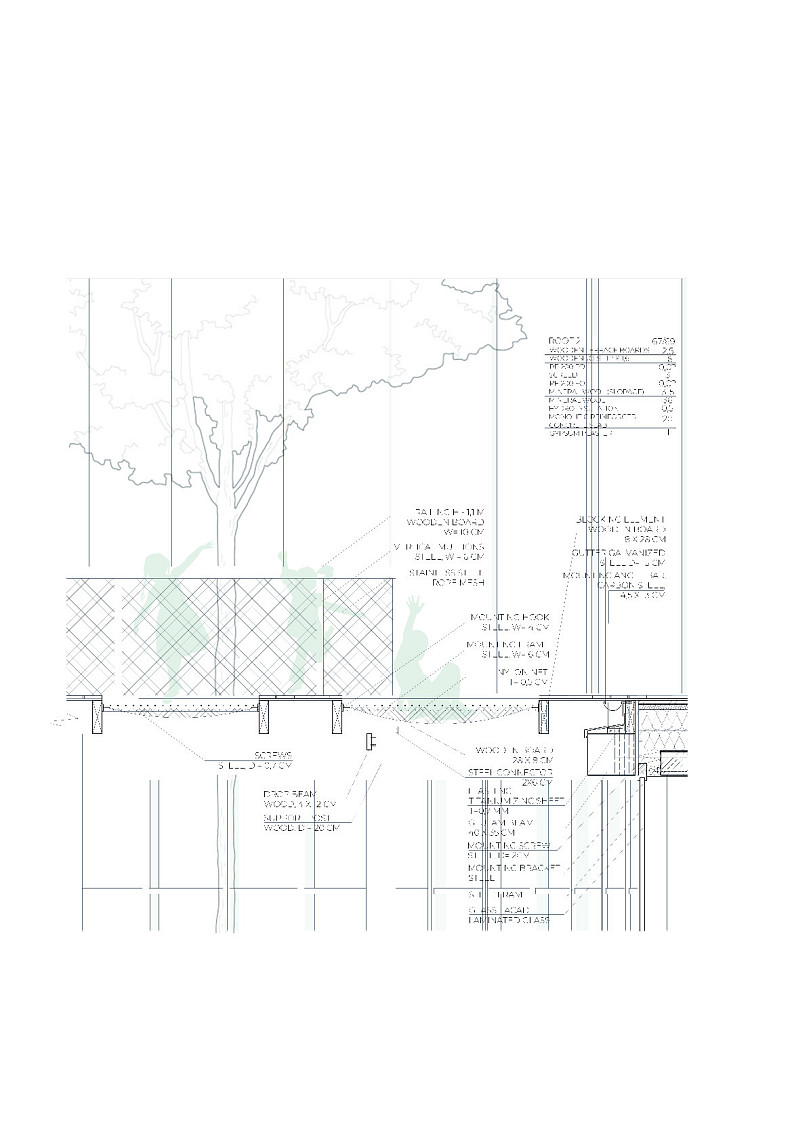
The roof is designed as an inverted flat roof with a reinforced concrete slab and internal rainwater drainage system. Thermal insulation is provided using mineral wool, ensuring low heat transfer values. The roof accommodates technical installations as well as accessible and recreational areas, including a secured play zone.
Thermal and Waterproof Insulation
Thermal insulation of external walls and roofs is achieved using mineral wool, while XPS insulation is applied in foundation zones. Waterproofing and damp-proofing systems are executed using KMB mass, selected for its elasticity, durability, and resistance to water penetration.
Internal Staircases
Two internal staircases made of reinforced concrete connect all floors. They are designed in accordance with safety regulations, with appropriate step dimensions, landings, and widths to ensure comfortable and accessible movement.
Finishes
Floor finishes vary depending on function. Stone tiles are used in sanitary spaces and entrance zones, while wooden parquet provides a warm atmosphere in common areas. Classrooms and therapy rooms are equipped with acoustic carpeting to enhance safety and sound comfort. Interior walls and ceilings are finished with non-toxic, child-safe plaster. Washable ceramic tiles are applied in bathrooms up to the required height.
Doors and Windows
External doors provide acoustic protection and barrier-free access. Fire-rated doors (EI 30) are used between fire zones. Internal doors are adapted for children’s safety, featuring soft-close fittings and laminated safety glass. Window systems include a structural glass façade and modular aluminium-framed windows with high thermal and acoustic performance. All glazing accessible to children uses laminated or tempered safety glass.
Balustrades
Balustrades are designed to ensure maximum safety and accessibility. Staircase balustrades include handrails at two heights for adults and children. Terraces and roof areas are secured with steel-frame balustrades with wooden handrails and steel net infill. The rooftop play zone is additionally protected with a 2.5-metre-high safety barrier.
Documentation
Show PDF 1Show PDF 2Show PDF 3Show PDF 4Show PDF 5
Created in:


Copyright © 2026 INSPIRELI | All rights reserved. Use of this website signifies your agreement to the Terms of Use, Privacy Policy, and use of cookies.