
Khepri Automotive Engineering University


Project idea
How can contemporary architecture reflect technological innovation while remaining rooted in its surrounding context?
Khepri Automotive Engineering University is conceived as a campus of transformation, inspired by both the evolving nature of automotive engineering and the architectural language of Smart Village, Egypt. The project draws from the surrounding campus buildings in their use of solid masses, clear proportions, and controlled transparency, reinterpreting these elements through a cohesive and contemporary design approach.
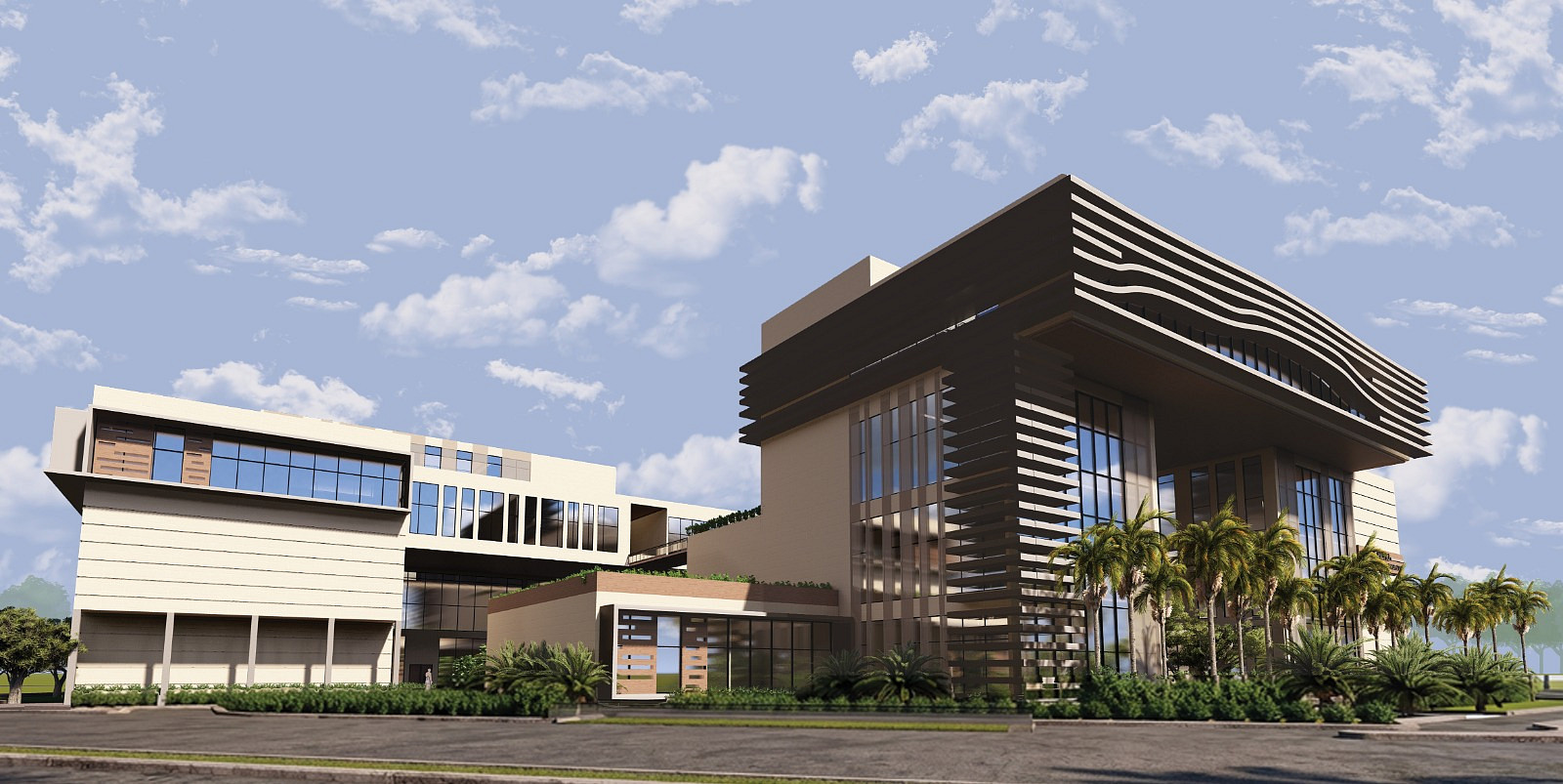
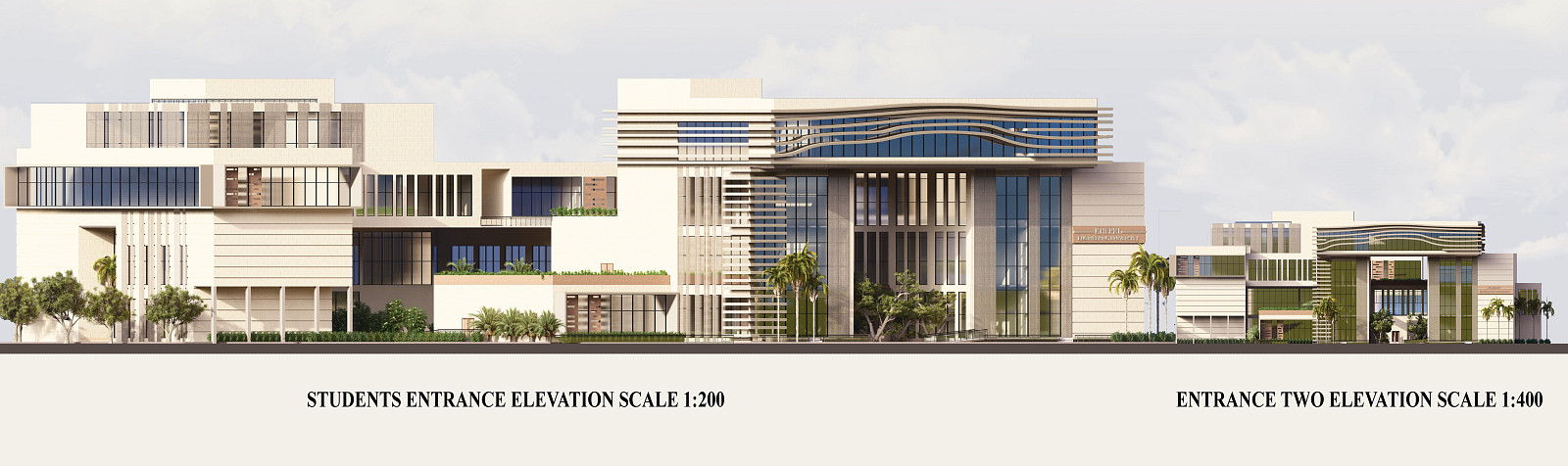
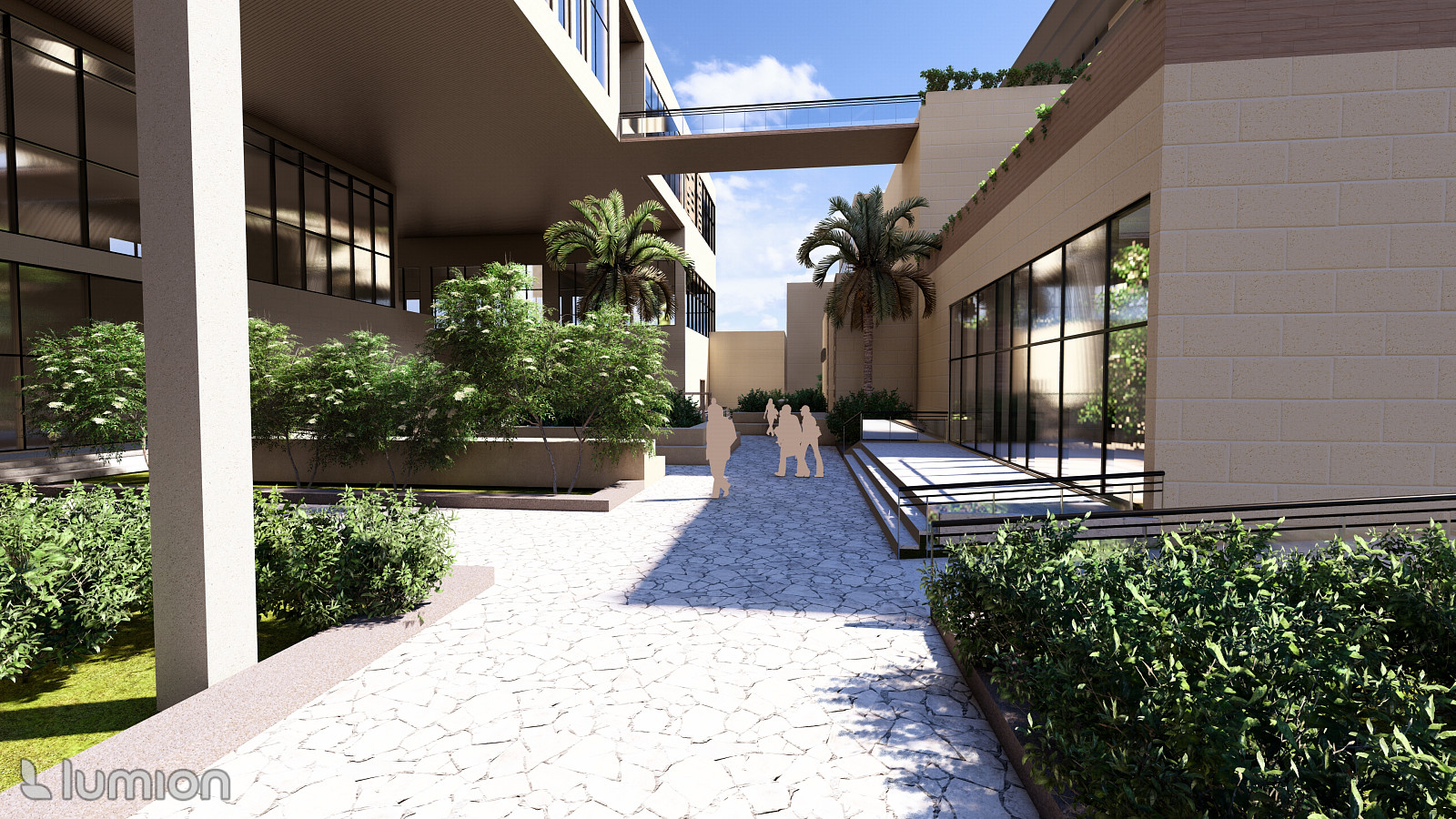
The architectural style is defined by a dialogue between solid and transparent surfaces, reflecting the dual nature of engineering education—precision and openness. Solid walls establish a sense of stability, continuity, and permanence, grounding the project within its context. In contrast, strategically placed curtain walls open learning spaces toward courtyards and circulation areas, making education and innovation visible parts of daily campus life.
This balance between enclosure and exposure relates directly to the concept of Khepri, the ancient Egyptian symbol of creation and transformation. Just as Khepri represents renewal through gradual change, the architecture expresses transformation through movement, light, and spatial progression rather than overt symbolism. Learning unfolds across buildings, courtyards, and shaded paths, reinforcing the idea of knowledge as an evolving process.
Landscape and outdoor spaces are woven throughout the campus, softening the built form and supporting interaction, reflection, and collaboration. Together, context-driven massing, layered transparency, and integrated landscape create a human-scale learning environment that connects past inspiration with future mobility innovation.
Through this approach, Khepri Automotive Engineering University becomes an architectural expression of transformation grounded in place, where context, concept, and contemporary education converge.
Project description
Khepri Automotive Engineering University is conceived as a context-responsive educational campus where architectural form emerges from environmental analysis, functional zoning, and the concept of transformation inspired by Khepri, the ancient Egyptian symbol of creation and renewal. The project responds directly to the architectural character of Smart Village, Egypt, while reinterpreting it through a contemporary and human-scale campus model.
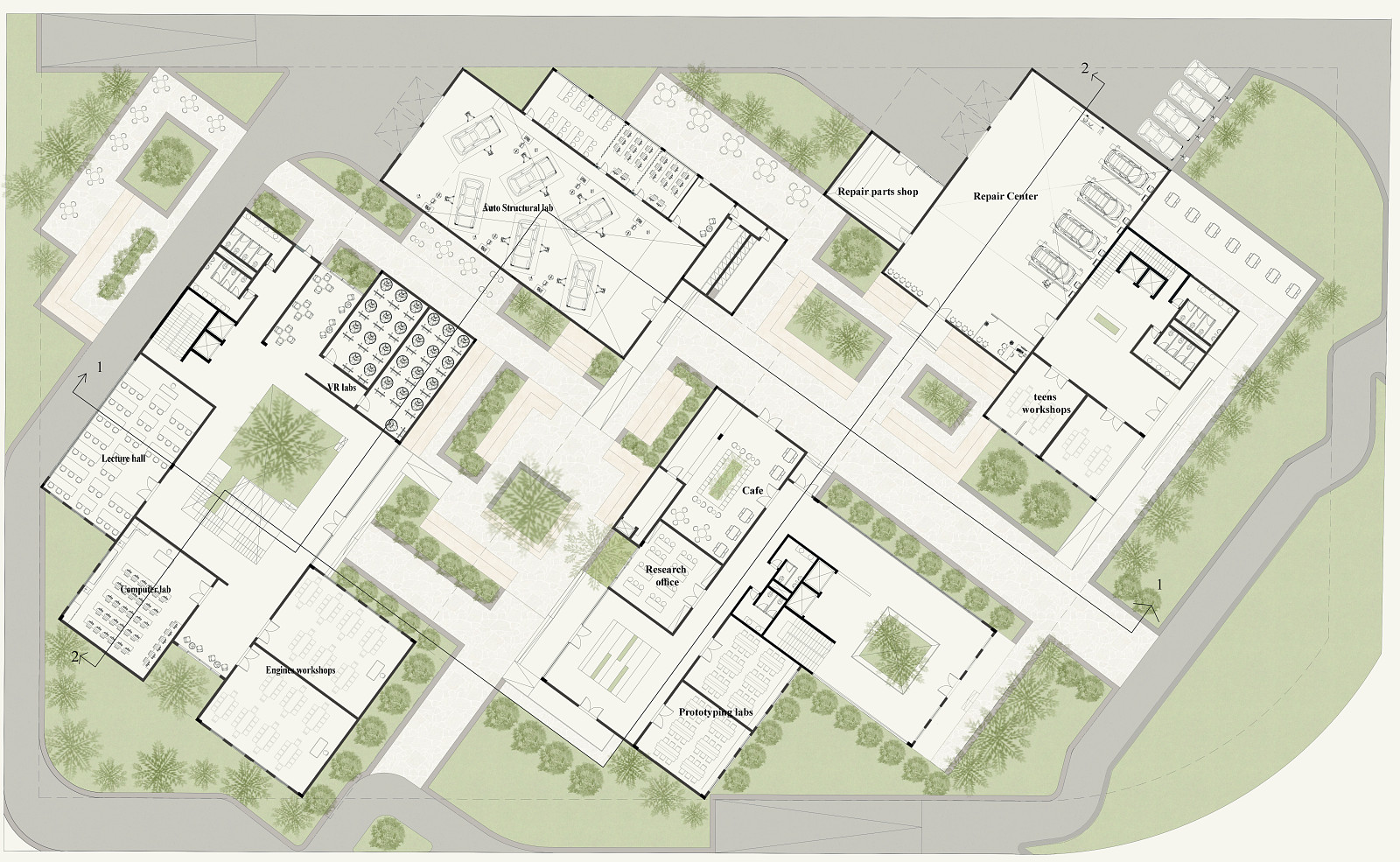
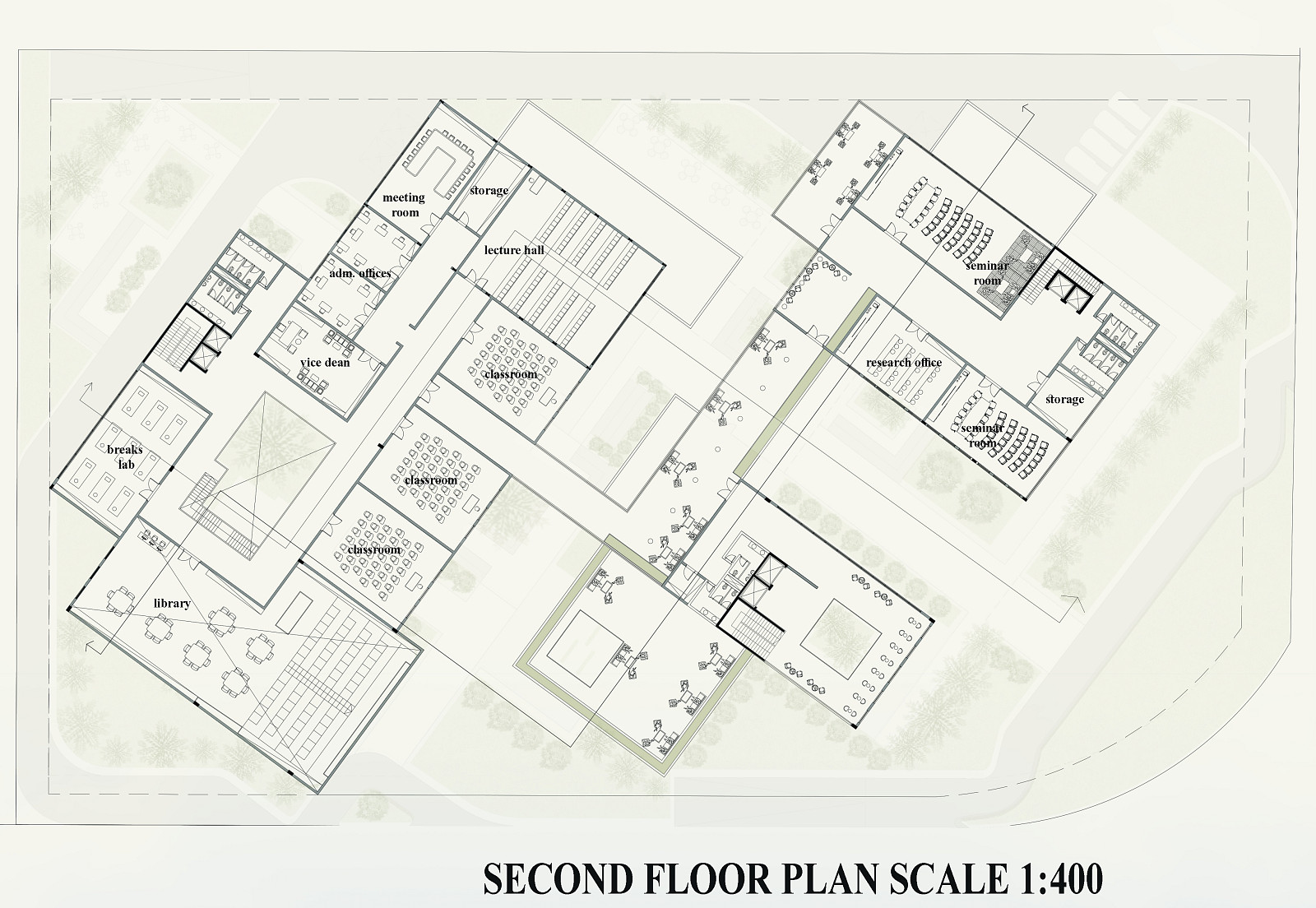
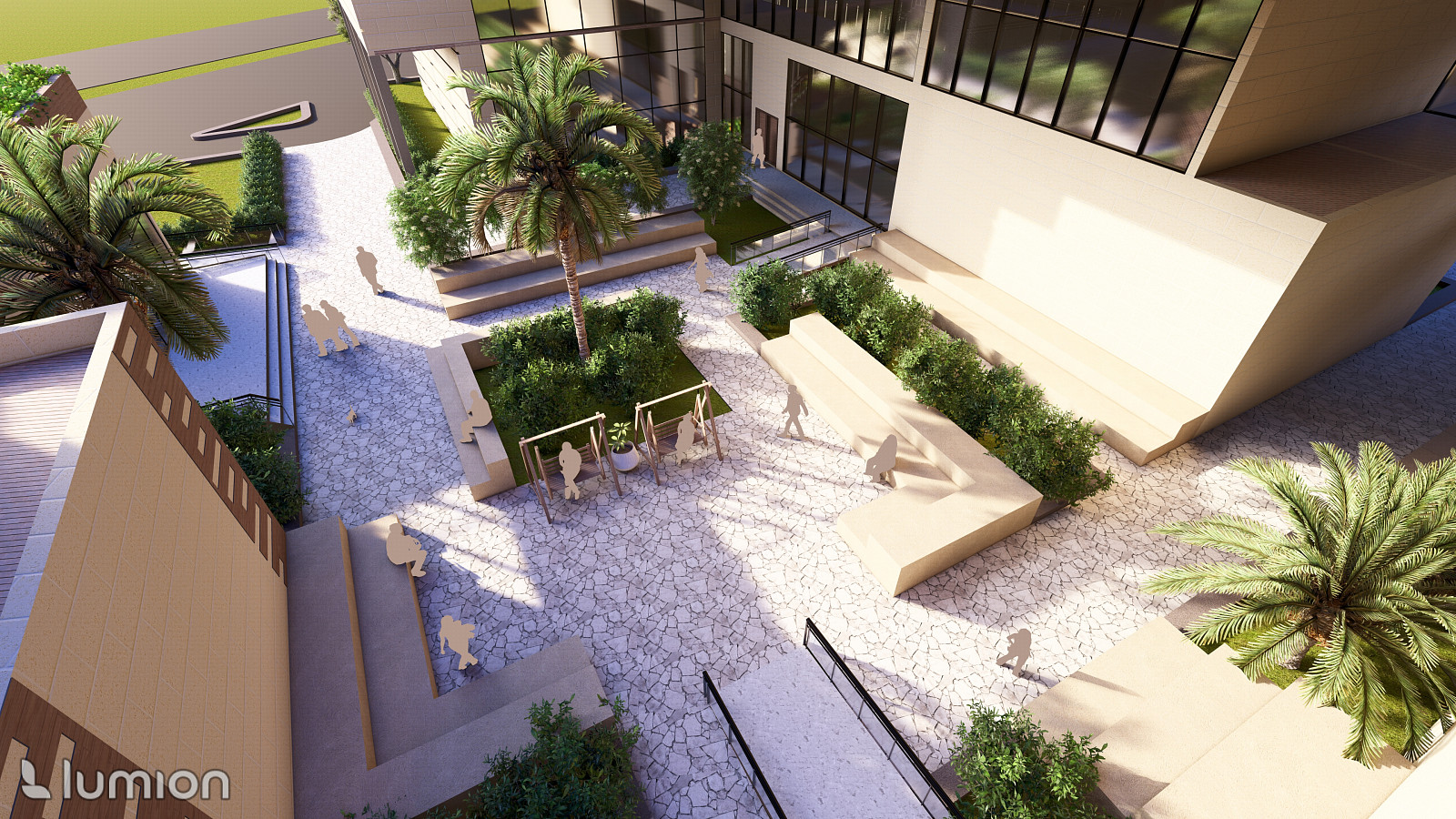
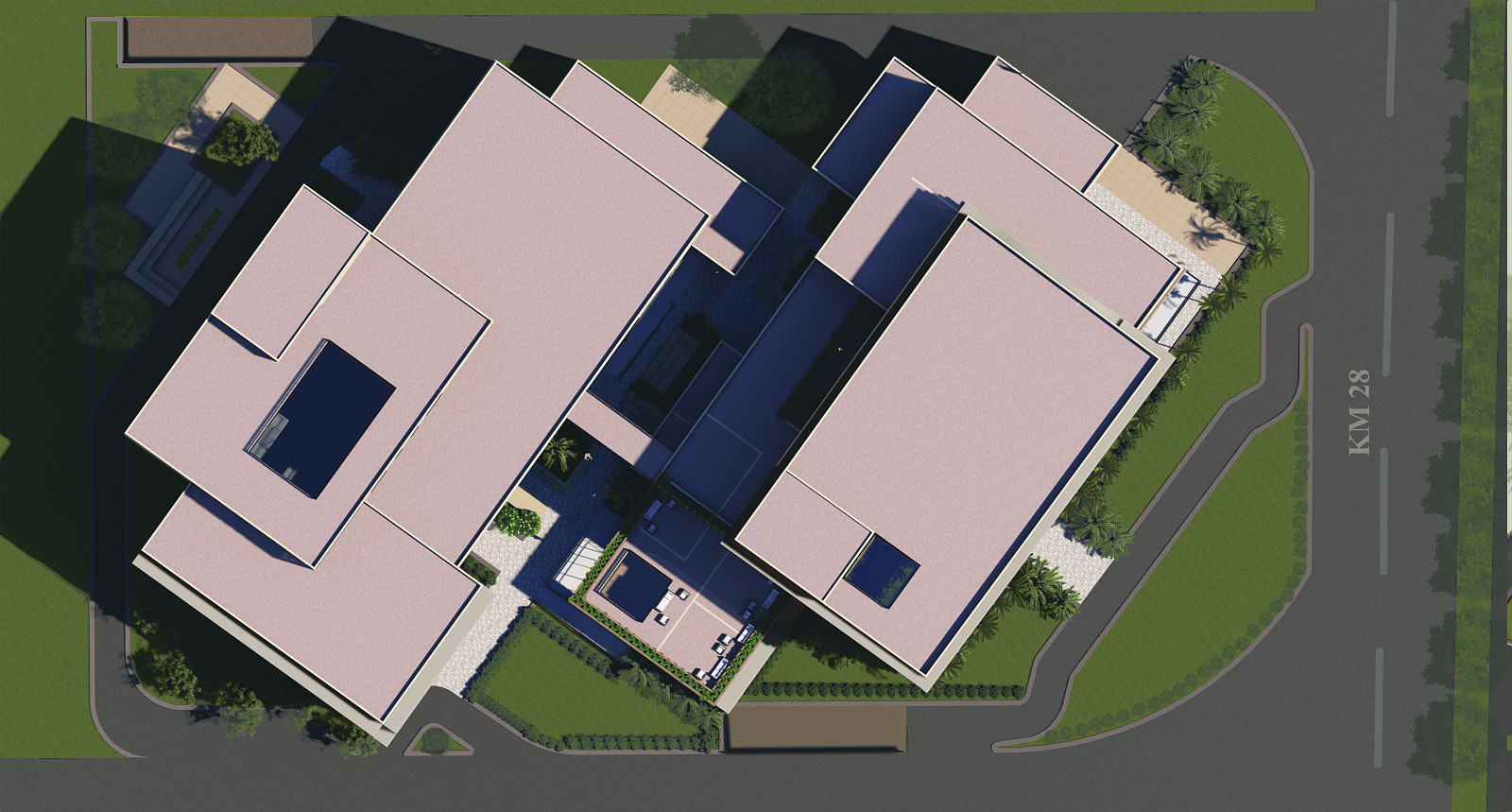
The design process begins with a clear zoning strategy, organizing the campus into distinct yet interconnected academic, research, and community-oriented zones. Educational and research functions are positioned to form the core of the campus, while shared facilities and public-facing services are placed to activate edges and courtyards. This zoning establishes a hierarchy of privacy and accessibility, allowing academic life to unfold gradually across the site rather than being confined to isolated buildings.
Environmental studies play a central role in shaping the project. Sun path and prevailing wind analysis inform building orientation, spacing, and massing to ensure comfortable outdoor spaces and effective daylight access. Buildings are arranged to create shaded courtyards and protected pedestrian routes, while openings and transparent areas are positioned to benefit from favorable light and airflow without excessive exposure.
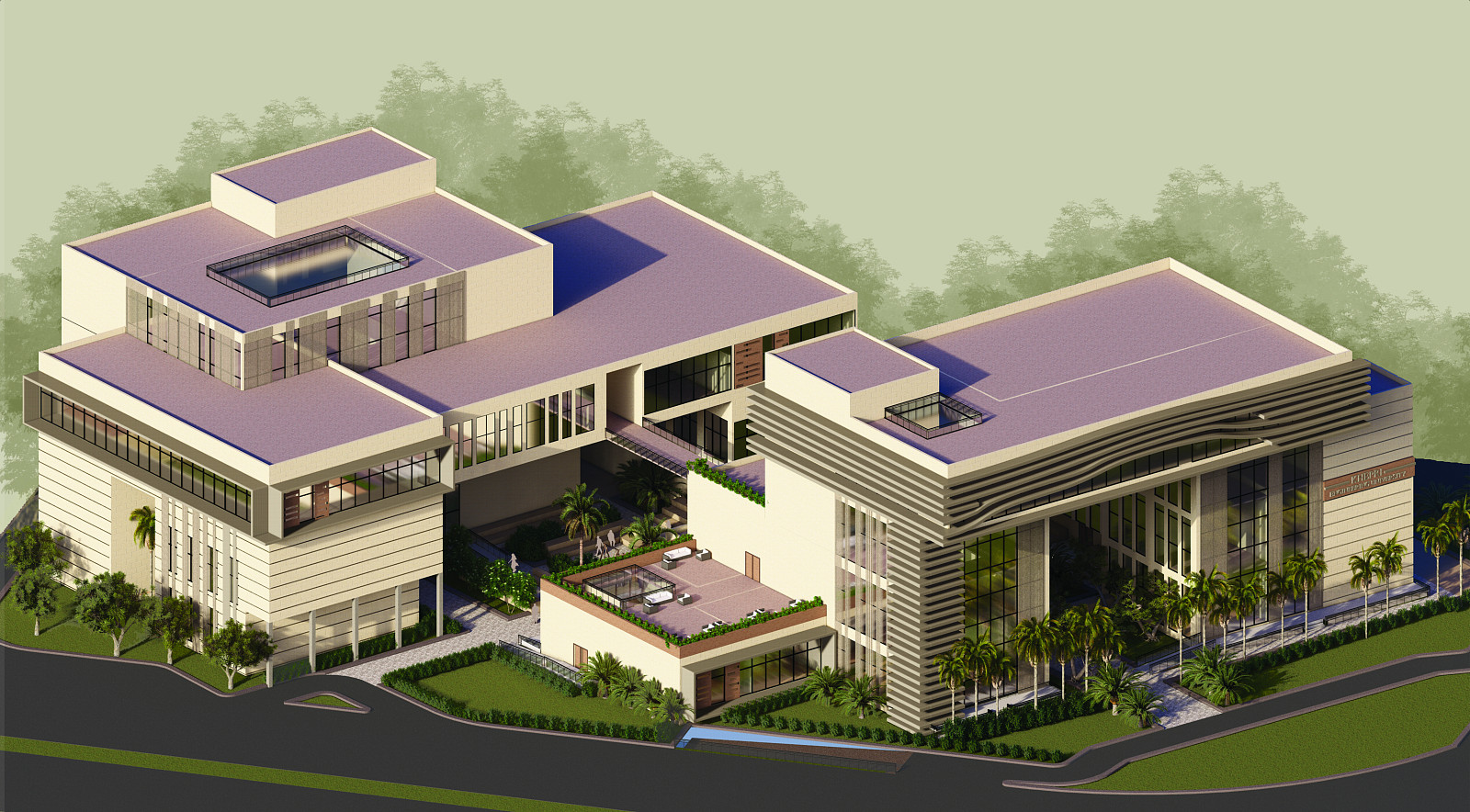
The architectural form is generated through a building-block methodology, where volumes are articulated, shifted, and layered in response to environmental forces and programmatic needs. This process results in a composition of solid masses softened by setbacks, voids, and terraces, enhancing spatial dynamism while maintaining coherence with the surrounding Smart Village context.
Materially and spatially, the campus establishes a dialogue between solid walls and curtain walls. Solid walls define the primary mass and provide a sense of stability and permanence, reflecting the disciplined nature of engineering education. Curtain walls are selectively introduced to open learning spaces, circulation areas, and communal zones toward courtyards, making academic activity visible and encouraging interaction.
External fabric screens and louvers are positioned in front of curtain walls to control sunlight and improve comfort, allowing transparency without compromising environmental quality. This layered architectural approach reinforces the concept of gradual transformation, where spaces shift from enclosed to open, from solid to transparent, mirroring the evolving process of learning and innovation.
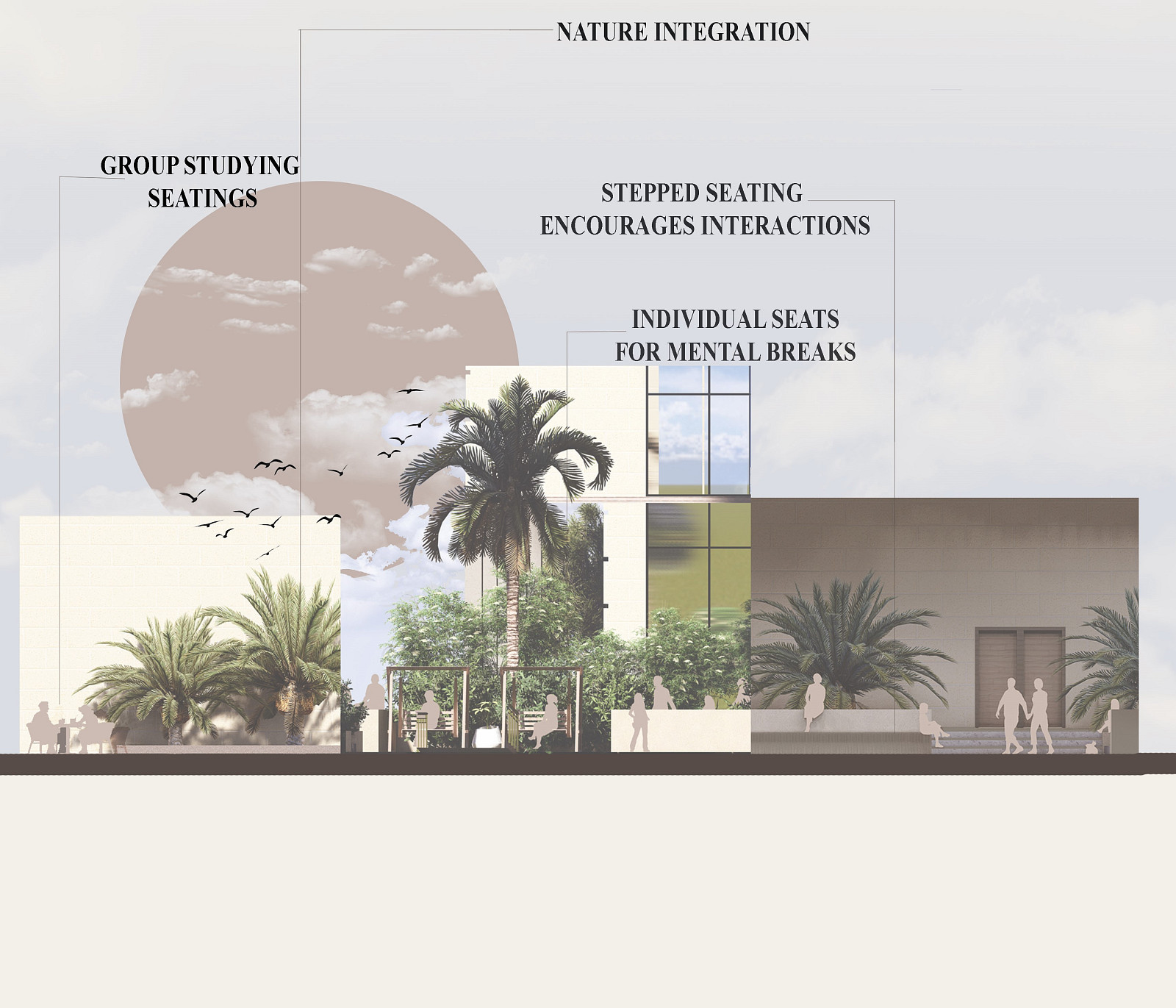
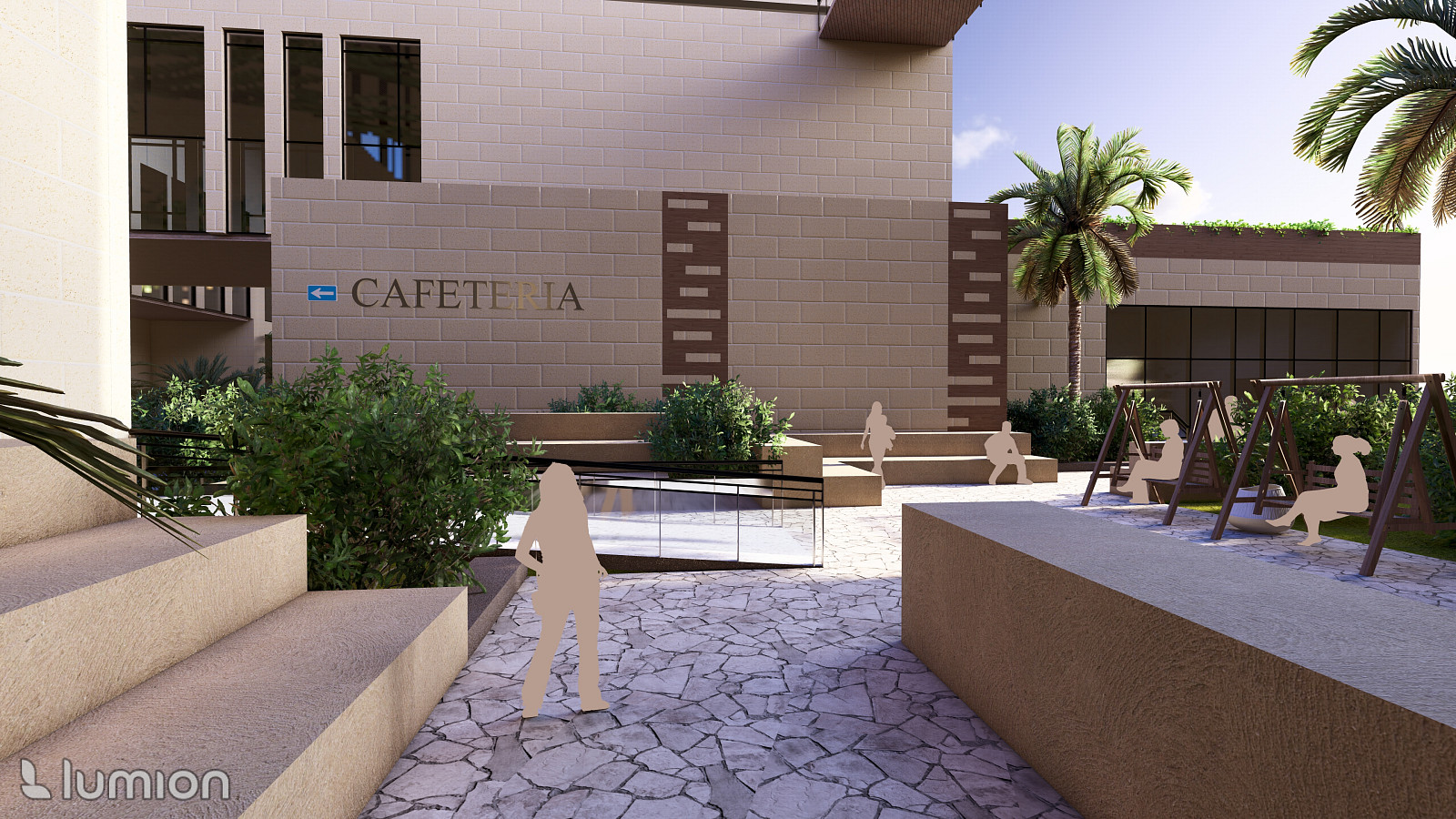
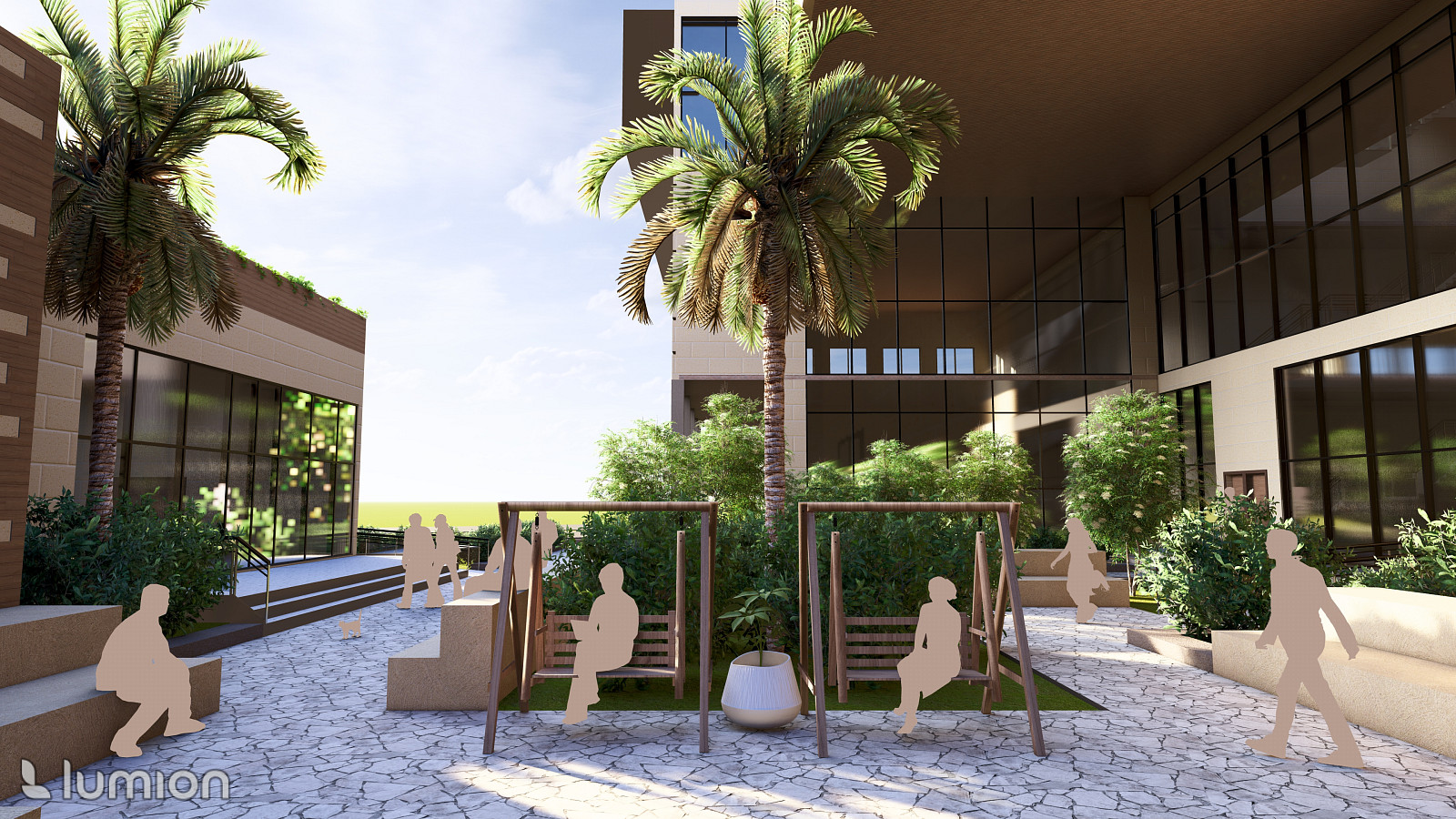
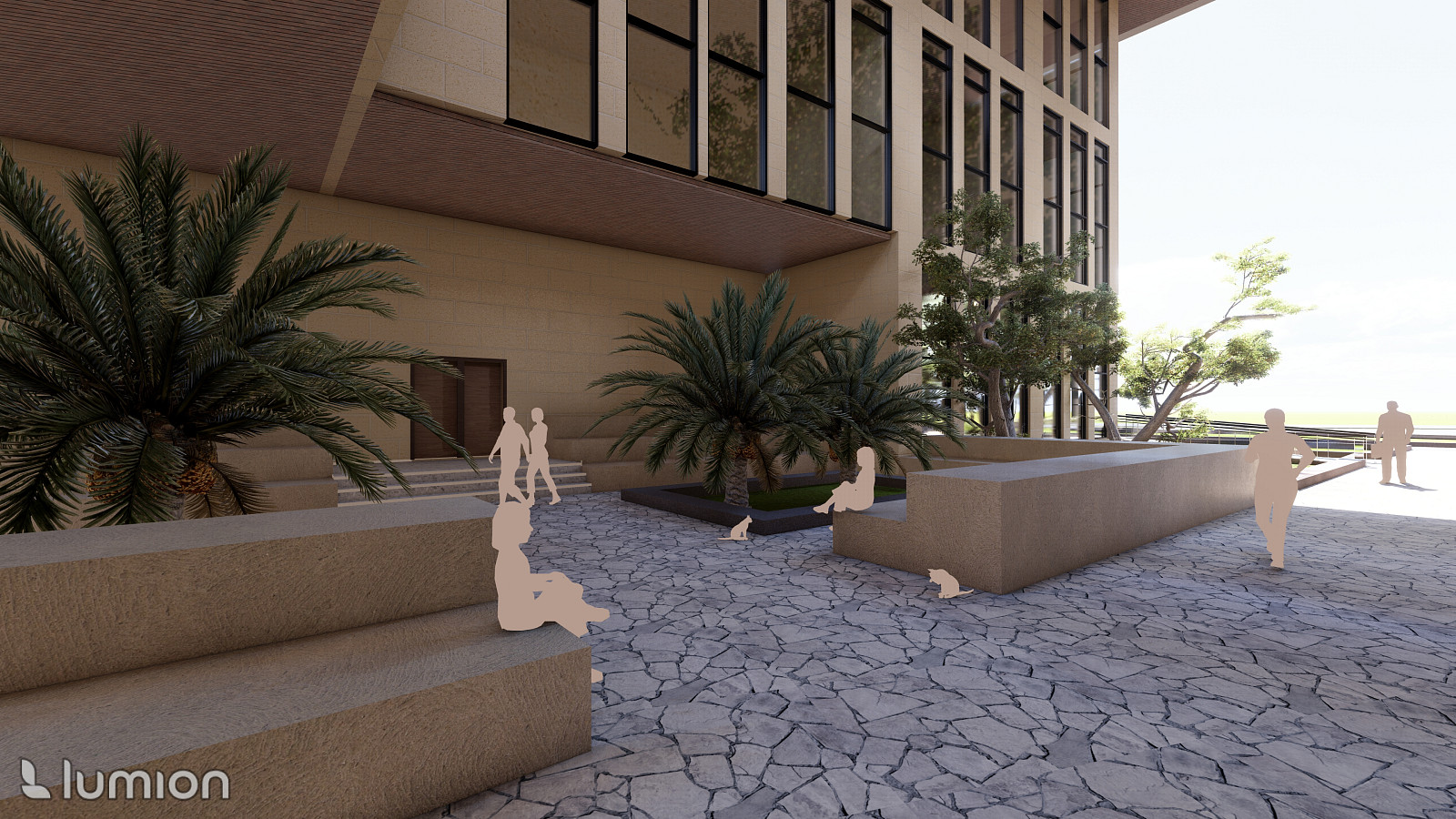
Landscape weaves through the campus as an extension of the architectural system. Courtyards, shaded paths, and outdoor platforms support informal learning, social interaction, and daily movement, reinforcing the campus as a living environment rather than a static institution.
Through zoning clarity, environmental responsiveness, and form generation rooted in context, Khepri Automotive Engineering University becomes an architecture of transformation, where education, environment, and movement are integrated into a cohesive and future-oriented campus experience.
Technical information
Structural System
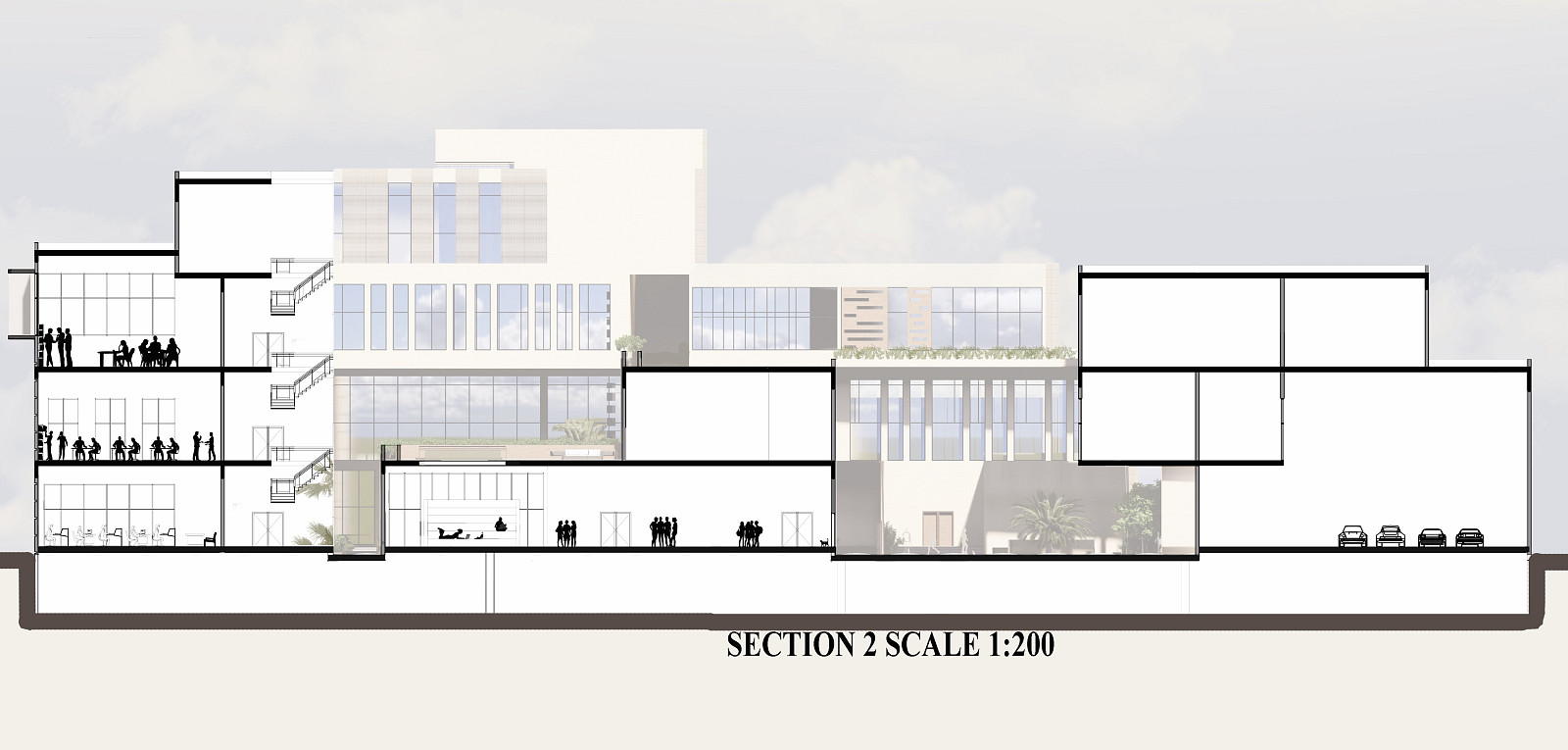
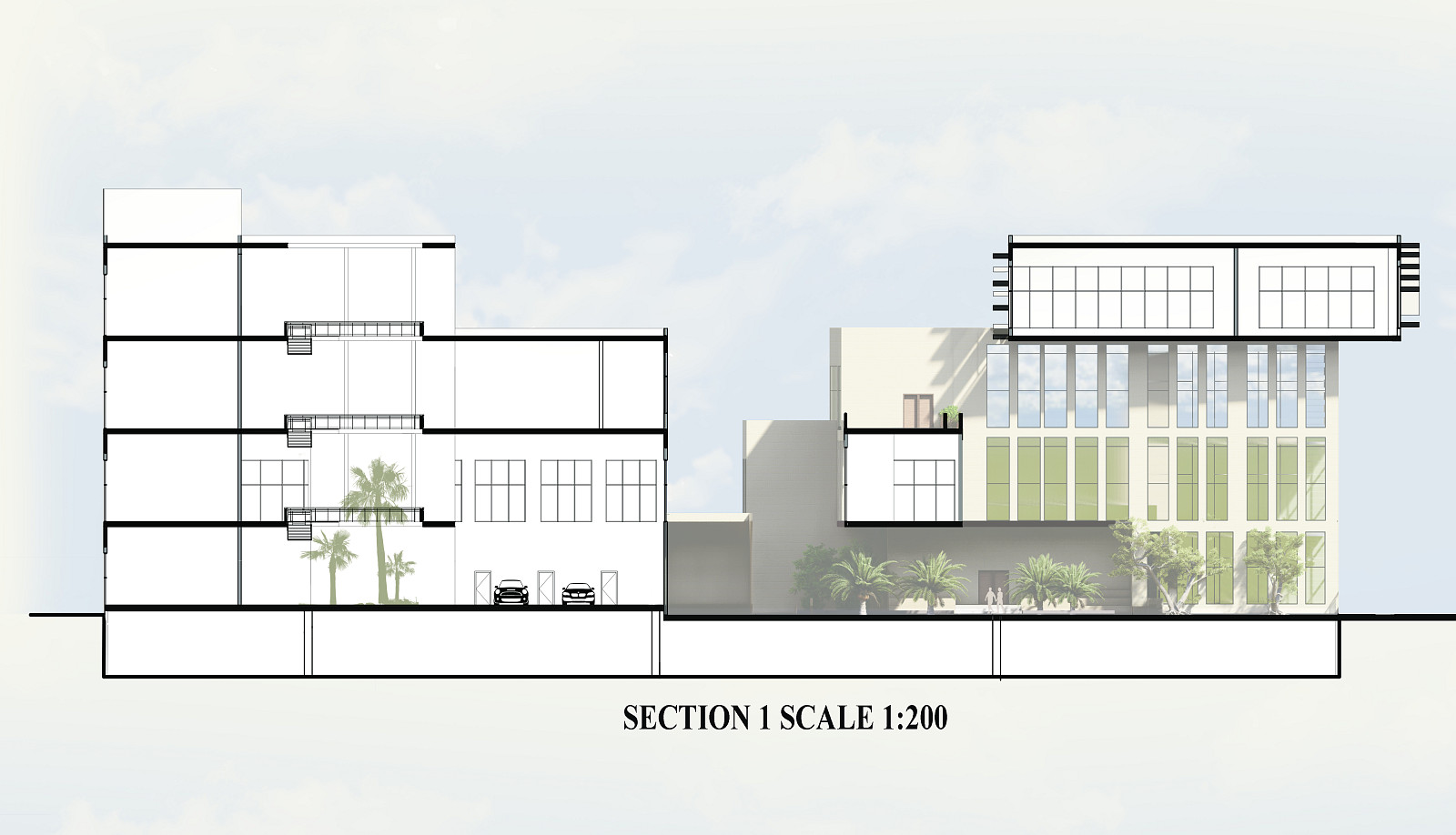
The project is constructed using a reinforced concrete structural system, selected for its durability, flexibility, and suitability for educational and research buildings. A regular column and slab grid allows adaptable interior layouts to accommodate classrooms, laboratories, workshops, and collaborative spaces.
Cantilevered volumes, terraces, and shaded walkways are structurally integrated into the slab system, supporting the stepped massing and articulated building blocks that define the campus form.
Environmental Strategy
Environmental performance is addressed through passive design principles established during the early design stages. Sun path and prevailing wind studies guide building orientation, spacing, and massing to reduce excessive solar exposure while enhancing daylight access and outdoor comfort.
Buildings are positioned to create shaded courtyards and protected pedestrian routes, improving thermal comfort in external spaces and encouraging year-round campus activity. Openings and transparent zones are carefully oriented to balance daylight, visibility, and comfort.
Facade System
The facade strategy is based on a clear distinction between solid walls and curtain walls.
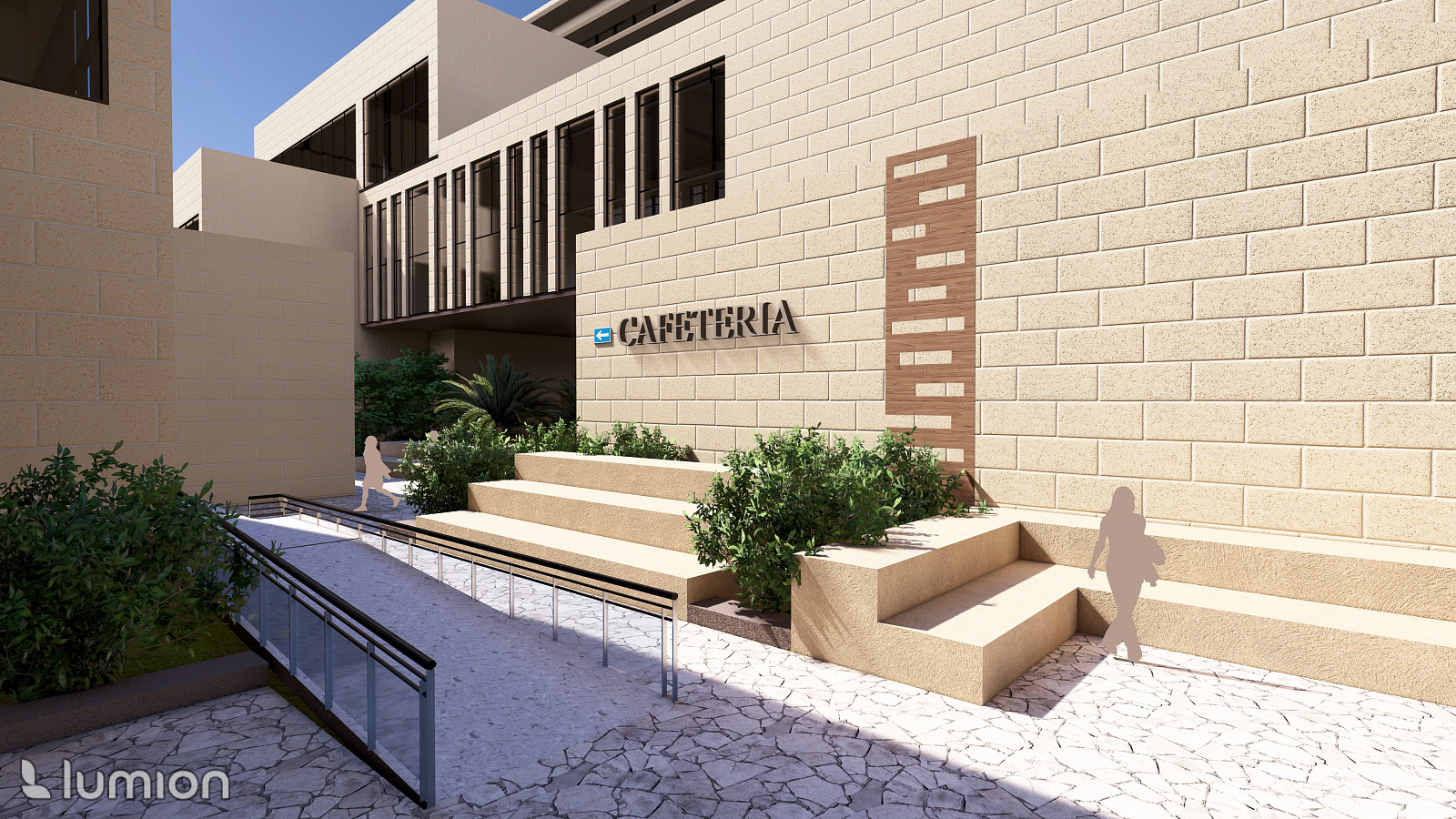
Solid walls, constructed in stone and concrete, form the dominant building mass, providing enclosure, privacy, and contextual continuity with the surrounding architecture of Smart Village.
Curtain wall systems are selectively used in learning spaces, laboratories, and circulation areas to introduce transparency and visual connection between interior activities and outdoor courtyards.
To control sunlight and glare, external fabric screens and louvers are placed in front of curtain walls. These elements filter light, enhance comfort, and maintain openness without compromising environmental quality.
Material Strategy
The material palette reflects the architectural language of Smart Village while supporting a contemporary educational environment. Stone and concrete express solidity and permanence, while glass, metal louvers, and fabric screens introduce lightness, transparency, and environmental modulation.
Material transitions emphasize the relationship between enclosed learning spaces and open communal areas, reinforcing the campus as a layered and dynamic environment.
Form Generation
The campus form is developed through a building-block methodology, responding to zoning requirements, environmental studies, and circulation patterns. Volumes are shifted, layered, and connected to create spatial variation, visual interest, and functional clarity.
This approach allows the campus to grow organically, reflecting the concept of Khepri as a symbol of gradual transformation and renewal, where form evolves through adaptation rather than monumentality.
Circulation & Connectivity
The campus is organized around a pedestrian-focused circulation network, connecting buildings through shaded walkways, courtyards, and bridges. This system encourages movement, interaction, and accessibility while minimizing reliance on vehicular circulation within the academic core.
Clear visual connections between buildings support intuitive wayfinding and reinforce the openness of the campus environment.
Landscape Integration
Landscape is integrated as a functional and spatial element within the campus. Planted courtyards, terraces, and outdoor seating areas support informal learning, social interaction, and rest. Vegetation enhances the quality of outdoor spaces while softening the architectural massing.
Landscape and architecture operate together to create a human-scale academic environment, where exterior spaces are as important as interior ones.
Overall Technical Approach
Khepri Automotive Engineering University combines context-responsive architecture, environmental awareness, and flexible structural systems to support advanced engineering education. Through careful zoning, environmental studies, and layered architectural expression, the project delivers a campus that is functional, adaptable, and rooted in both place and concept.

Copyright © 2026 INSPIRELI | All rights reserved. Use of this website signifies your agreement to the Terms of Use, Privacy Policy, and use of cookies.