
Malaz - ملآذْ : Drug Addiction Recovery & Rehabilitation Center


Project idea
This project conceives rehabilitation as a spatial journey of progression, where architecture reflects the psychological stages of recovery rather than functioning as a static medical facility. The design is structured around a sequence of three vertical elements, each representing a distinct phase in the rehabilitation process and guiding users through a clear yet non-oppressive path of healing.
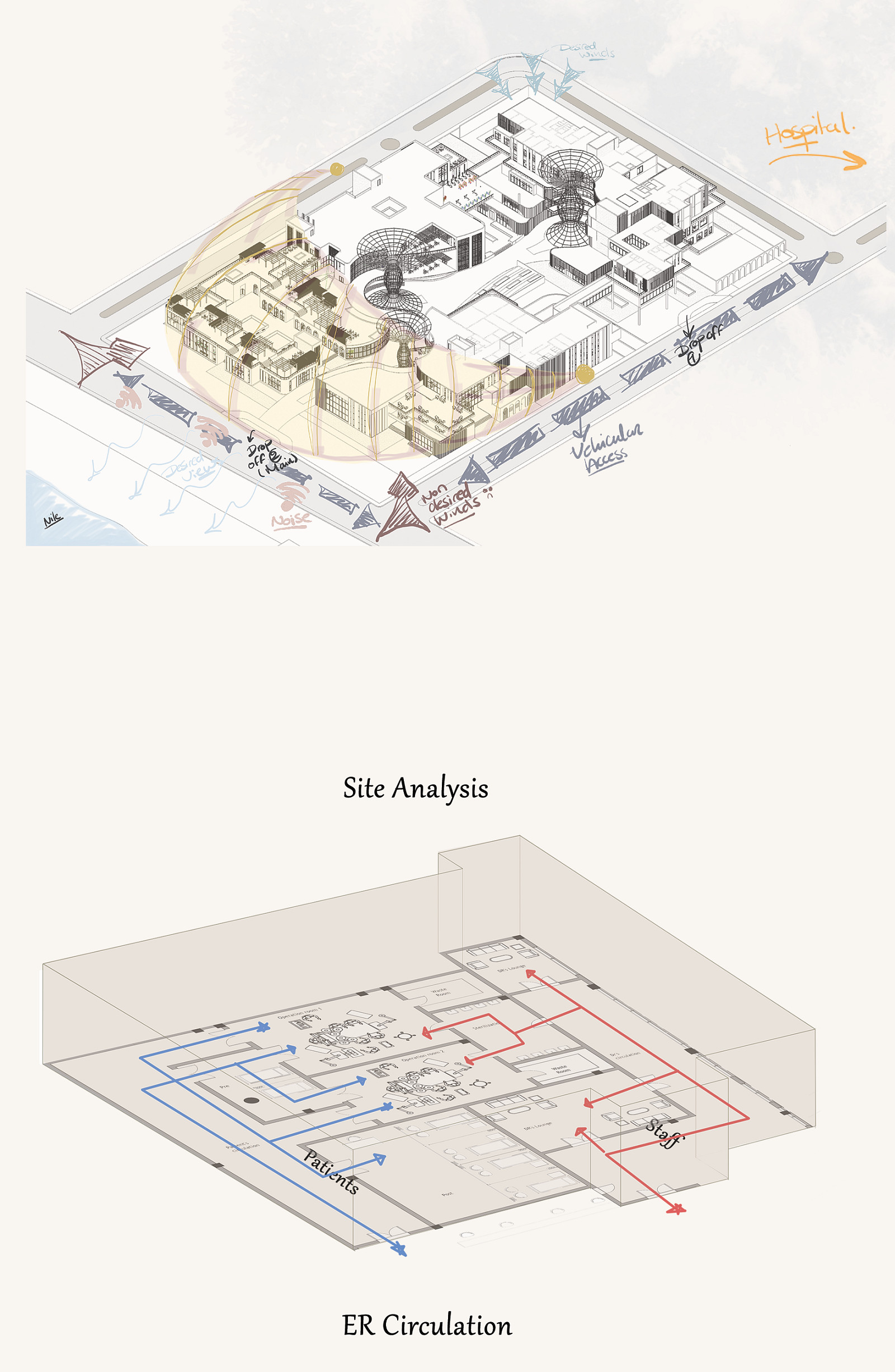
The journey begins at the first and smallest vertical element, where the process of detection and assessment takes place. This initial stage is intentionally compact and discreet, offering a sense of safety and privacy during the early recognition of addiction levels. Carefully framed openings introduce controlled views toward the River Nile, establishing an early visual connection to the outside world without overwhelming the user.
The second vertical element, larger and more open, represents the stage of understanding and guidance. Here, individuals meet with doctors and specialists who help them comprehend their condition and define their rehabilitation journey. Positioned at the heart of the project, this element is directly connected to recreational spaces, gardens, and communal activities. Continuous visual access to the Nile accompanies daily movement through the building, reinforcing calmness and orientation while ensuring that users remain socially engaged and emotionally supported.
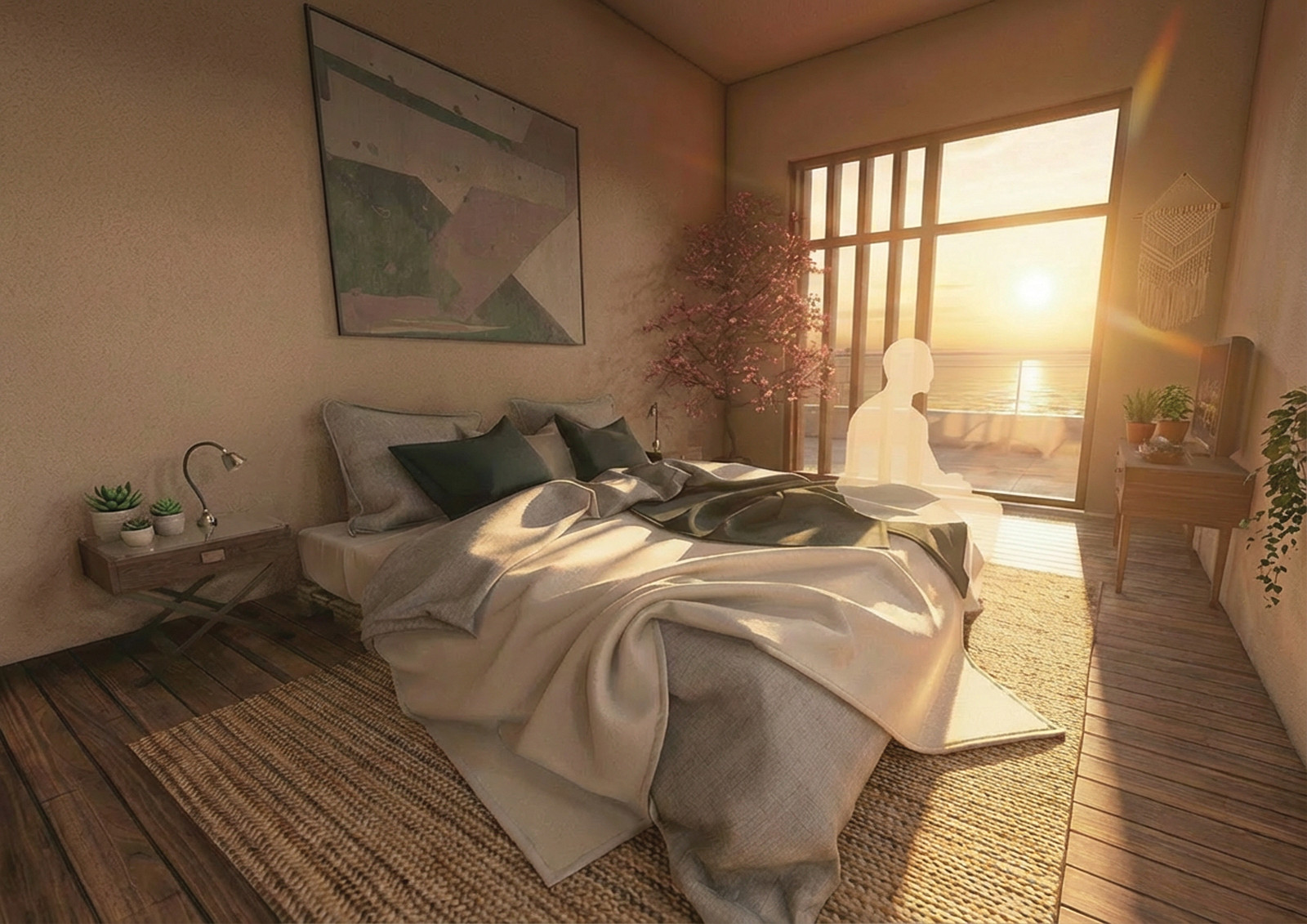
The final and tallest vertical element accommodates the residential and treatment phase, where individuals live while receiving ongoing care. This stage offers greater stability, routine, and privacy, reflecting the user’s progression toward recovery. Living spaces are oriented to secure uninterrupted views of the River Nile, using light, breeze, and horizon as constant companions in the healing process.
Across all stages, the river functions as a permanent visual reference, symbolizing continuity, flow, and time—qualities essential to recovery. Rather than isolating individuals from their surroundings, the project maintains a continuous relationship with the Nile, allowing architecture to guide healing through movement, light, and landscape, while preserving dignity and connection at every step.
Project description
The project is conceived as a vertically sequenced rehabilitation and research complex, where architecture supports recovery through spatial progression, environmental continuity, and controlled social engagement. Rather than functioning as an isolated medical institution, the project integrates treatment, research, community interaction, and productive functions within a unified architectural system.
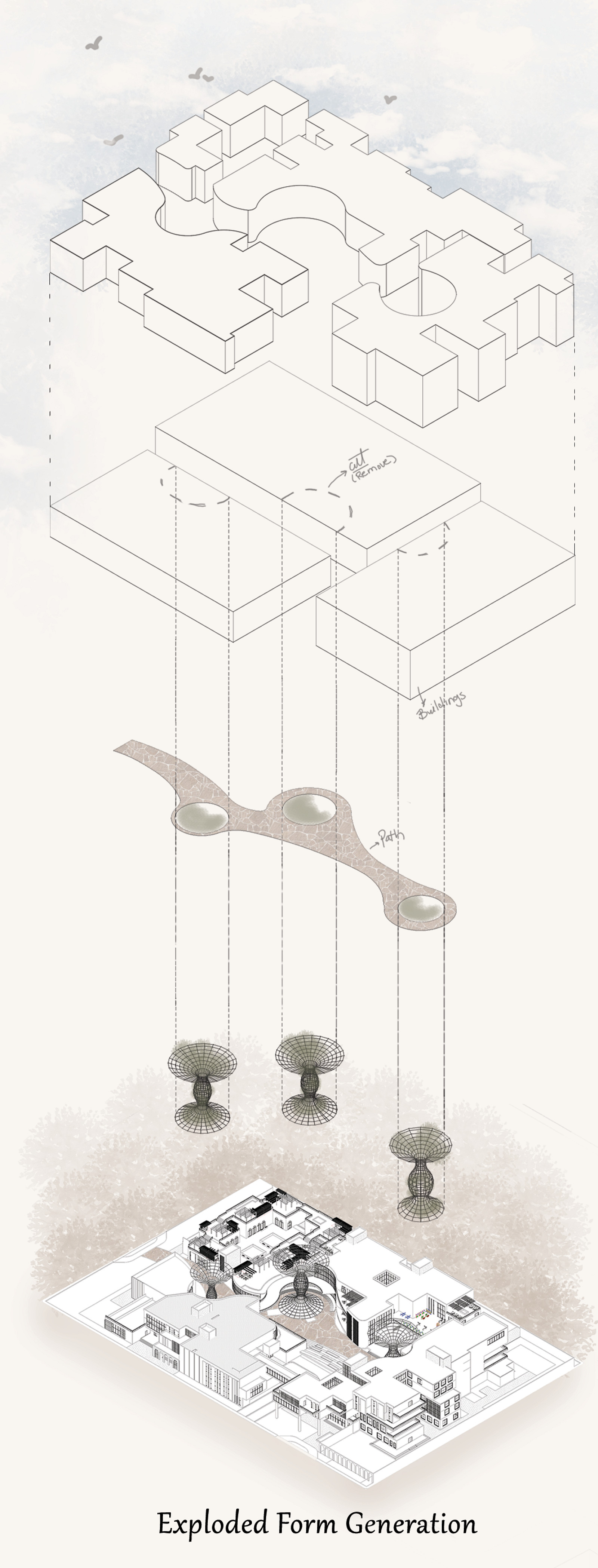
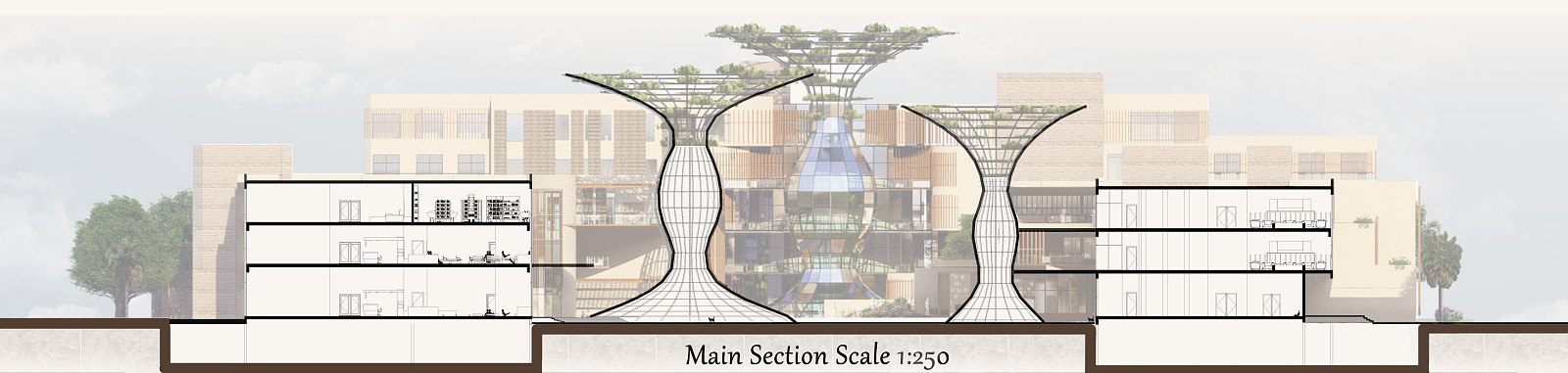
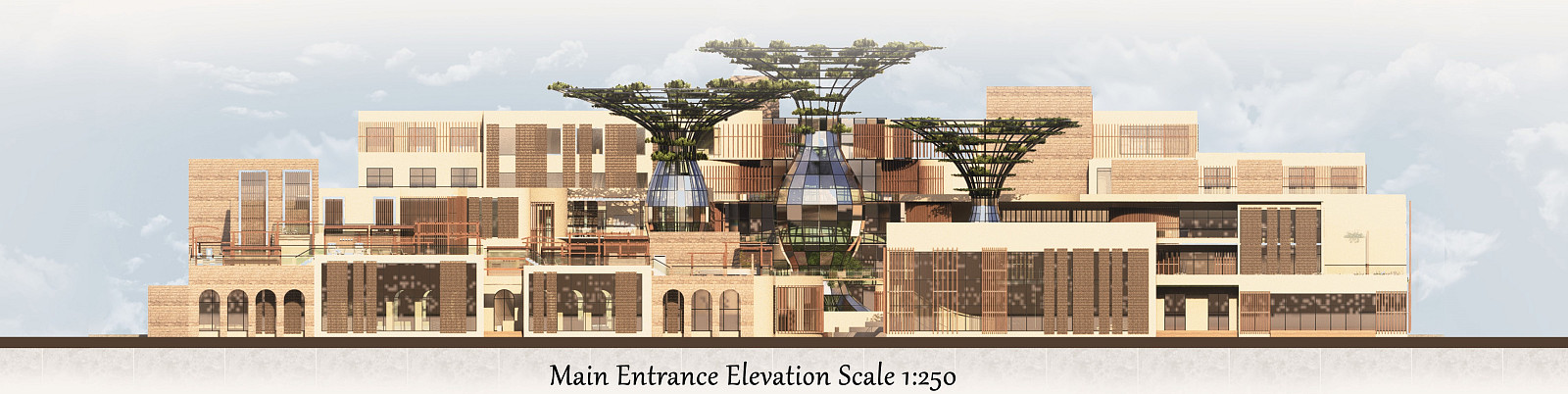
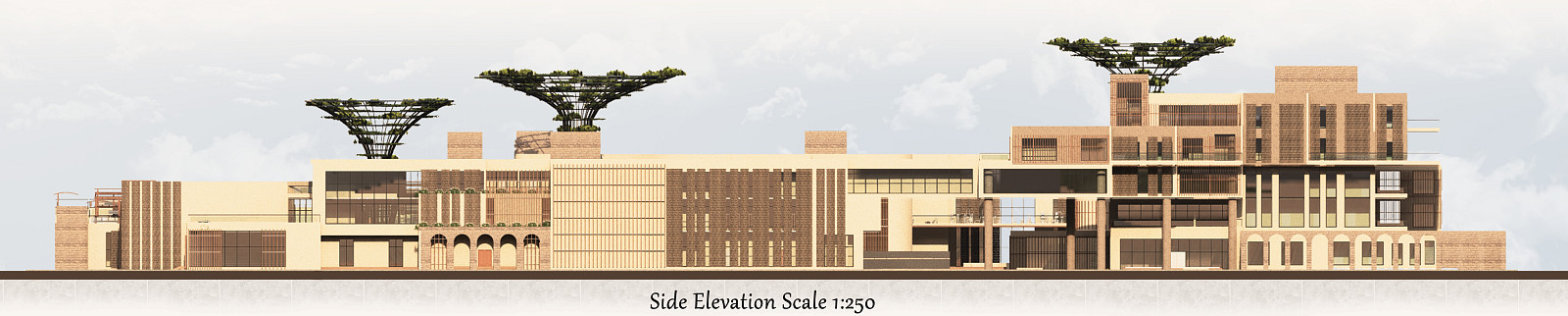
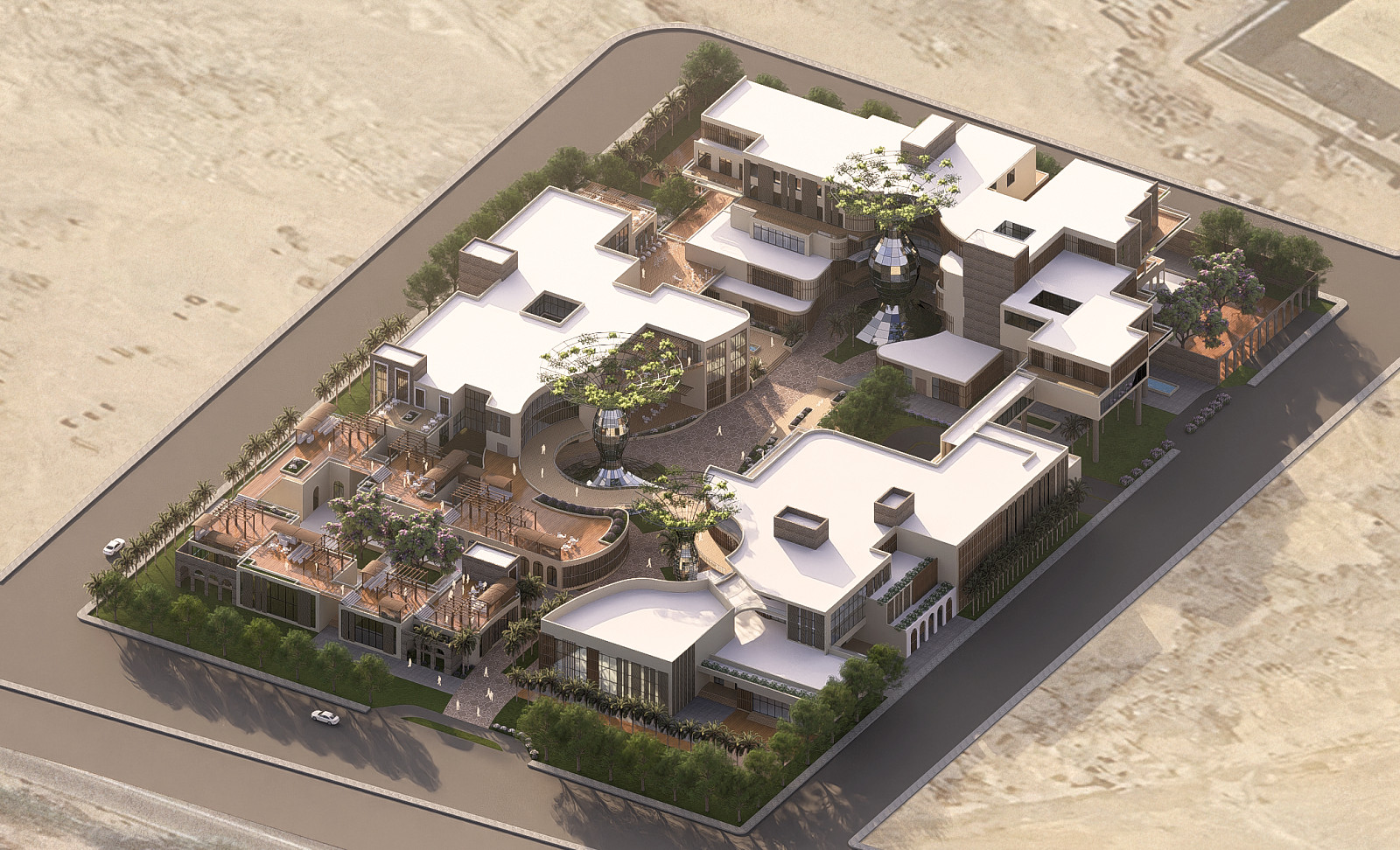
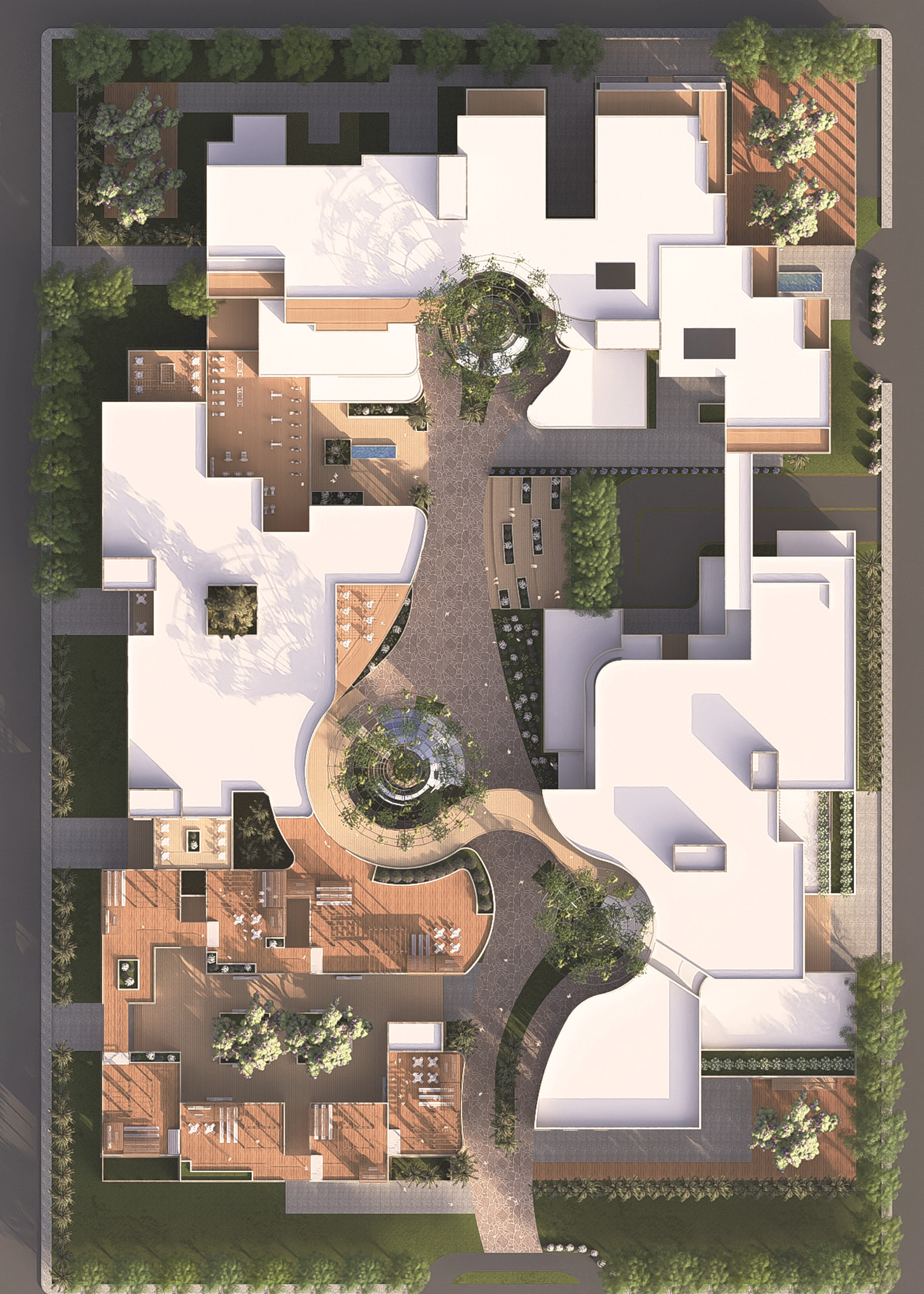
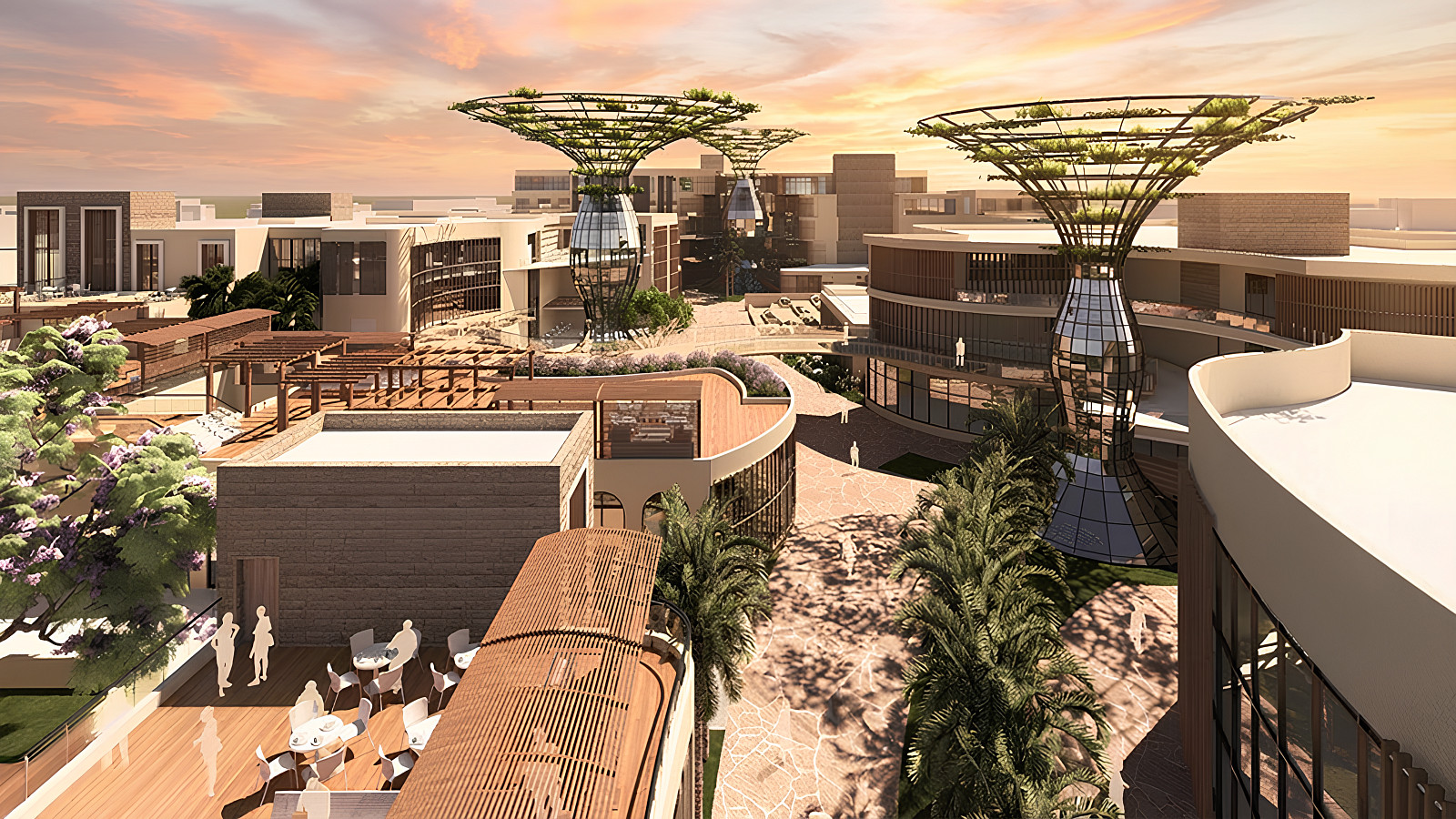
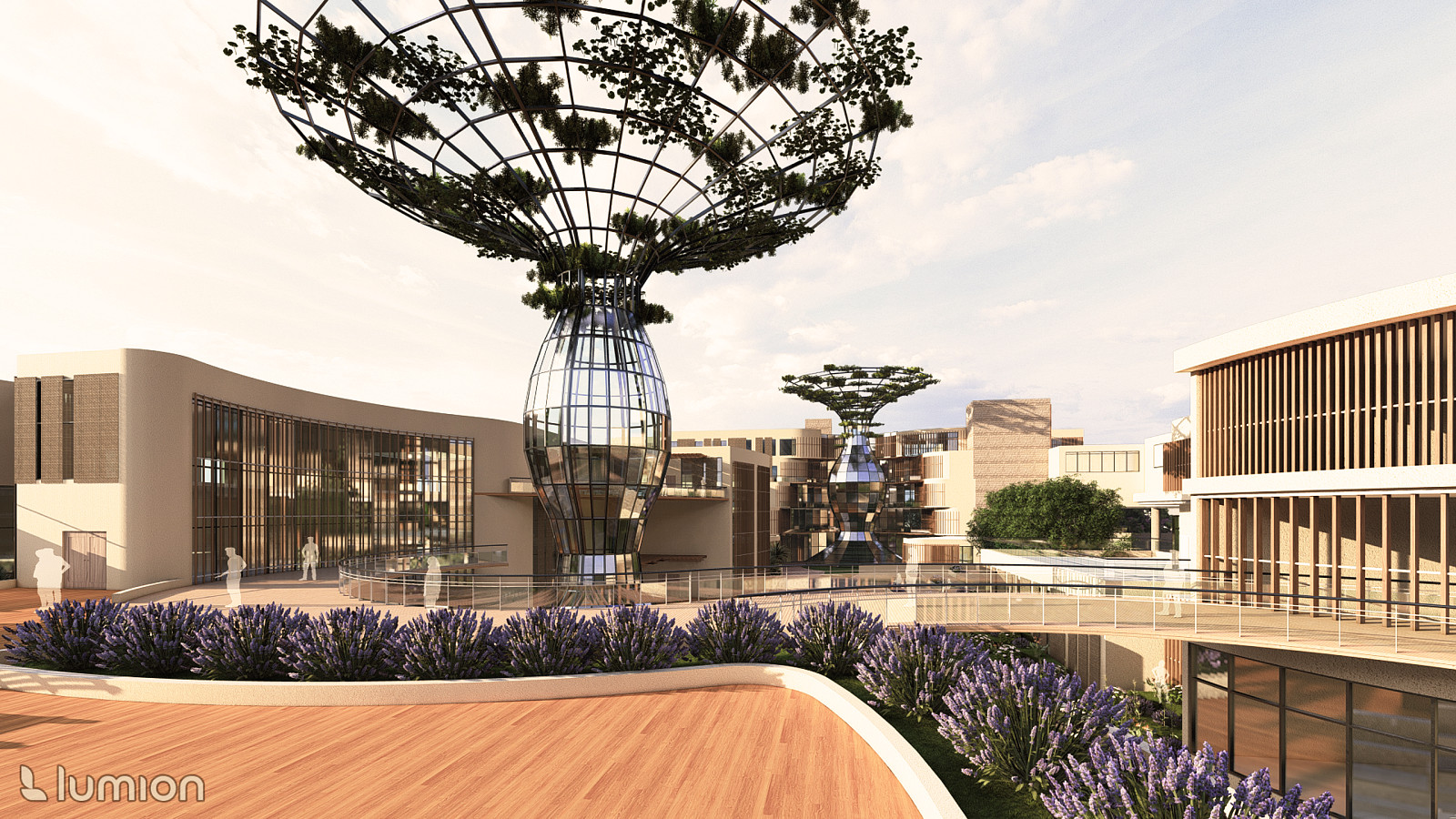
The design is composed of three main buildings, each enclosing a dominant vertical element. These vertical elements differ in scale, openness, and spatial character, and visually and spatially resemble the stages of the rehabilitation journey, acting as internal organizers within each building rather than circulation connectors. The buildings are aligned along a primary visual axis toward the River Nile, ensuring a continuous relationship with landscape, light, and horizon throughout all stages of recovery.
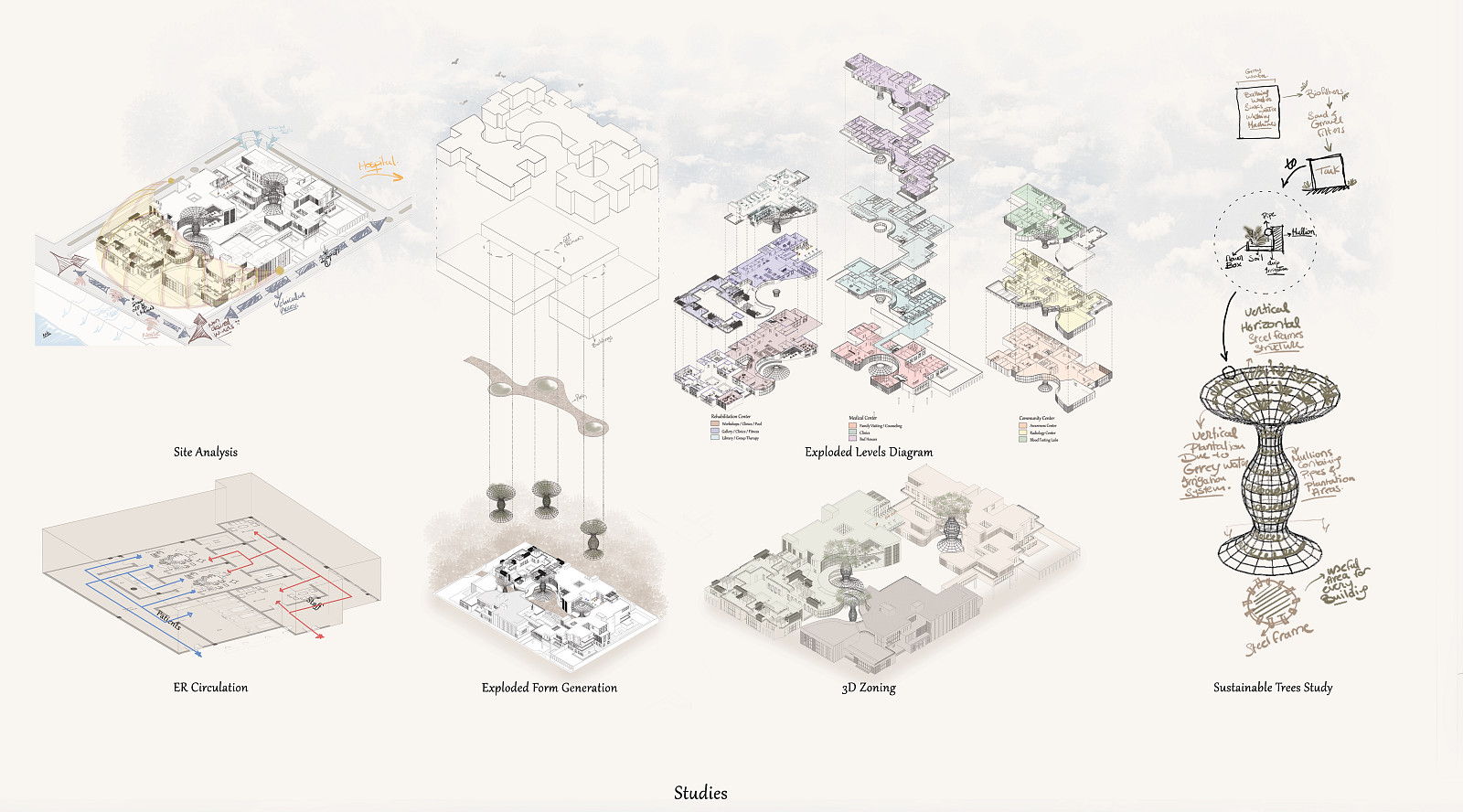
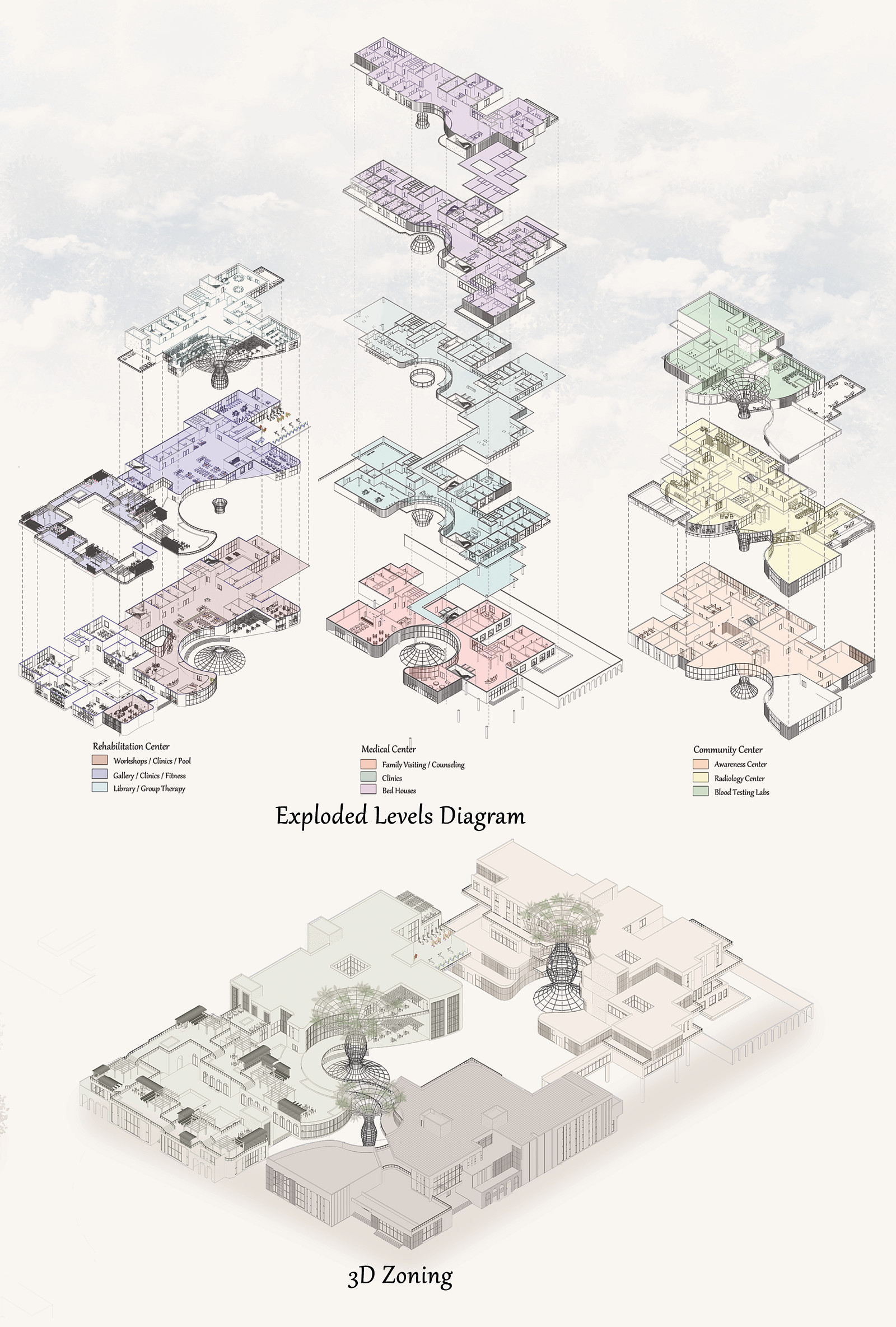
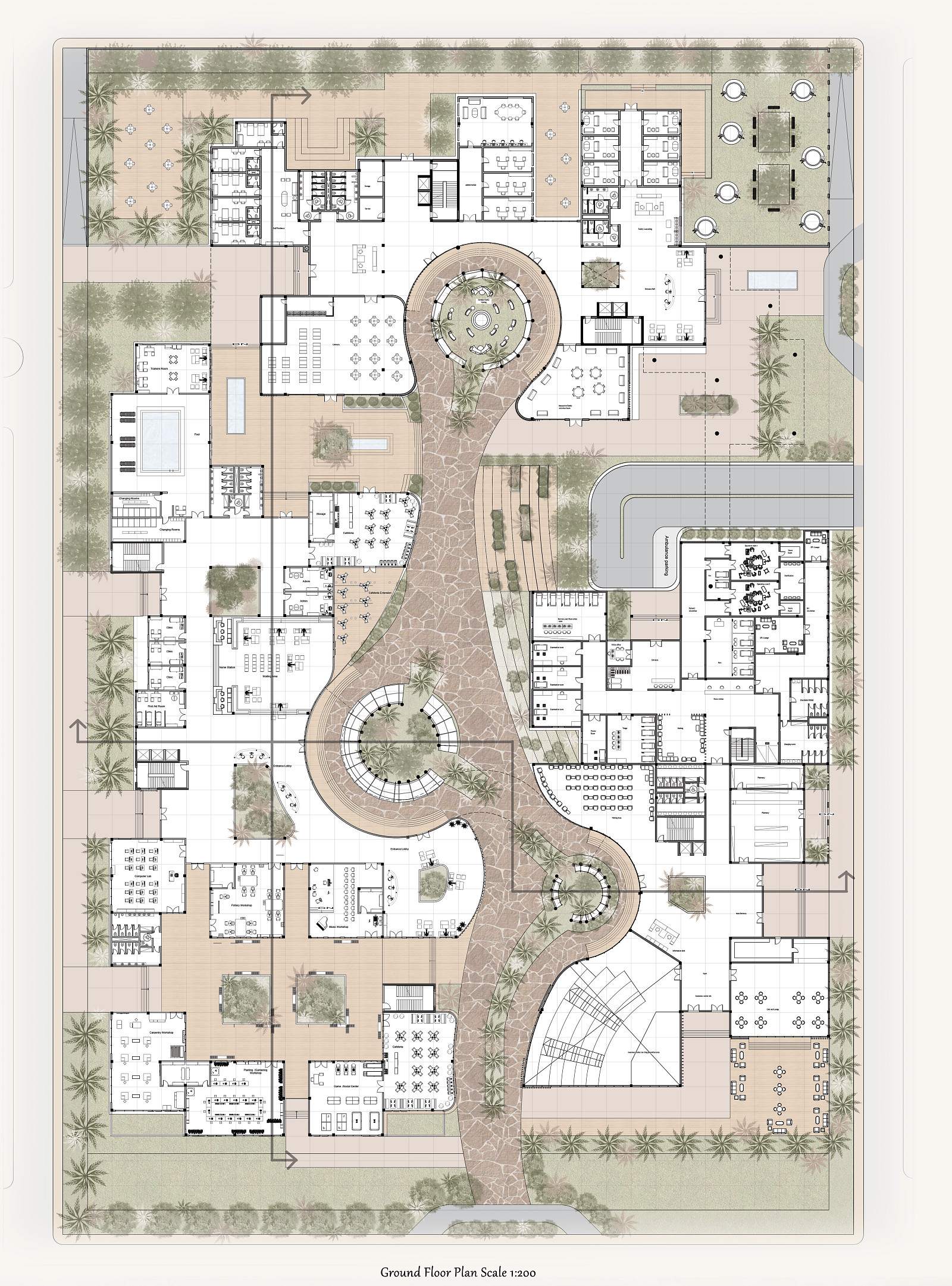
The first building, containing the smallest and most compact vertical element, represents the initial stage of awareness and assessment. At ground level, the building accommodates an emergency unit (ER) with direct and controlled access. Upper floors house diagnostic and analytical laboratories for addiction detection and assessment. The building also integrates research facilities related to addiction and treatment, alongside community-oriented laboratories that operate independently and contribute to the project’s economic sustainability. The compact scale and inward-oriented spatial character reflect the sensitivity of the early rehabilitation stage, while carefully framed views toward the River Nile provide calm and orientation.
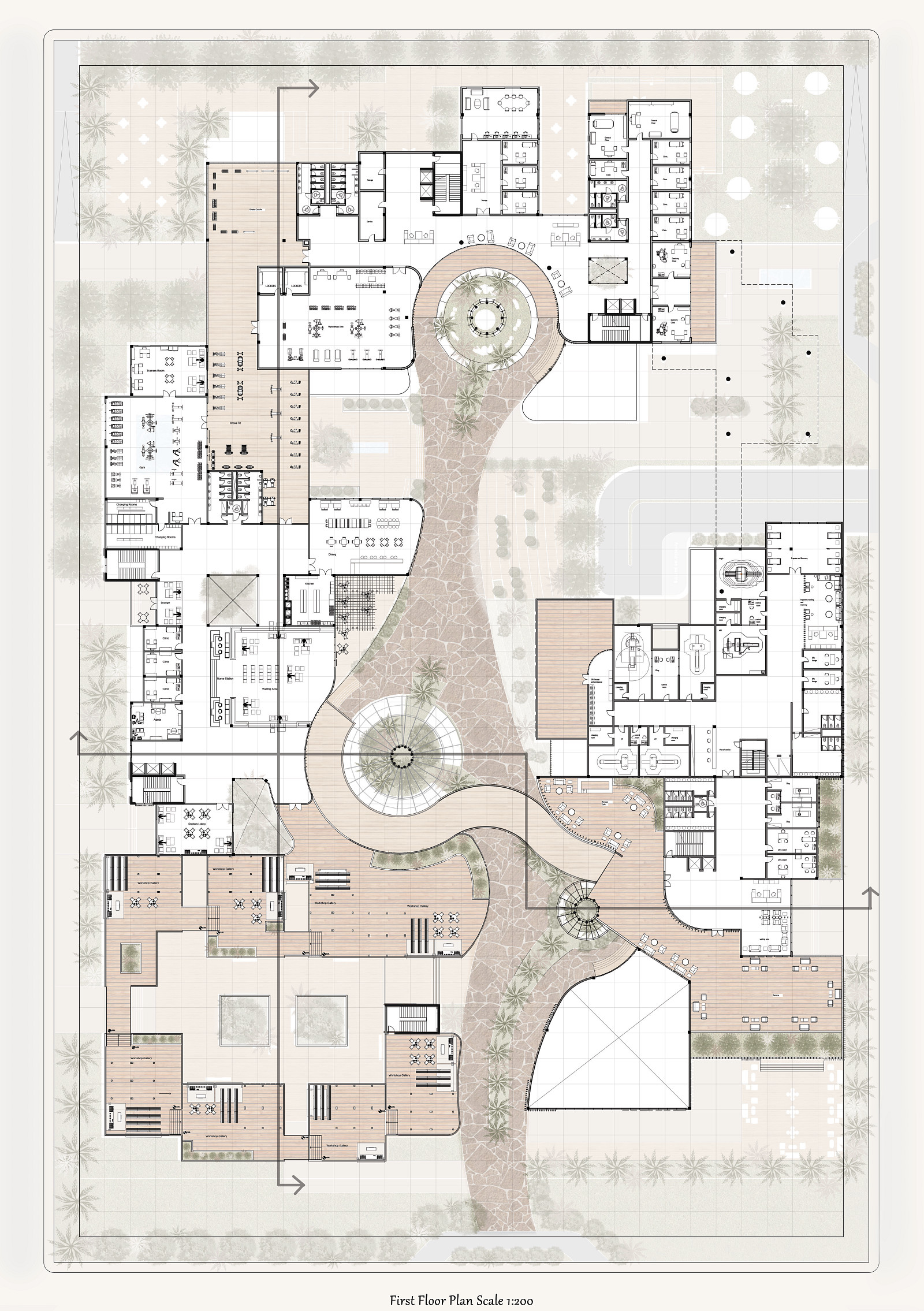
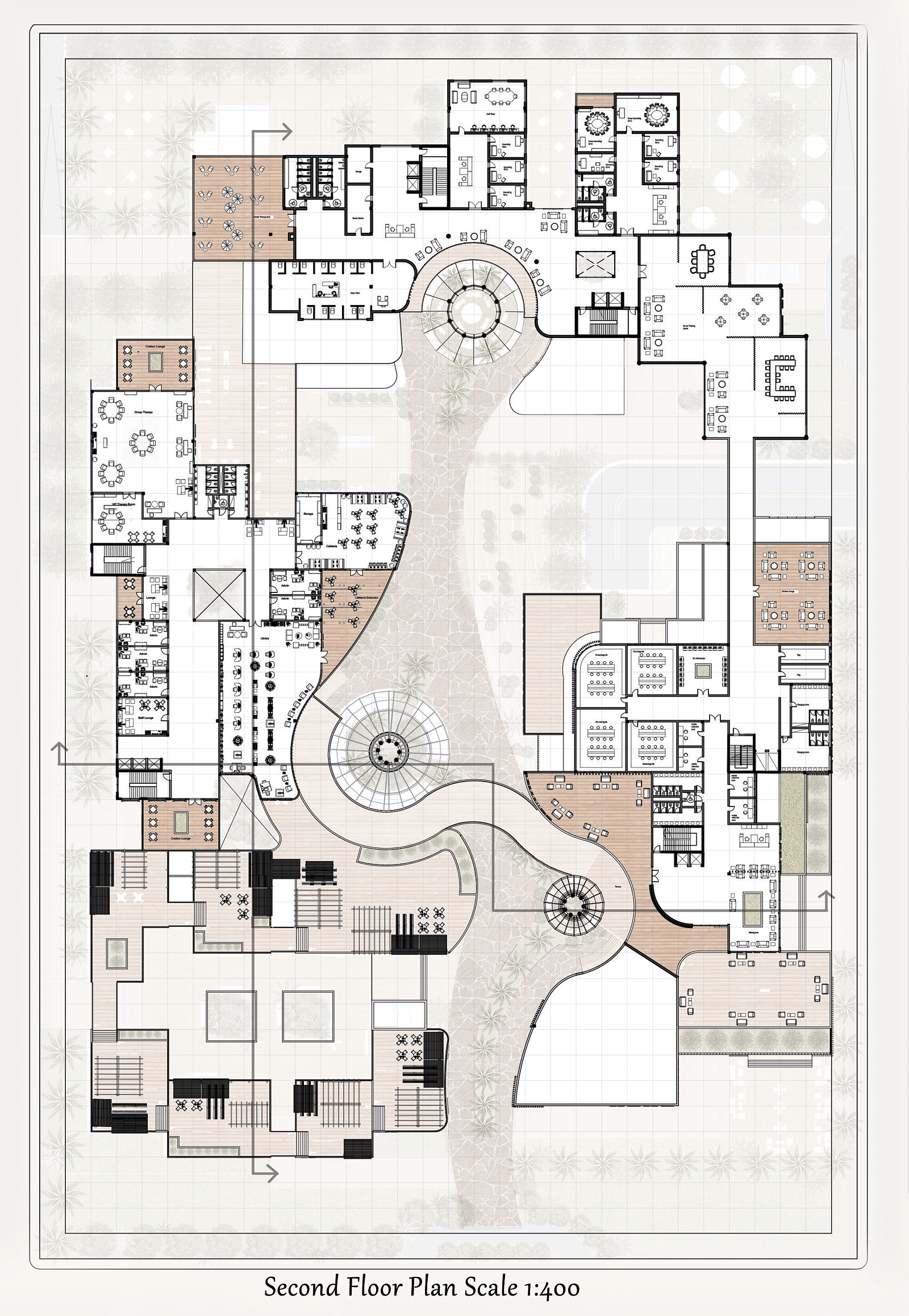
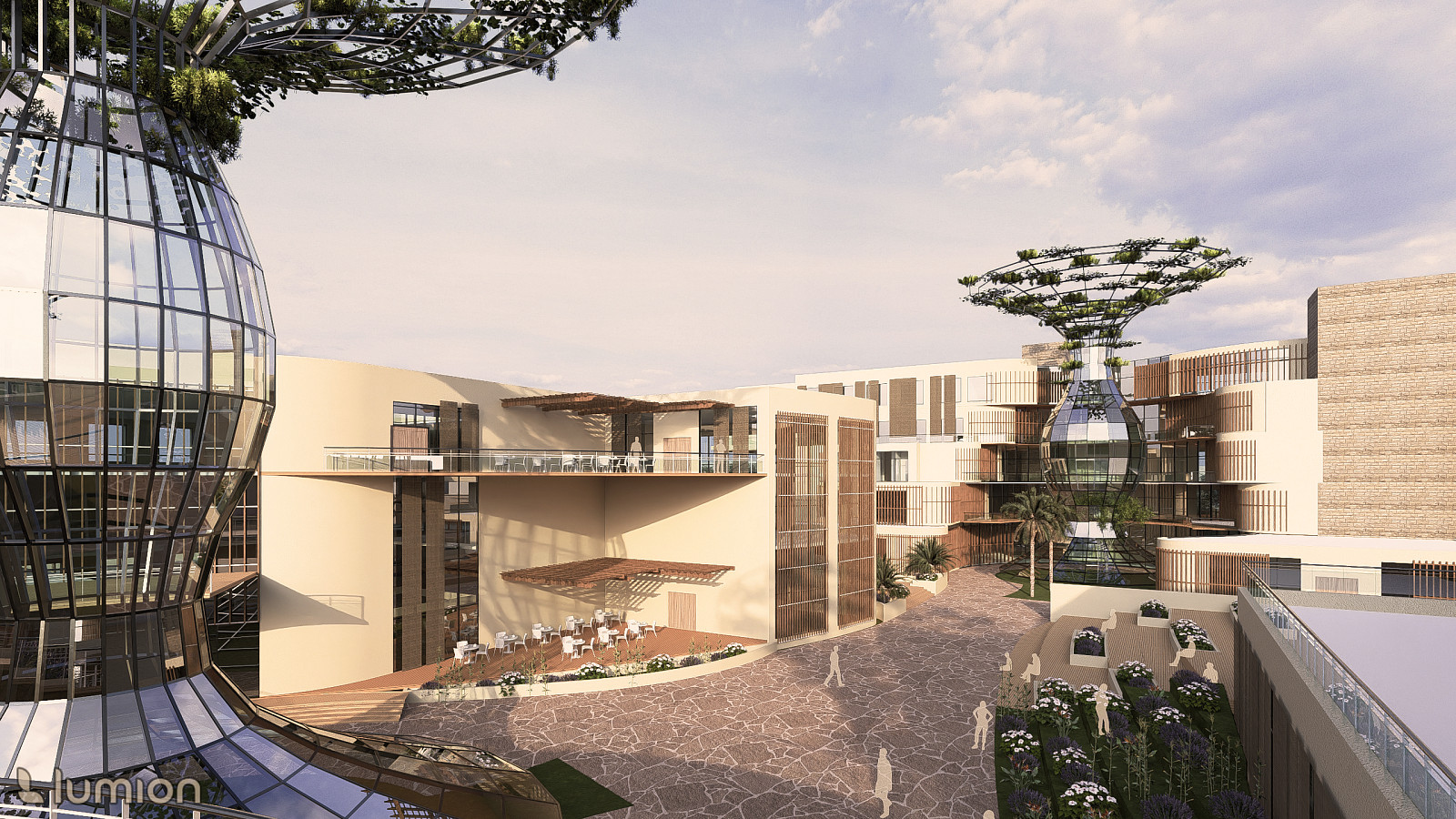
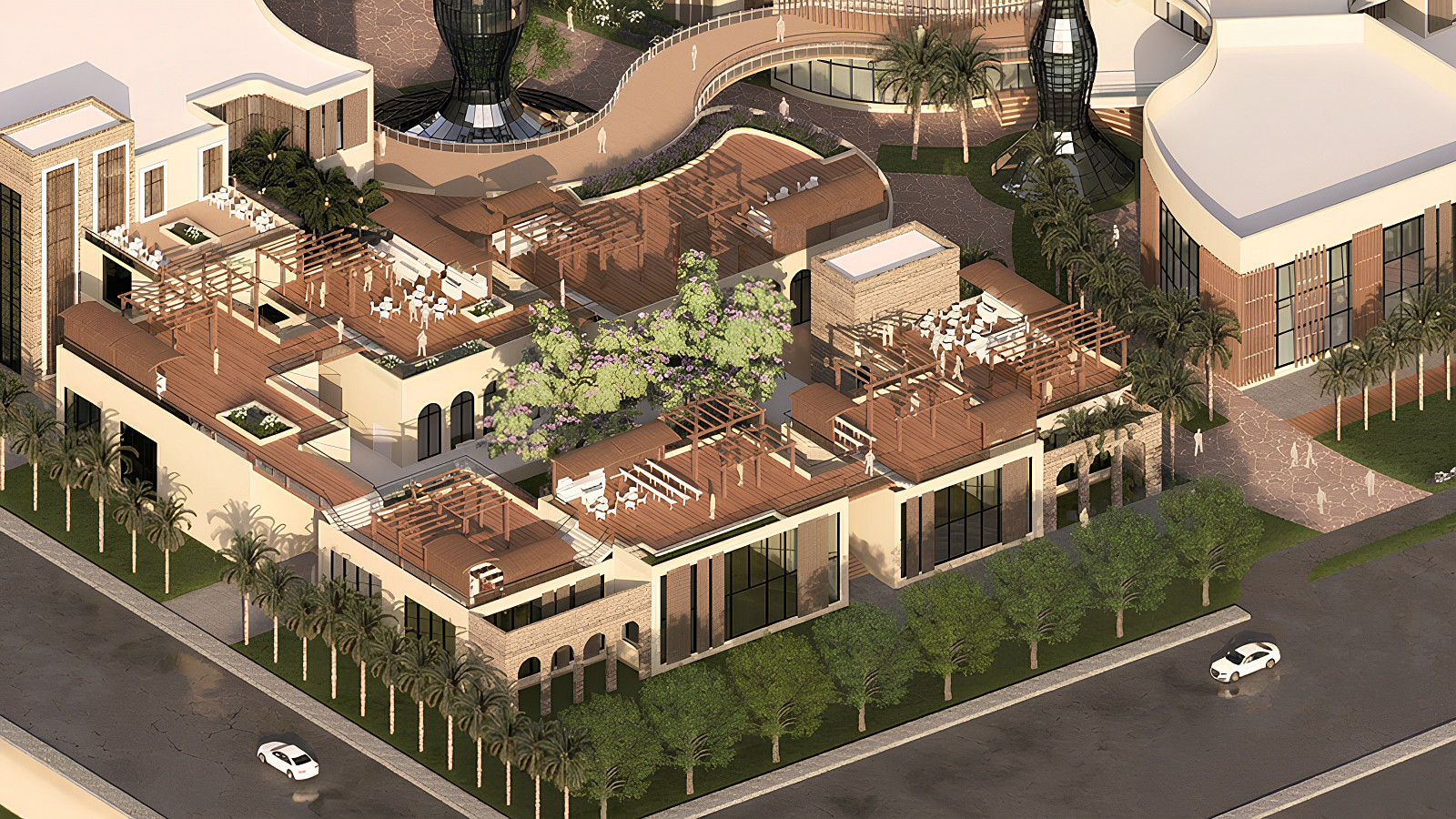
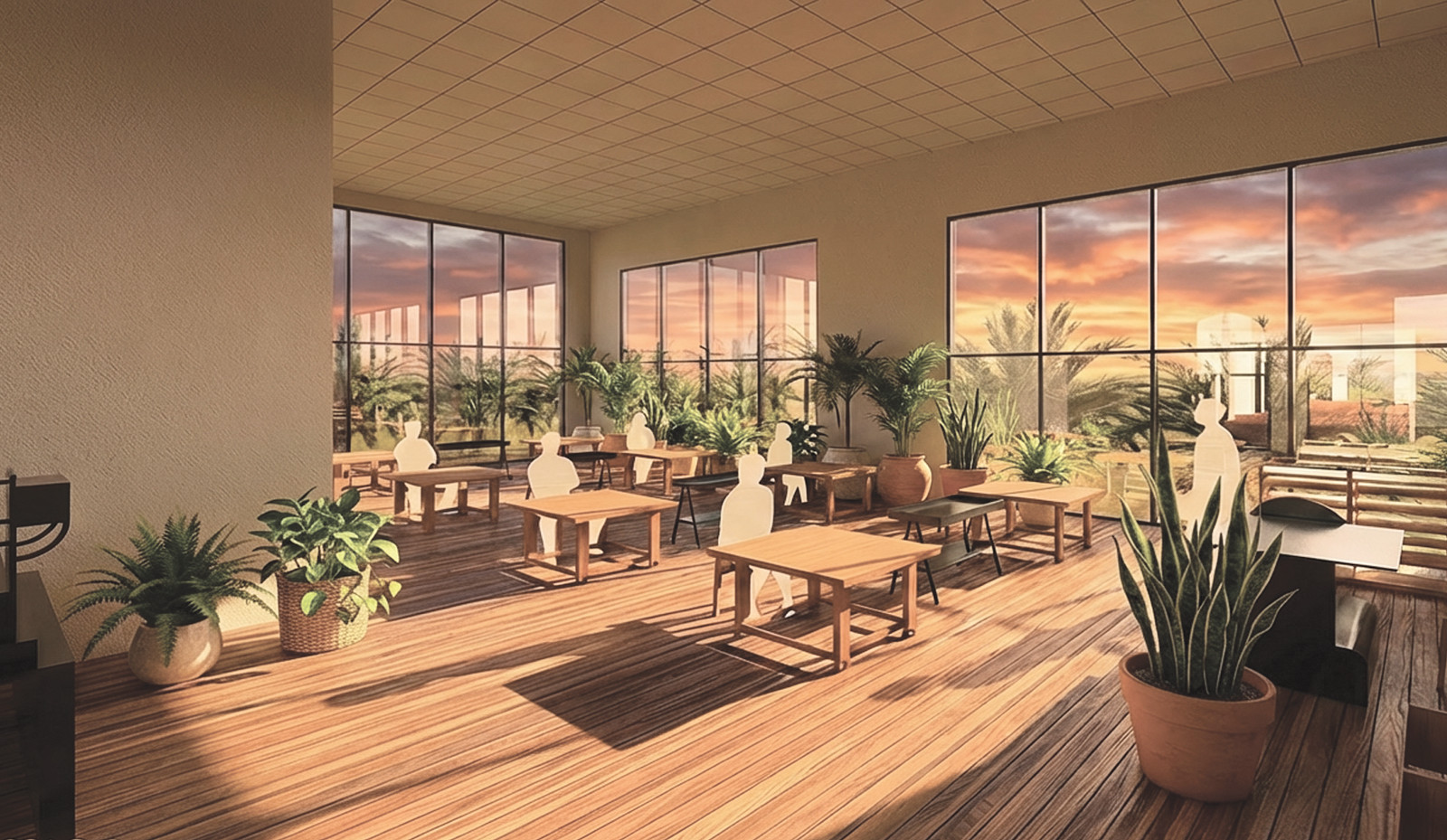
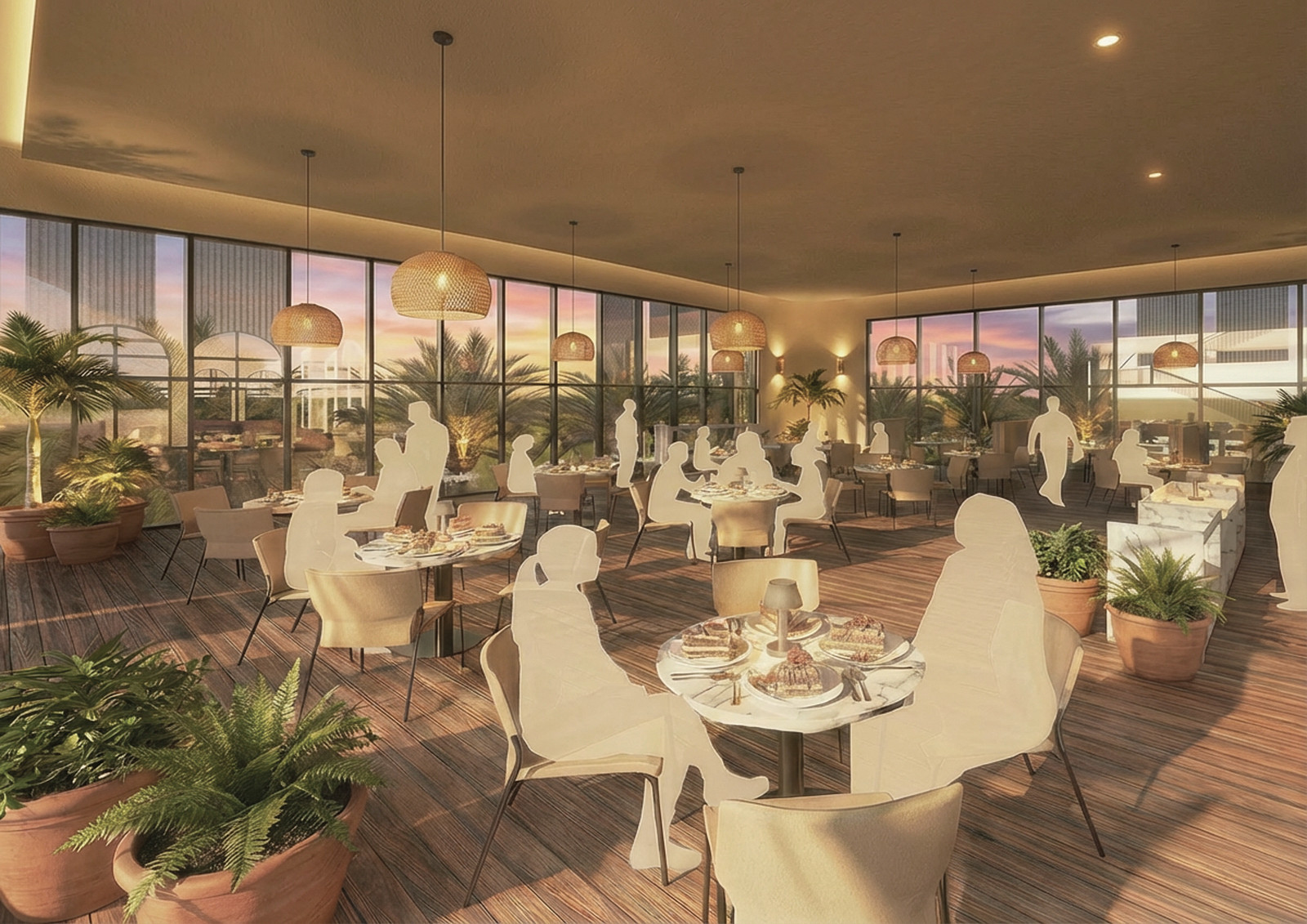
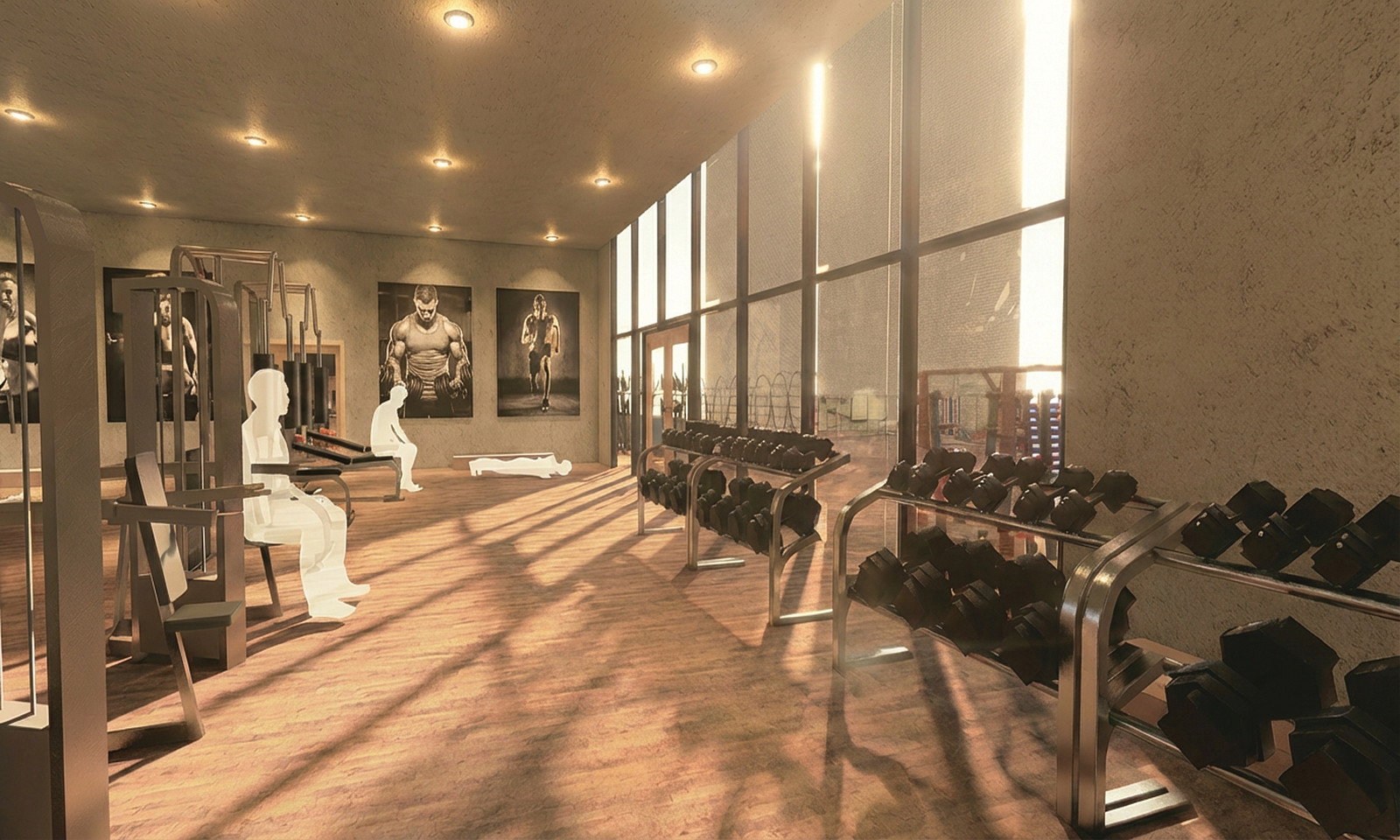
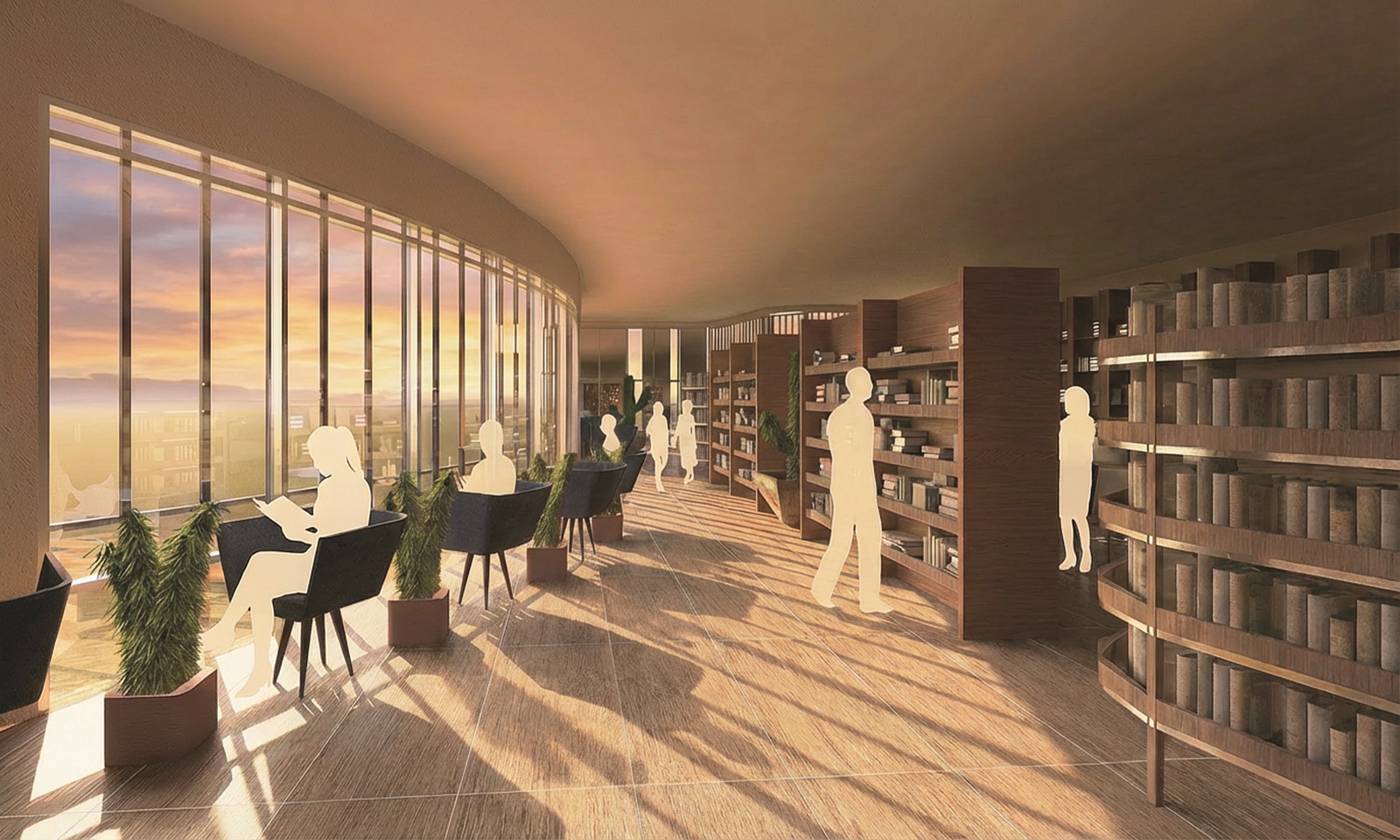
The second building, enclosing the middle-sized vertical element, forms the active heart of the project and represents the stage of understanding, engagement, and daily routine. The ground floor includes a swimming pool, café, clinics, first aid unit, administrative spaces, and workshops, establishing an accessible and dynamic base. The first floor accommodates a gym, kitchen, dining areas, clinics, and exhibition galleries, while the second floor contains a library, group therapy spaces, café, administrative functions, and shared lounges. Lounges are distributed across all floors and organized around the vertical element, encouraging continuous interaction and preventing isolation. Medical, recreational, and cultural programs are intentionally interwoven, supported by uninterrupted visual access to the River Nile.
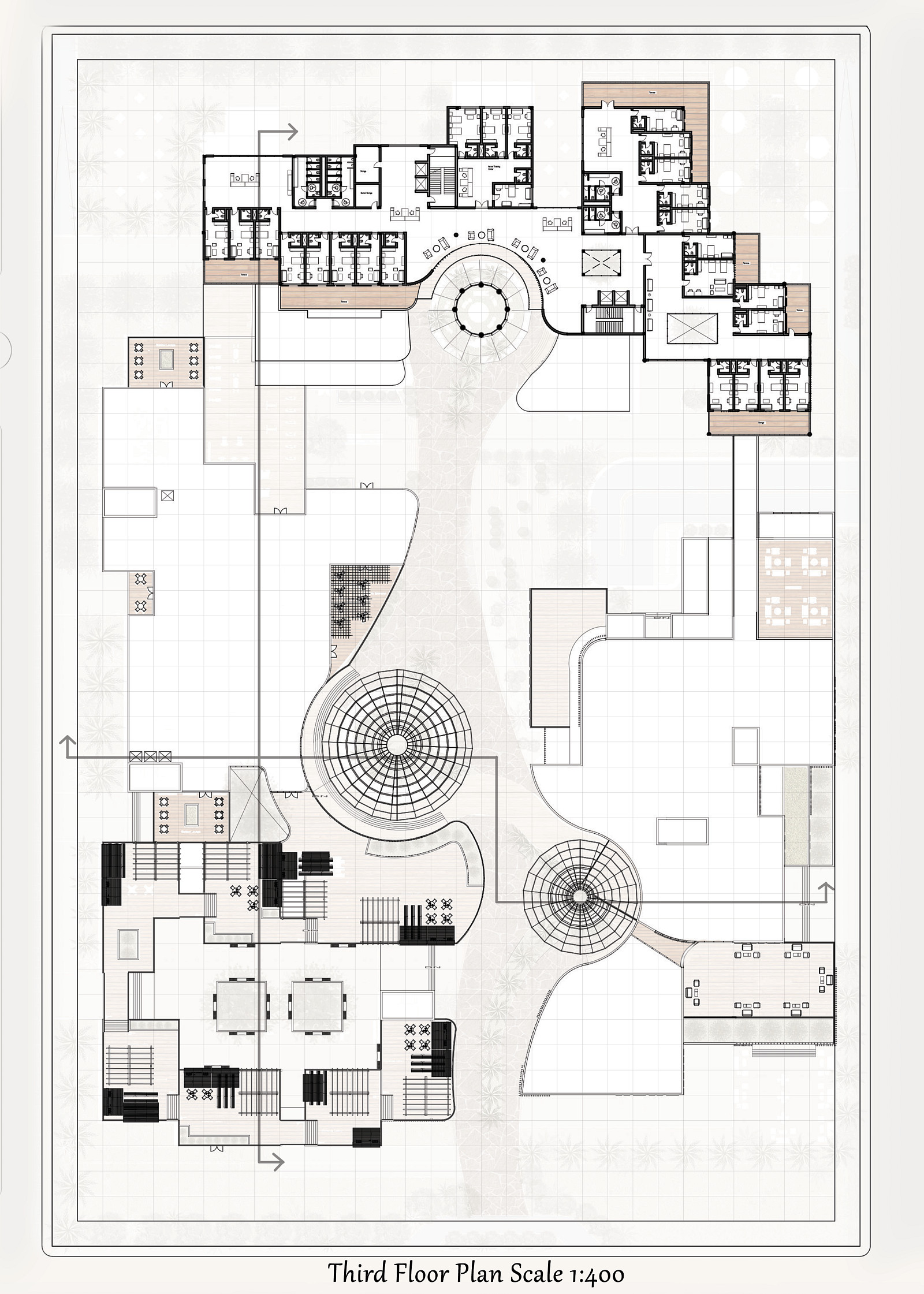
The third and largest building, which encloses the tallest vertical element, represents the advanced stage of rehabilitation, stability, and reintegration. The ground floor is dedicated to family visiting areas, creating a welcoming and socially supportive interface between residents and their families. The first and second floors accommodate treatment clinics, ensuring close proximity between medical care and living spaces while maintaining controlled privacy. The third, fourth, and fifth floors contain accommodation units, providing a stable and dignified living environment during extended treatment periods. Residential spaces are oriented to maximize direct views of the River Nile, reinforcing routine, continuity, and a sense of belonging.
Connections between the buildings are achieved through a system of private horizontal links embedded within the overall massing, allowing controlled movement between different rehabilitation stages without exposing users to public or disruptive circulation. These connections ensure clarity, security, and discretion, while preserving the independence of each building and its corresponding rehabilitation phase.
Overall, the project redefines the rehabilitation center as an integrated healing, research, and community-driven environment, where architectural form, massing, and spatial sequencing actively participate in recovery. By maintaining constant visual contact with the River Nile and embedding treatment within everyday life, the design promotes dignity, continuity, and long-term rehabilitation.
Technical information
The project is constructed using a reinforced concrete flat slab structural system, allowing strong horizontal continuity, stepped massing, and flexible internal layouts suitable for medical, laboratory, recreational, and residential functions.
A regular column grid supports the flat slabs, enabling deep setbacks, large terraces, and carved voids within the building mass. Punching shear is resolved through localized slab thickening and drop panels where required.
Cantilevered terraces and projecting platforms are achieved through extended flat slabs with local reinforcement. Vertical circulation elements are integrated within the slab–column system and remain structurally independent, without acting as load-bearing cores.
This system supports the architectural intent of the project as a solid, terraced, and sculpted composition, rather than a lightweight or facade-driven structure.
Vertical Plantation Elements
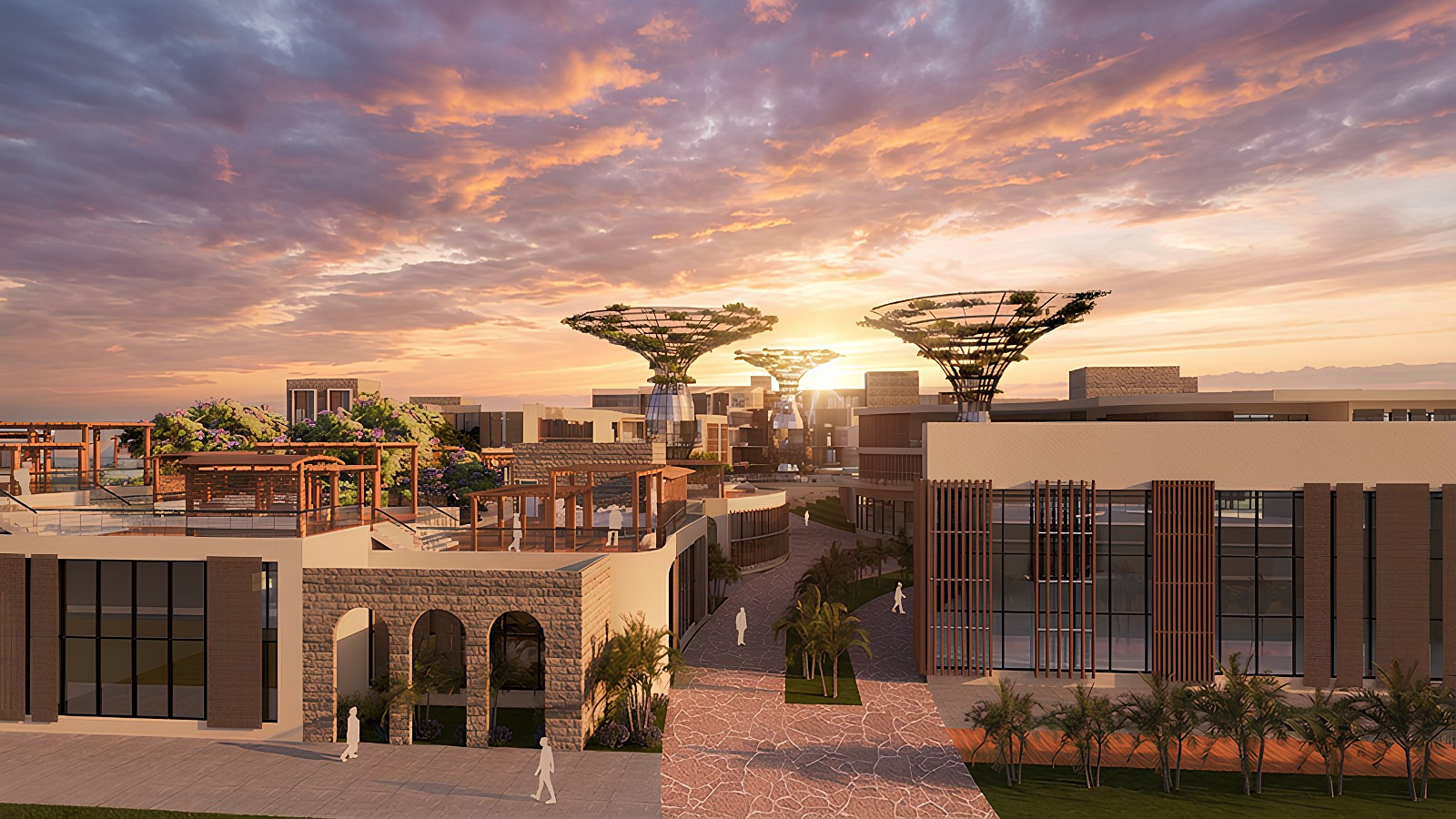
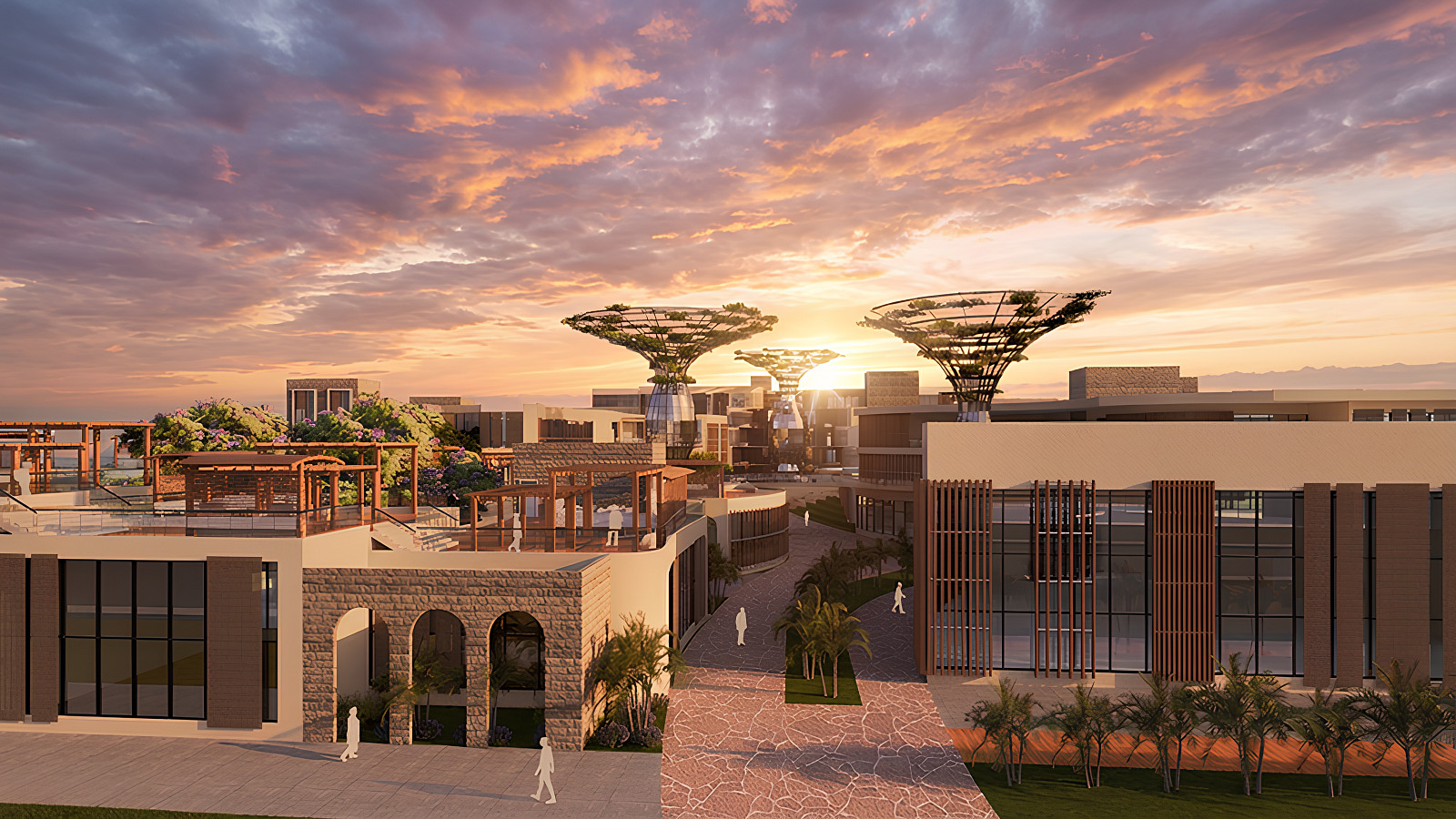
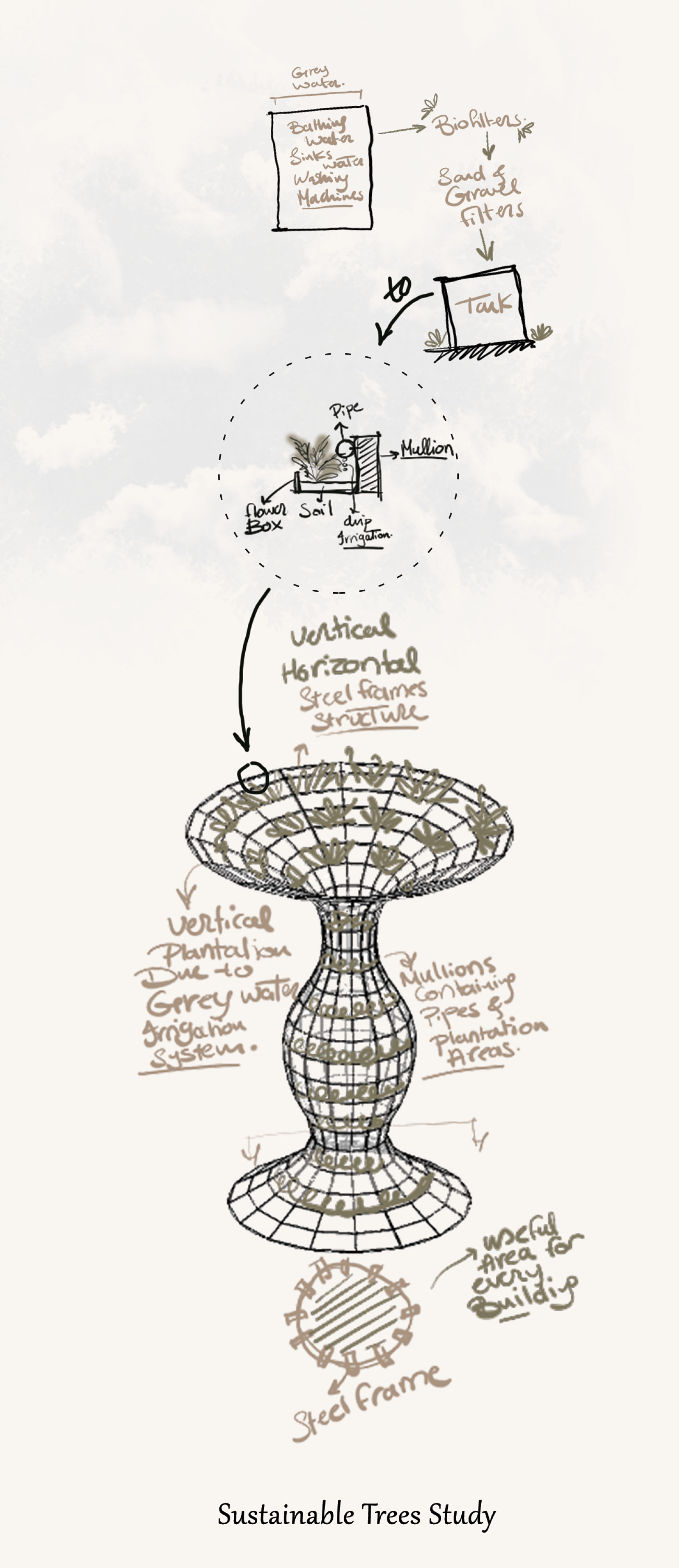
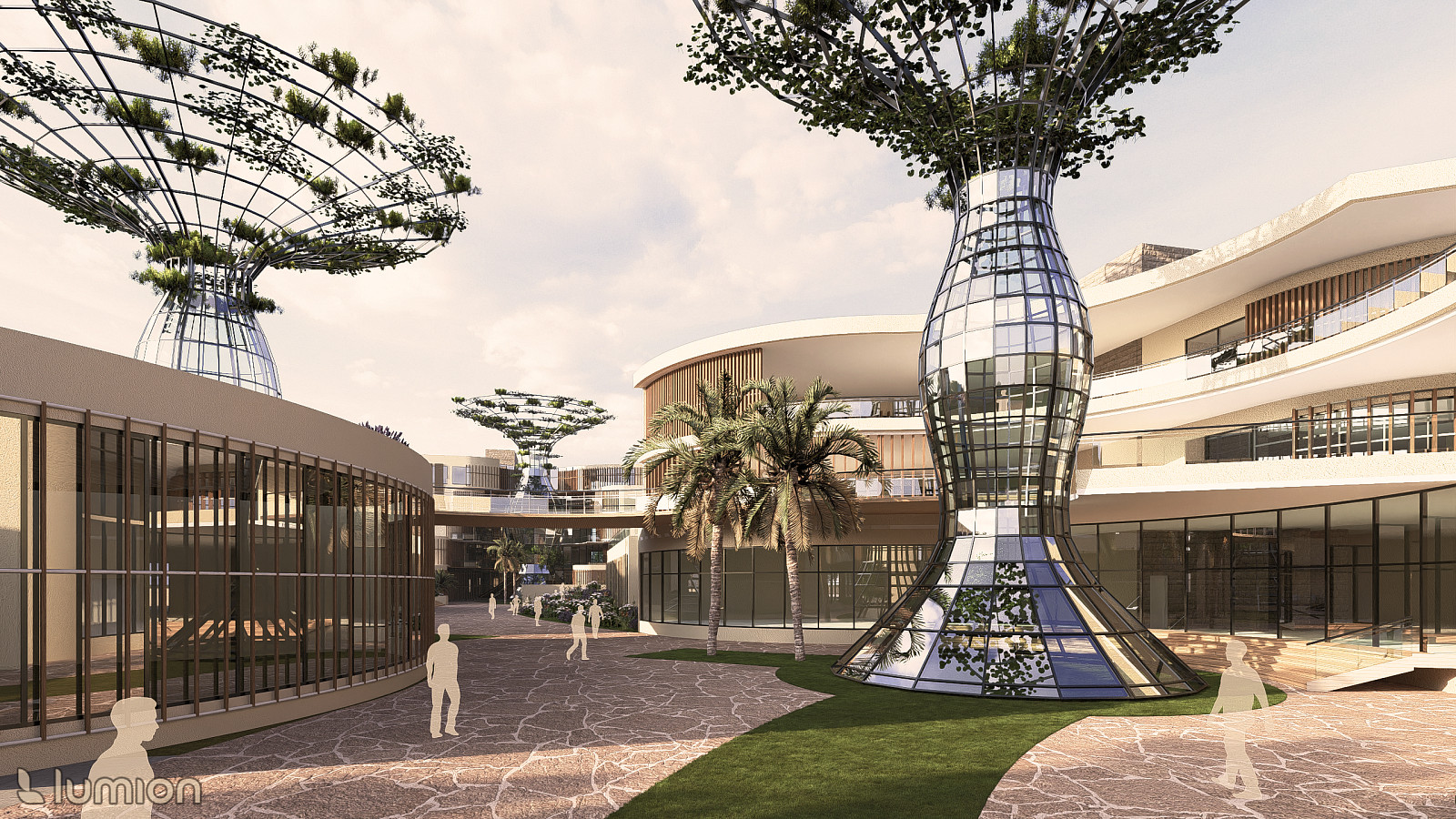
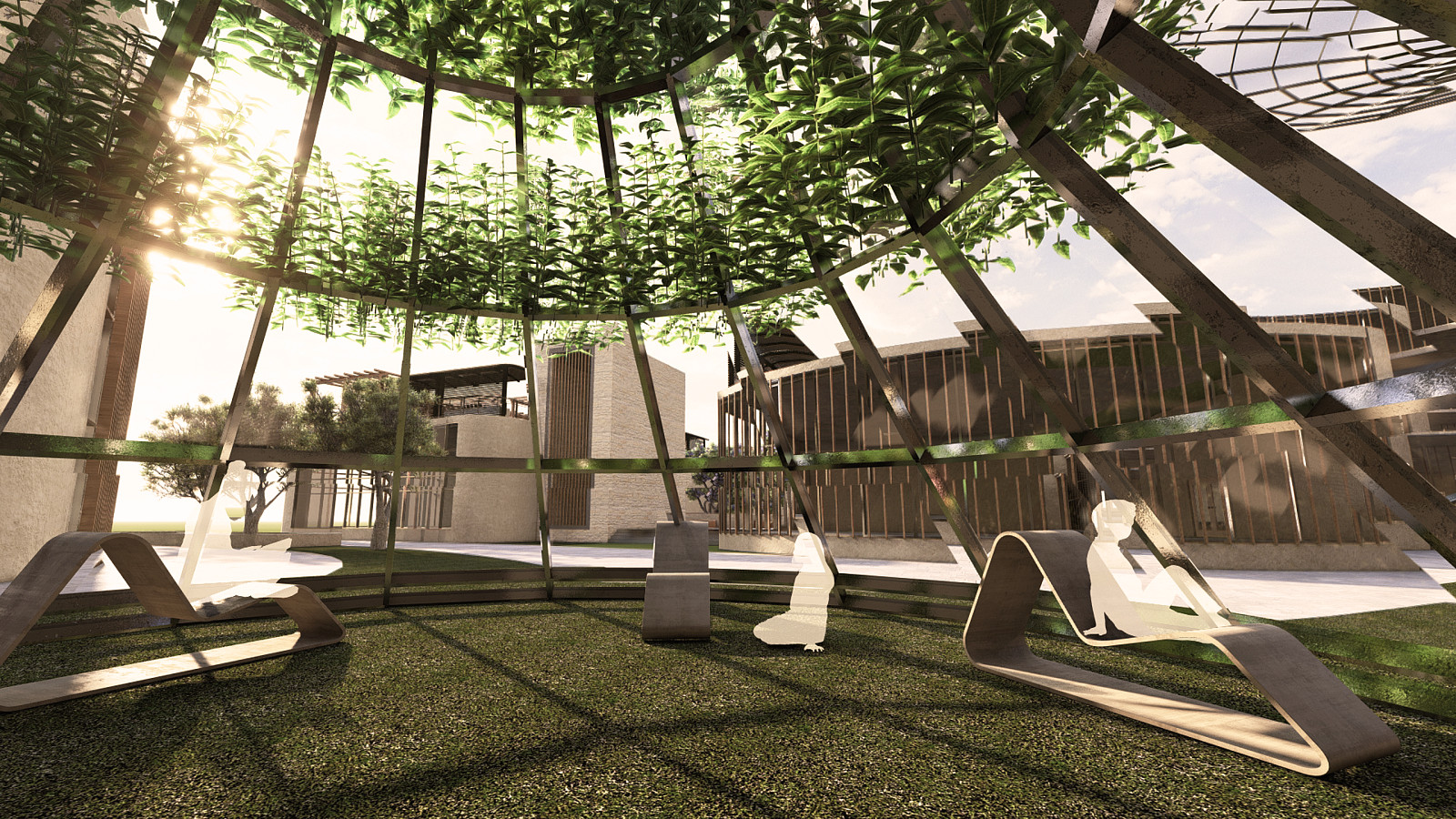
Each building encloses a vertical plantation element, conceived as a planted spatial void carved directly into the building mass. These elements are not technical shafts or facade systems, but architectural spaces that organize perception, experience, and daily movement.
The scale and openness of the planted voids vary across the three buildings, corresponding to different stages of the rehabilitation journey. They provide continuous visual contact with greenery and act as emotional reference points within the architecture.
Irrigation for these planted elements relies on treated grey water, collected from residential, clinical, and recreational functions, supporting continuous vegetation growth through simple and legible systems.
Landscape Strategy (Participatory & Therapeutic)
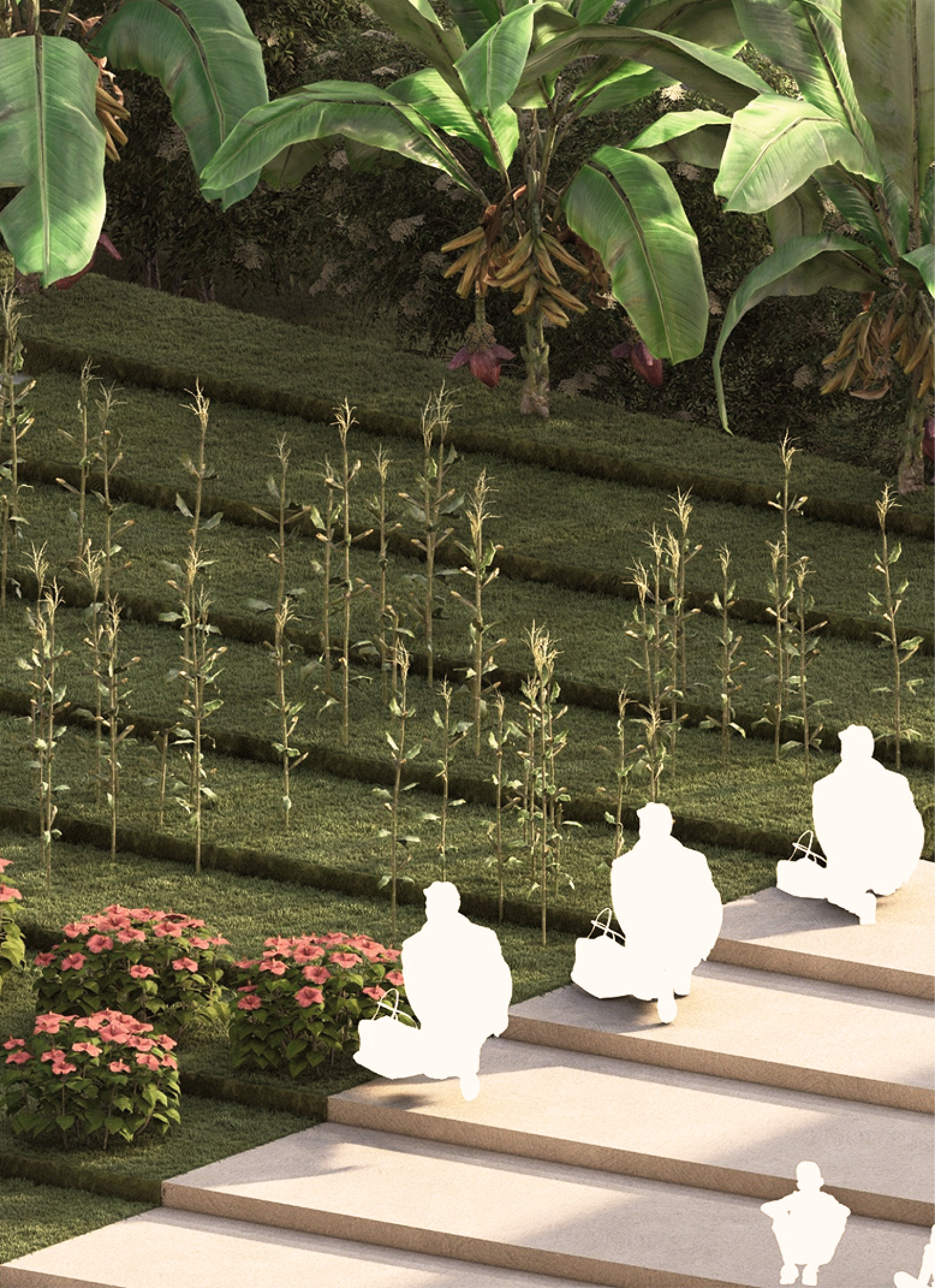
Landscape is treated as an active and essential component of the rehabilitation environment. The entire site is designed as a fully planted landscape, directly accessible and used by patients throughout the complex.
Patients are actively involved in planting, caring for, and maintaining the landscape as part of their daily routine. Gardens, terraces, courtyards, and planted circulation paths are designed to encourage hands-on interaction with soil, plants, and seasonal change, fostering responsibility, routine, and a sense of growth.
Landscape extends vertically through terraces and planted voids, ensuring that nature is present at every level of the buildings, not limited to the ground plane.
Environmental & Sustainability Approach
Sustainability in the project is addressed through clear, low-complexity strategies closely tied to daily use. Grey water reuse supports irrigation of all planted areas, reducing potable water demand while reinforcing a visible and understandable environmental cycle.
Rather than relying on complex technical systems, the project emphasizes direct relationships between users, landscape, and water, making sustainability experiential and participatory.
Material Expression
The architecture is defined by a layered material strategy that balances solidity, transparency, and environmental control.
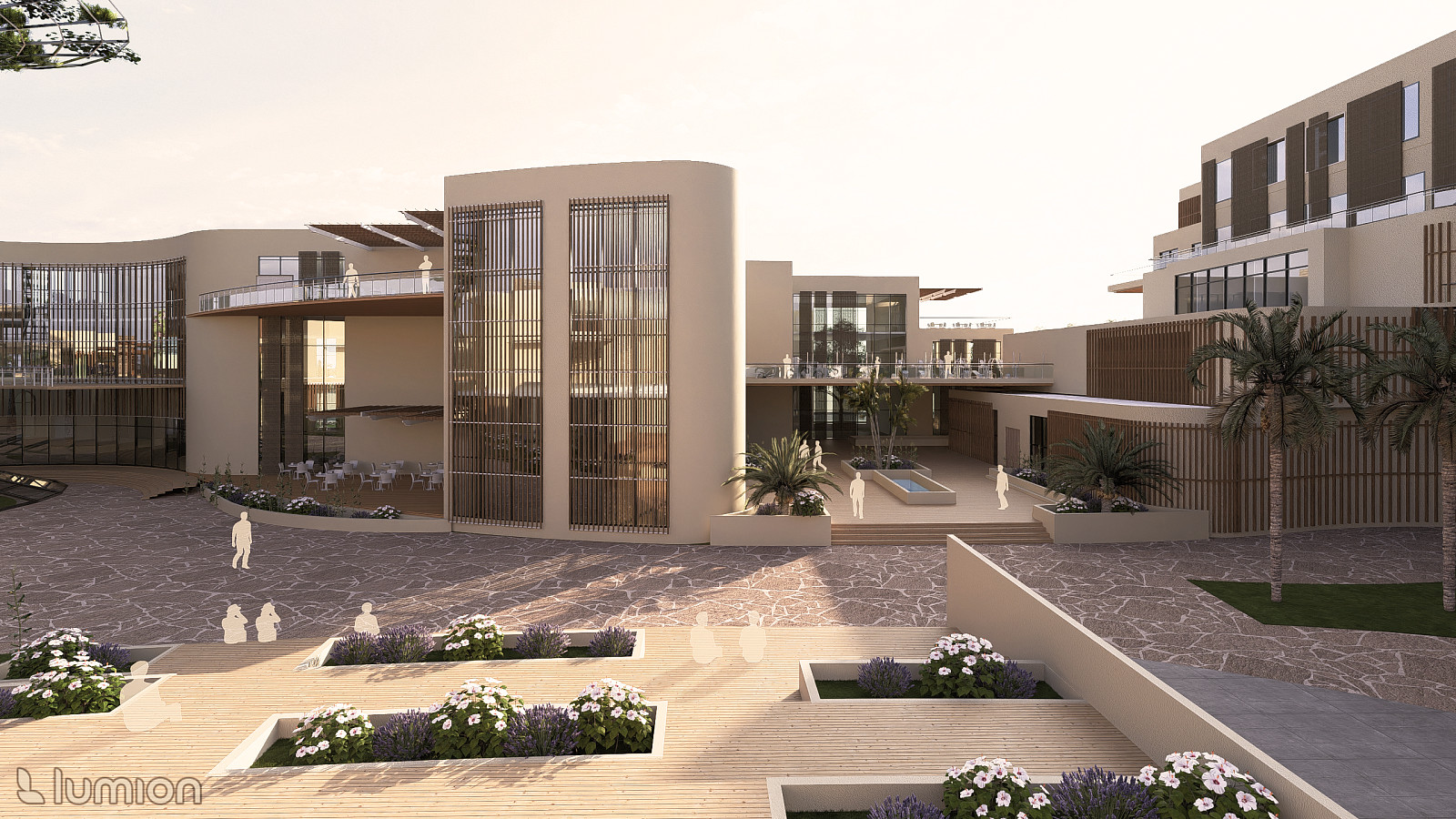
Primary building masses are expressed through stone and concrete, giving the complex a grounded, protective, and calm character. Selected areas incorporate curtain wall systems to introduce daylight, views, and visual connection to planted voids, terraces, and the surrounding landscape.
In front of these curtain walls, fabric screens and louvers are integrated as external shading layers. Fabric screens provide soft, permeable shading that filters light and creates a calm interior atmosphere, while louvers allow more precise control of sunlight and privacy where orientation and program require it.
Together, these layers establish a clear hierarchy:
solid mass → transparent curtain wall → lightweight shading → vegetation, allowing the architecture to remain heavy and protective while still open, humane, and responsive.
Circulation & Connectivity
Each building operates independently while remaining connected through private horizontal links embedded within the overall massing. These connections allow discreet and controlled movement between different stages of rehabilitation without exposure to public circulation routes.
Circulation paths frequently intersect with planted areas, reinforcing daily interaction with landscape as part of movement rather than as a separate activity.
Program Distribution
First Building – Assessment, Research & Community Laboratories
Ground Floor: Emergency unit (ER)
Upper Floors: Diagnostic and analytical laboratories for addiction detection
Addiction-related research facilities
Independent community laboratories supporting project sustainability
Second Building – Therapy, Activity & Engagement
Ground Floor: Pool, café, clinics, first aid, administration, workshops
First Floor: Gym, kitchen, dining areas, clinics, exhibition galleries
Second Floor: Library, group therapy spaces, café, administration
Lounges distributed across all floors
Third Building – Treatment & Accommodation
Ground Floor: Family visiting areas
First & Second Floors: Treatment clinics
Third, Fourth & Fifth Floors: Residential accommodation units
Overall Technical Approach
The project integrates architecture, landscape, and rehabilitation through massing-driven design, planted voids, participatory landscape, and layered material systems. Healing and sustainability are embedded in everyday actions, where patients actively engage with their environment cultivating landscape as they progress through recovery.

Copyright © 2026 INSPIRELI | All rights reserved. Use of this website signifies your agreement to the Terms of Use, Privacy Policy, and use of cookies.