THE IN-BETWEEN URBAN EDGE


Project idea
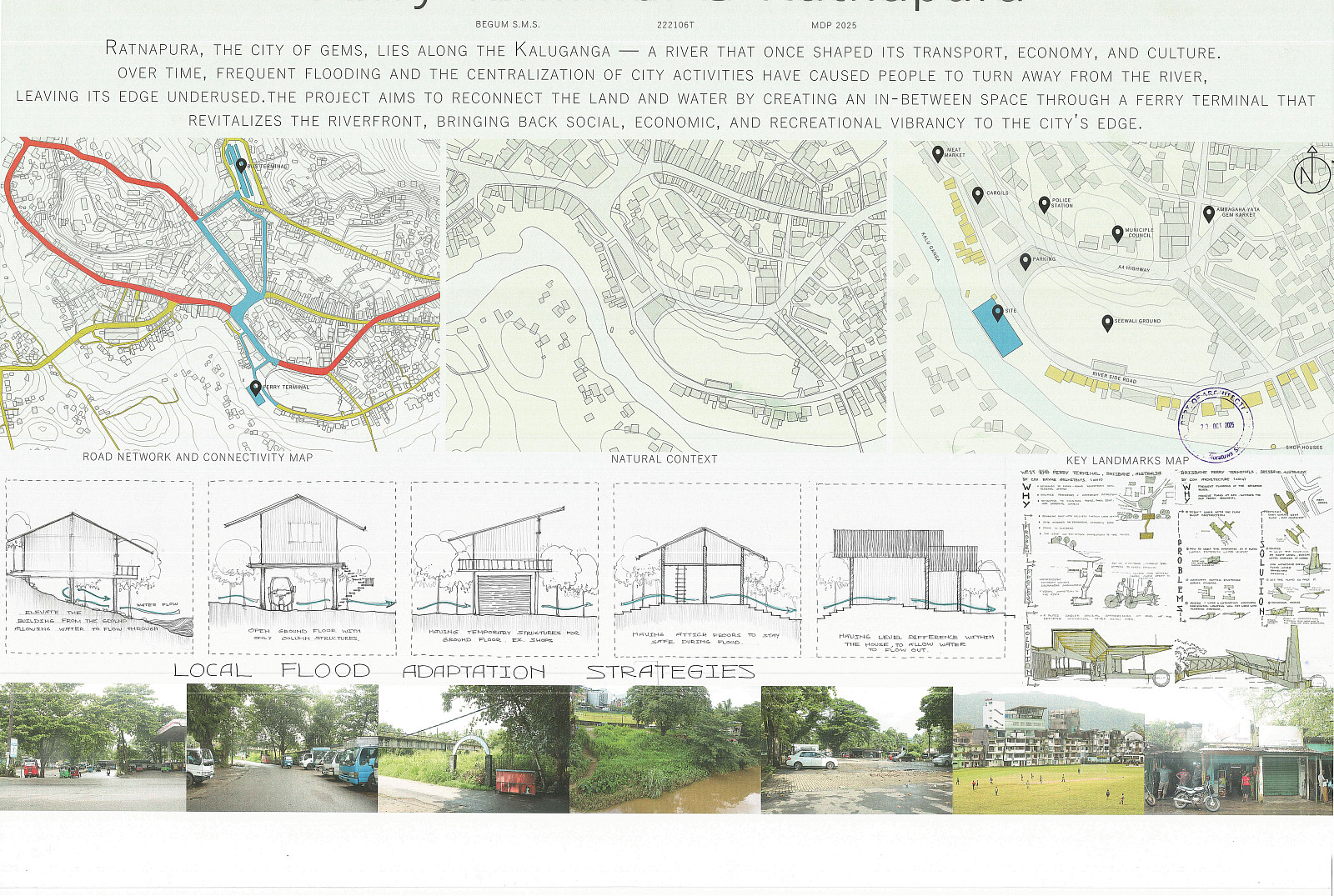
Ratnapura, located in the Sabaragamuwa Province of Sri Lanka, is widely known as the “City of Gems” and has historically developed along the Kalu Ganga River, which once played a crucial role in transport, trade, and cultural exchange. Over time, frequent seasonal flooding, riverbank erosion, and the centralization of urban activities away from the river have caused the city to gradually turn its back on this vital natural edge. Today, the riverfront remains largely underutilized and disconnected from everyday civic life.
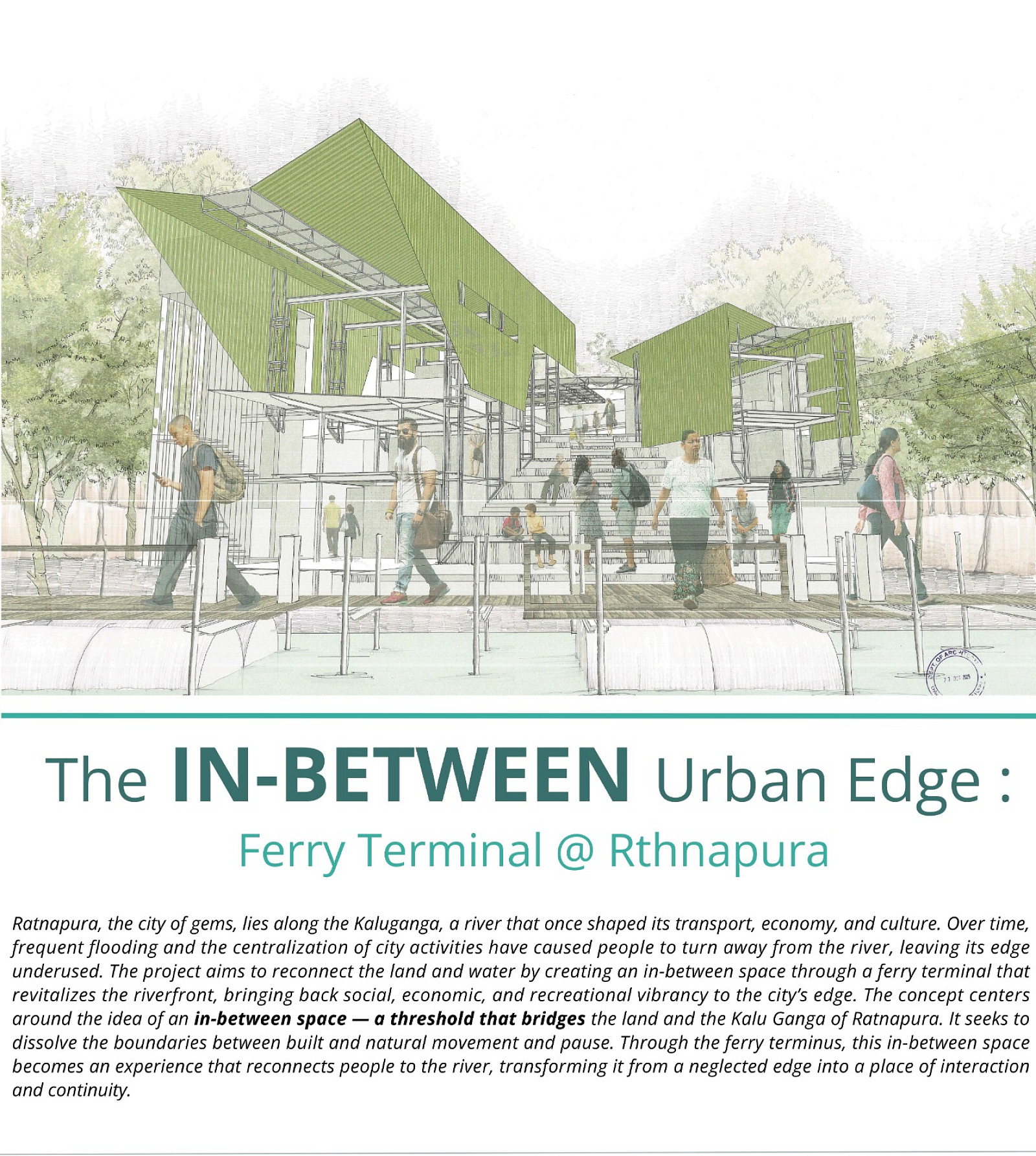
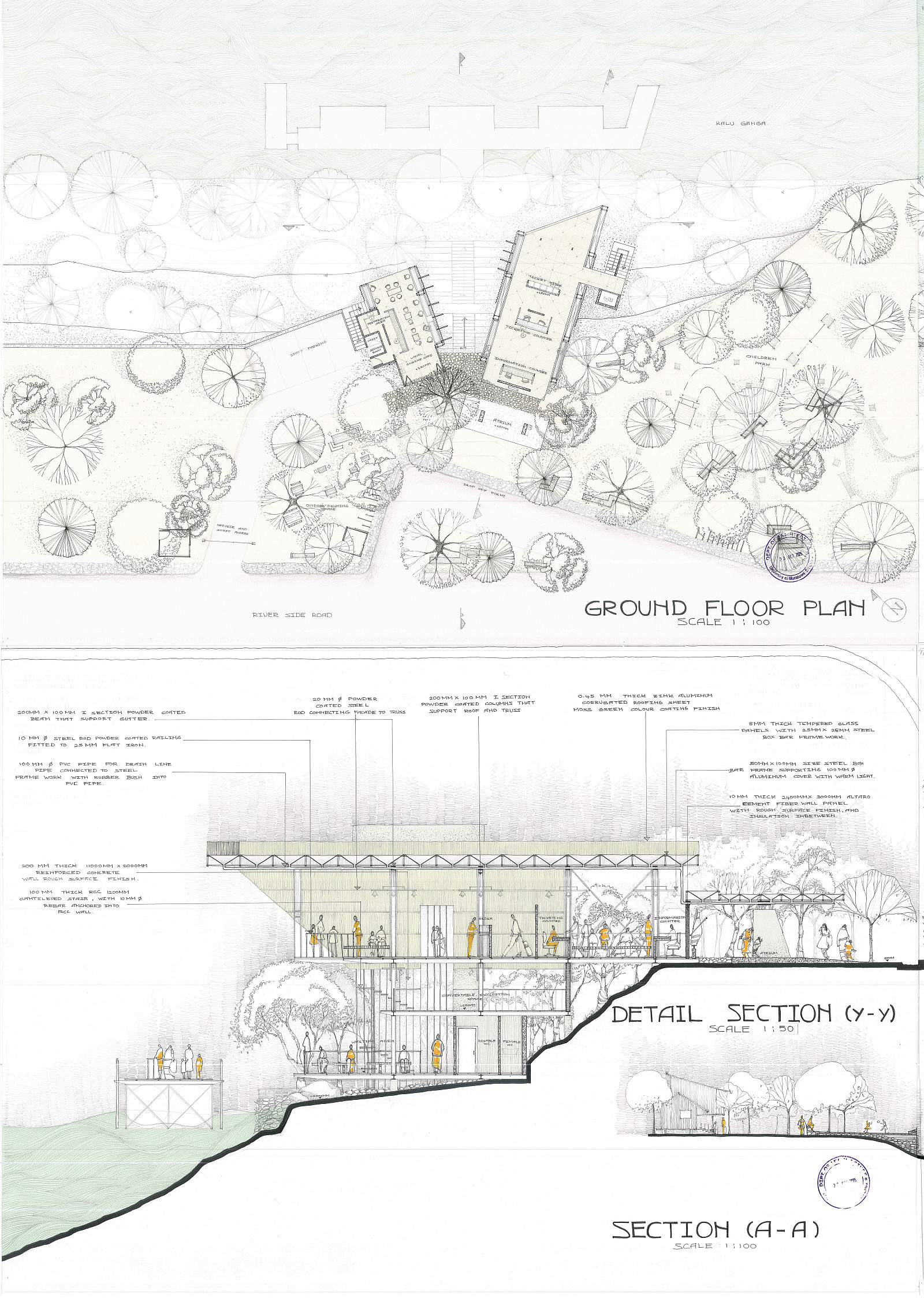
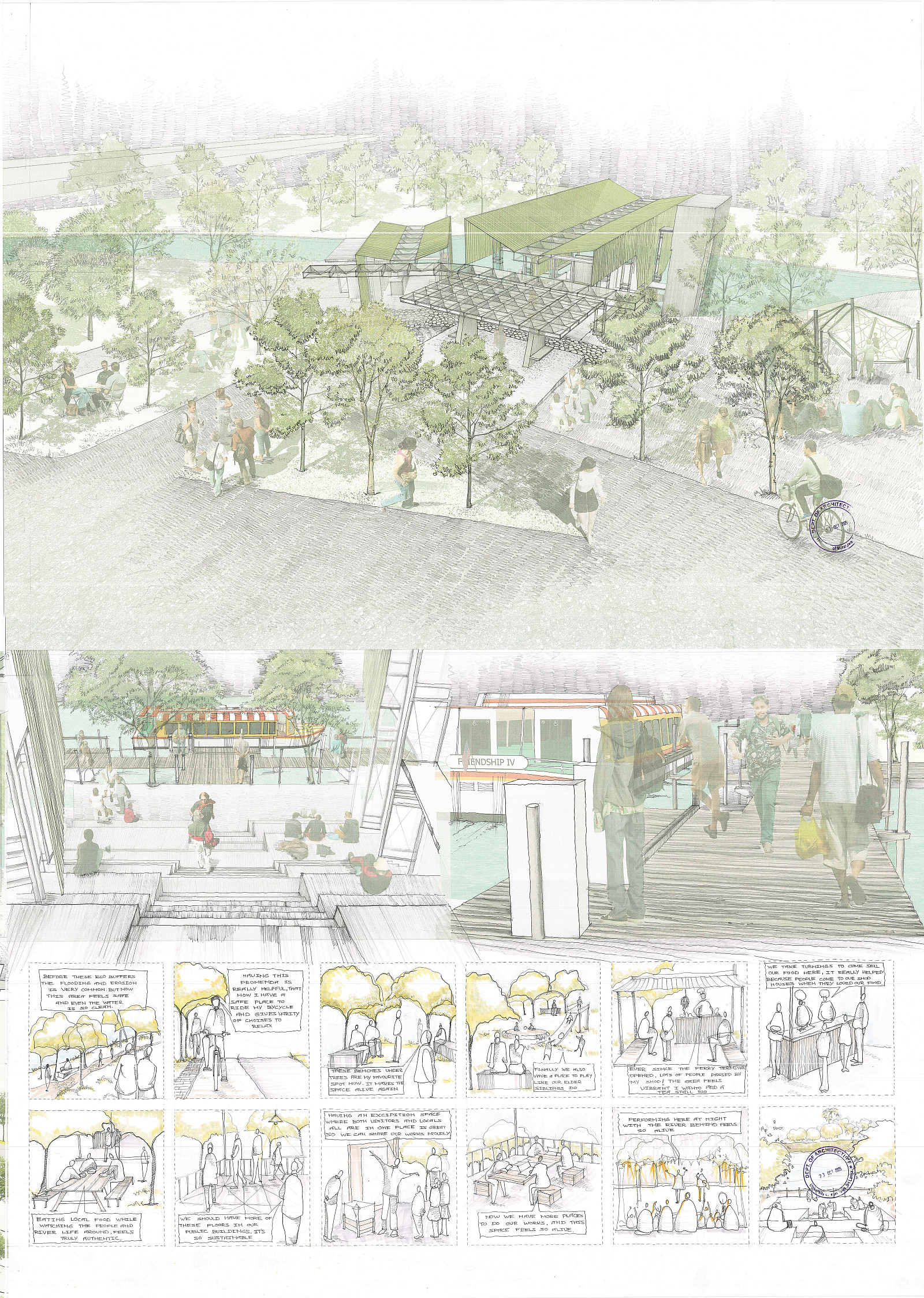
This project proposes a ferry terminal in Ratnapura, Sri Lanka, as an architectural intervention to reconnect the city with its river. Rather than approaching the terminal as a purely functional transport facility, the project redefines it as an in-between space, a transitional civic environment that bridges land and water, movement and pause, and built social capital.
The primary goal of the project is to reactivate the neglected river edge while addressing mobility, social interaction, and flood resilience. By integrating public transport infrastructure with social, economic, and recreational functions, the ferry terminal becomes a catalyst for restoring the relationship between the Kalu Ganga and the people of Ratnapura, transforming the riverfront into an active and inclusive public realm.
Project description
The ferry terminal is located along the Kalu Ganga riverfront in Ratnapura, Sabaragamuwa Province, Sri Lanka, and is conceived as a multifunctional civic space that operates beyond its role as a transport hub. Guided by the concept of in-between space, the project creates a spatial continuum where circulation, gathering, and informal activities coexist along the river edge.
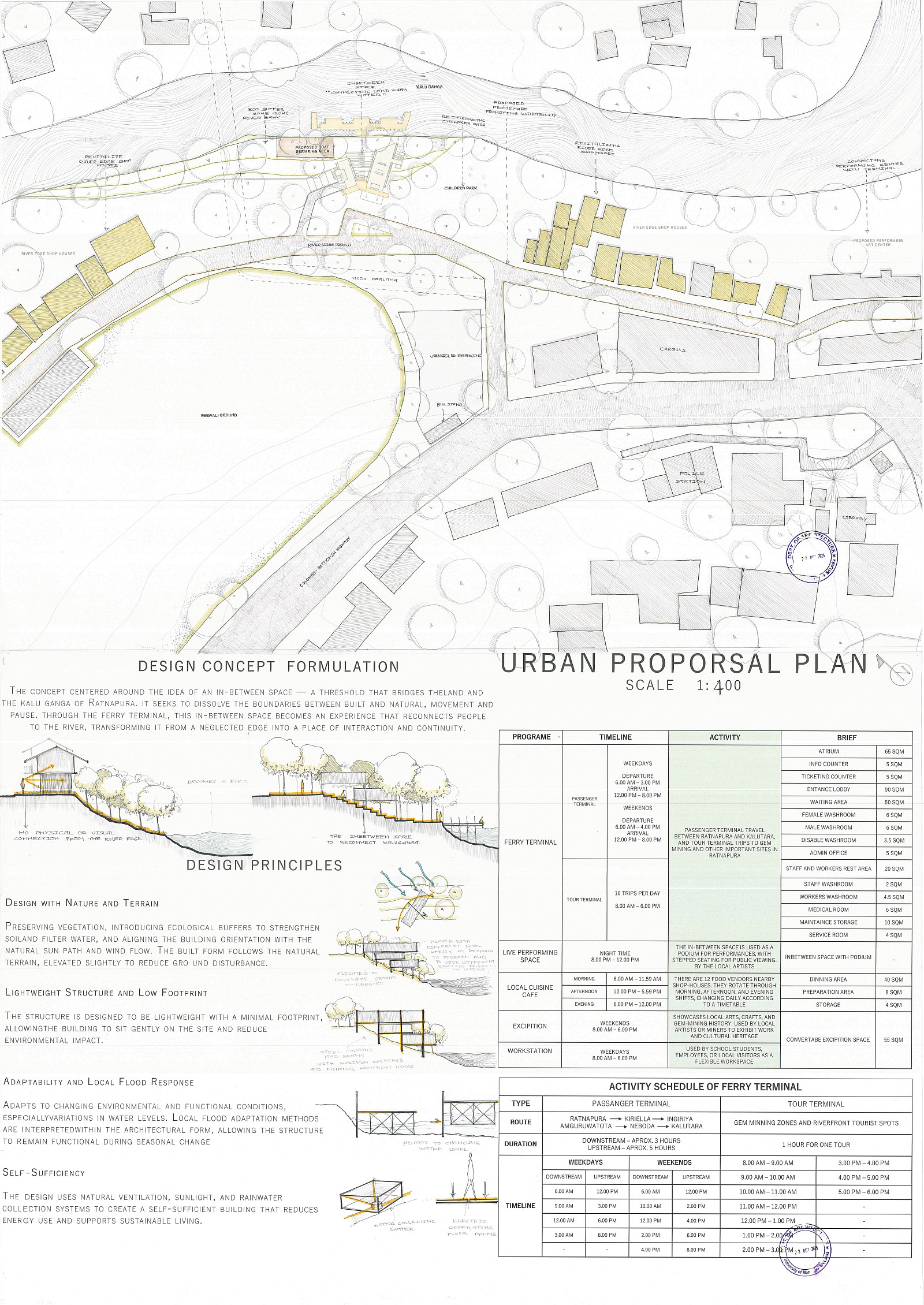
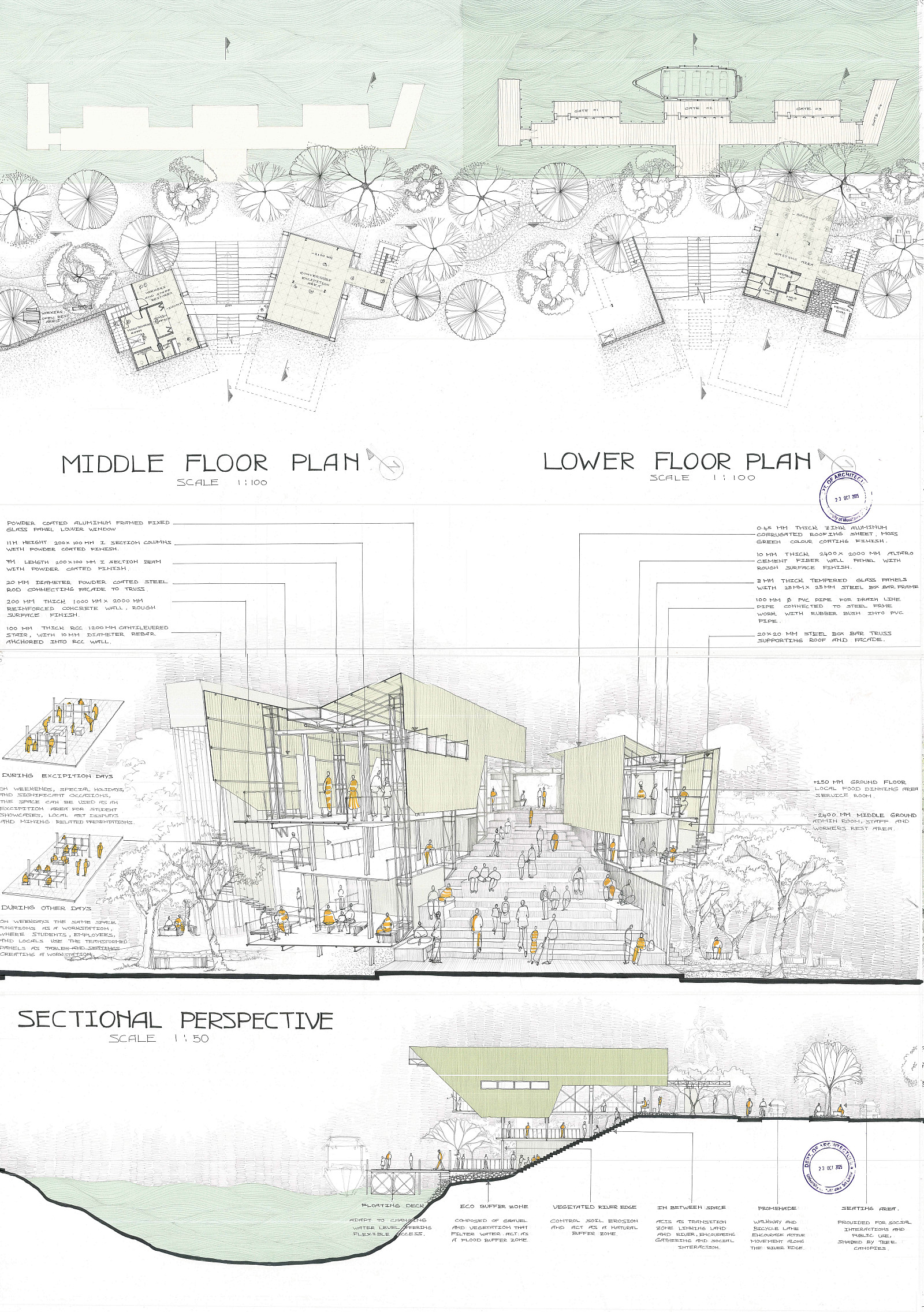
The design introduces riverfront promenades, pedestrian walkways, bicycle lanes, and shaded seating areas that encourage movement and social interaction. Ecological buffer zones composed of gravel and vegetation act as flood mitigation layers, filtering runoff water, stabilizing soil, and reducing erosion. Floating decks adapt to fluctuating river levels, ensuring that the terminal remains functional during seasonal flooding.
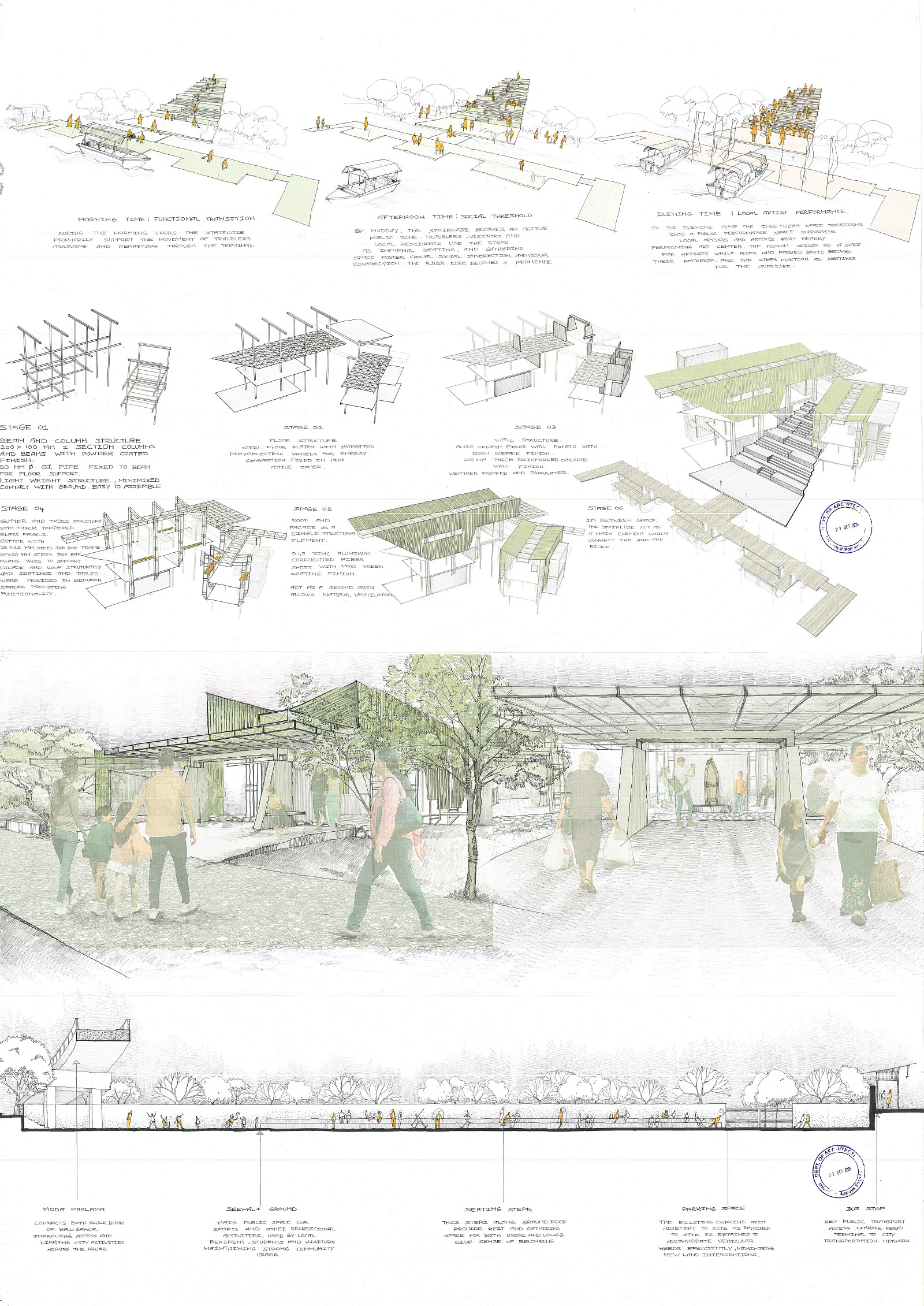
Spatially, the project responds to different times of the day. In the morning, the in-between spaces primarily support commuter movement. By midday, stepped platforms and open edges function as informal social zones for travelers, visitors, and local residents. In the evening, the same spaces transform into public performance areas, supporting local artists and cultural activities, with the river and surrounding landscape acting as a backdrop.
Commercial spaces within the terminal support existing river-edge vendors and introduce local economic activity, strengthening the riverfront as an active urban edge within Ratnapura, Sri Lanka.
Technical information
The ferry terminal in Ratnapura, Sabaragamuwa Province, Sri Lanka, is designed as a lightweight, flood-adaptive structure responding to the region’s tropical climate and seasonal river fluctuations. The built form follows the natural terrain and is slightly elevated to minimize ground disturbance and allow floodwater movement beneath the structure.
Floating decks and adaptable platforms respond to changing water levels of the Kalu Ganga, ensuring continued operation during flood periods. Ecological strategies are integrated through vegetated riverbanks and eco-buffer zones that strengthen soil stability, reduce erosion, and function as natural flood barriers while filtering surface runoff.
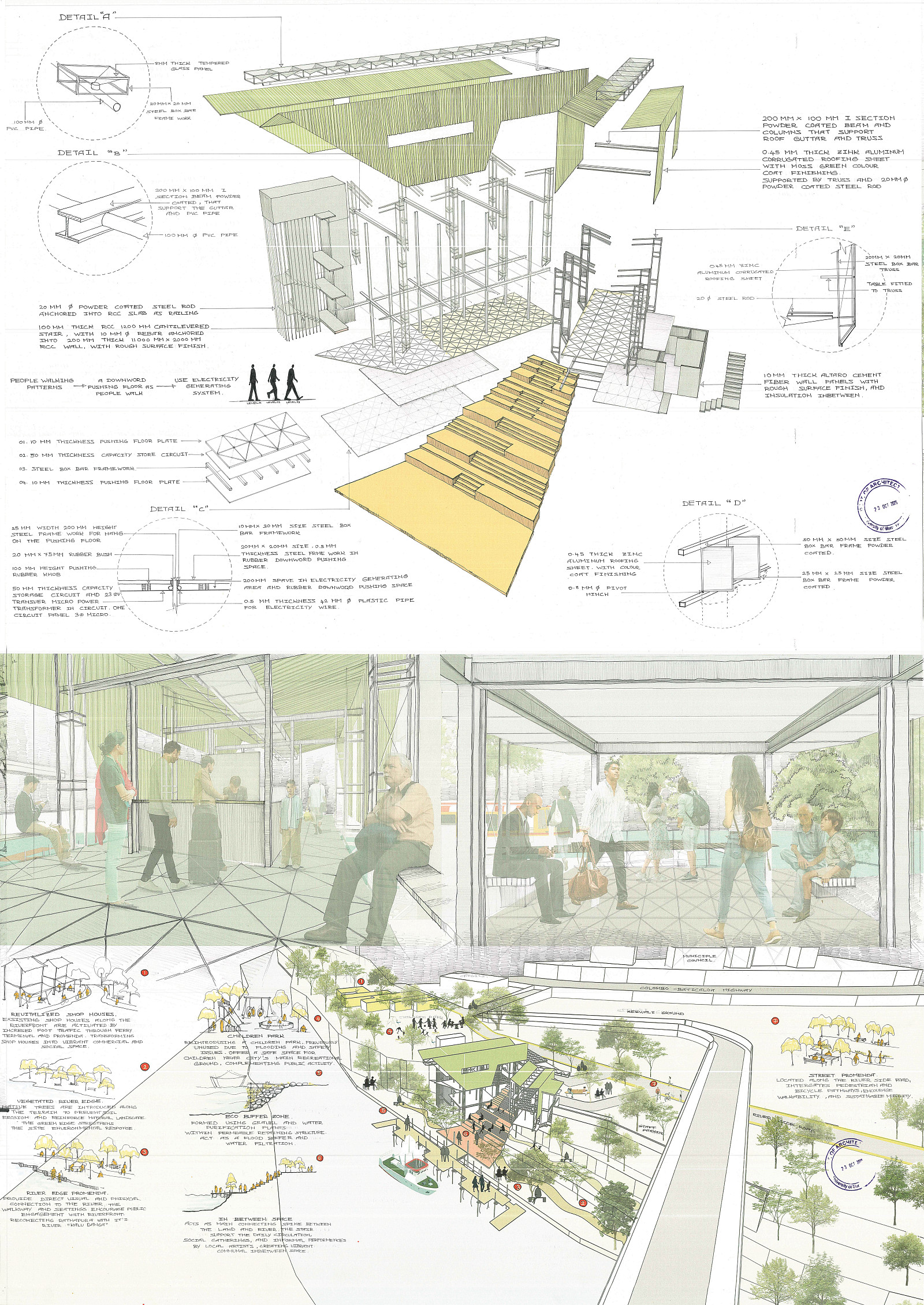
The building orientation is aligned with prevailing wind directions and solar paths to maximize natural ventilation and daylighting. A truss-supported roof structure serves both structural and social purposes, creating shaded seating zones within the architectural framework. The roof also supports a rainwater harvesting system, contributing to water self-sufficiency.
Sustainable energy strategies include the use of piezoelectric floor tiles that generate electricity through pedestrian movement, reducing overall energy demand. Combined with passive environmental strategies, the project demonstrates a resilient, low-impact, and context-sensitive architectural response suitable for the climatic and social conditions of Sri Lanka.

Copyright © 2025 INSPIRELI | All rights reserved. Use of this website signifies your agreement to the Terms of Use, Privacy Policy, and use of cookies.