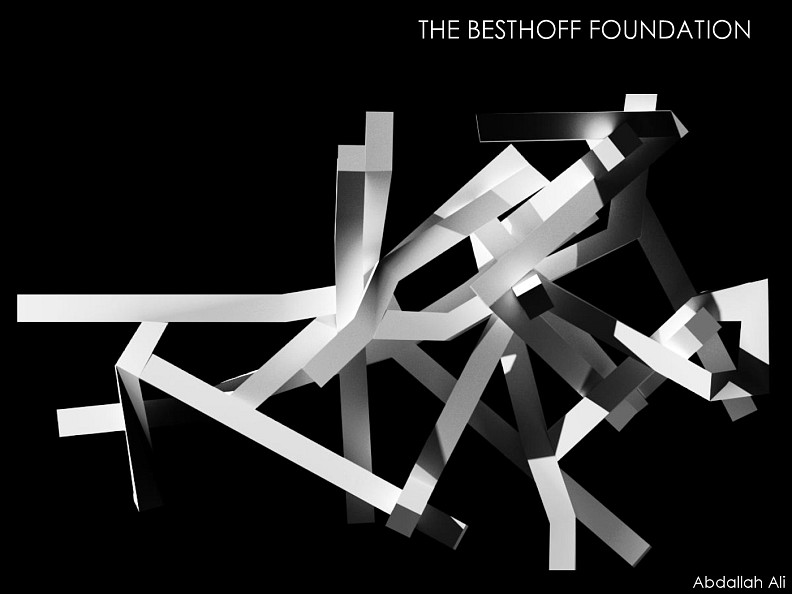
The Besthoff Foundation


Project idea
Hi everyone,
I am Abdalla. I want to introduce you to my proposal for
the Besthoff Foundation in magazine st, new orleans.
Before starting , I would like to position myself within the
history of the Architecture. I was always curious about the
evolution of the architecture through eras. From the
renaissance period and giving an example on that is St peter
basilica in the Vatican ,moving towards modernism with
Miesvanderohe buildings that defined modernism as this
office in Chicago , and then reaching an era of contemporary
architecture and looking at one of my favourites architects
that I really studied his work and ethos this semester and his
most notable works that always not being interested in
design itself but rather than that questioning the nature of
already existing architectural elements and re exploring
them critically as his project in Bahrain pavilion And that’s
where I position my approach
My approach mainly started with a field trip to the context
and observing the atmosphere,the importance and the main
features of such a context ,the warehouse district and its
history.
My first thought was the idea of the contrast between the
historical architecture and the contemporary expression. As
you can see , I simplified the historical skyline of the
warehouse façade into the simplest and most contemporary
line, a straight line as a base and a box as a vessel for my
functions floating above the historical warehouse façade.
But how can I make this box float? That was my question?
The structure was my answer , and what is structure was the
question that I kept trying to answer during the last 15
weeks. How can structure evolves from as it has already did
through history but also be part of the enhancement of the
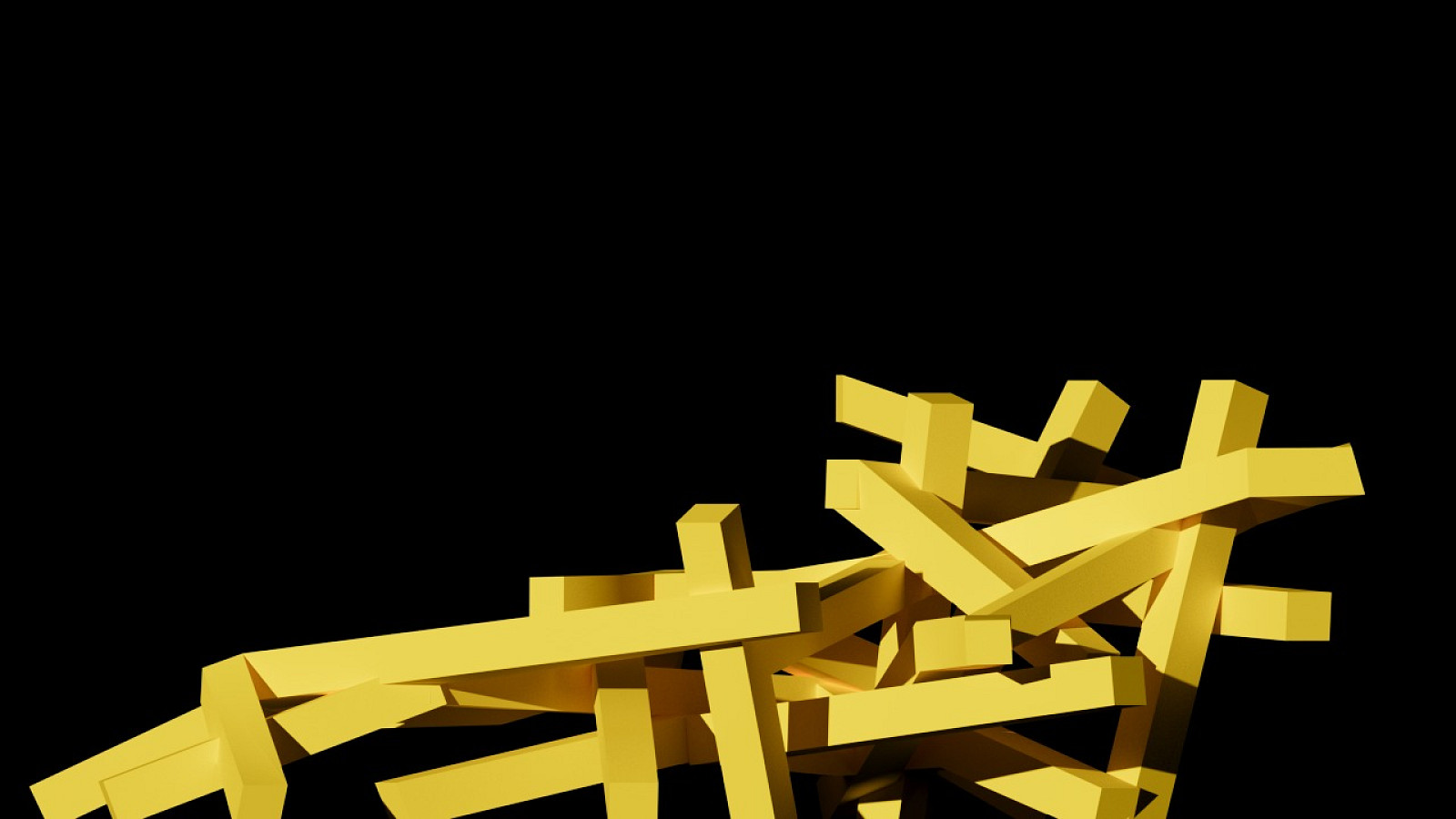
architecture. So my proposal for the besthoff Foundation, is based on a thesis that I
developed to position my intervention as a contemporary intervention
within a historical context like the warehouse district.
Combining circulation, openings, spaces , structures and even places for
ducts and maintanince, all in one element that acts as the backbone of
the proposal. Exploring slopes , angles, spans and relation of the slabs to
these elements for both functionality of spaces and possibility of
structural integrity was the solution to my previous question. What is
structure?
This was my first attempt in designing in the existing context, and to just
start I actually dropped bunch of those elements with an intent to
connect between the historical context and the contemporary
intervention.
I had 2 weeks to develop from this stage till the mid review and that’s
what I reached . I can say this was what I was imagining inside my head
but however , you can see in both section and plan that there was a lot of
these elements that it became complicated and not complex to me to
solve clean spaces that serves the functions of the program.
Another critic , I give to the proposal in this stage was the absences of
hierarchy in the scale and proportions of these elements like tubes where
they were all the same size and proportions.
Moving from the mid review phase with a clear understanding of what I
need to do and I can say that this was the most crucial stage in the
design. Remove all the elements and solve the plans and the space
without putting them in but ofcourse after 7 weeks with a more clear
understanding of where they will be re introduced but not randomly
anymore, just to support as a structure and enhance the quality inside
the spaces
And then after re introducing them again, with careful positioning , and
understanding of how they can support and enhance the space that was
the result .
Now you can see in the ground floor plan. Only 3 main pillars are placed as a
main support. And placed in relation to the already solved clean spaces. You
can see they start from the outdoor to reach a certain height that can be
accessible below when they enter the building. Like for example the audiotrium
The auditorium , people would be moving in those
elements see the auditorium and this huge sort of a
beam holding the slab of the auitorium
And then you come to the main floor of the exhibit and
galleries, I call it the 3 galleries space. With 3 off grid
oriented galleries that showcases special and unique
sculptures and artworks
And at the same time they are overlooked by the library
on their roofs. Having this sort of double height spaces
with floating boxes
And then comes the final floor that has the library and
the study rooms on top of the slabs of the 3 galleries
below
Till you reach the roof where you have an
accessible open roof you can host open
outdoor exhibition with the views to the city
Not revealing whats inside just a trace of the movement
through the translucency of the material in contrast
with the roughness of the concrete
This section shows the overall picture and the relation
of these elements to the slabs , but how do the
movement inside them looks like and how light falls on
these and enters through those fenestrations
And finally , my most favourite section, always the
smallest cross section that show the clear idea. The old
loft building functioning as the artists residency with a
direct accessibility from the outdoor and overlooking
the workspace and gallery of the artists raised and
hanged at the corner of magazine and st joseph
Project description
The proposed Besthoff Foundation intervention reimagines circulation not as a passive connector, but as the
generative force of architecture itself. Inspired by the idea of reducing architecture to its most essential elements
and reconfiguring their potentials, this project makes the ramp - a device of movement - into the structure, the
form, and the light-giving core of the building.
Their dynamic trajectories make circulation a performative experience,
echoing the Besthoff vision of making art universally accessible - no
longer confined, but spatially unfolding as an open journey.The program is carefully nested along this system of ramps. The galleries are
suspended between ramp segments, their volumes illuminated by shafts of light
channeled through tubular voids created by the circulation itself. The artists’
residences, more secluded yet directly plugged into the ramp structure, maintain a
spatial dialogue with the exhibition spaces. The ramps themselves serve not only as
arteries of movement but as the structural skeleton, distributing loads and giving
coherence to the ensemble.
Technical information
Through this circulation-as-structure, the project constructs a living organism where public and private, old and
new, stability and impossibility coexist symbiotically. Light, access, and structure converge into one architectural
gesture. By foregrounding movement as the foundation of spatial experience, the Besthoff Foundation becomes
a radical expression of openness—where every step taken is both a passage through art and an act of inhabiting
architecture.A series of interwoven ramps emerges from the public realm, extending from the exterior plaza into the heart of
the historic warehouse fabric. These ramps pierce through the old walls, glide past the new interventions, and
cantilever into seemingly impossible voids, at moments suspended in air as if leading to nowhere. Made of concrete and steel for the cantilevers outside of the box is the main structure system.
Documentation

Copyright © 2025 INSPIRELI | All rights reserved. Use of this website signifies your agreement to the Terms of Use, Privacy Policy, and use of cookies.