REVITALIZING KOLAKOPA’S HERITAGE: Conservation and Adaptive reuse of Kokil Peri Palace and Surrounding Buildings


Project idea
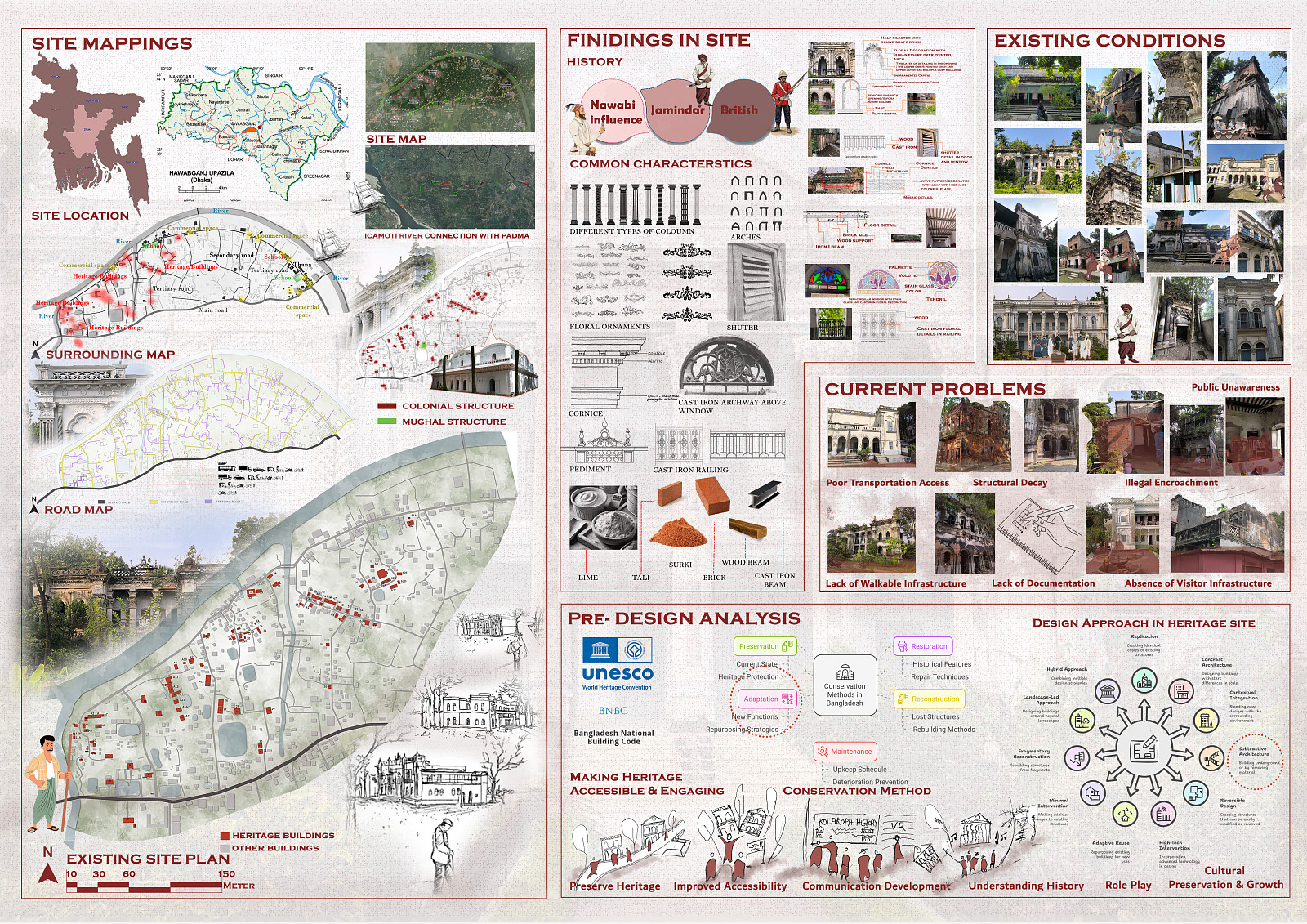
This project emerges from a slowly disappearing heritage site in Kolakopa, Nawabganj, where historic buildings still stand, yet quietly decay over time. Although their physical presence remains, neglect and lack of recognition are causing their identity, memory, and meaning to gradually fade.
The project proposes conservation and adaptive reuse as a response to this silent loss. Its aim is to reconnect people with the site and transform neglected structures into living spaces of cultural value, rather than leaving them to remain as forgotten ruins.
By keeping each building active, maintained, and publicly engaged, the project seeks to ensure that the site does not simply survive as fragments of the past, but continues to live, communicate its history, and remain relevant for future generations.
Project description
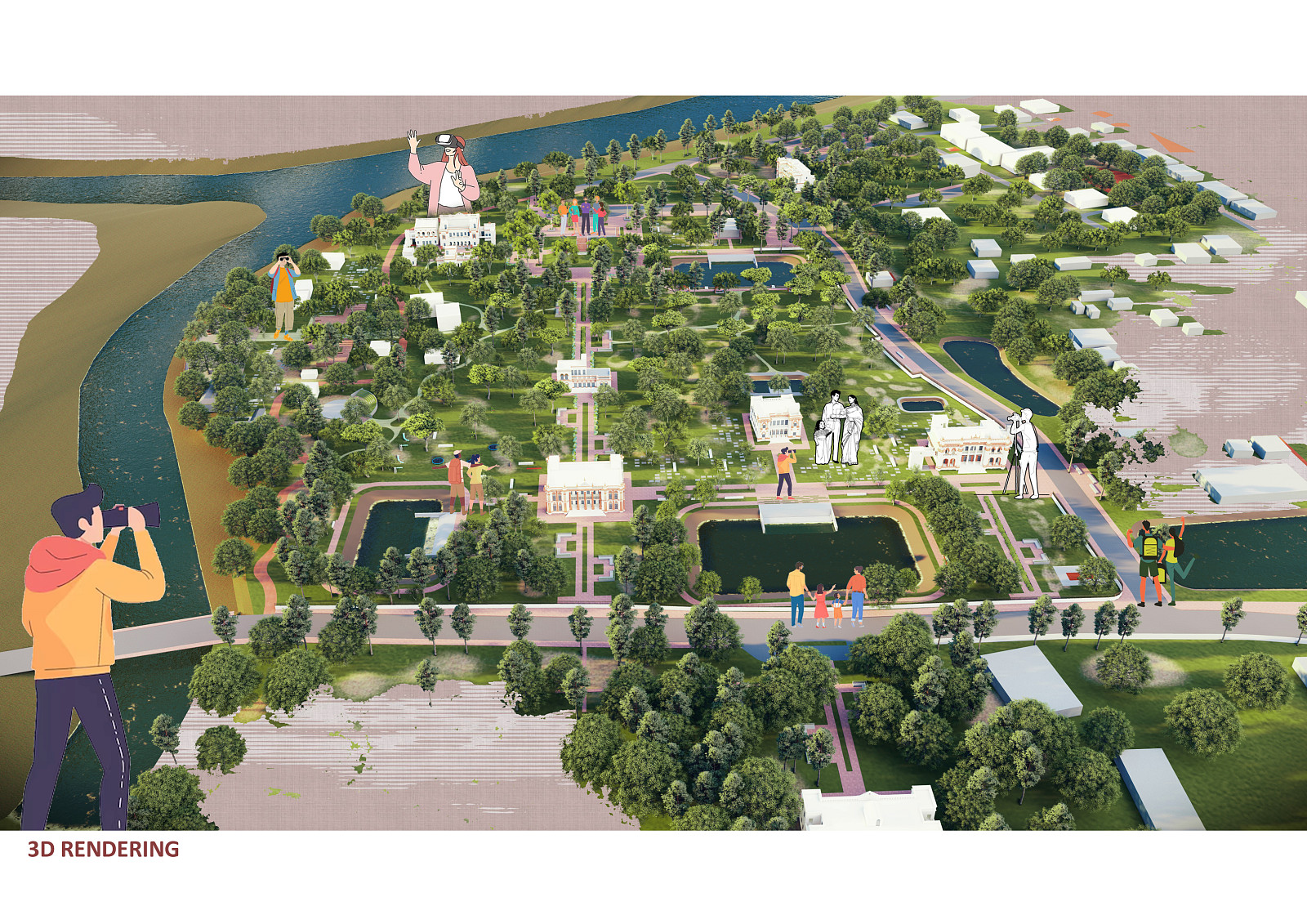
The main goal of this project is to conserve and adaptively reuse the site while creating a strong emotional and experiential connection between people and heritage. Through this approach, the project aims to keep the site and each of its buildings alive, meaningful, and actively engaged with the public.
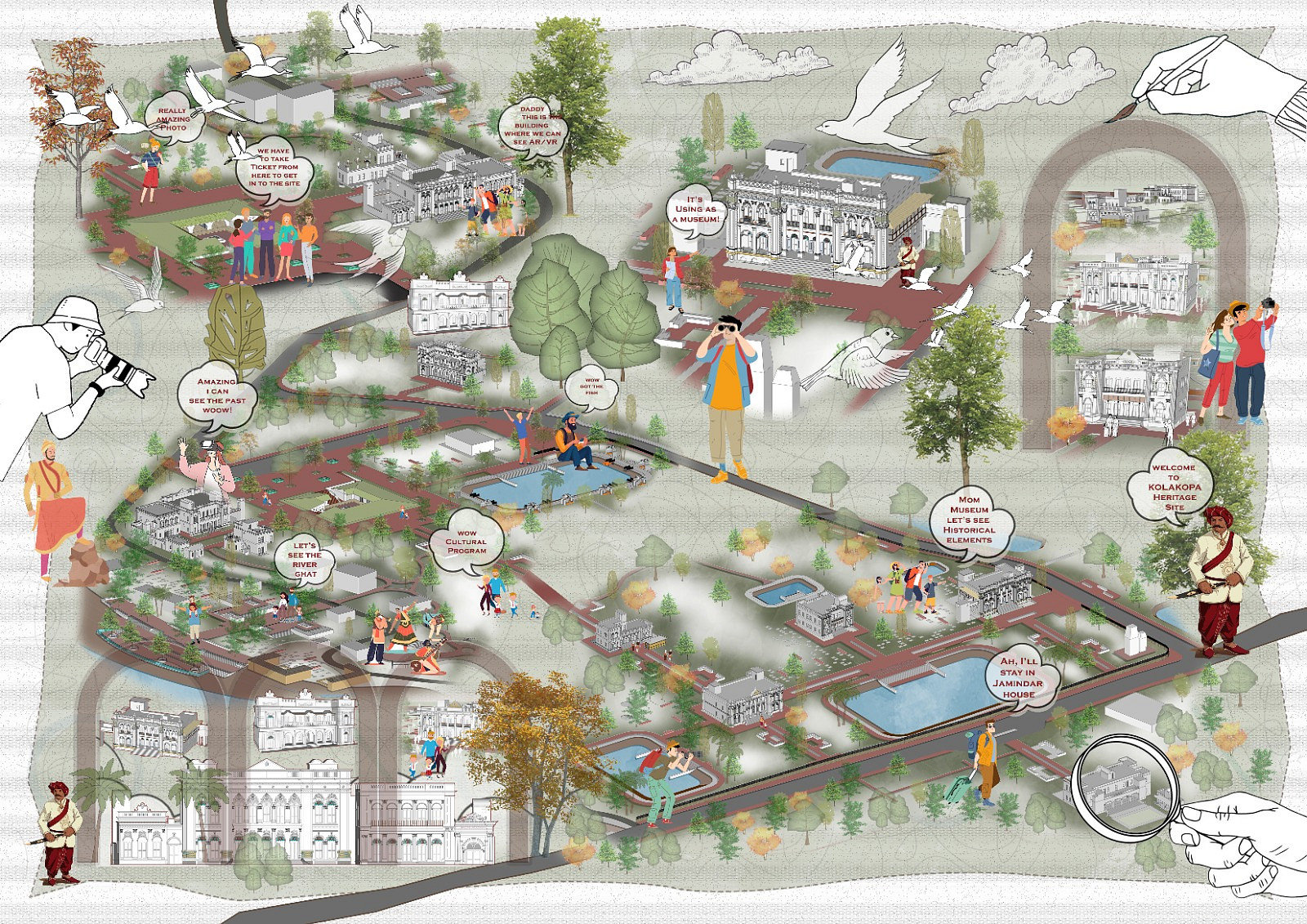
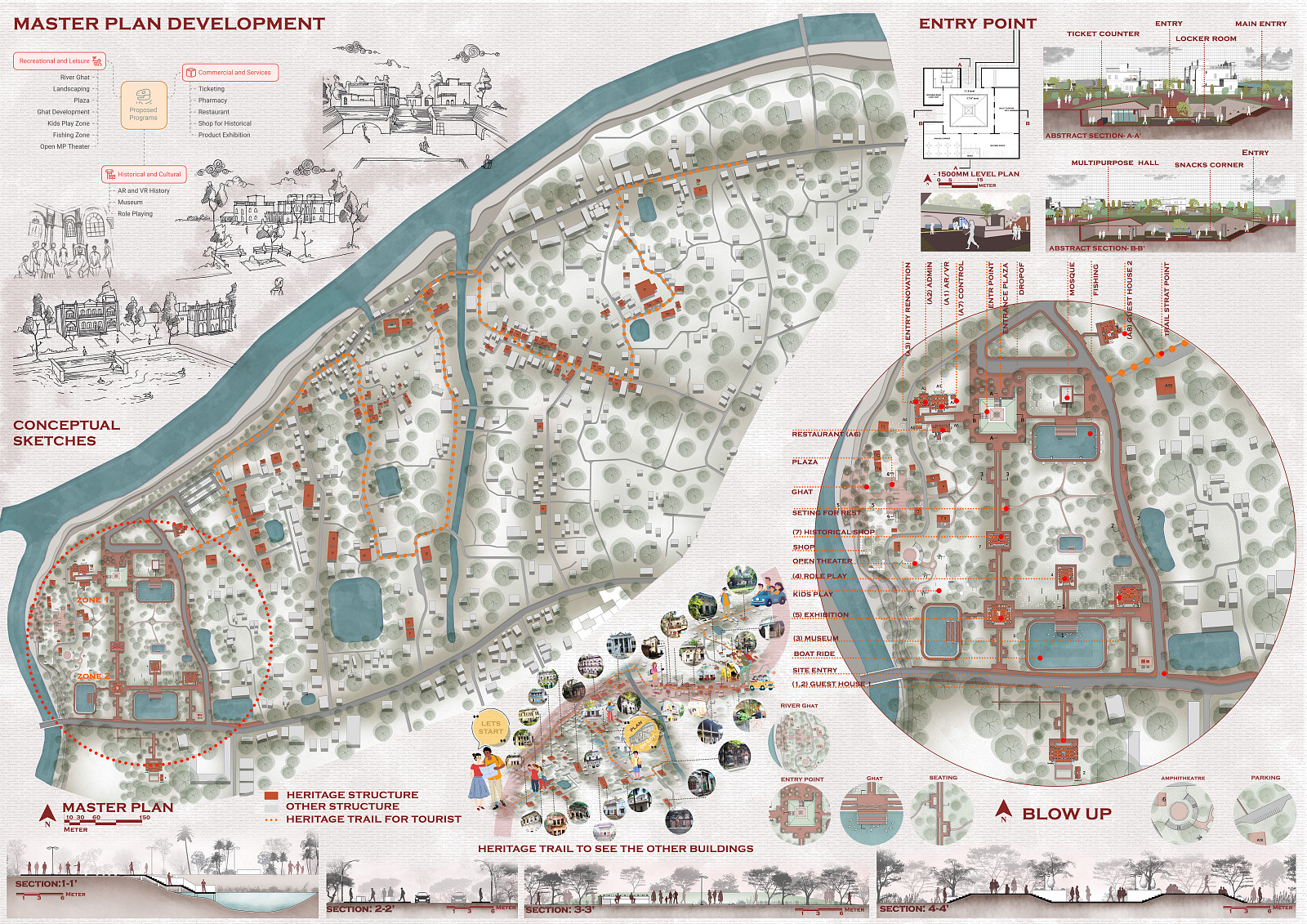
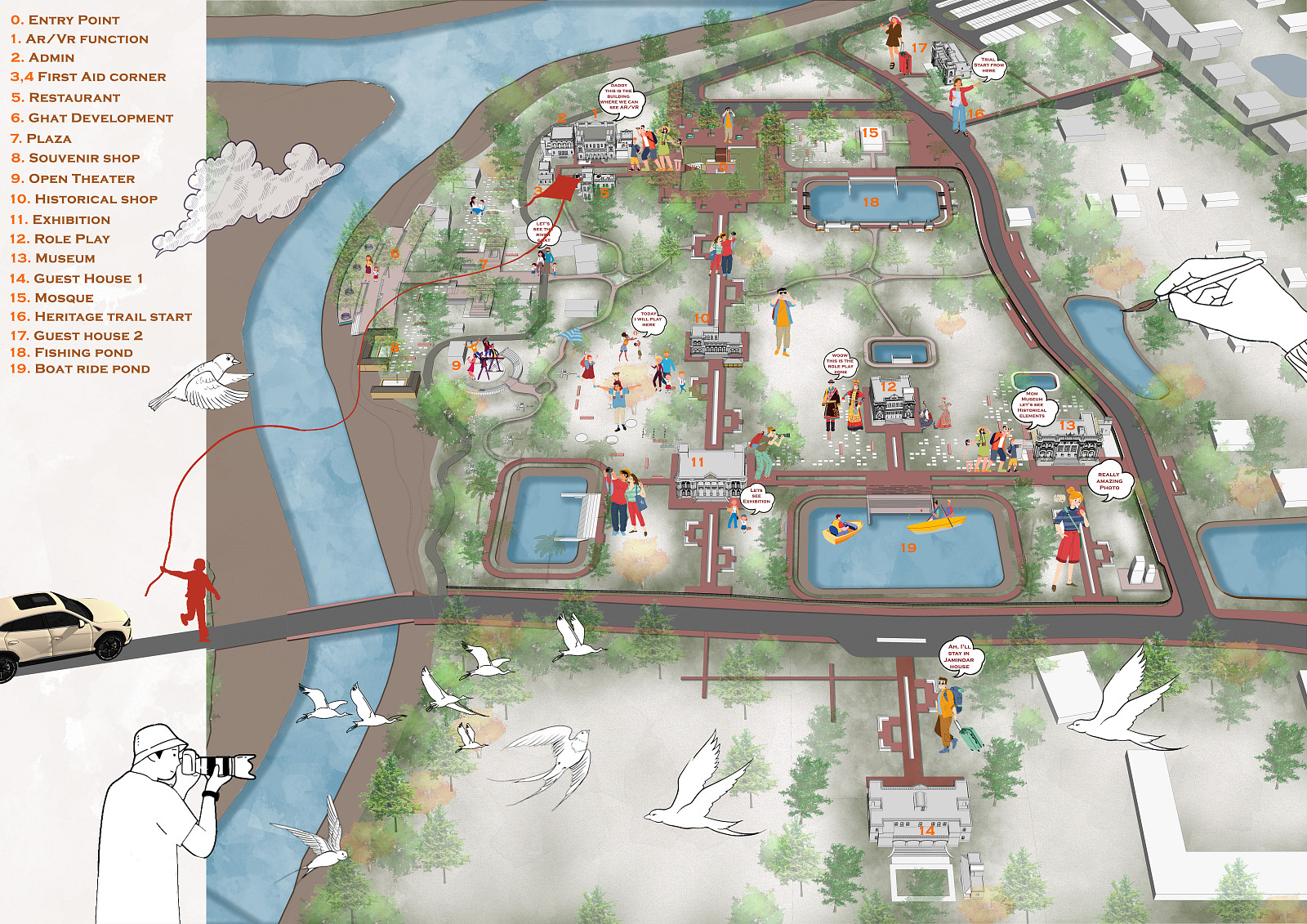
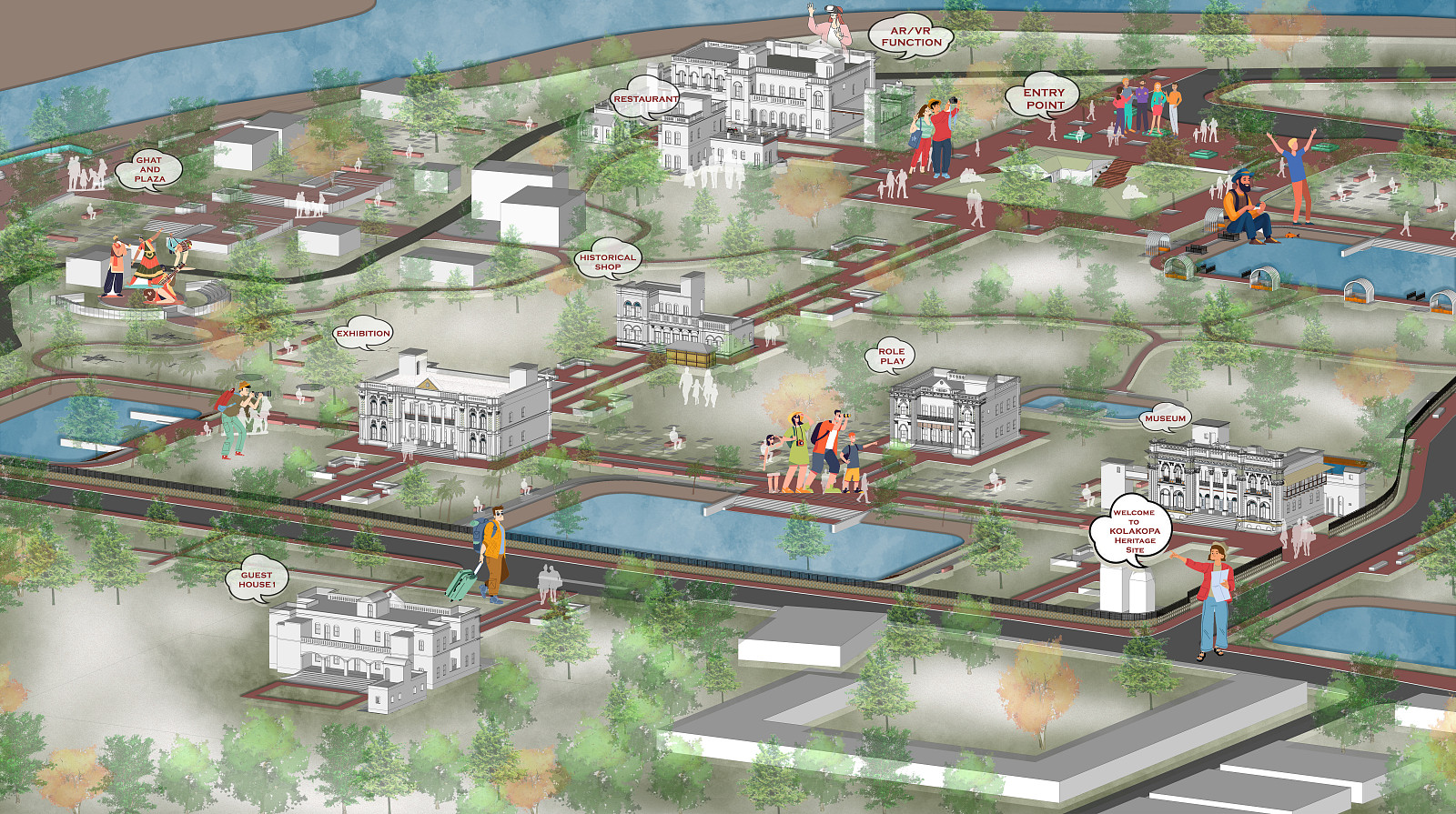
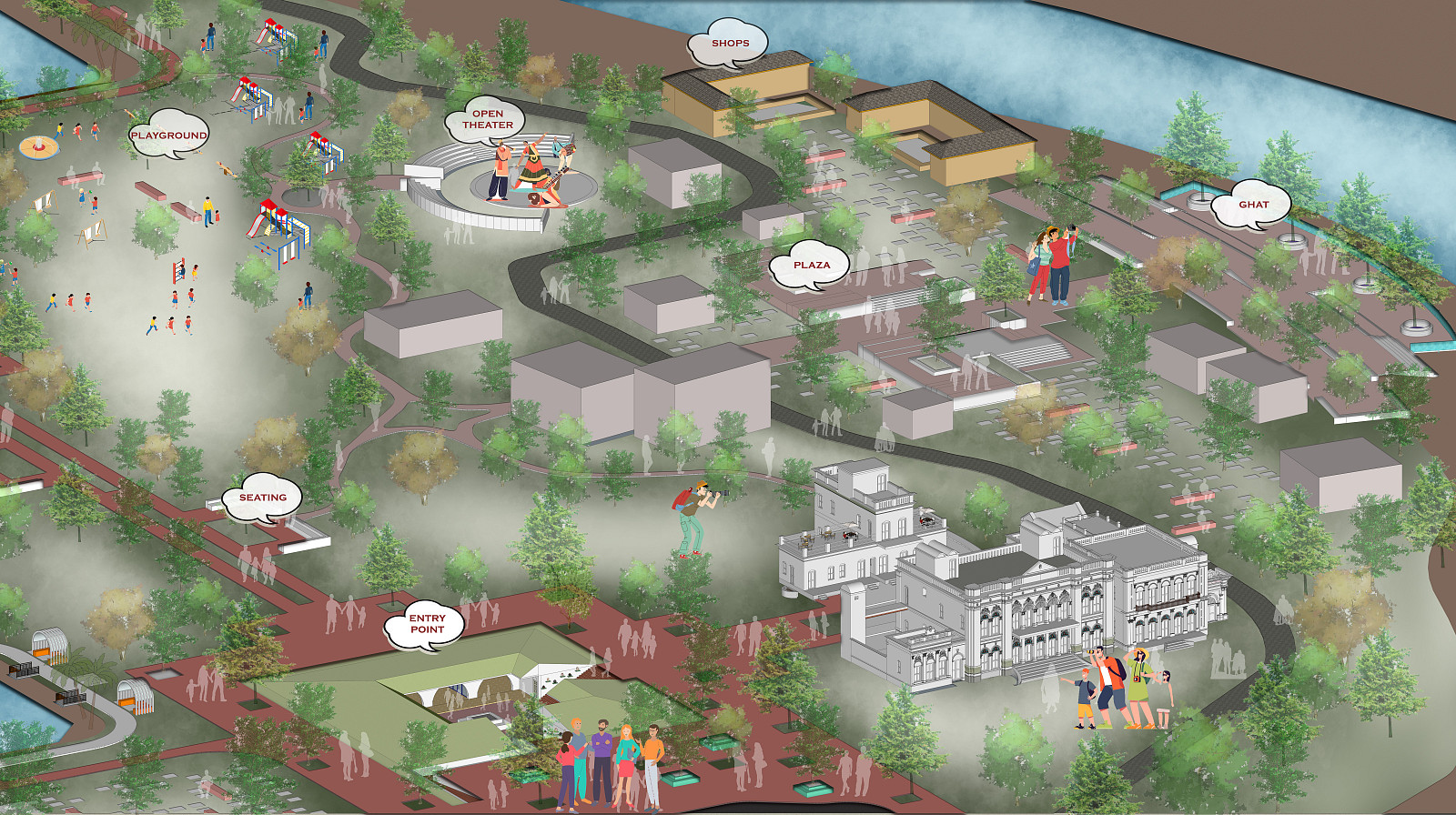
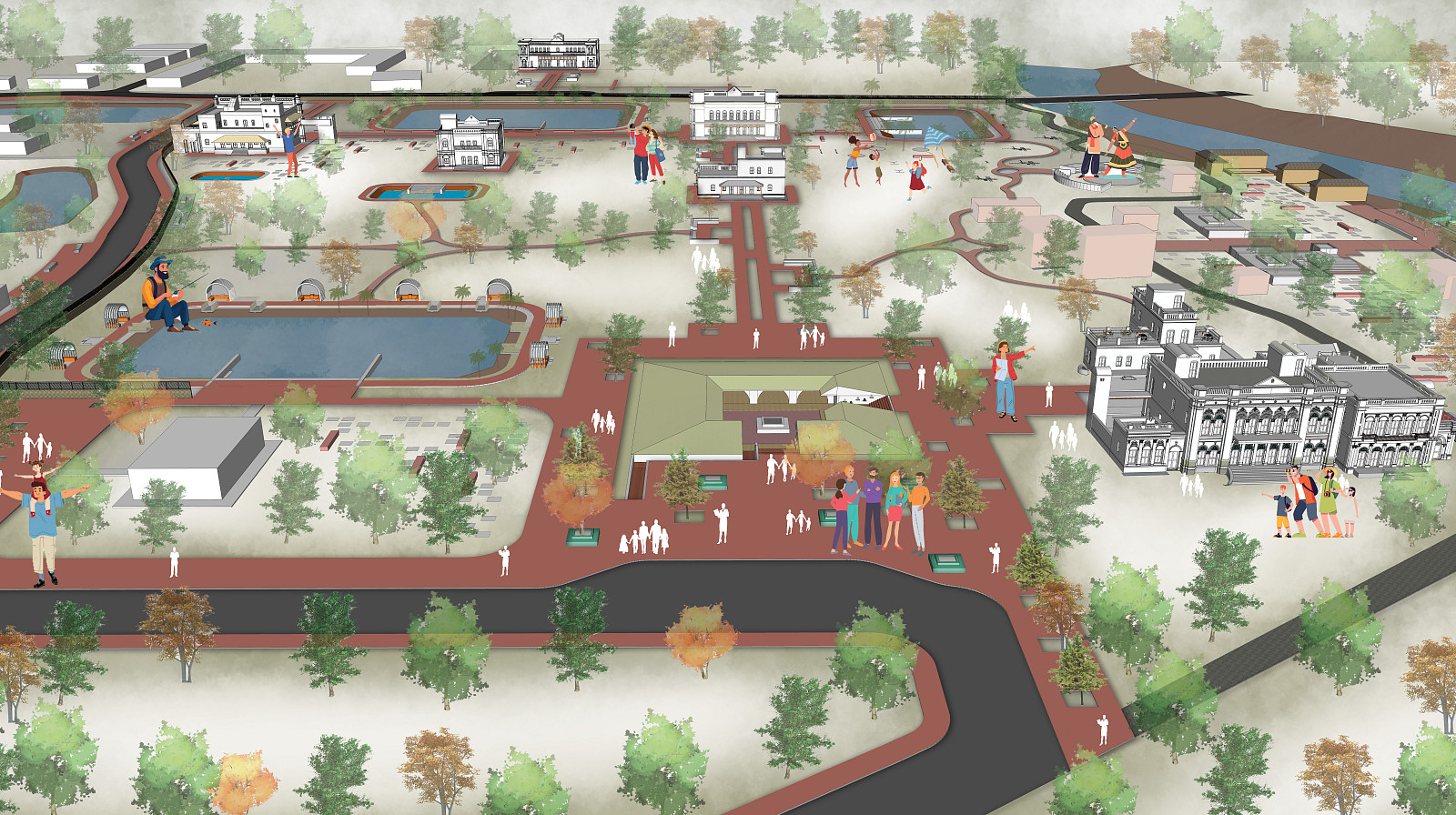
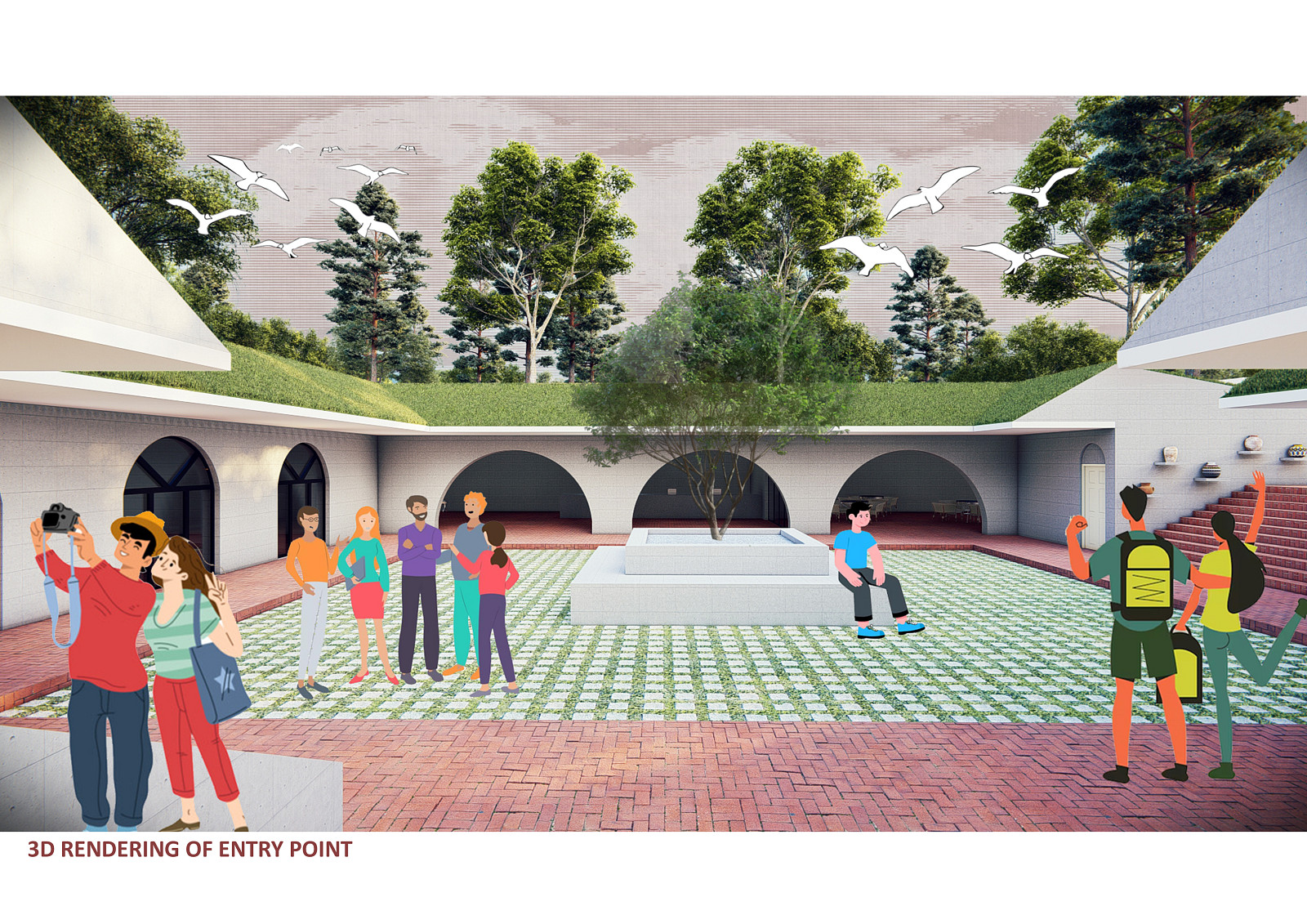
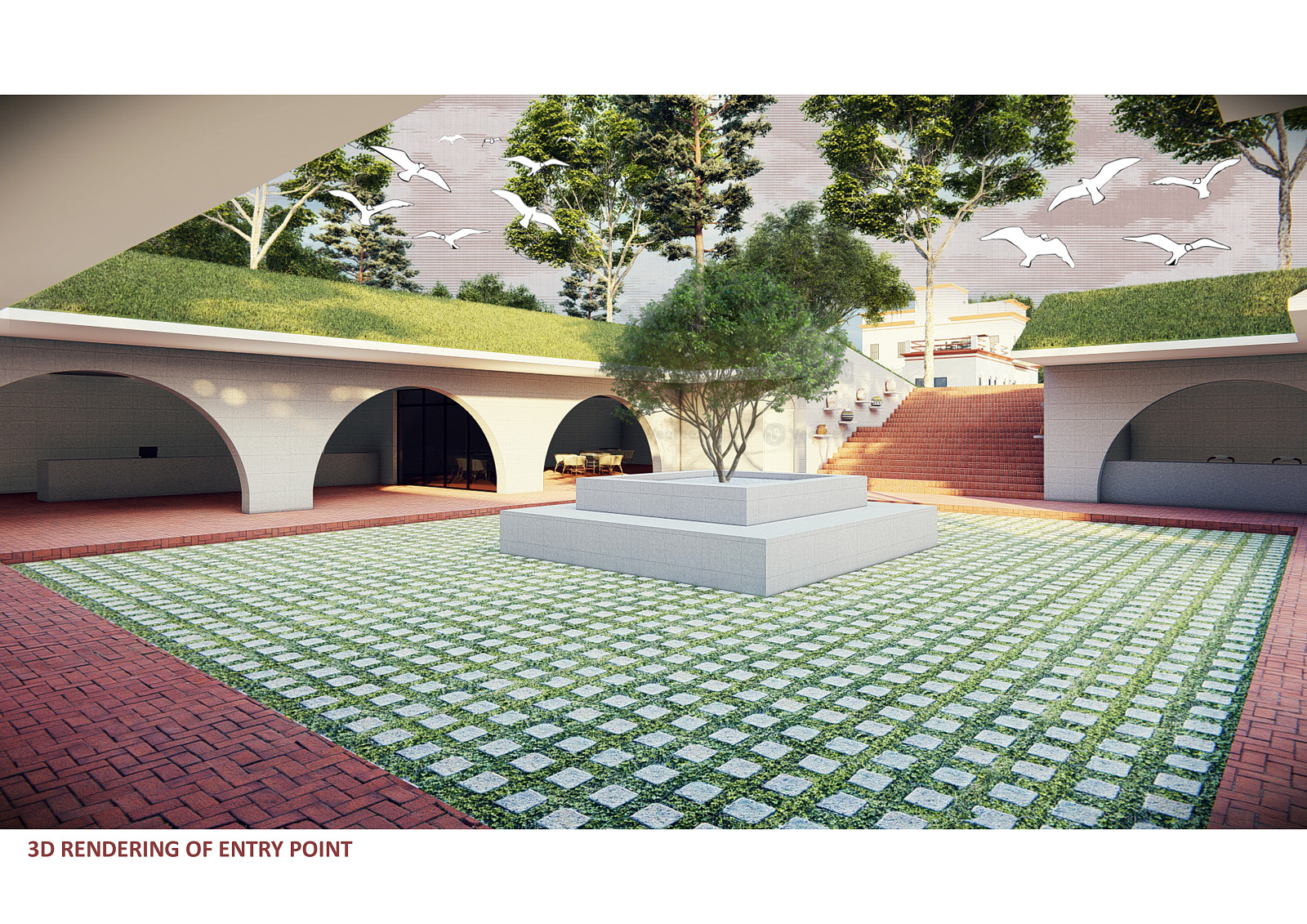
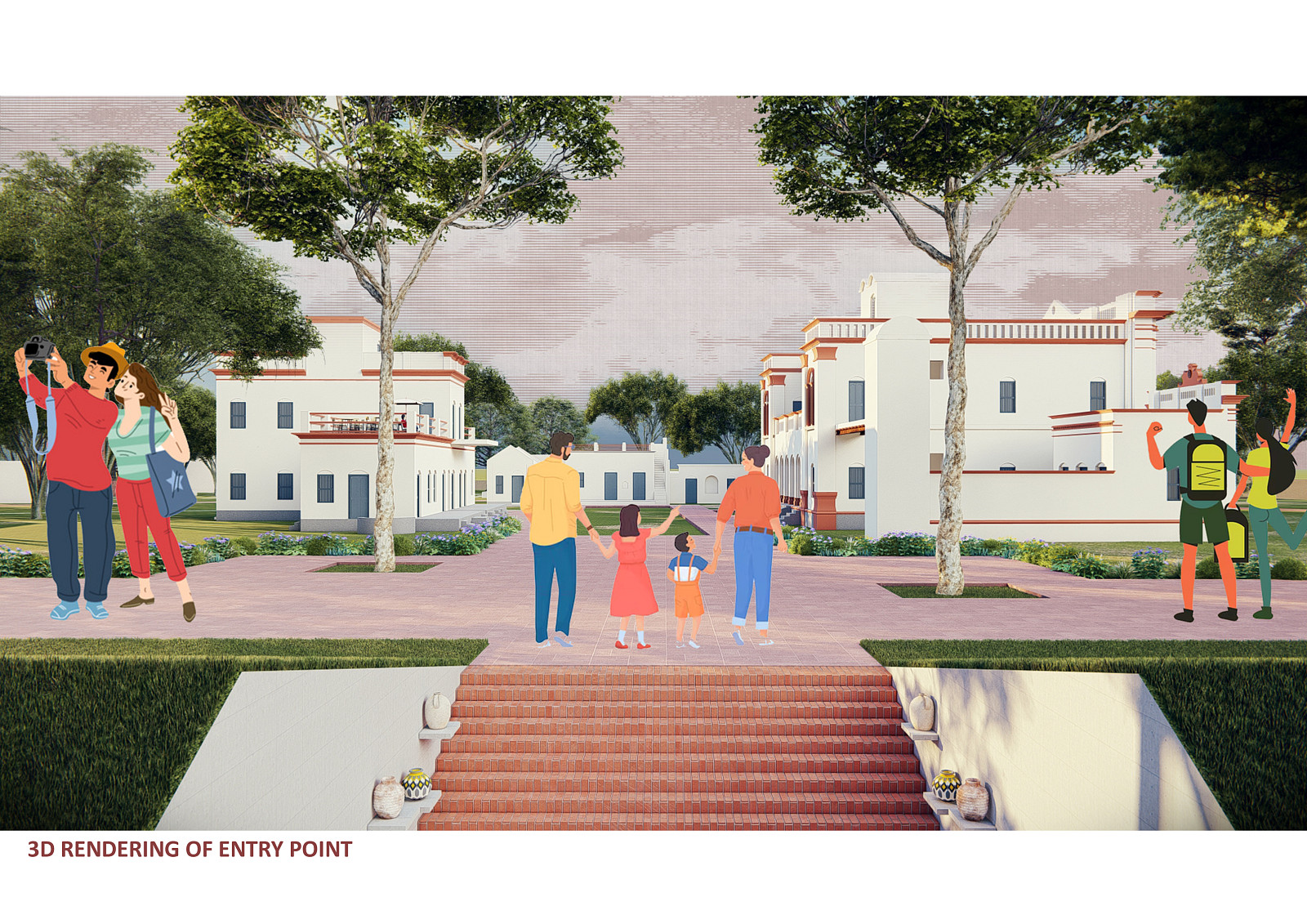
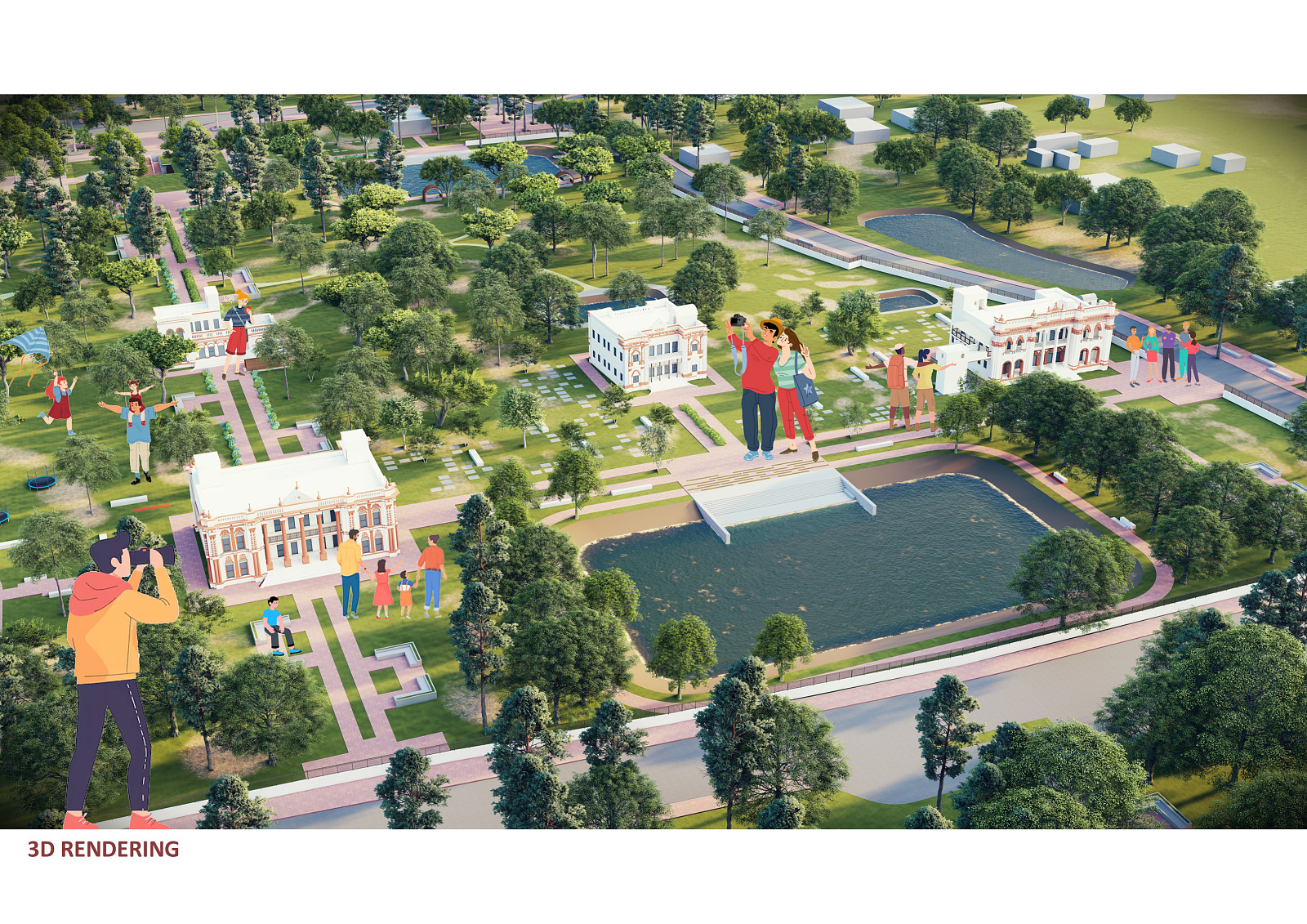
The new design follows a subtractive approach, allowing architecture and landscape to naturally reveal history to visitors. Tourists enter through an underground entry plaza, purchase tickets, and begin their journey along carefully planned heritage trails that connect every building.
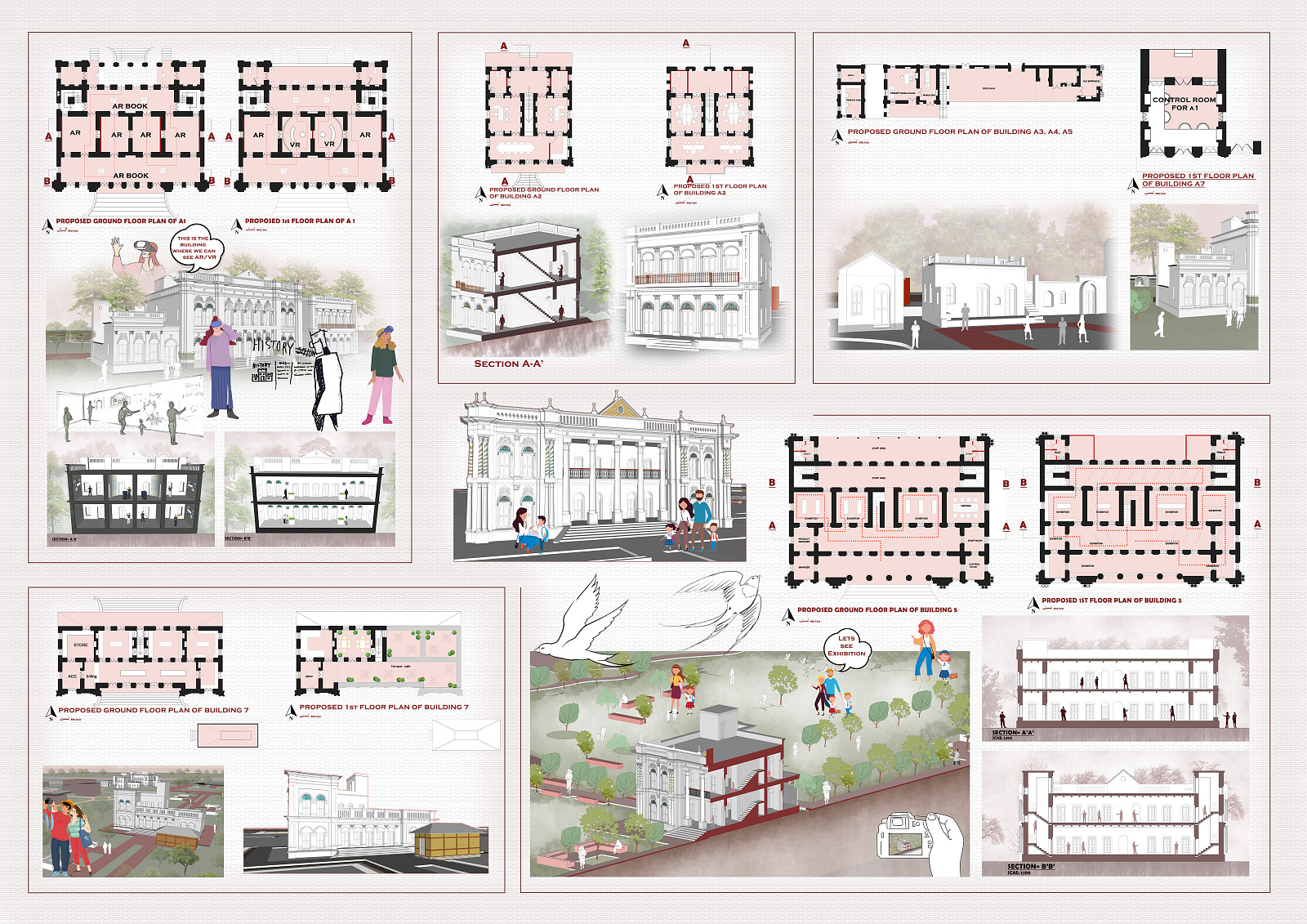
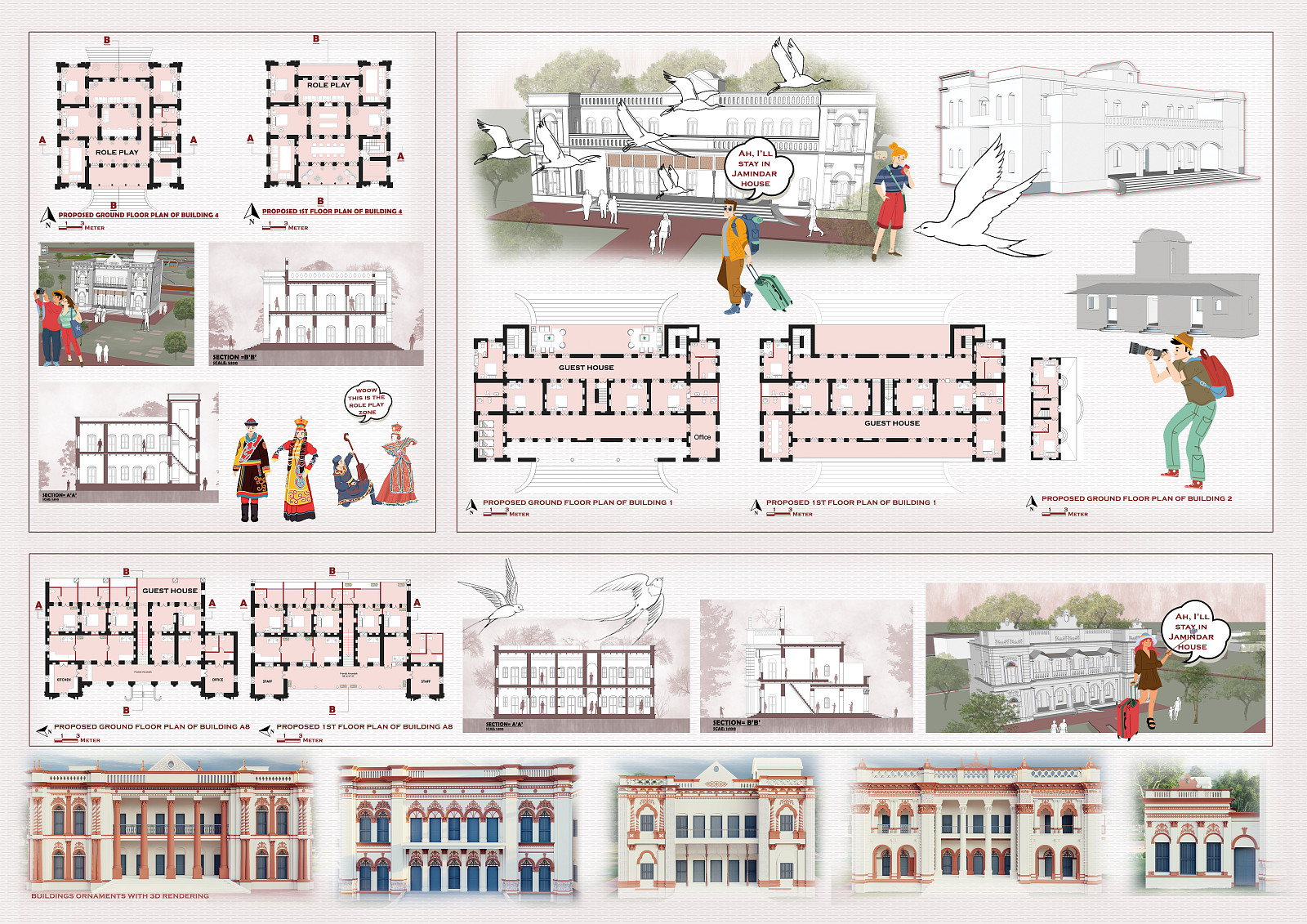
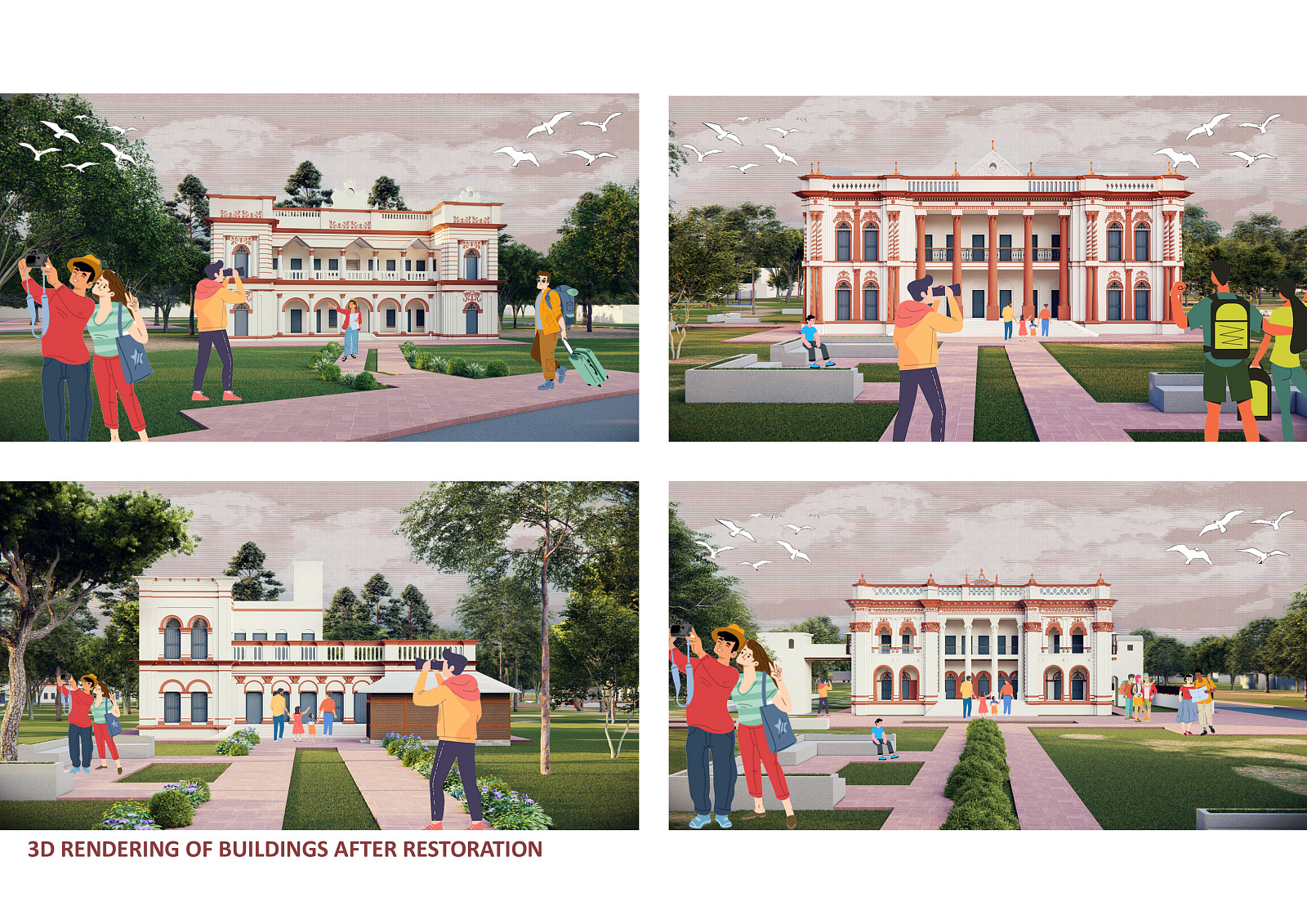
Each building has been adaptively reused to ensure proper maintenance and continued use. The site includes museum and exhibition areas, AR/VR experiences, a guest house, cafe, restaurant, historical shop, souvenir shop, primary healthcare facilities, and a dedicated role-playing zone, providing visitors with diverse ways to engage with the past. Through AR and VR technology, the past is reconstructed and forgotten events are reimagined. Visitors do not just learn “what these buildings were for and they begin to feel what these spaces truly meant.
The guest house allows visitors from across the country or abroad to stay within the heritage environment, experiencing life as it might have been during the zamindar era.
Various public activity spaces, such as river ghats, open-air amphitheaters, and interactive zones, keep the site lively and encourage community engagement. Through the heritage trail, visitors can also explore other heritage buildings within the site, connecting the full story of the area.
Ultimately, the site becomes a vibrant hub of activity, creating jobs, supporting local businesses, and ensuring long-term maintenance of the buildings. By combining conservation with interactive experiences, the project preserves forgotten heritage while inspiring curiosity, connection, and appreciation for history. All surrounding buildings are maintained, and the story of each structure remains alive, allowing the entire site to continue living and telling its story.
Technical information
Documentation :
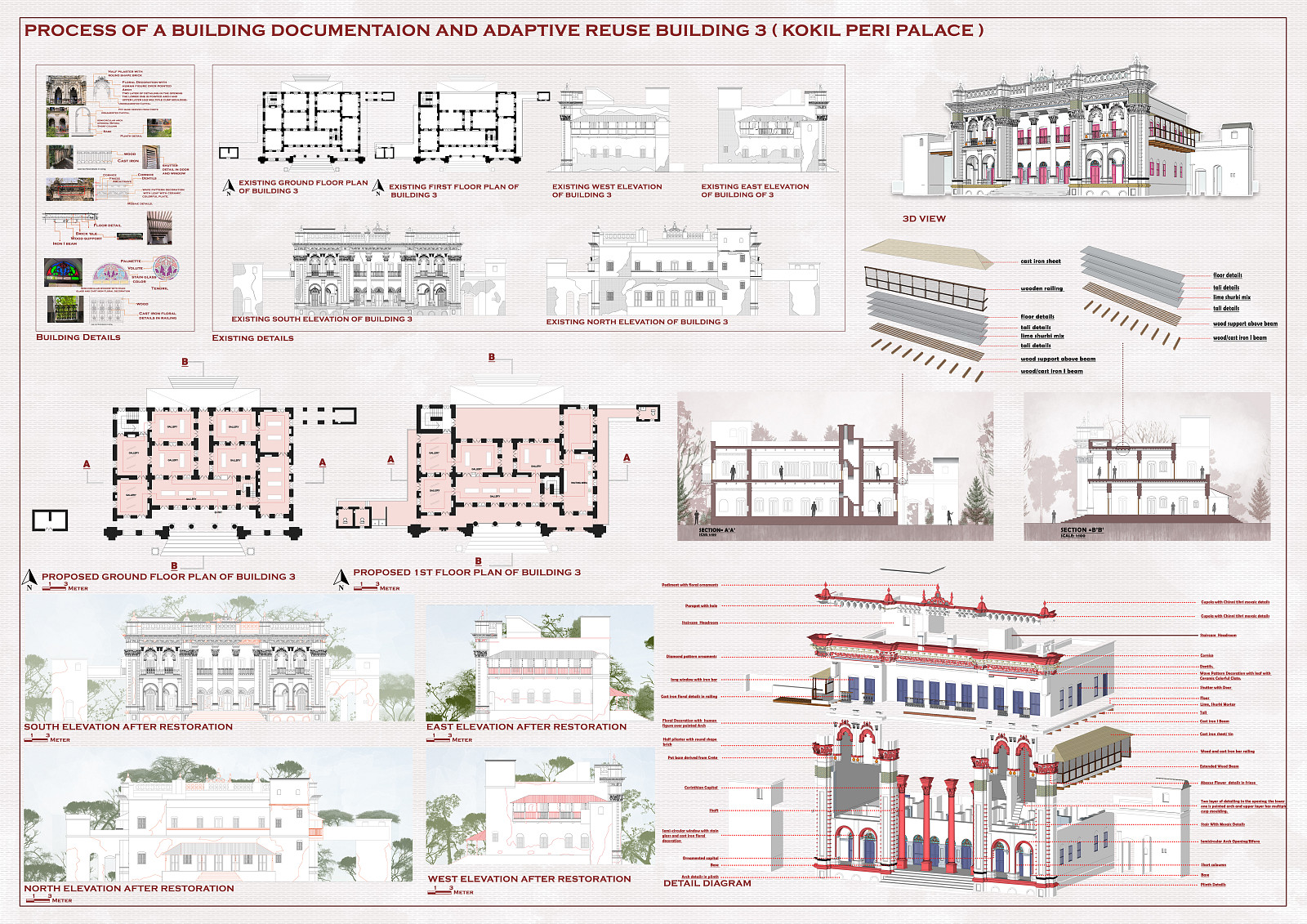
All documentation photographs, videos, and measured drawings to ensures accurate recording of the site’s current condition, material details, forming the foundation for careful conservation, adaptive reuse, and long-term preservation of the heritage.
Conservation Approach:
Existing buildings have been preserved while maintaining their architectural character, ensuring the historical identity and local cultural heritage are retained.
Adaptive Reuse Strategy:
Each building has been repurposed for new functions and keeping them actively used and well maintained.
Existing Structures Retained:
The original heritage structures and architectural elements have been retained as much as possible. New interventions have been designed to avoid any damage to the historic fabric.
New Interventions:
The main new element is the underground entry plaza, which manages visitor flow and functions as a ticketing and orientation space.
Materials:
Locally sourced, reversible, and non-invasive materials have been used, allowing new interventions to be integrated without harming the existing buildings.
Pedestrian-Only Circulation:
The entire site is designed exclusively for walking, enabling visitors to engage slowly and meaningfully with both architecture and landscape.


Copyright © 2025 INSPIRELI | All rights reserved. Use of this website signifies your agreement to the Terms of Use, Privacy Policy, and use of cookies.