Nafarabad Living Modules: A Regenerative Housing System


Project idea
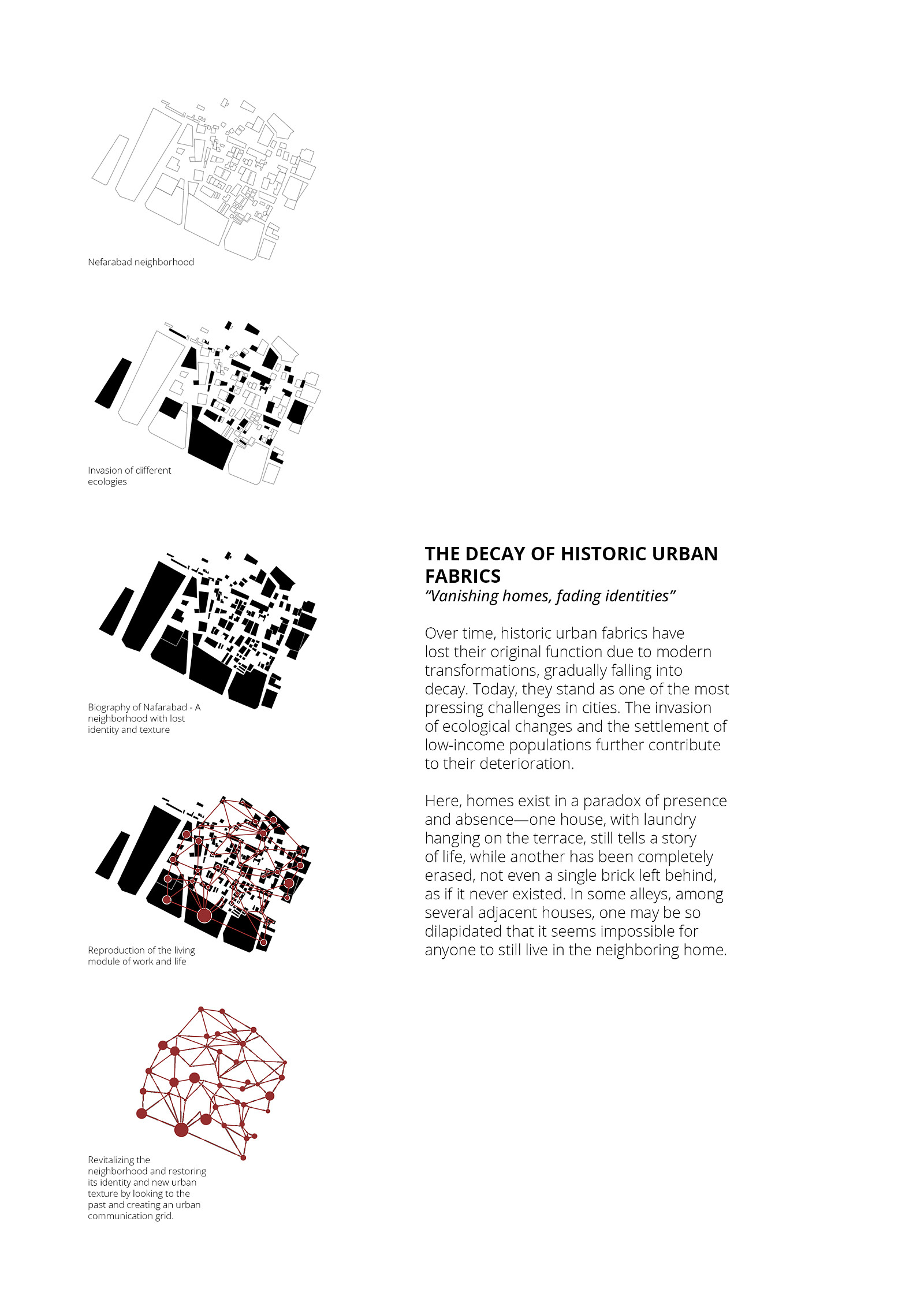
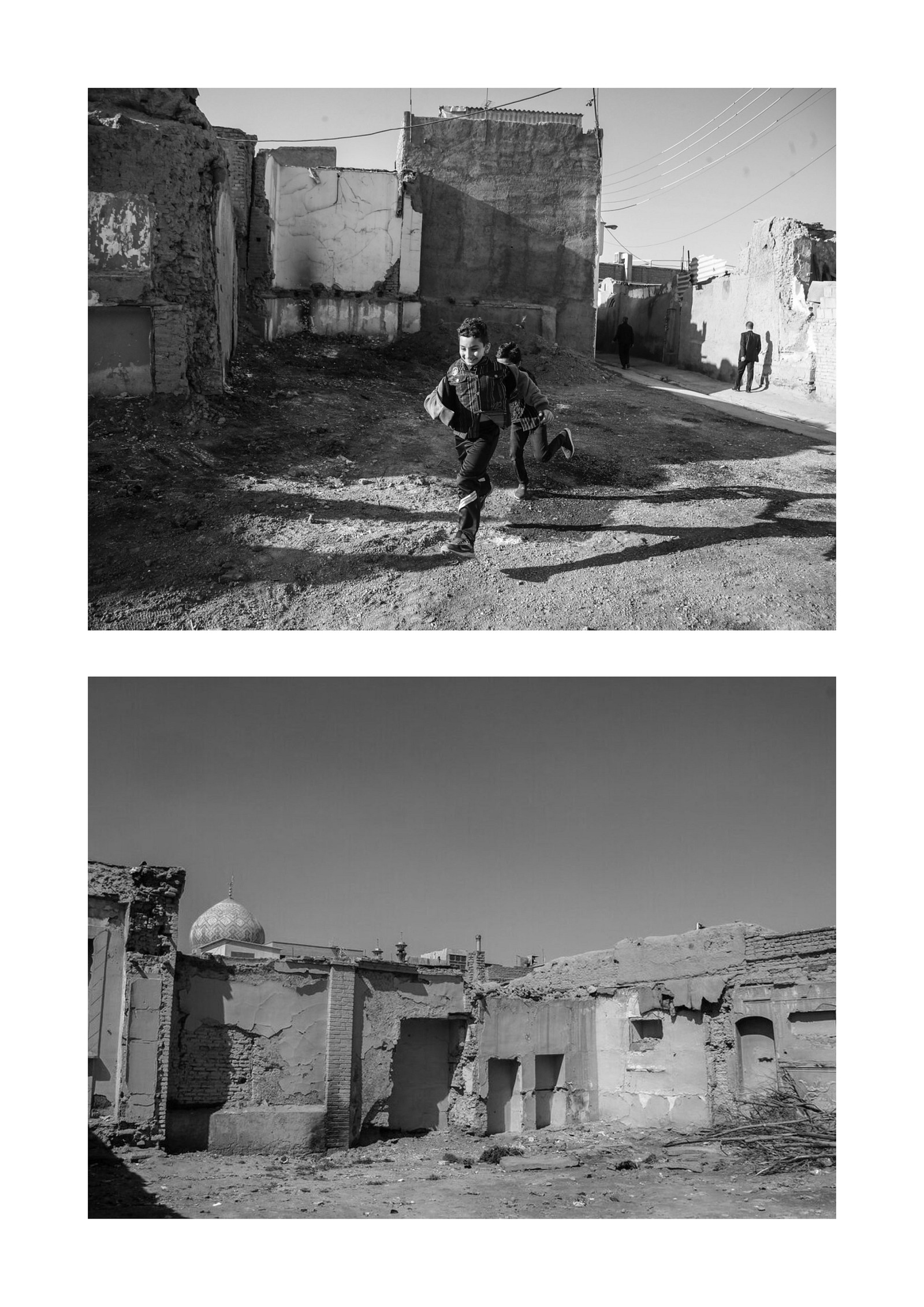
The project addresses the erosion of identity within Nafarabad, a historic neighborhood impacted by ecological shifts and socio-economic pressures. It proposes the house as a living organism capable of adapting, growing, and strengthening the urban fabric. By introducing flexible live work modules that function like seeds dispersed across the city, the design aims to revive community life, reinforce social interaction, and restore a sense of place. The project positions architecture as a catalyst for revitalizing historic identity while supporting contemporary economic and cultural needs.
Project description
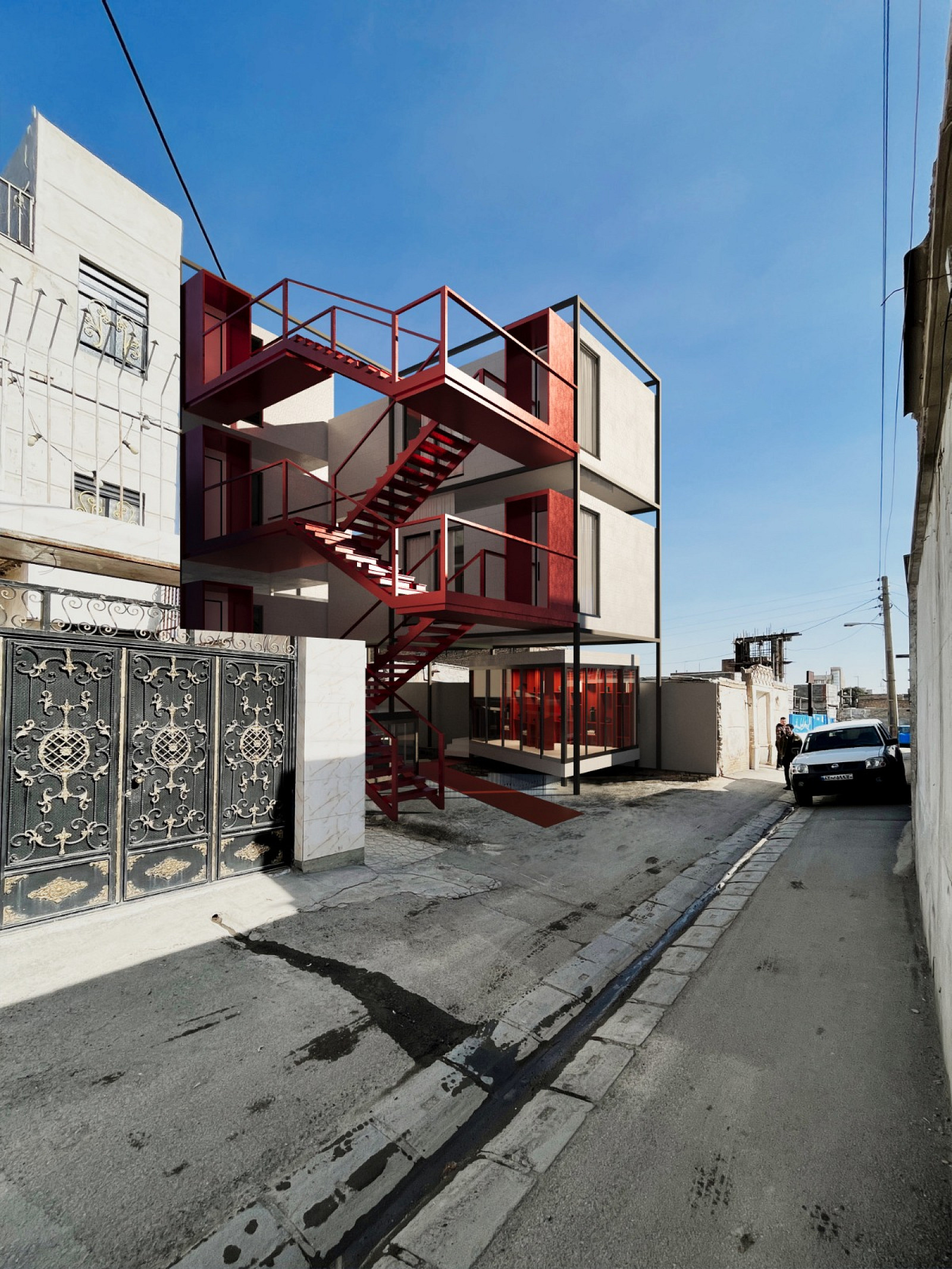
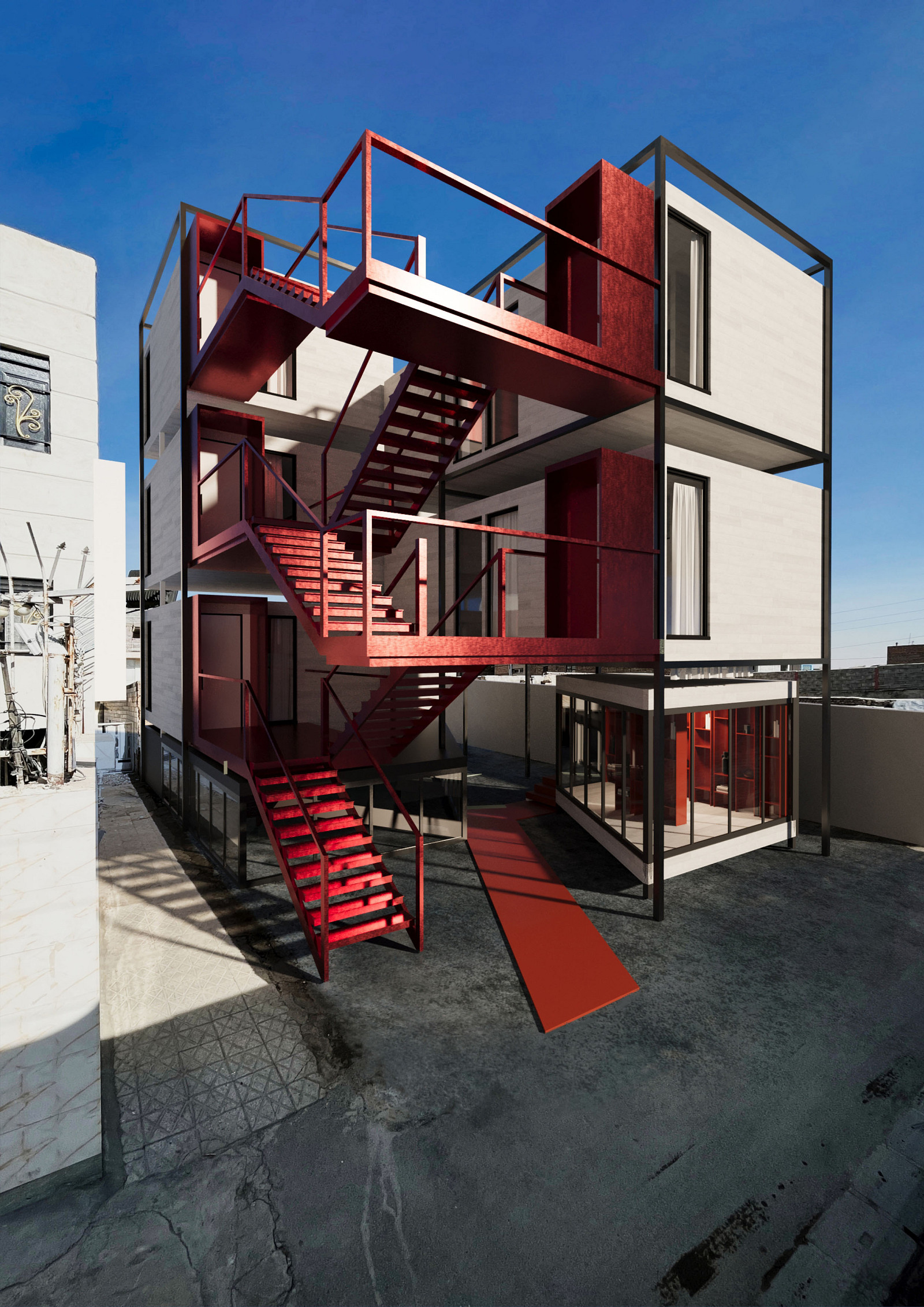
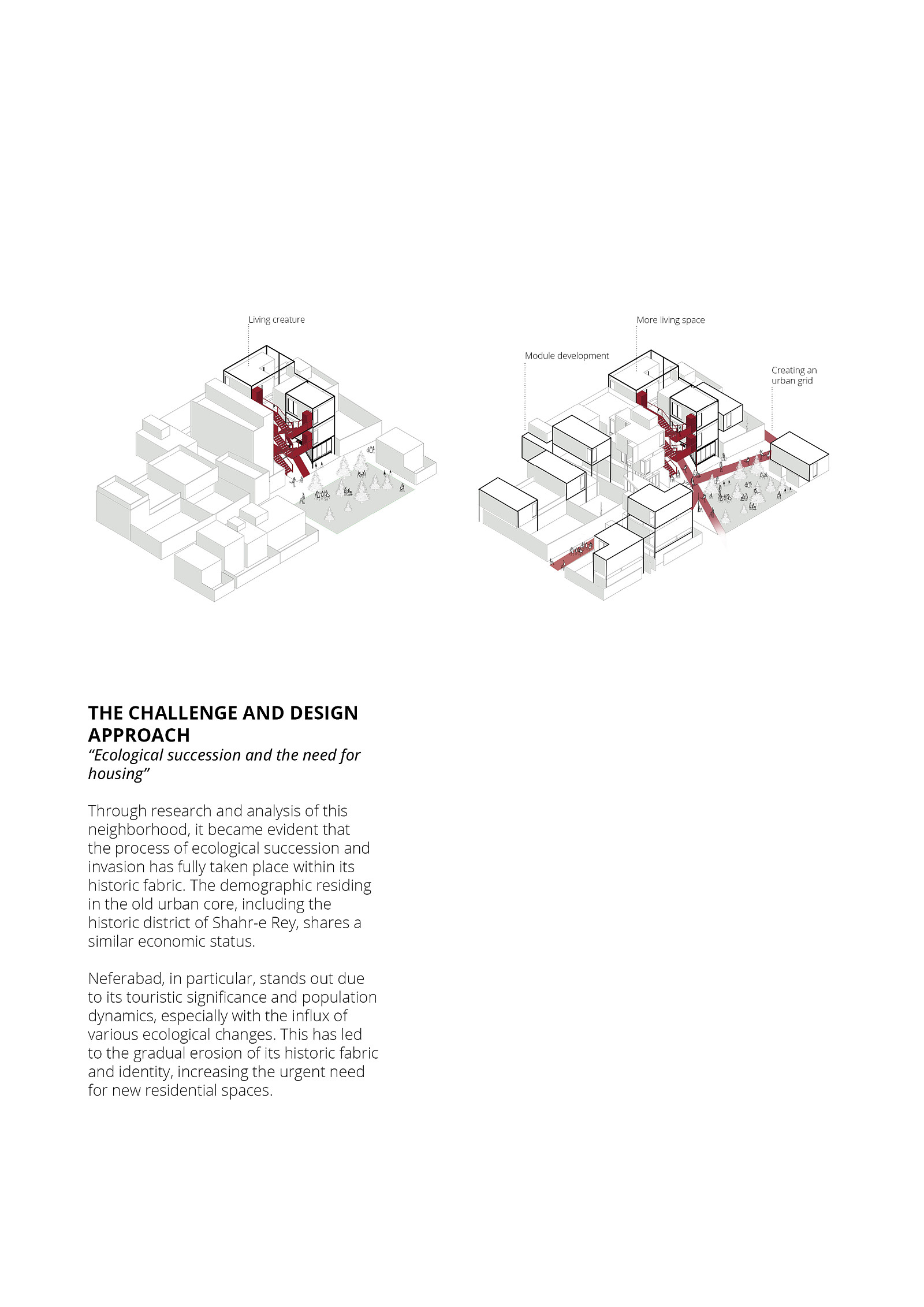
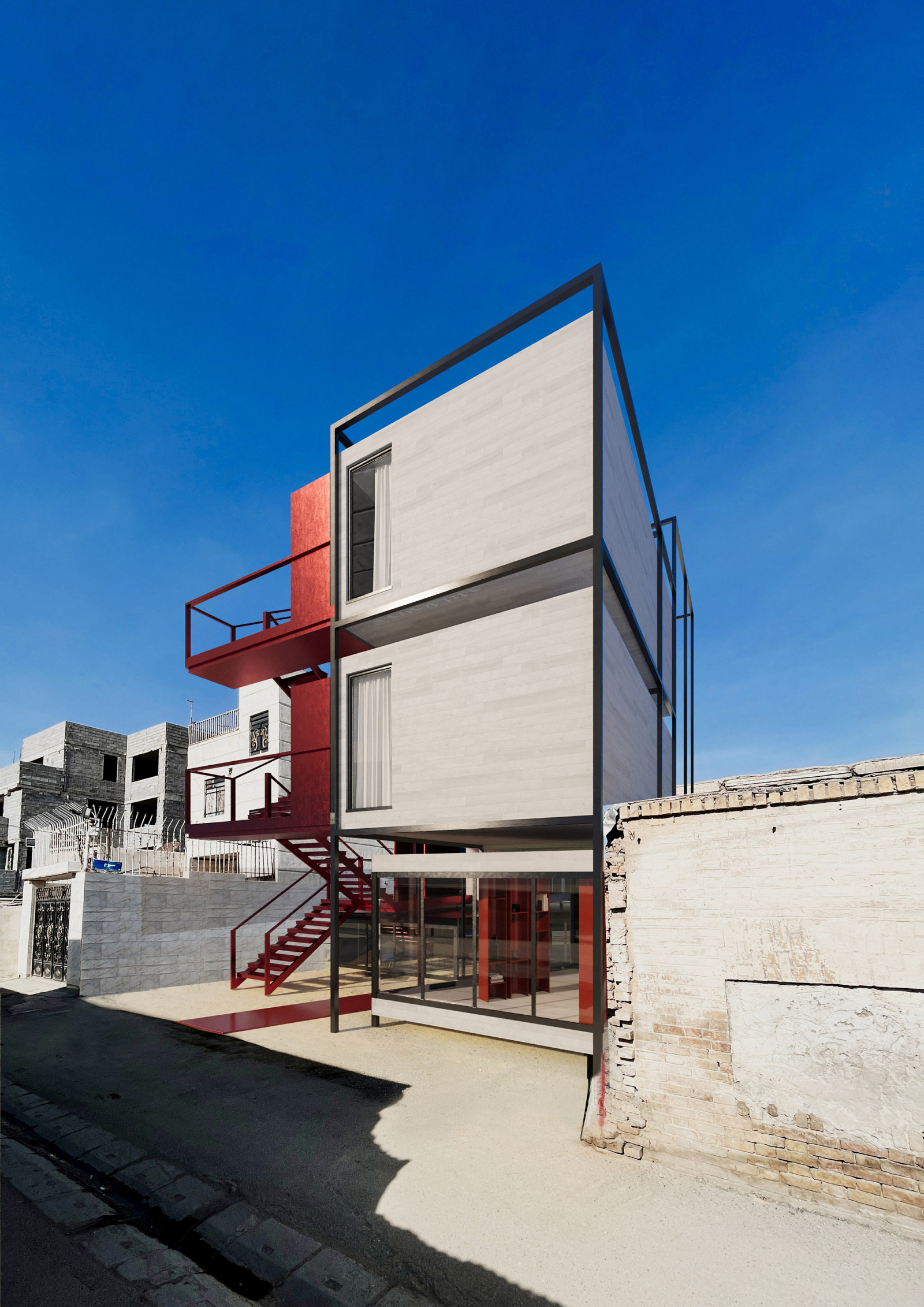
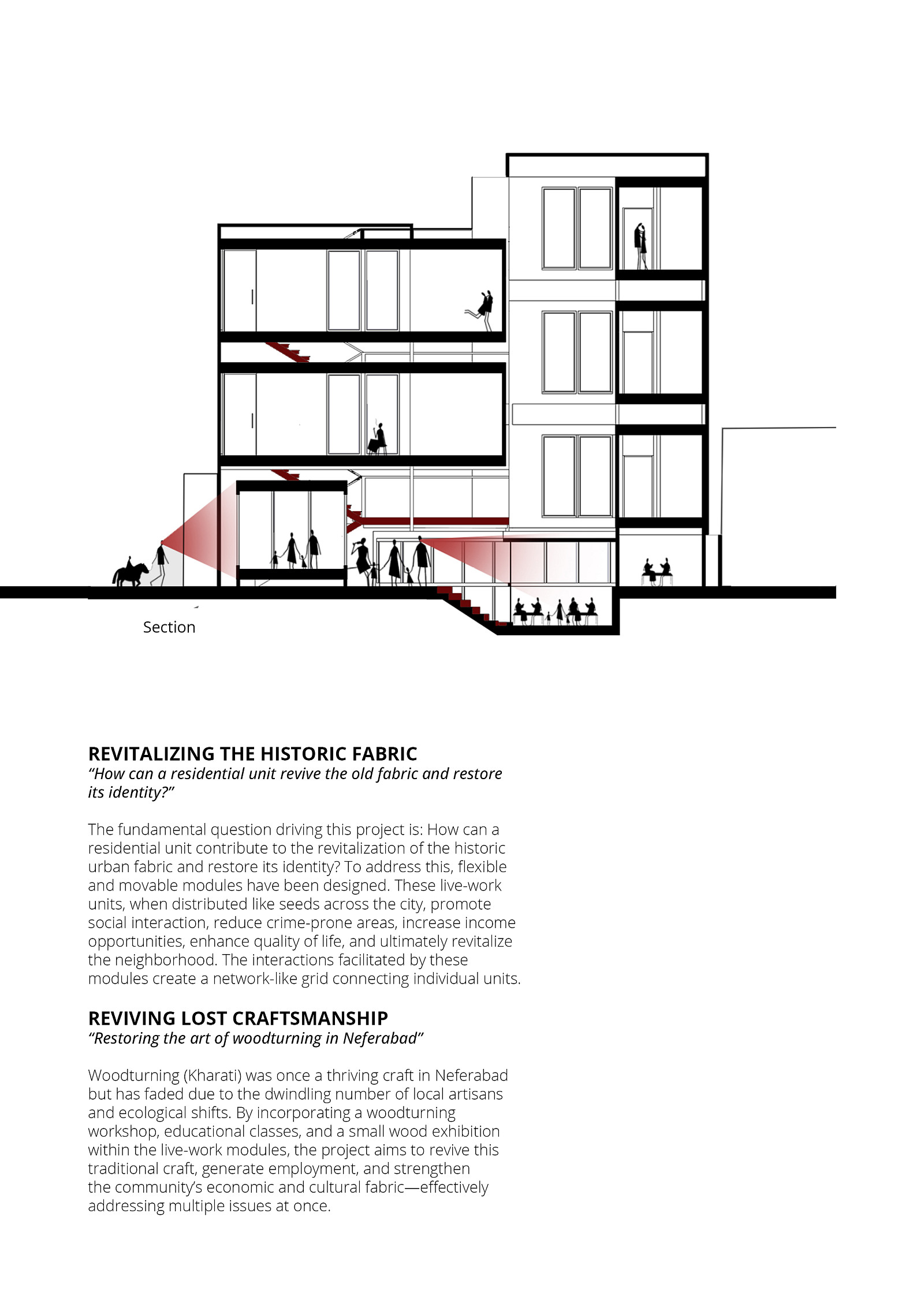
The design responds to the decay of Nafarabad’s historic fabric by deploying modular residential units that can grow organically within the existing urban context. These live work modules create a network of micro-interventions, linking isolated homes through spatial, social, and economic connections. Each module supports both living and craftsmanship activities particularly woodturning, a traditional craft once central to the neighborhood. By integrating workshops, educational spaces, and semi-public zones, the project enhances safety, reduces vacant or crime-prone pockets, and reinforces community presence. The result is a resilient, interconnected urban layer that merges housing, production, and public engagement to regenerate the neighborhood from within.
Technical information
The system is based on adaptable modular units designed for incremental expansion within deteriorated historic plots. Each module combines residential and workshop functions, allowing flexible configurations depending on site conditions and user needs. Structural light frame components enable mobility and rapid installation, while modular grids facilitate aggregation into larger clusters. Circulation networks are enhanced through the strategic placement of units to activate abandoned alleys and reestablish urban continuity. The integration of woodturning facilities supports small scale production, while environmental strategies address ventilation, daylight, and passive comfort. The technical framework ensures scalability, affordability, and compatibility with the fragile historic context.

Copyright © 2026 INSPIRELI | All rights reserved. Use of this website signifies your agreement to the Terms of Use, Privacy Policy, and use of cookies.