House on the Factory


Project idea
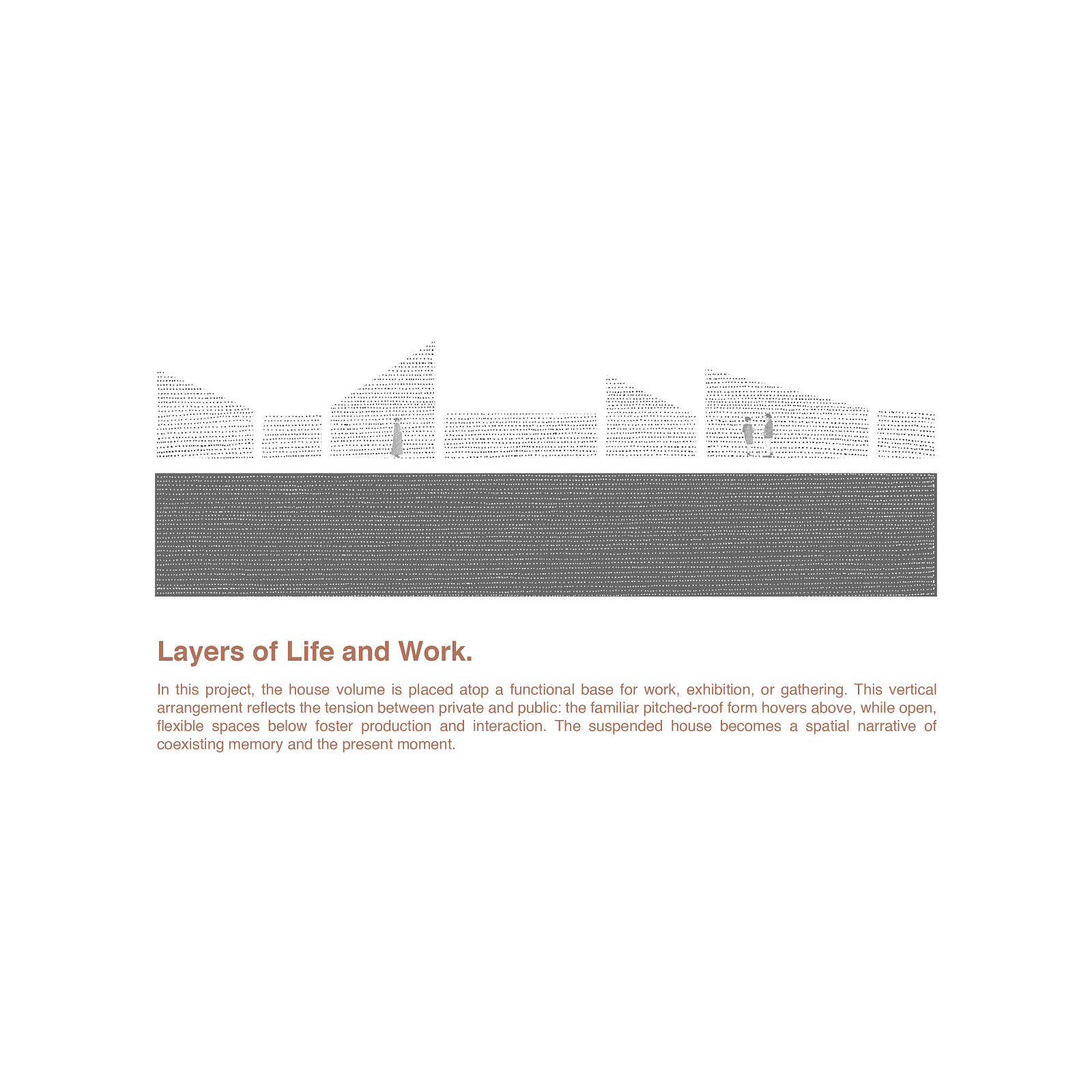
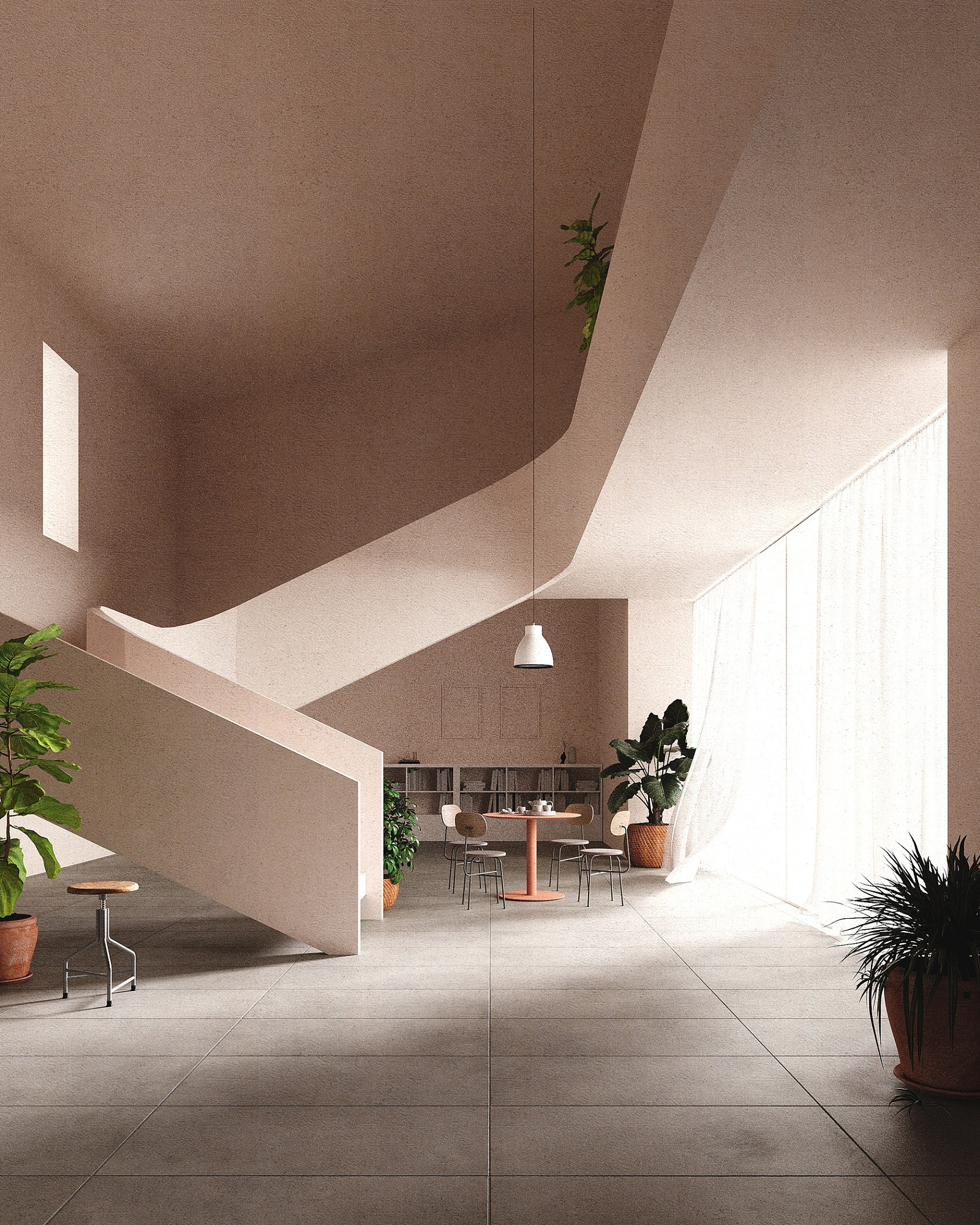
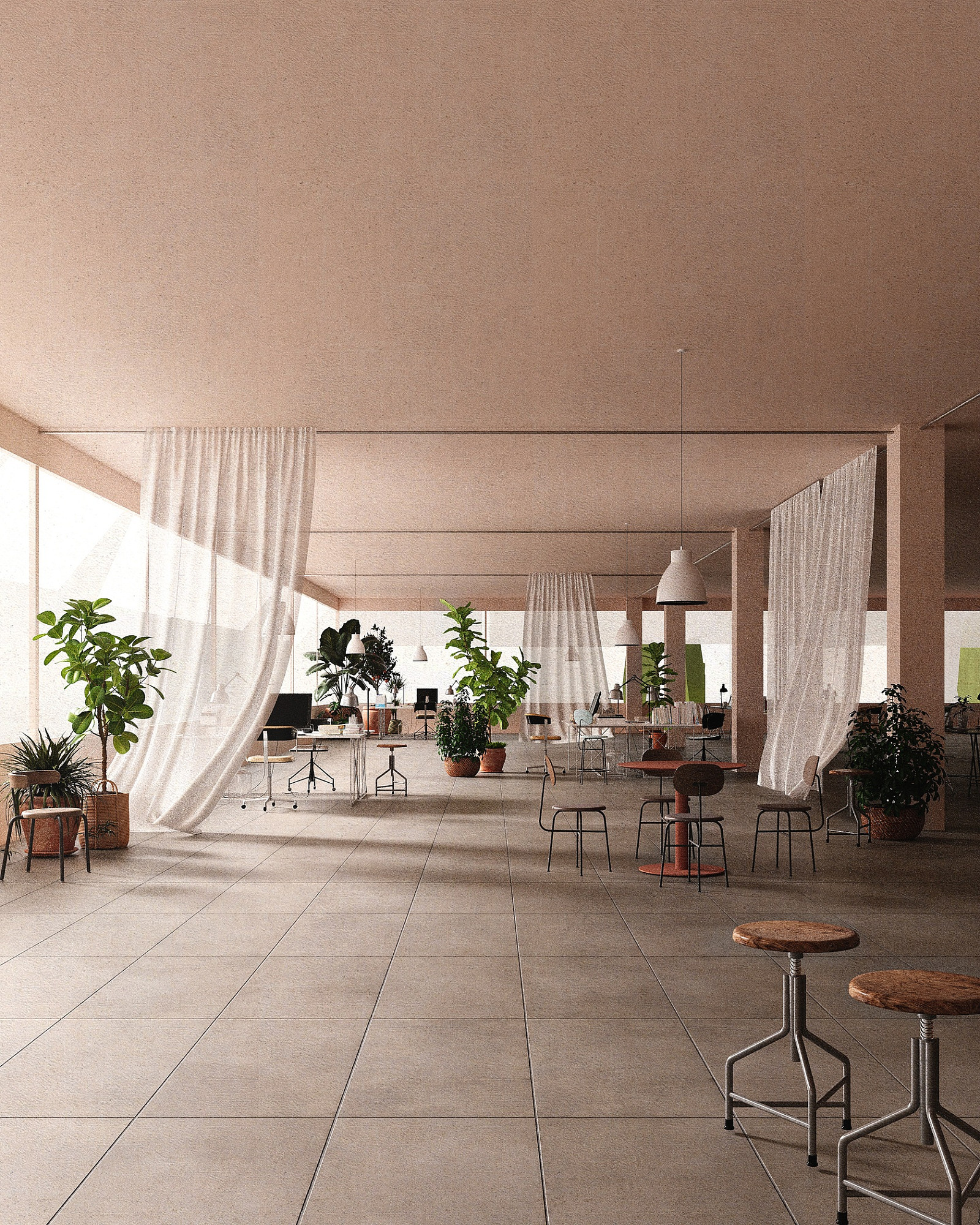
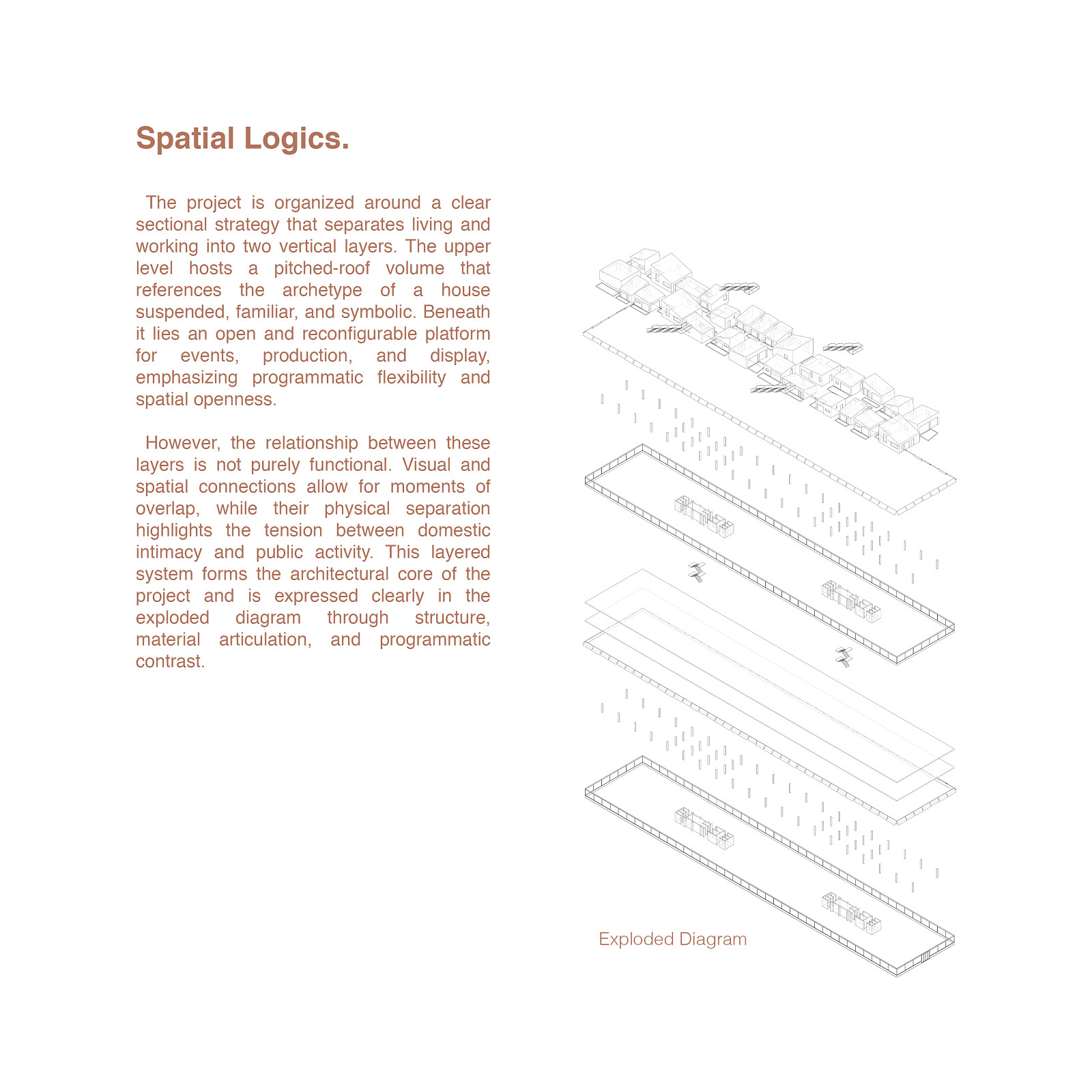
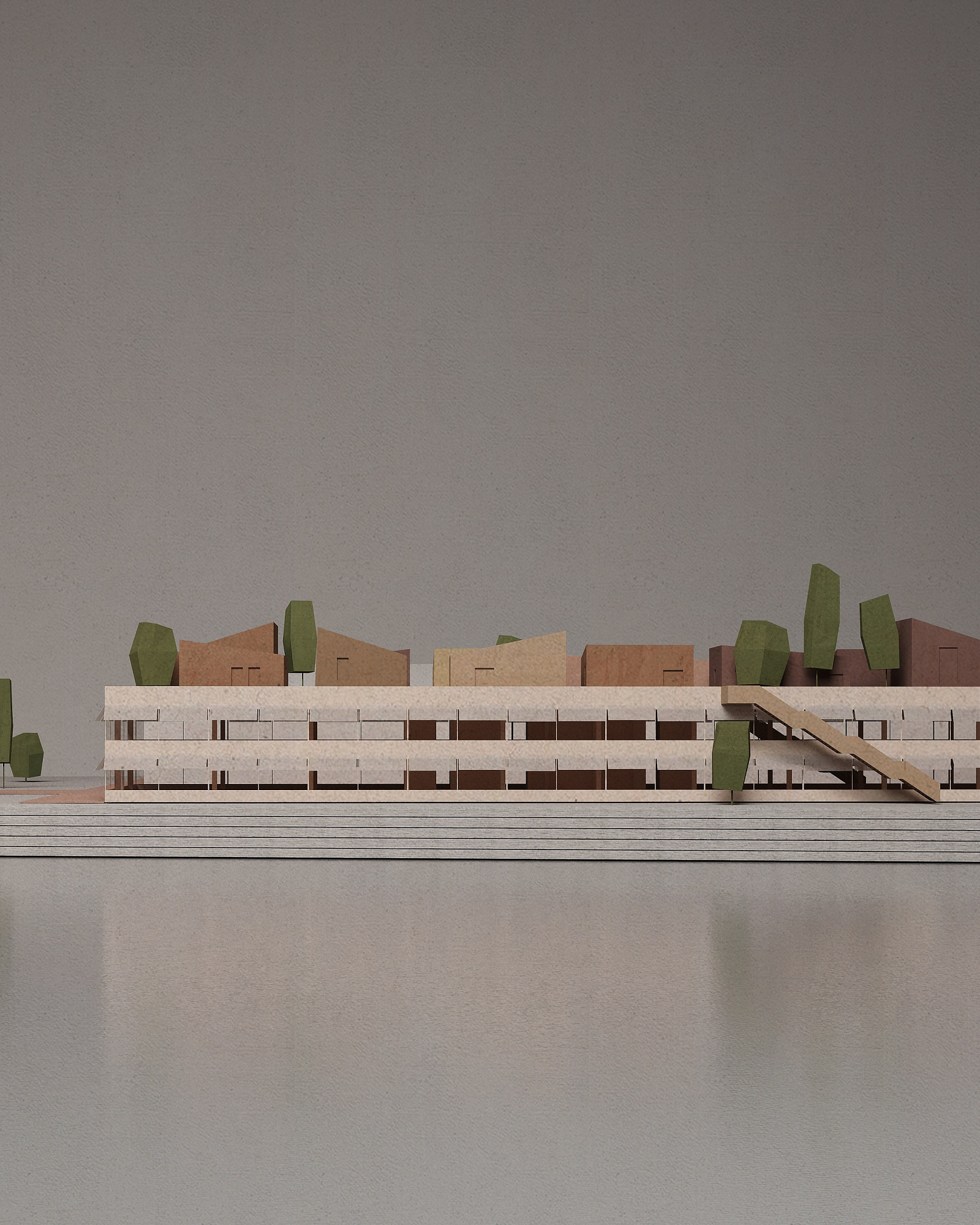
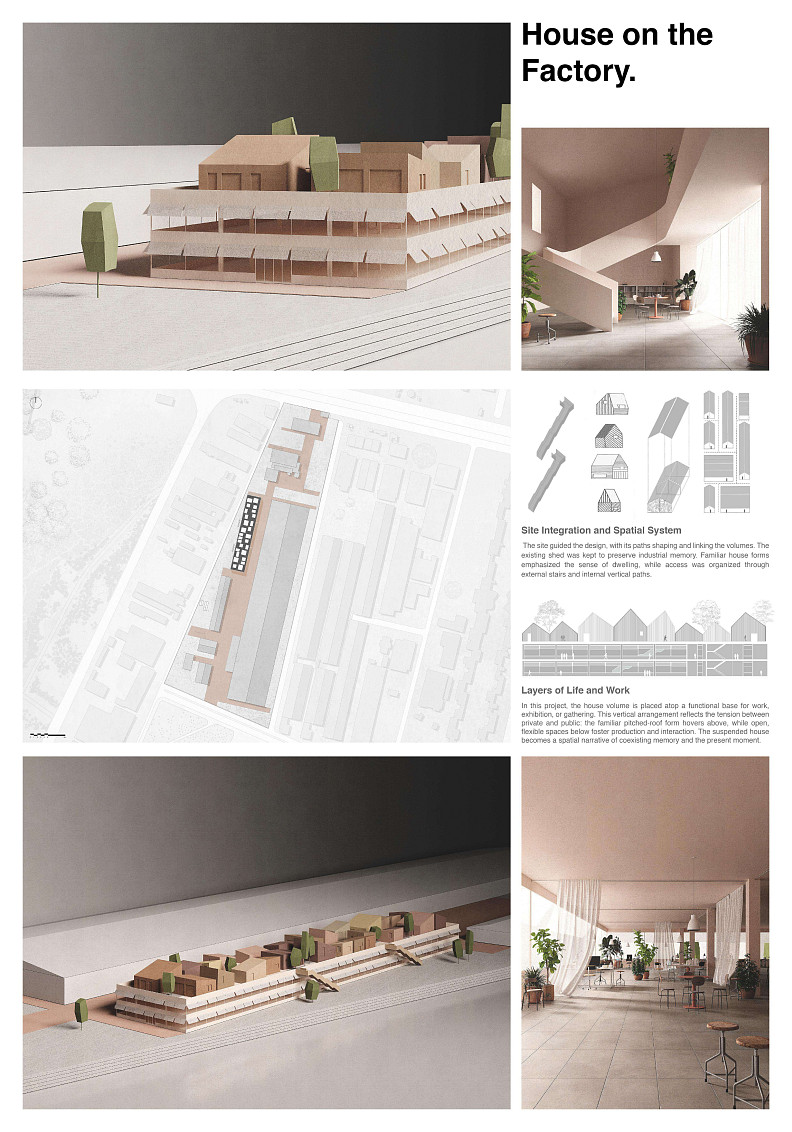
“House on the Factory” proposes a hybrid typology in which living and working coexist within the footprint of an abandoned industrial site. The project challenges the conventional separation between production and everyday life by redefining the factory as a layered environment for creativity, making, and domestic use. It explores how architecture can choreograph spatial contrasts—light and heavy, public and private, industrial and domestic—to form a new model for the future of urban inhabitation.
Project description
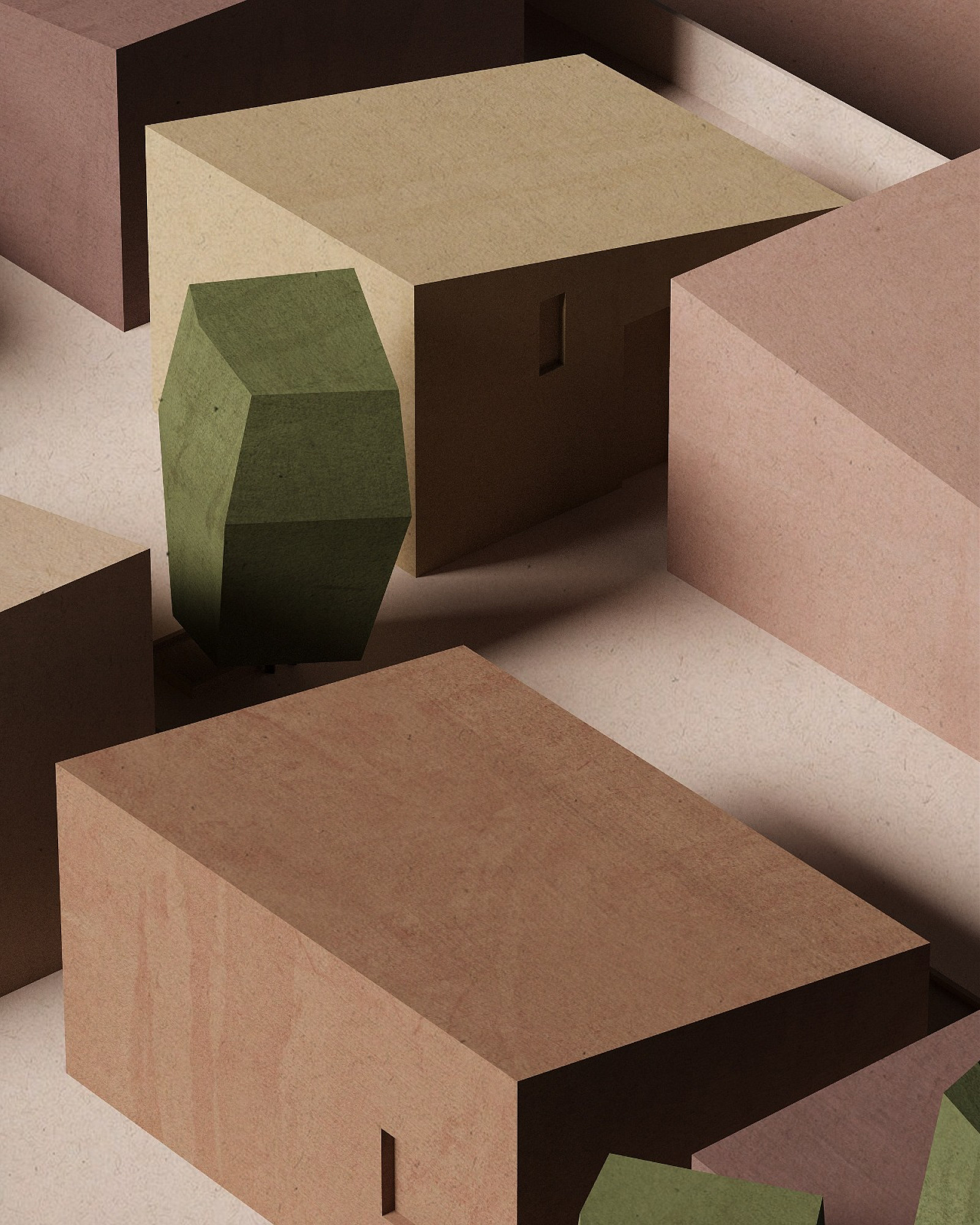
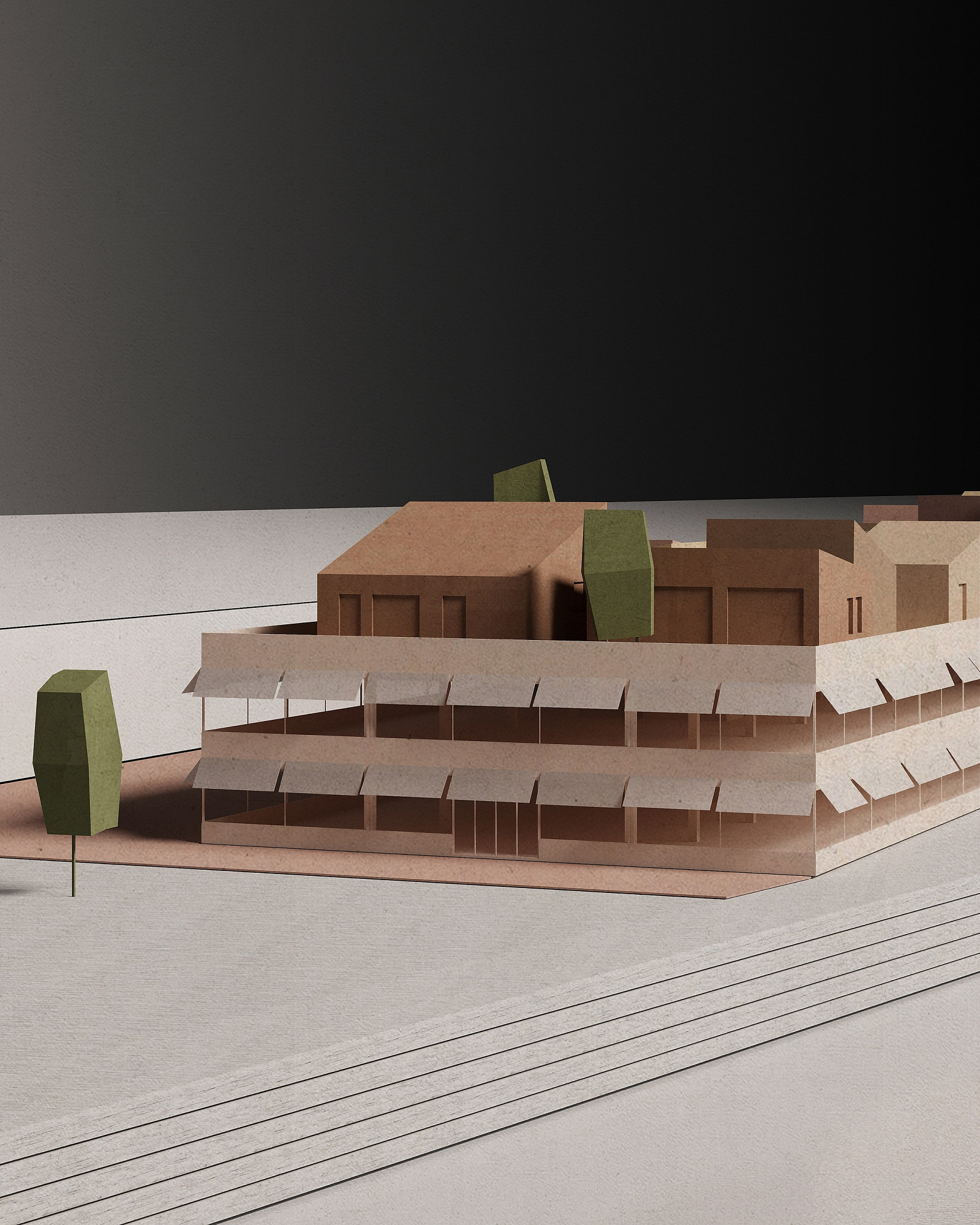
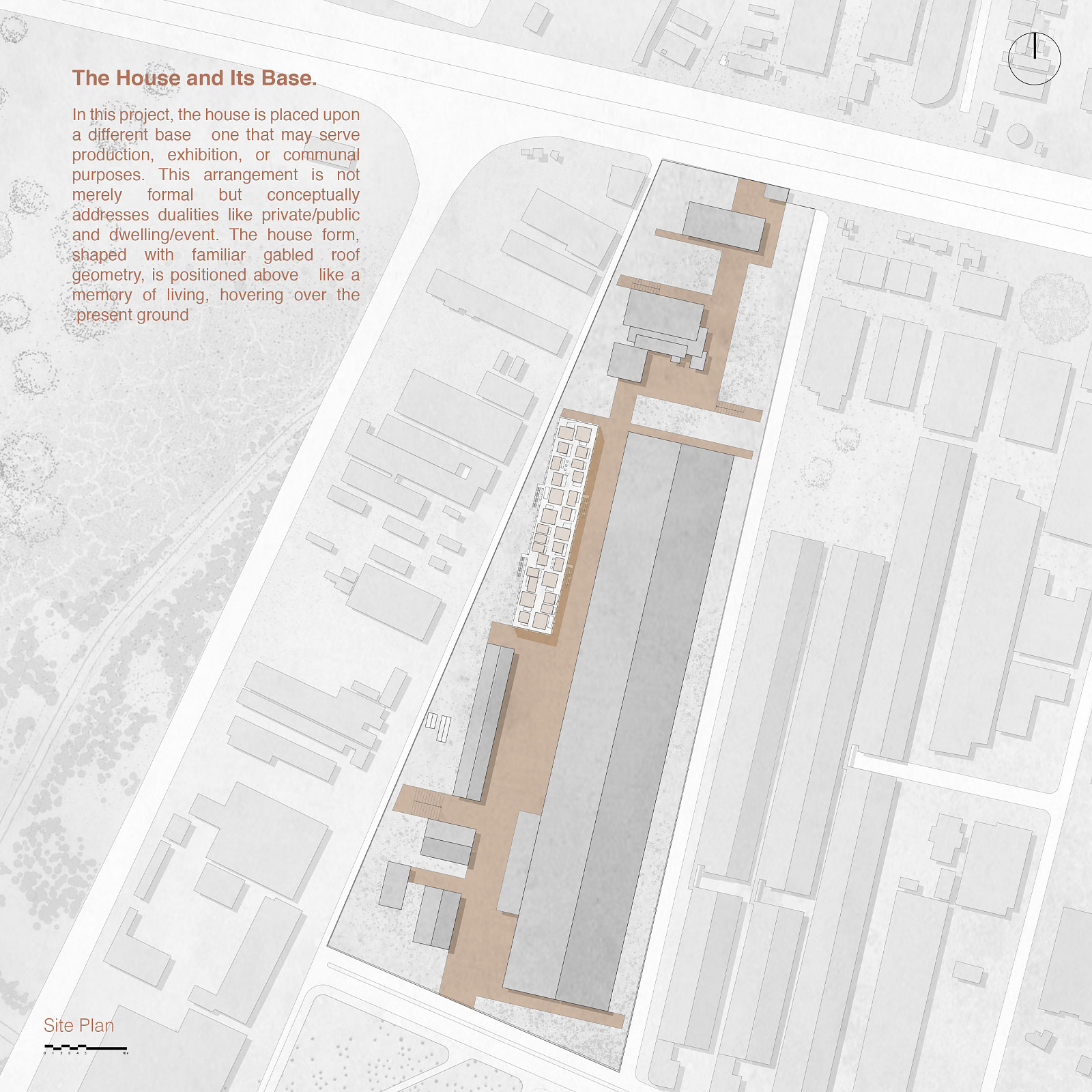
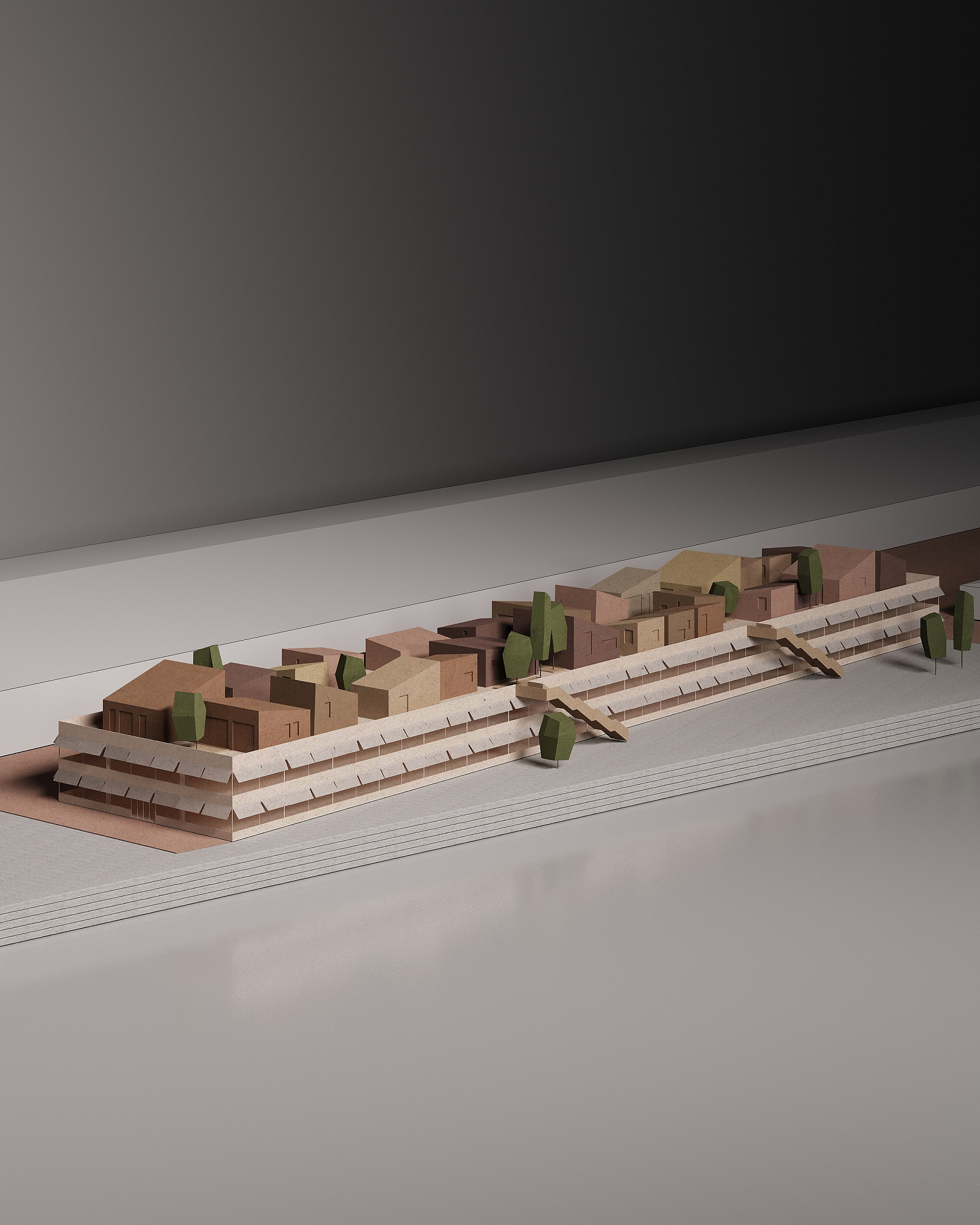
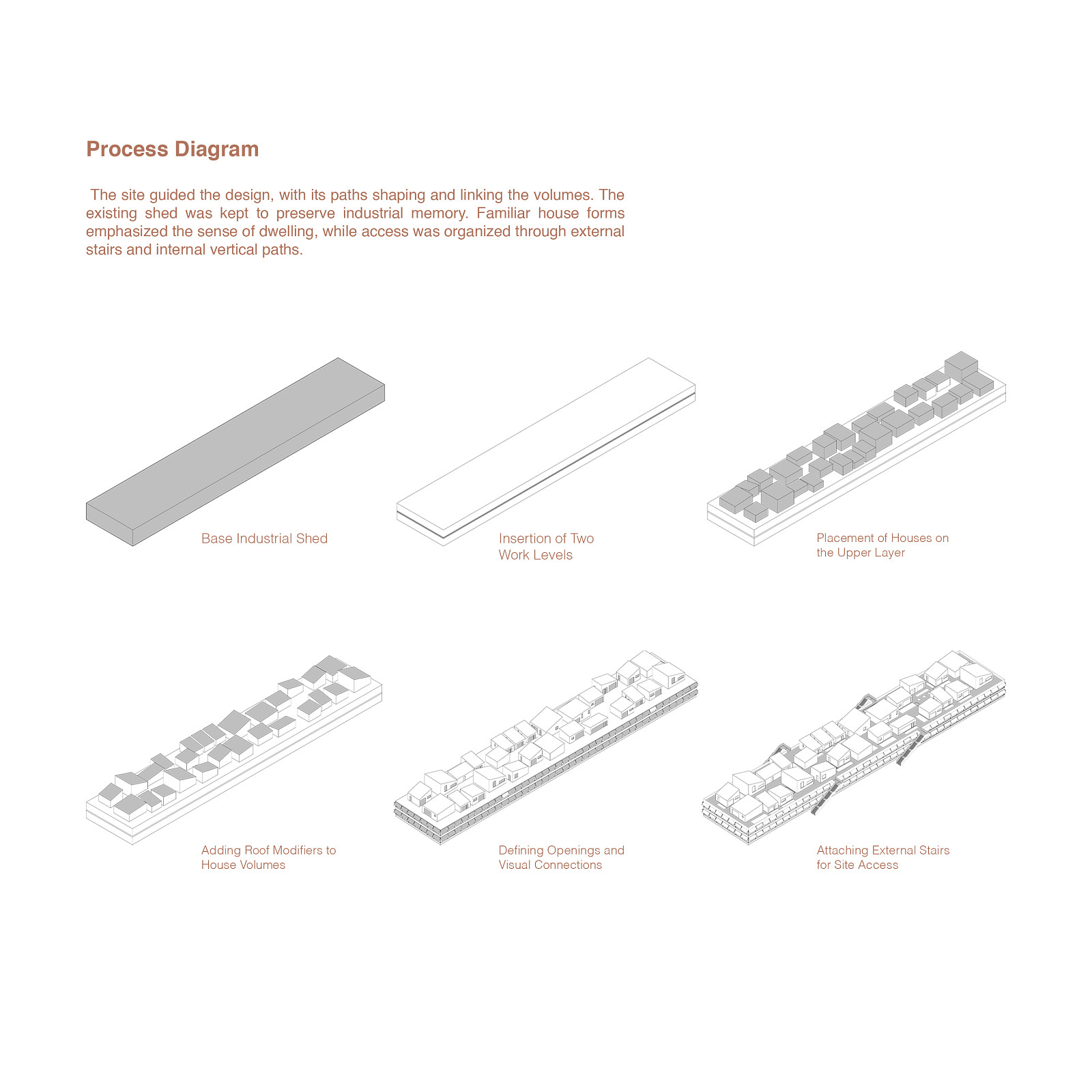
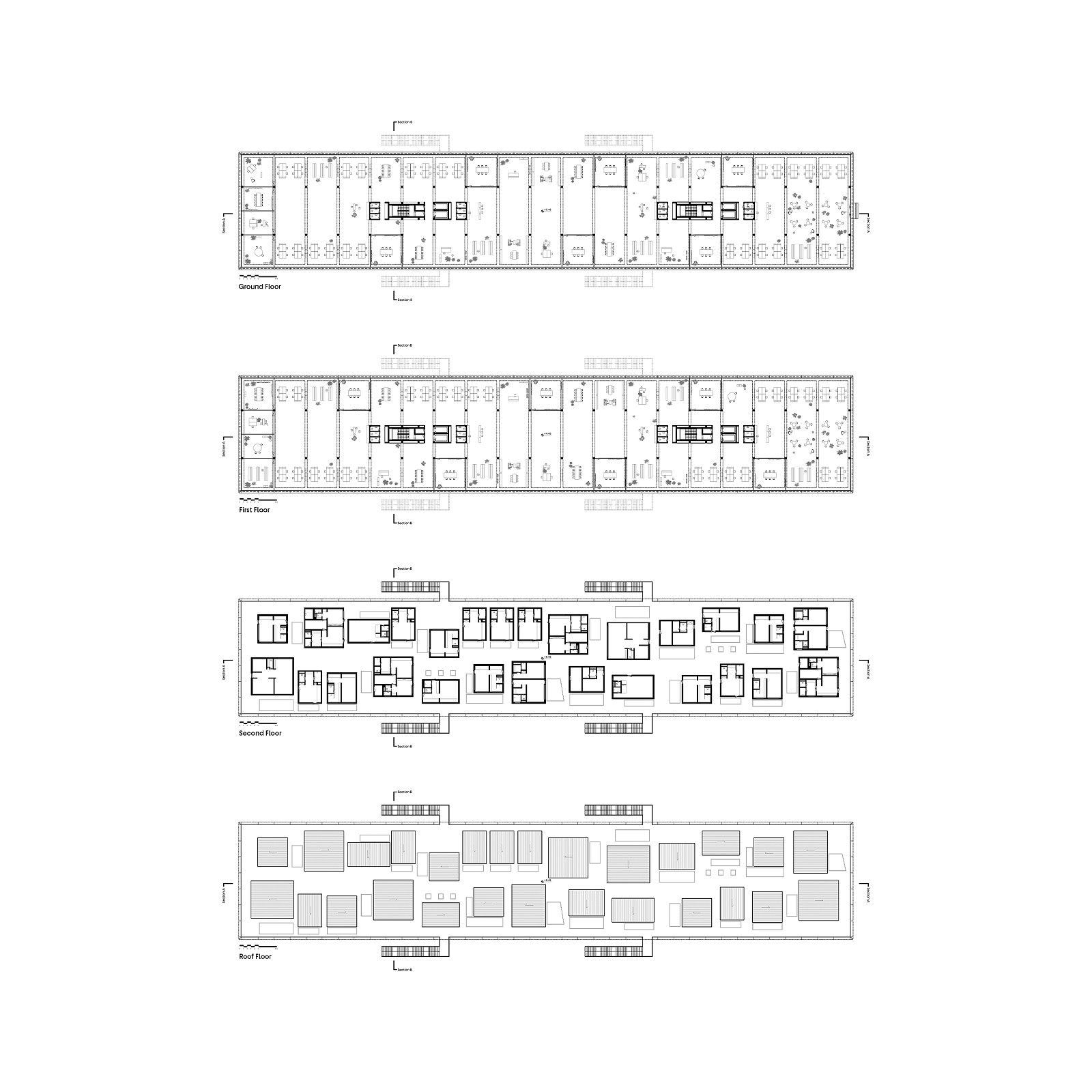
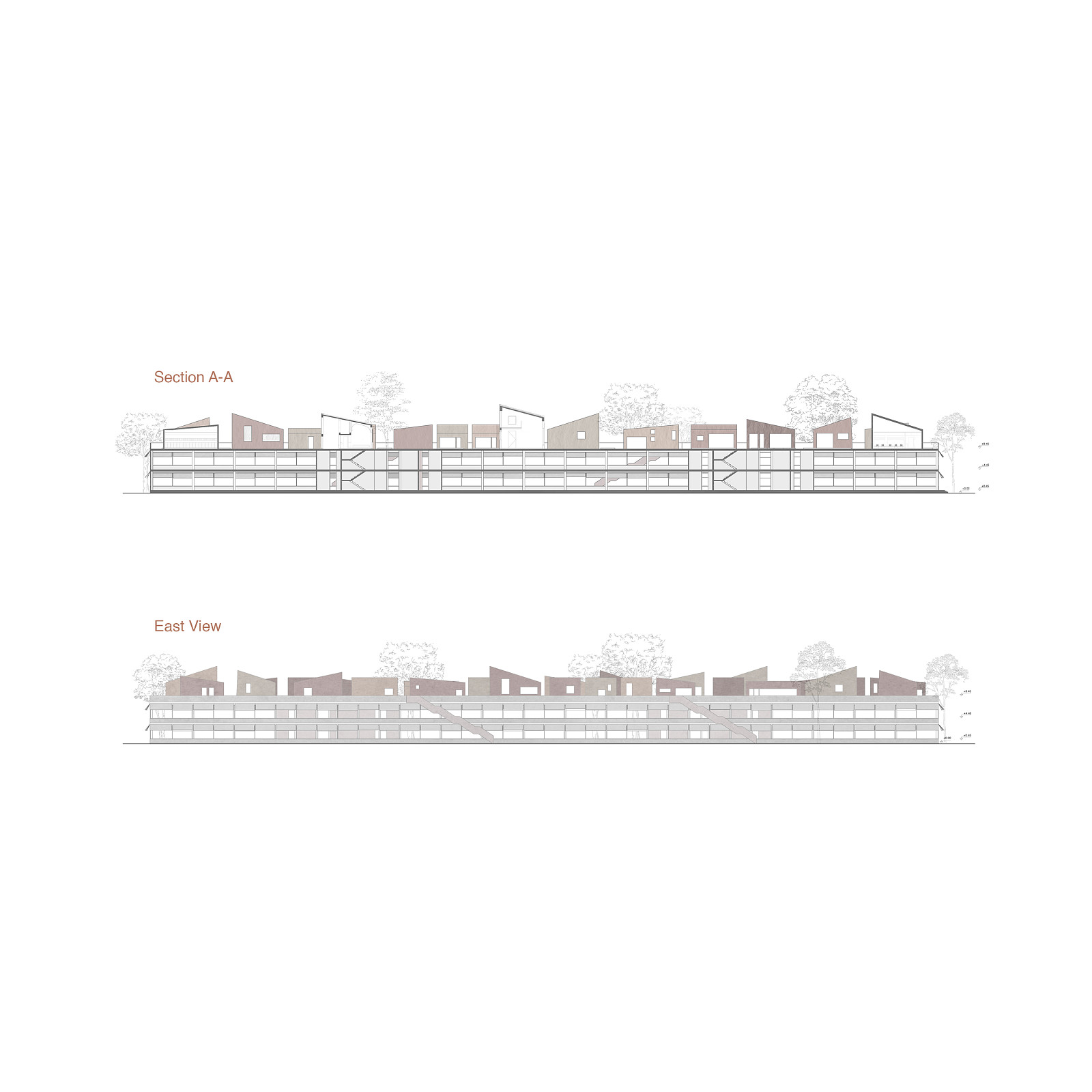
Situated on the remnants of a former factory, the project integrates new residential and creative workspaces directly into the industrial framework. Existing structural traces are reinterpreted as platforms, anchors, and thresholds, allowing new volumes to be nested within and above the old infrastructure. The spatial sequence moves between exposed industrial elements and softer domestic zones, creating a gradient of privacy and activity. By interweaving production, living, and communal areas, the project functions as a continuous ecosystem where old and new architectures reinforce one another.
Technical information
The design builds upon the original factory structure, using its load-bearing grid as the primary organizational system. New additions employ lightweight steel and timber components to contrast the heavy industrial base while enabling rapid assembly and flexibility. Circulation is defined through elevated walkways and vertical connectors that link domestic units with shared workspaces. Material strategies emphasize reuse, combining retained industrial elements with new modular components to create an adaptable, multi-layered architectural environment.
Documentation

Copyright © 2026 INSPIRELI | All rights reserved. Use of this website signifies your agreement to the Terms of Use, Privacy Policy, and use of cookies.