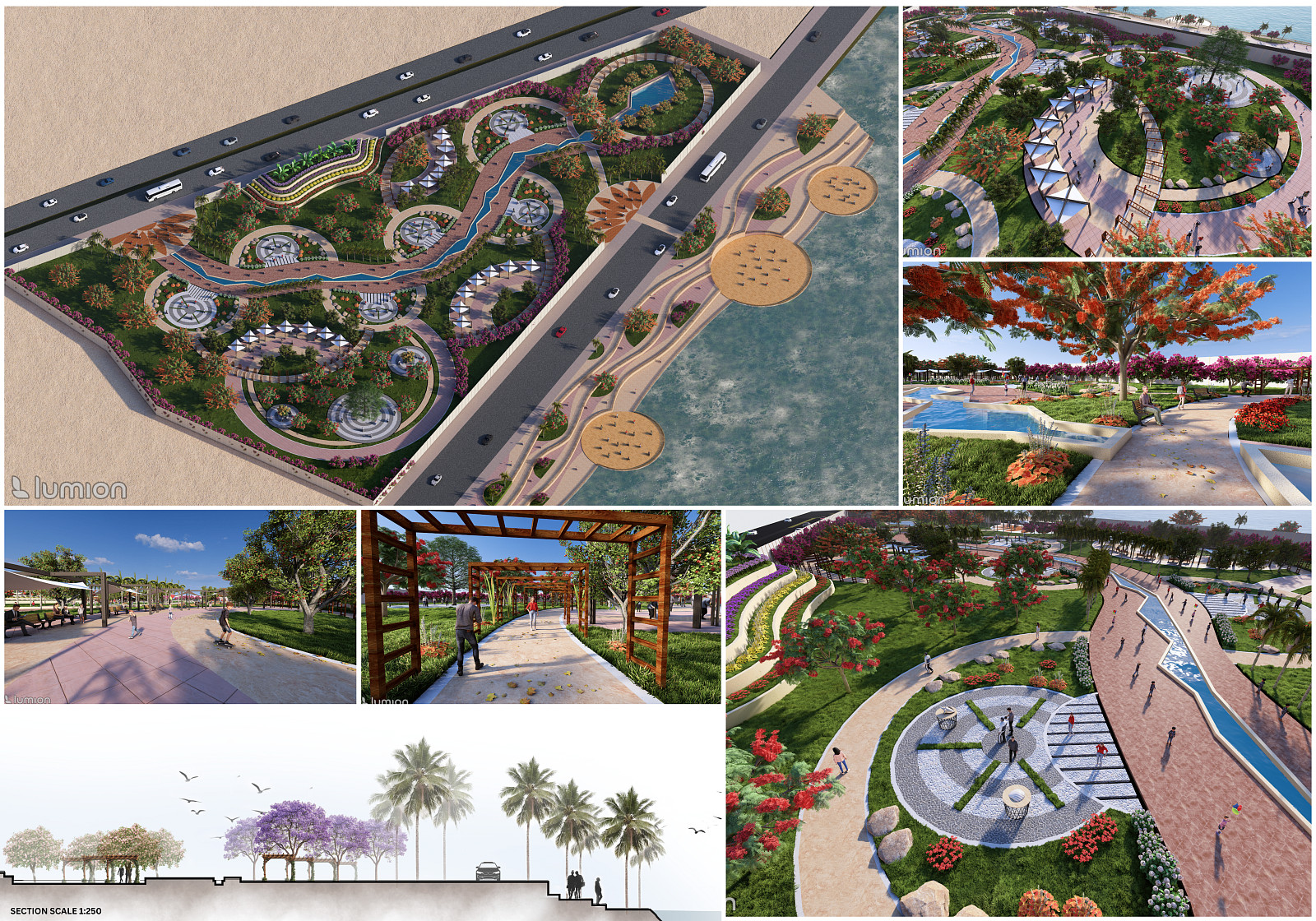
El-Horreya Garden - حديقة الحرية


Idea projektu
El-Hurriya Garden is conceived as a landscape of freedom, where movement, choice, and openness define the spatial experience. Located along the Nile edge in Zamalek, the project transforms a linear urban site into a public garden that allows visitors to move freely, explore multiple paths, and create their own journey through the landscape.
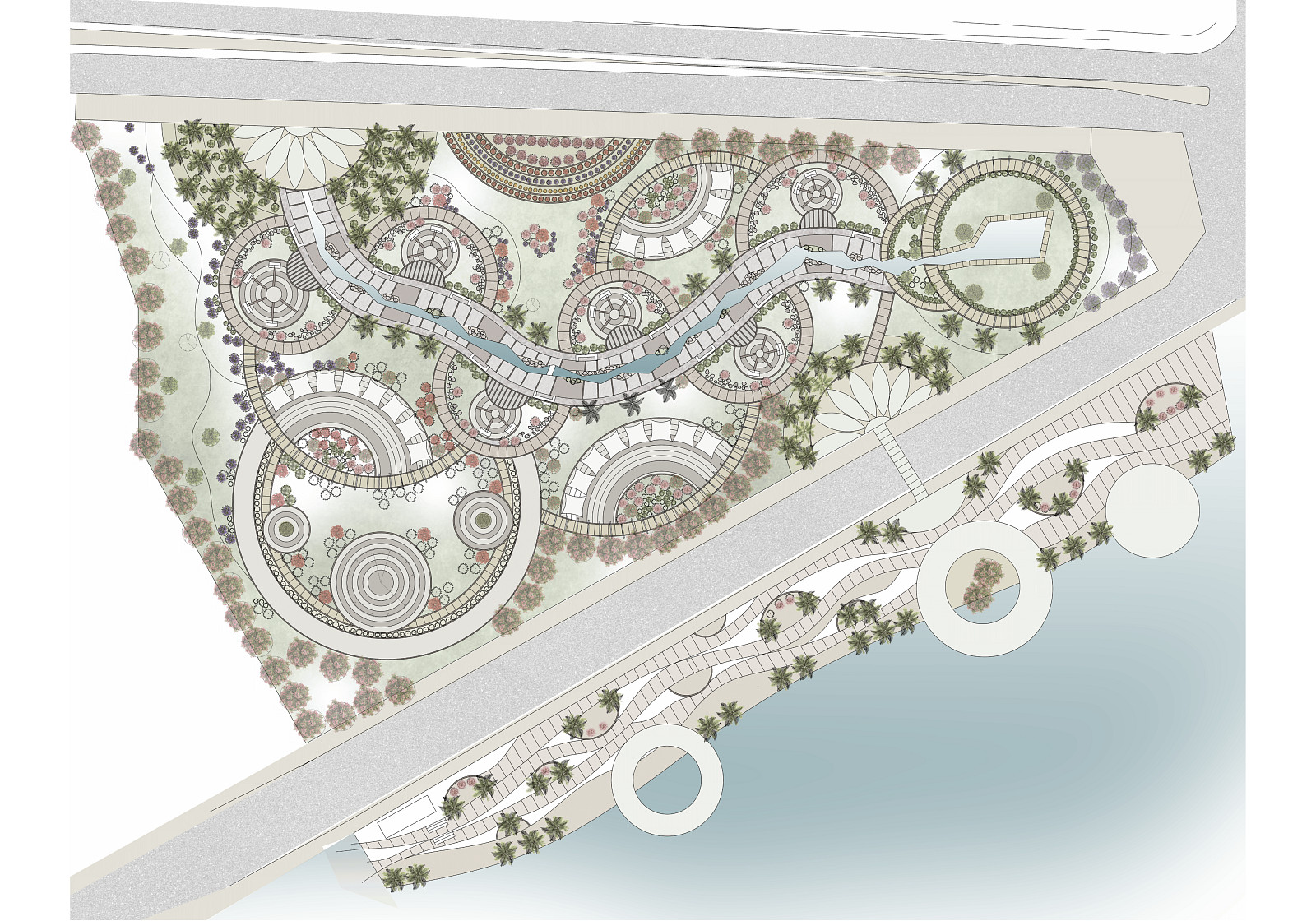
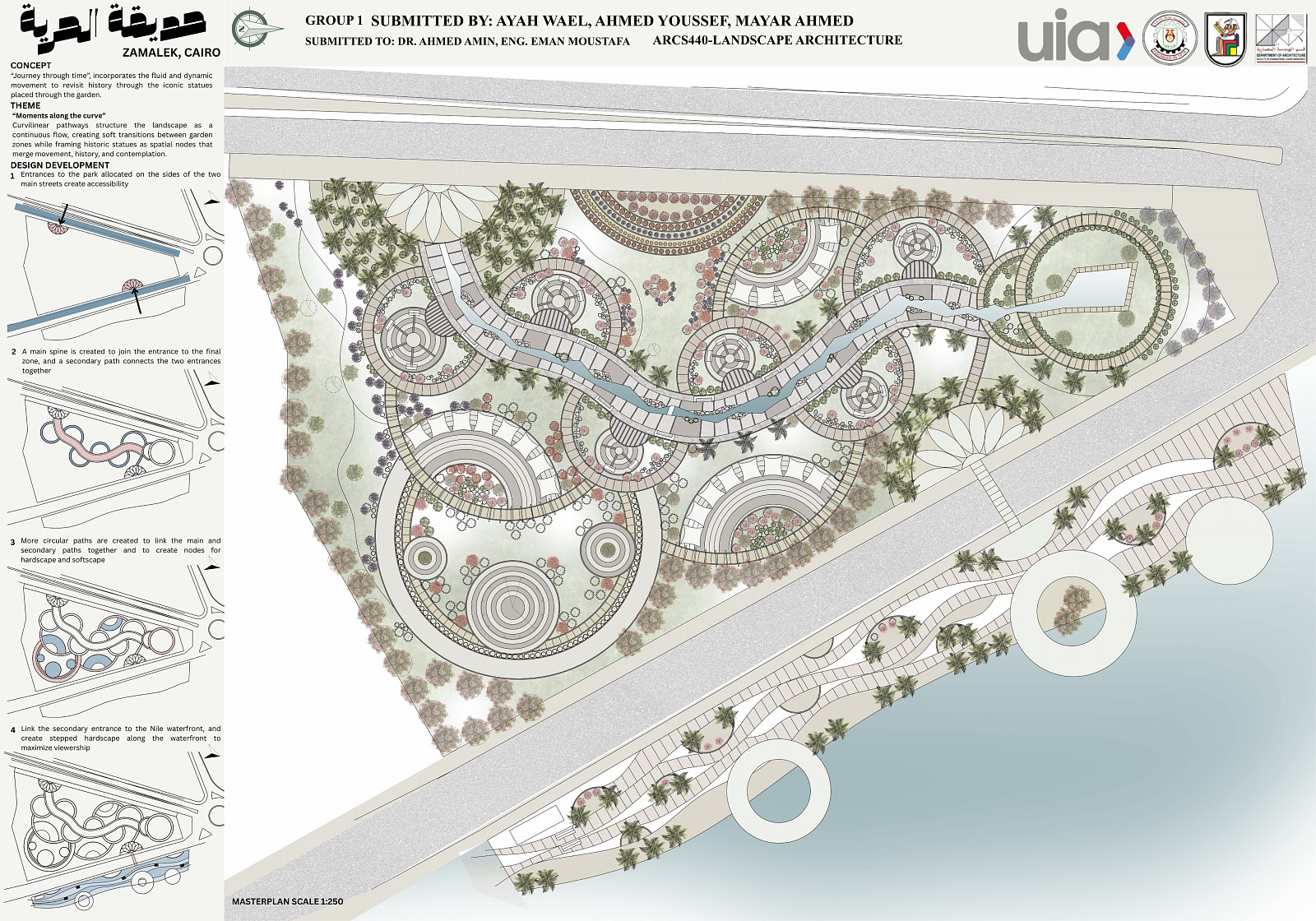
The concept of freedom is translated into design through a non-linear organization of space. Instead of a single dominant axis, the garden is structured as a network of curvilinear paths that continuously branch, reconnect, and overlap. This allows users to choose different routes, speeds, and experiences, reinforcing the idea that freedom lies in personal movement and interpretation rather than fixed direction.
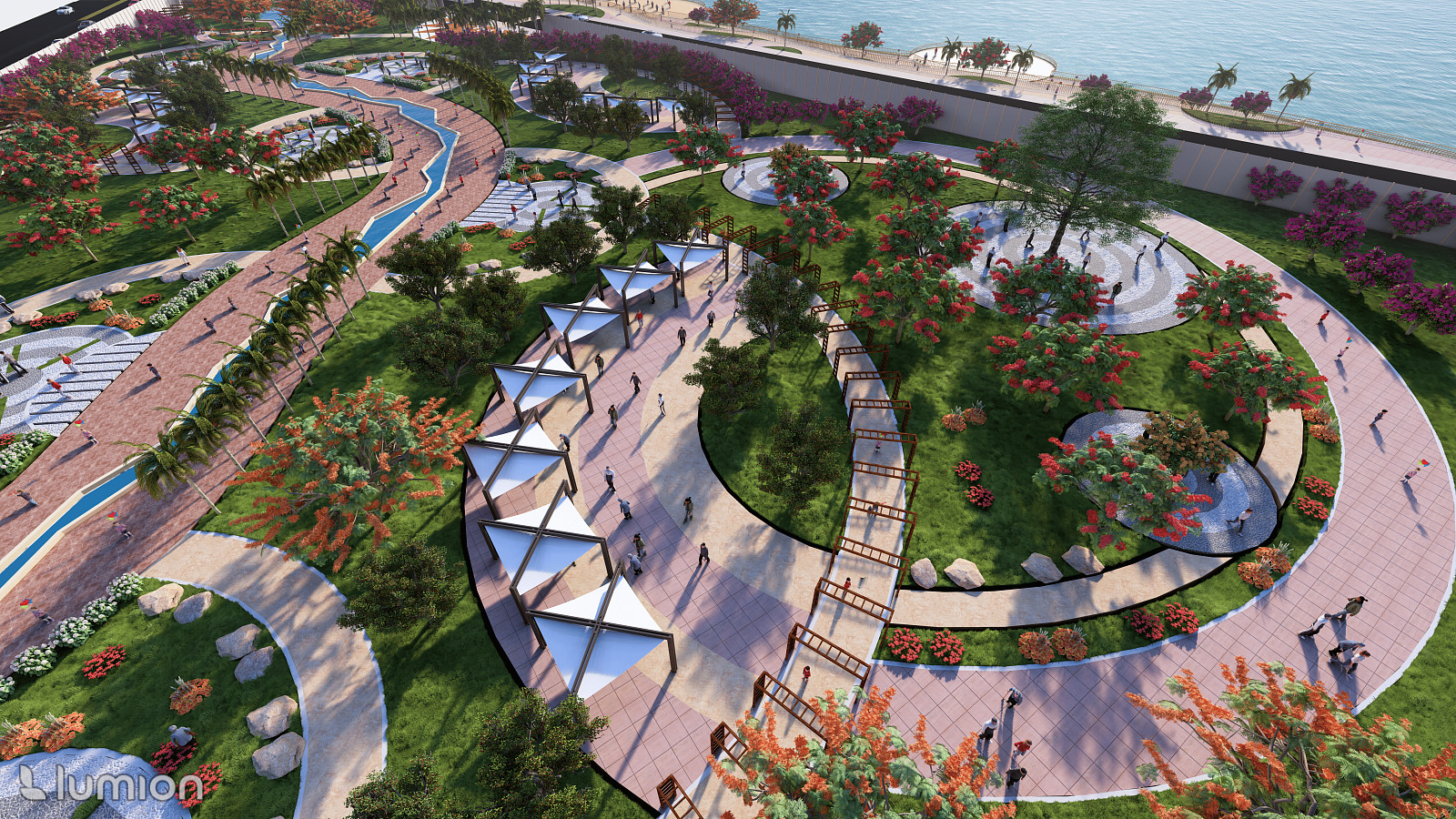
Circular and semi-circular nodes are distributed along the site, acting as moments of pause within the journey. These spaces accommodate seating, gathering, contemplation, and viewing points toward the Nile. Each node offers a distinct spatial character, creating diversity while maintaining continuity across the garden.
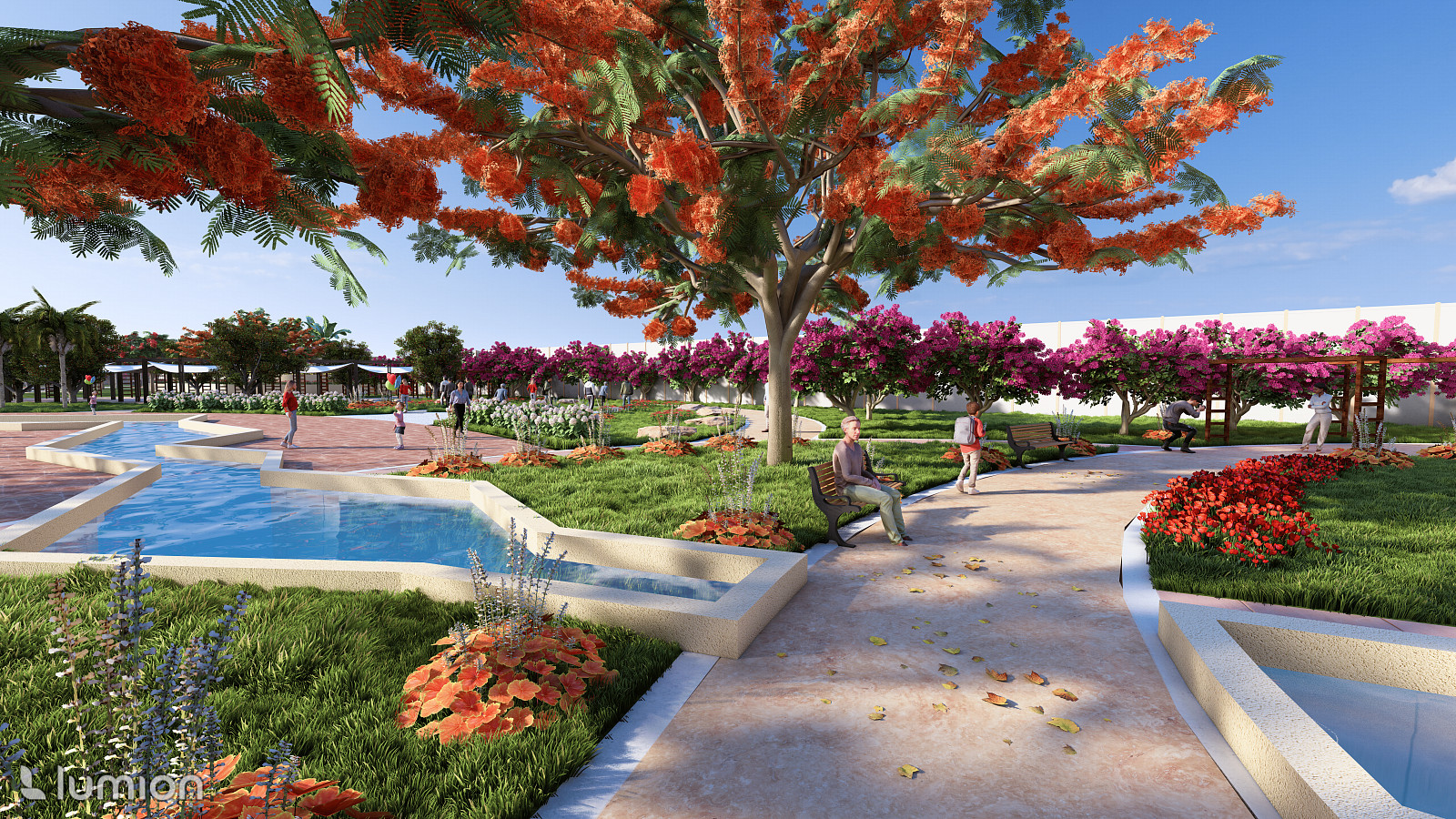
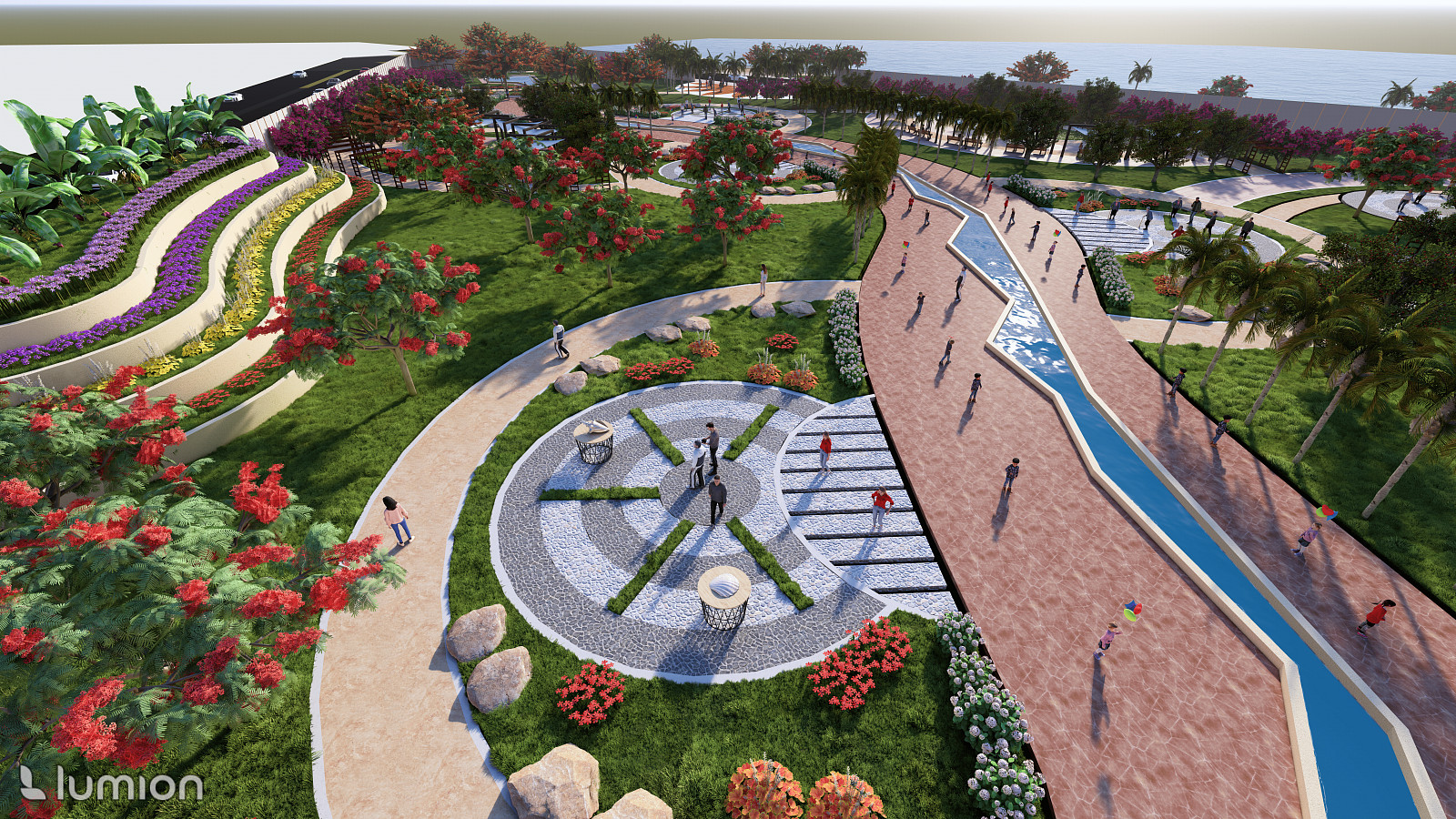
The central water feature acts as both a guiding element and a symbolic reference to the Nile. It visually and spatially connects the garden to the river, reinforcing the sense of openness and flow. As visitors move alongside the water, the landscape gradually shifts in scale, planting density, and enclosure, creating a dynamic rhythm between exposure and retreat.
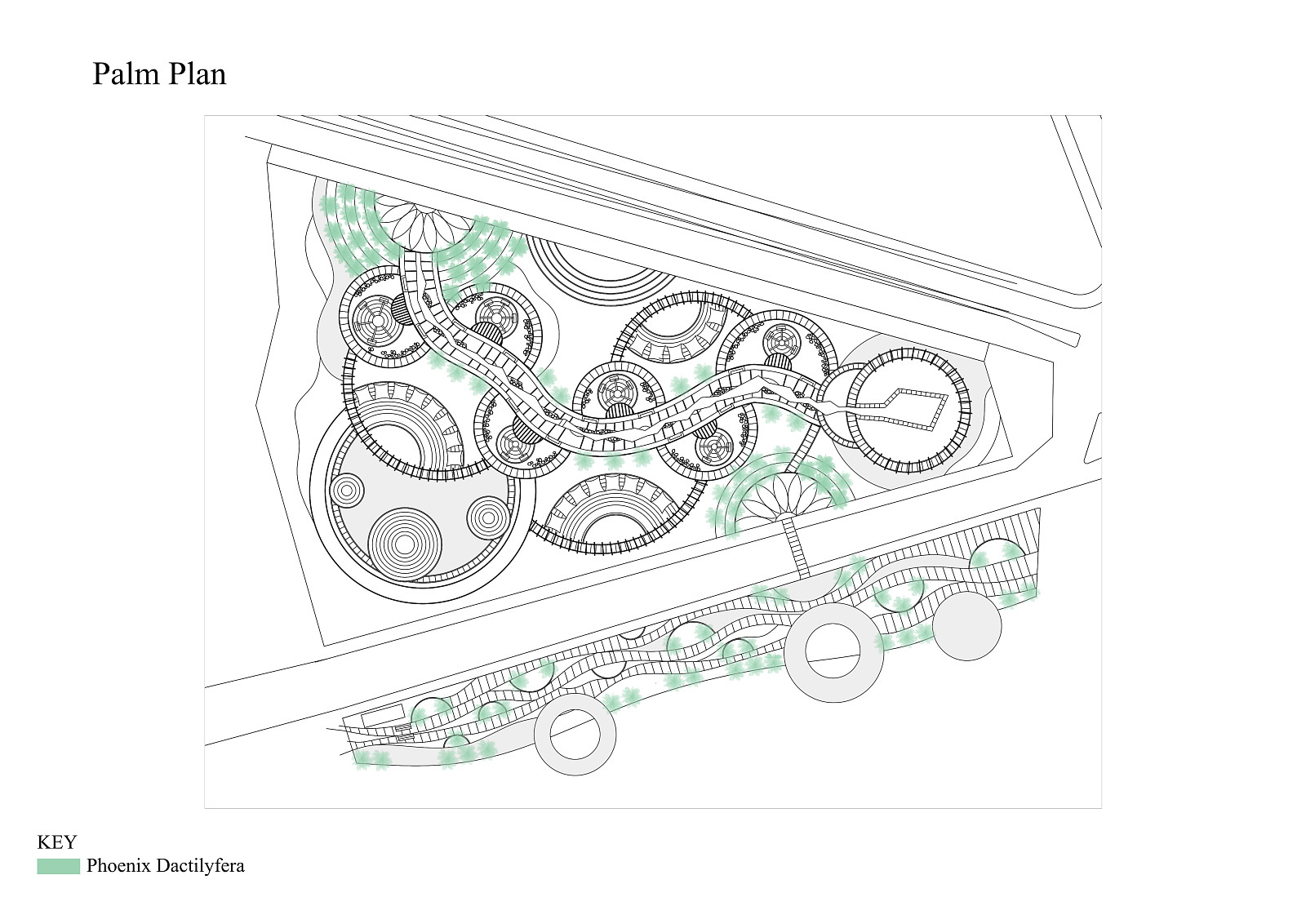
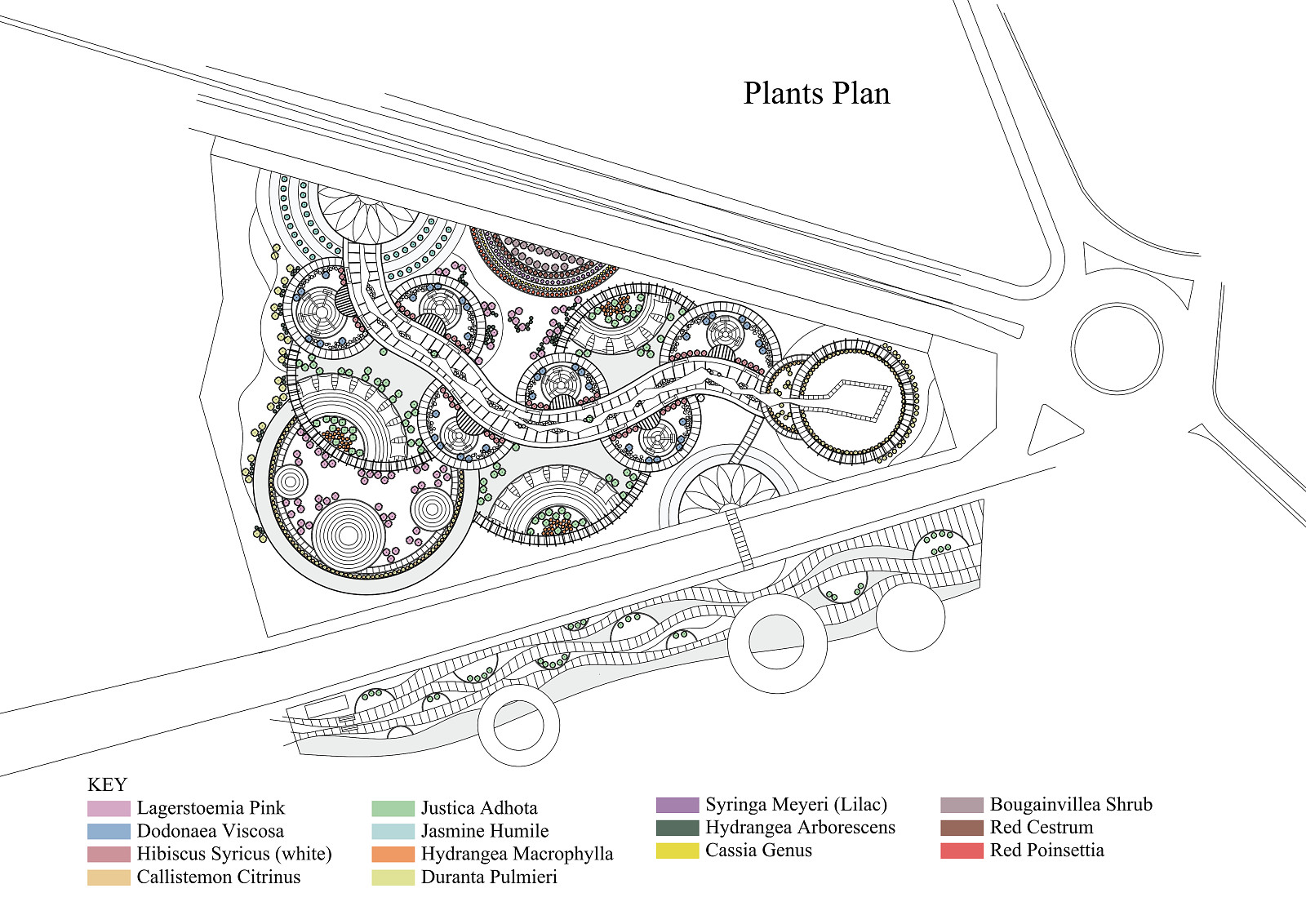
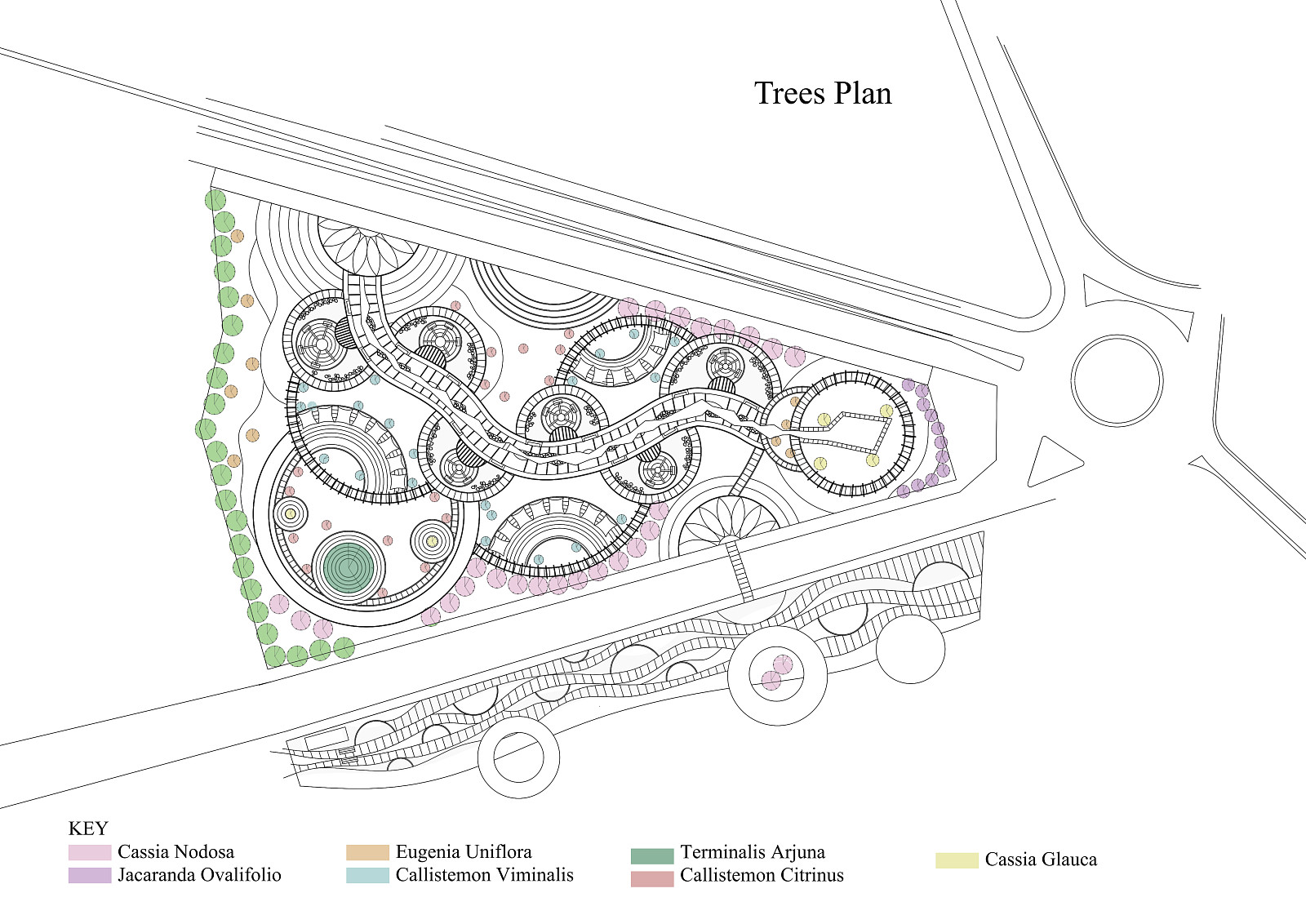
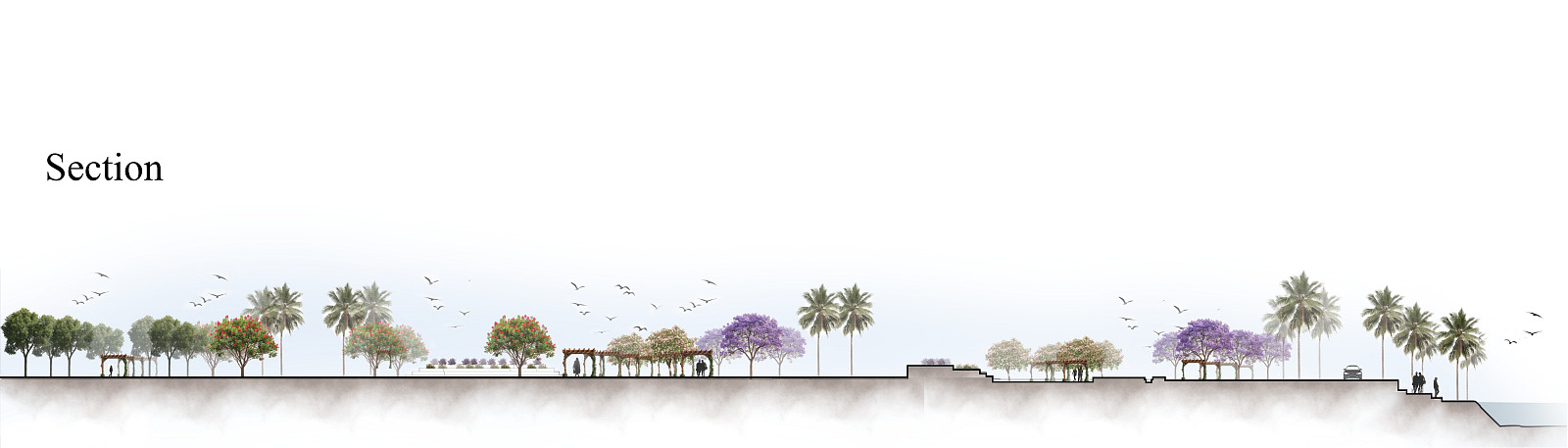
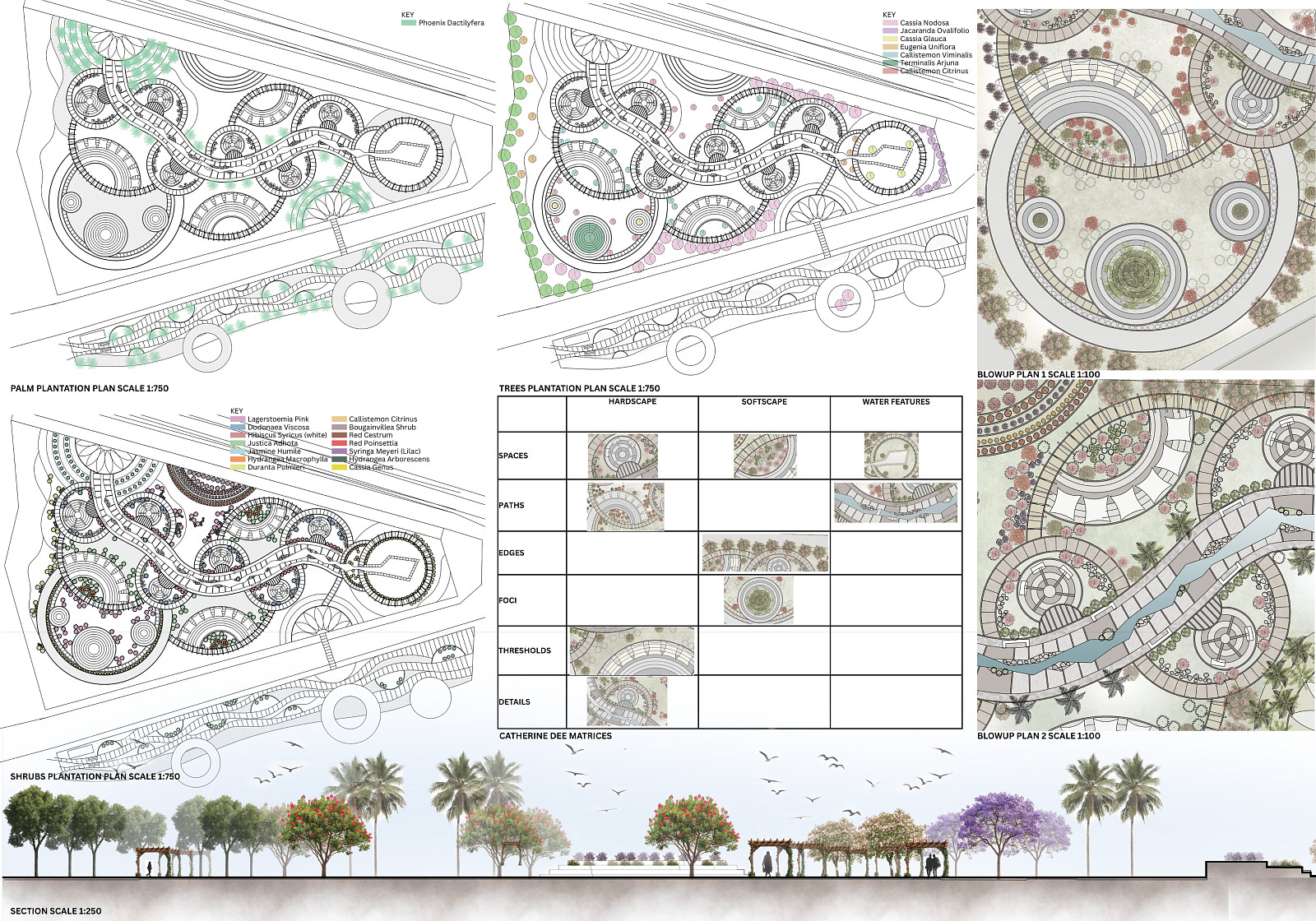
Planting plays a critical role in expressing freedom and transition. Palm rows provide orientation and structure, while flowering trees and shrubs introduce color, softness, and seasonal change. The planting strategy defines edges and thresholds without creating barriers, maintaining visual permeability throughout the site.
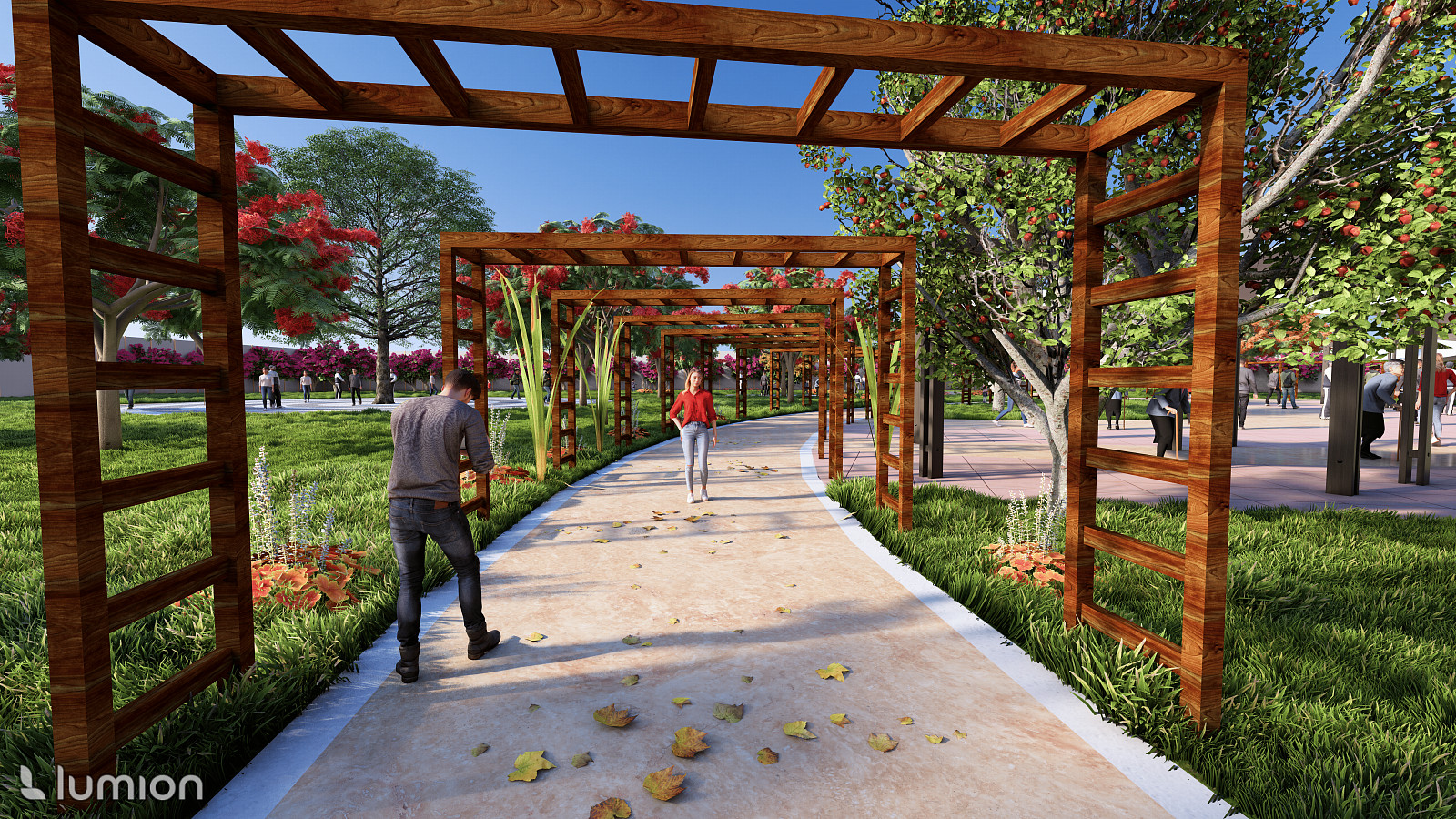
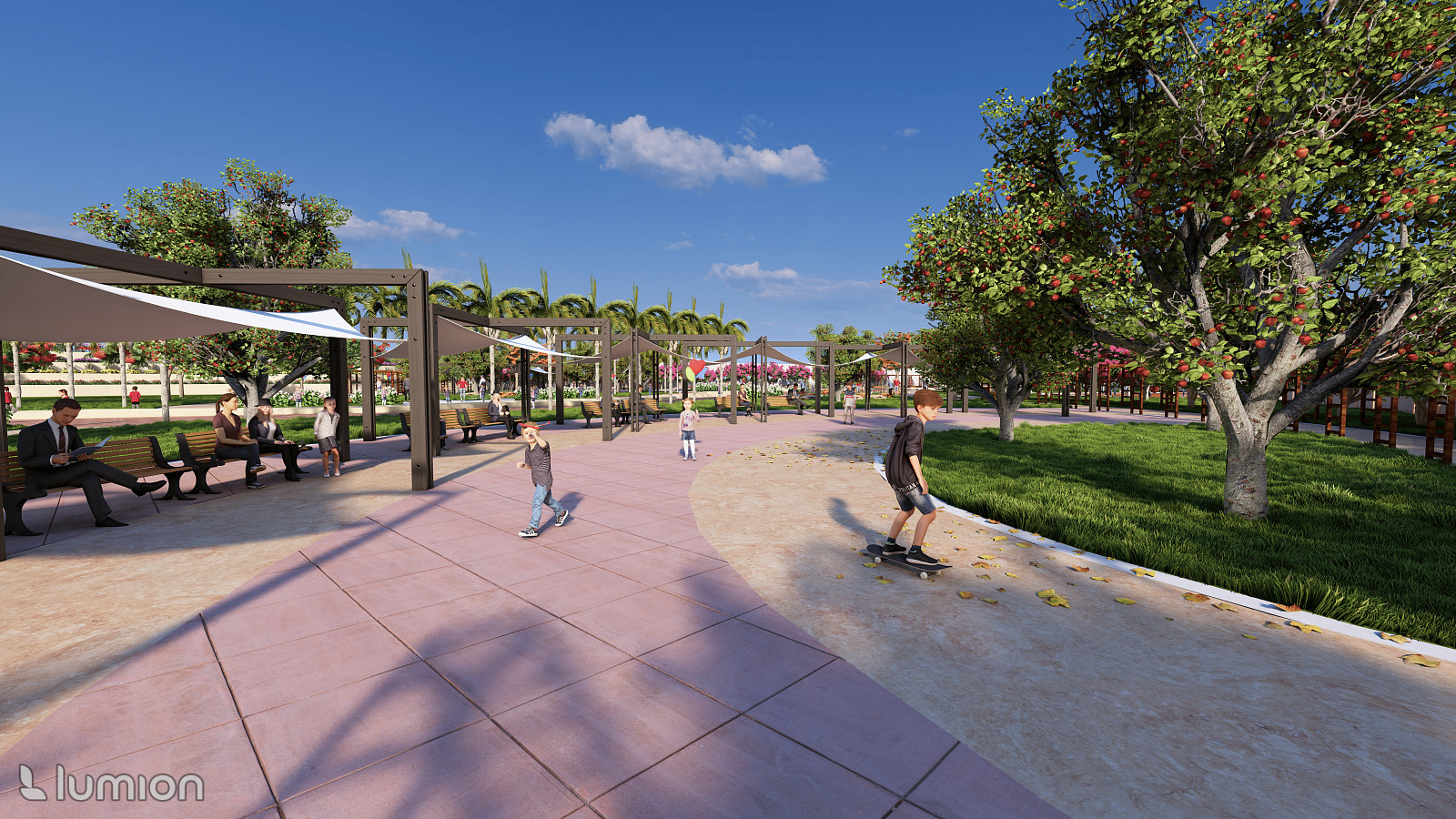
El-Hurriya Garden is designed as an inclusive public realm, welcoming everyday use, leisure, and social interaction. Shaded pergolas, terraces, and open lawns support diverse activities while preserving continuous views of the Nile.
Through its flowing paths, layered nodes, and open-ended circulation, El-Hurriya Garden becomes an urban landscape where freedom is experienced through movement, choice, and connection—a living extension of the city and the river it embraces.
Popis projektu
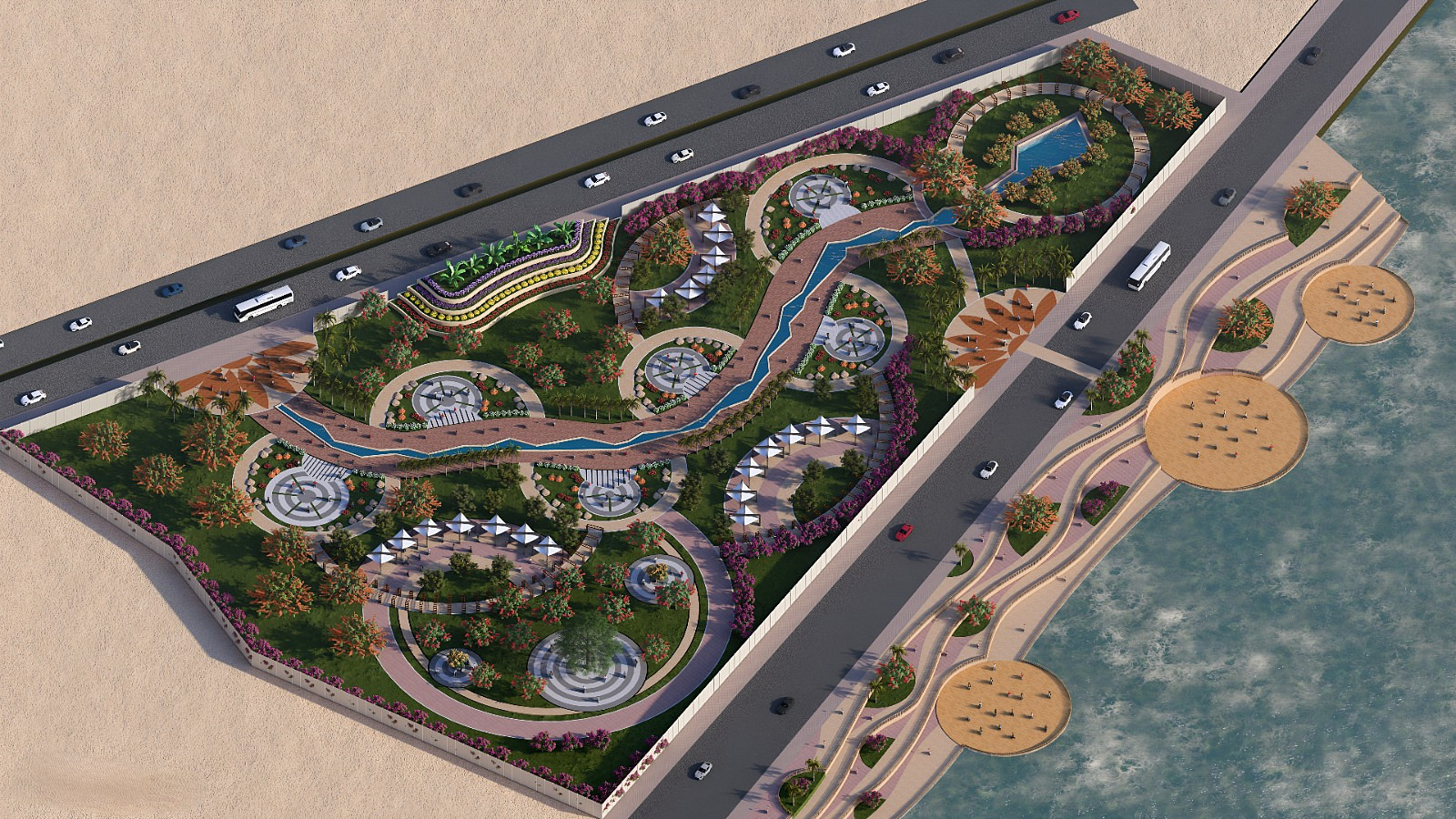
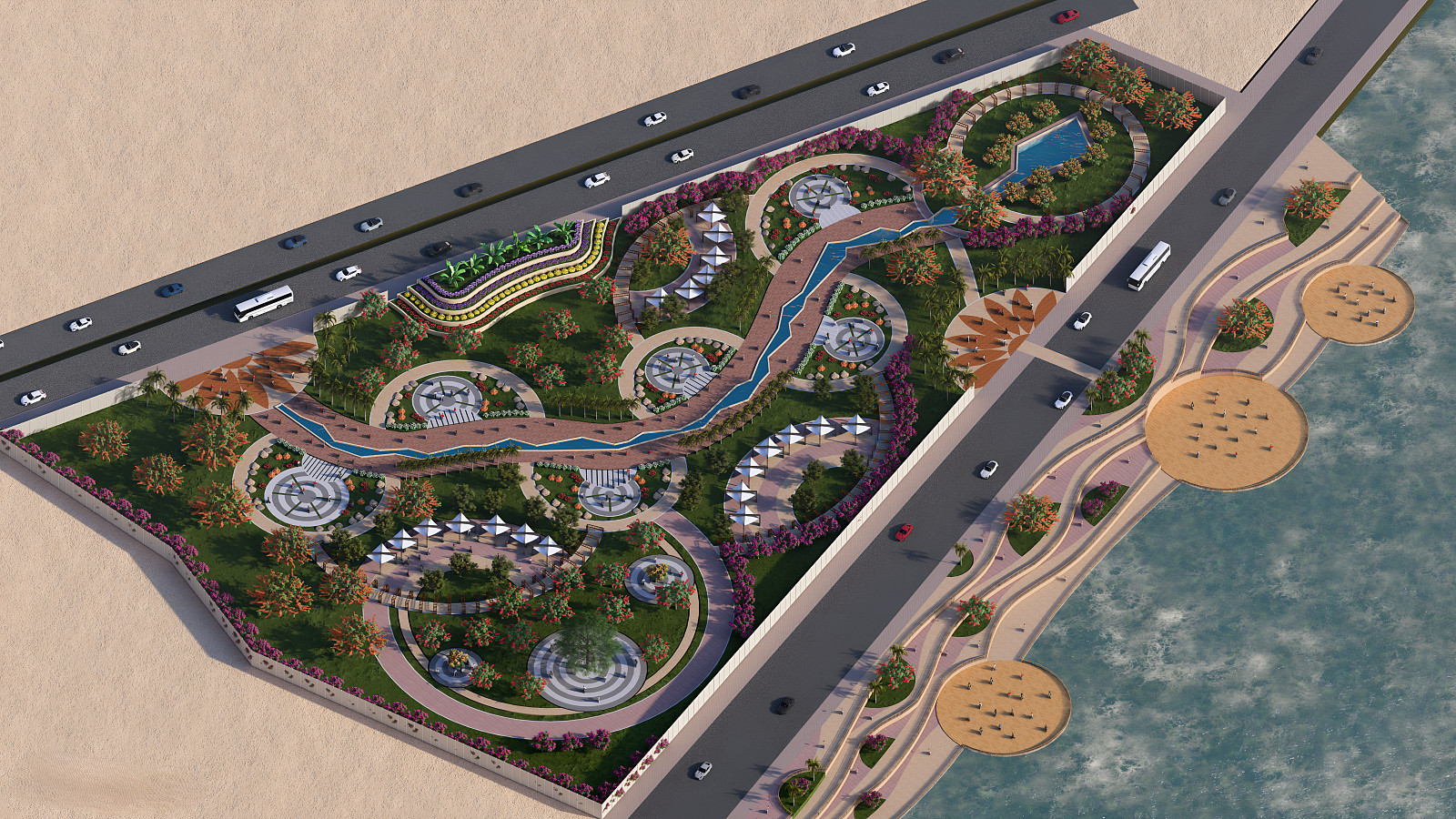
El-Hurriya Garden is a public landscape project located along the Nile waterfront in Zamalek, Cairo. The project reclaims a linear urban strip between the roadway and the river and transforms it into a continuous public garden that celebrates freedom through movement, choice, and spatial openness.
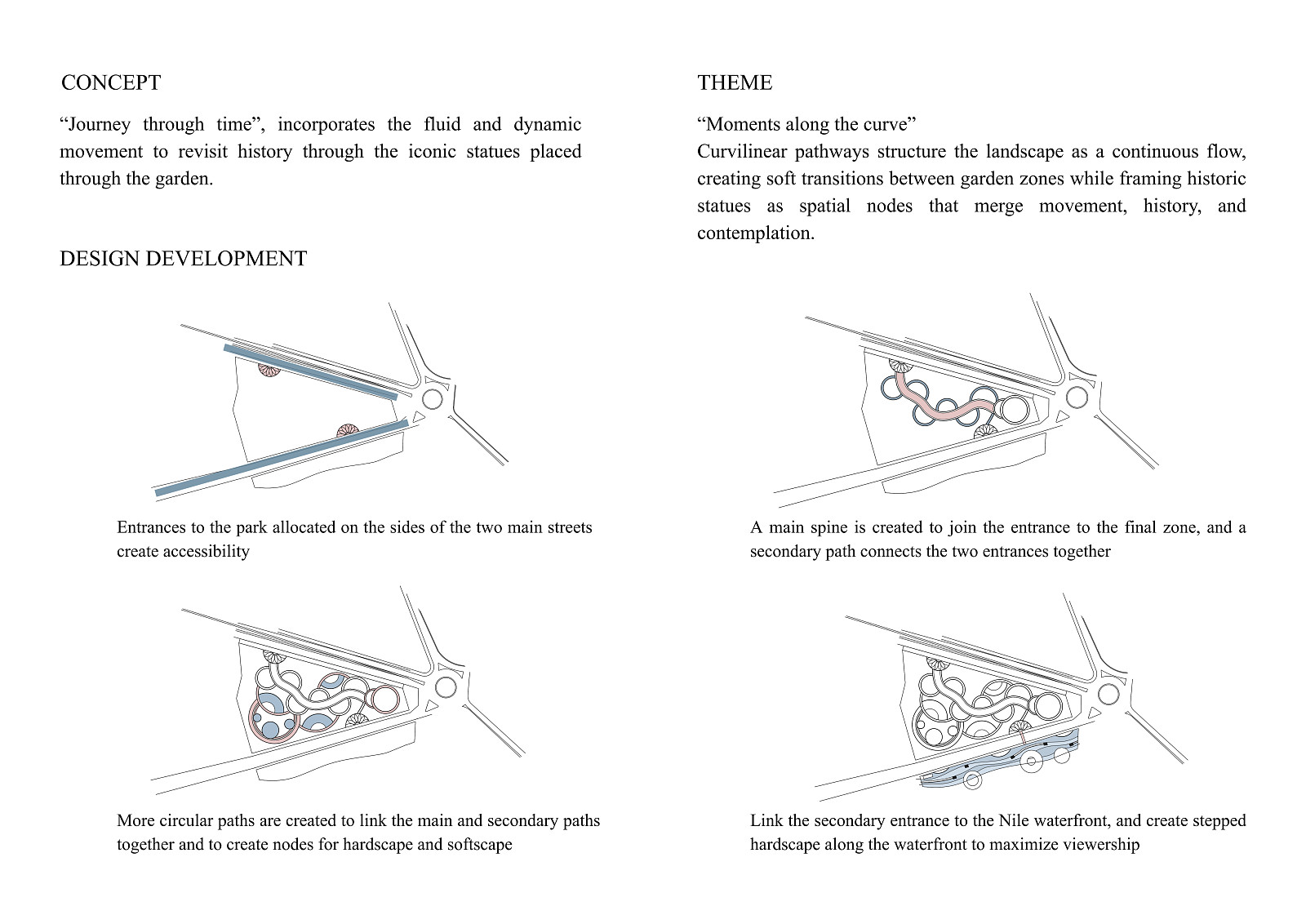
The design is structured as a journey rather than a destination. Visitors enter the garden from multiple access points and move through a network of interconnected paths that curve, overlap, and reconnect. This circulation strategy rejects rigid axial planning and instead offers multiple routes, allowing users to define their own experience of the space. Movement becomes a personal and flexible act, directly reflecting the concept of freedom.
The garden is organized around a main pedestrian spine that links the primary entrances, complemented by secondary paths that branch off into circular and semi-circular nodes. These nodes function as spatial pauses along the journey, accommodating seating areas, gathering spaces, shaded plazas, and viewpoints toward the Nile. The repetition of circular geometries reinforces continuity while allowing each space to maintain a distinct identity.
A linear water feature runs through the heart of the project, visually guiding movement and strengthening the connection to the Nile. It enhances the microclimate, introduces sensory experience, and reinforces the idea of flow and continuity. Along the waterfront edge, stepped hardscape and terraces provide direct engagement with the river while maintaining safety and accessibility.
Planting is carefully layered to define edges, frame views, and create varying degrees of enclosure without restricting visual openness. Palms establish rhythm and orientation, flowering trees introduce seasonal change and color, and shrubs soften transitions between hardscape and softscape. This landscape strategy ensures that boundaries are suggested rather than imposed.
El-Hurriya Garden functions as an inclusive urban space that supports daily walking, leisure, social interaction, and quiet contemplation. Through its fluid circulation, diverse spatial nodes, and strong relationship to the Nile, the project transforms the site into a living landscape of freedom, where users are free to move, pause, gather, or reflect within an open and continuous public realm.
Technické informace
El-Hurriya Garden is developed along a linear Nile-front site bordered by a major roadway, requiring a landscape solution that balances accessibility, safety, and environmental comfort. The design establishes a strong pedestrian buffer between traffic and the waterfront, transforming the site into a continuous public realm that enhances walkability while maintaining visual and physical connections to the river.
The circulation system is organized around a primary pedestrian spine that runs through the length of the garden and links all main entrances. This main path is supported by a network of secondary curvilinear paths that branch, intersect, and reconnect, allowing visitors to move freely through the site without imposed hierarchy. The circulation strategy prioritizes user choice and continuity, ensuring smooth transitions between spaces and encouraging exploration.
Spatial organization is defined through a sequence of circular and semi-circular nodes distributed along the main circulation route. These nodes function as gathering areas, resting points, and visual anchors within the garden. Changes in paving patterns, level variations, and planting density are used to distinguish these spaces while preserving overall spatial unity. Thresholds between zones are gradual, allowing movement between open lawns, shaded areas, and waterfront terraces without abrupt separation.
Hardscape elements are carefully integrated to support circulation, seating, and activity. Paved walkways, stepped platforms, and circular plazas provide durable surfaces suited to high pedestrian use, while pergolas and shaded structures enhance comfort in exposed areas. Materials are selected for durability and ease of maintenance while visually complementing the surrounding landscape and river context.
Softscape plays a critical role in shaping the environmental performance and character of the garden. Palm trees are used as structural elements to define movement and rhythm, while flowering trees introduce seasonal color and visual interest. Shrubs and groundcover soften edges between hardscape and open green spaces, improving microclimatic conditions and enhancing user comfort. Planting density varies across the site to create different spatial experiences without obstructing views or circulation.
A linear water feature runs through the central axis of the garden, reinforcing the concept of movement and continuity while establishing a strong visual connection to the Nile. The water element contributes to thermal comfort, enhances sensory experience, and acts as a guiding element within the circulation network. Along the waterfront, stepped hardscape terraces allow users to engage directly with the river while maintaining safety and accessibility.

Copyright © 2026 INSPIRELI | All rights reserved. Use of this website signifies your agreement to the Terms of Use, Privacy Policy, and use of cookies.