LUMINA ARCHIVE


 Assist. Prof. Dr. Gizem Özkan Üstün (Ph.D.)
Idea projektu
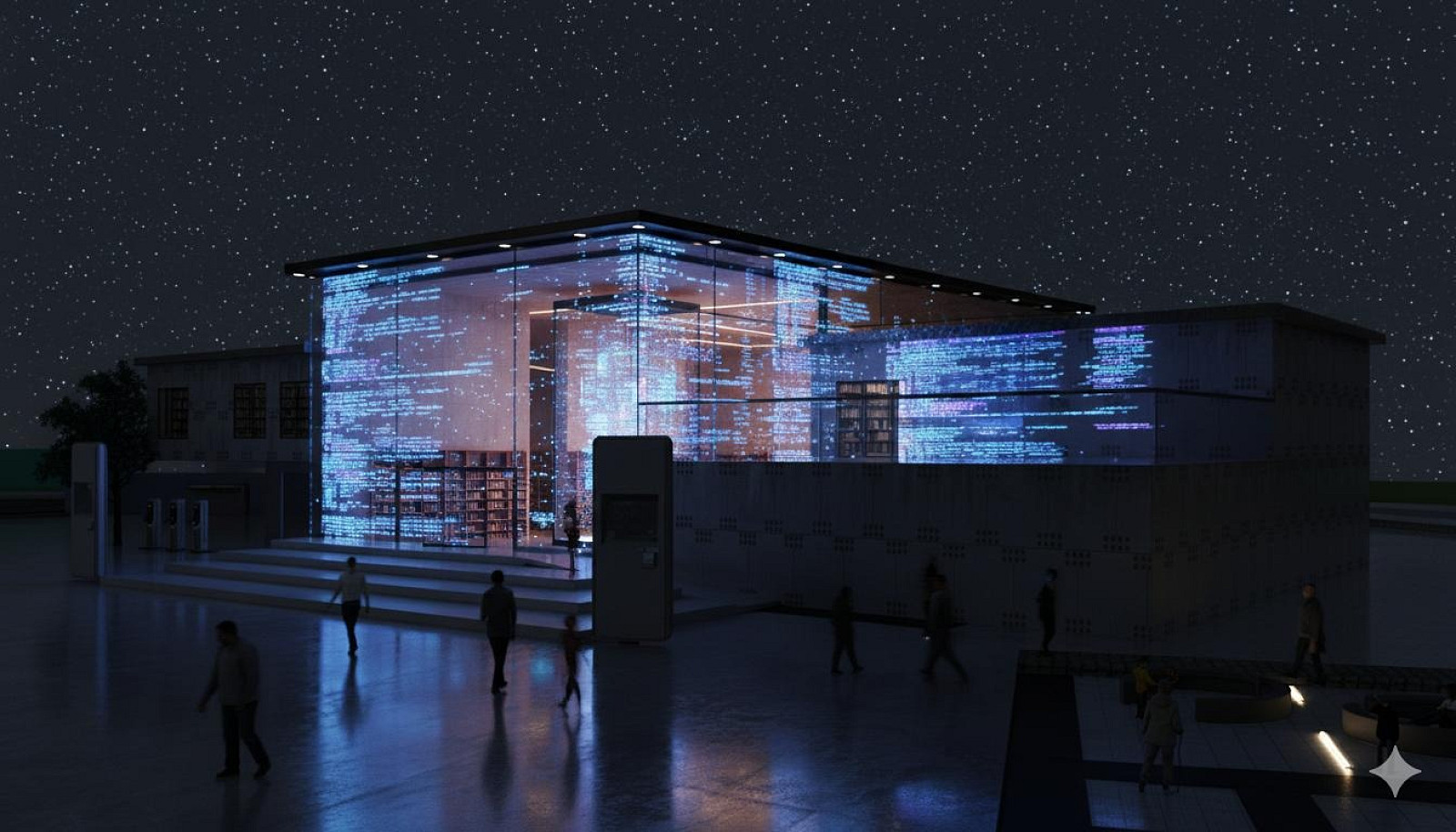
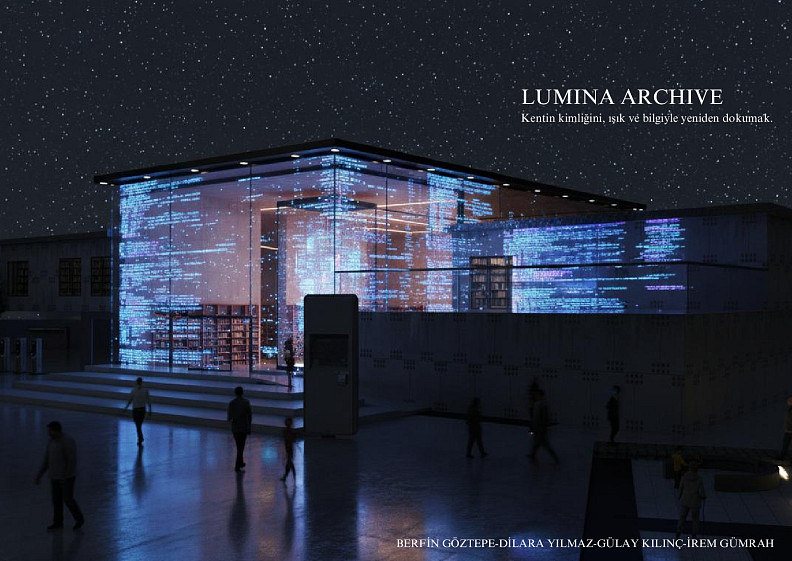
Lumina Archive is a hybrid spatial proposal where information transcends being a static object of storage and evolves into a living urban experience. The primary objective of the project is to redefine the relationship between data and the user on a spatial plane by expanding the traditional library typology with a digital layer.
Driven by the principle of digital continuity, the design utilizes 360-degree holographic archives to transform the structure into a living interface that projects data onto the city. The permeability of glass combined with the dynamism of digital projections dissolves the boundaries between interior and exterior, creating an "archive of light" that carries urban memory into the future. Lumina Archive strengthens urban integration through digital depth, offering an atmosphere where information is not merely observed, but lived within.
Popis projektu
The project establishes an urban information space by modernizing traditional library functions through holographic technologies and transparent architecture. The scope of the solution encompasses 360-degree digital archives where data merges with physical space, boundaries that dissolve into the public square, and a dynamic facade system that projects data onto the city.
Technické informace
The visual and functional character of the project is built upon high-permeability smart glass and a steel structural system. Smart polymer surfaces are preferred on the facade to lighten the static mass, while the holographic towers utilize specialized reflective film layers and integrated LED mesh technology to refract light. This material palette enables the seamless physical integration of digital flow with the space.
Dokumentace

Copyright © 2026 INSPIRELI | All rights reserved. Use of this website signifies your agreement to the Terms of Use, Privacy Policy, and use of cookies.