
Methods for creating modern public spaces in the redevelopment of a flour mill (a case study of Kaliningrad)

Idea projektu
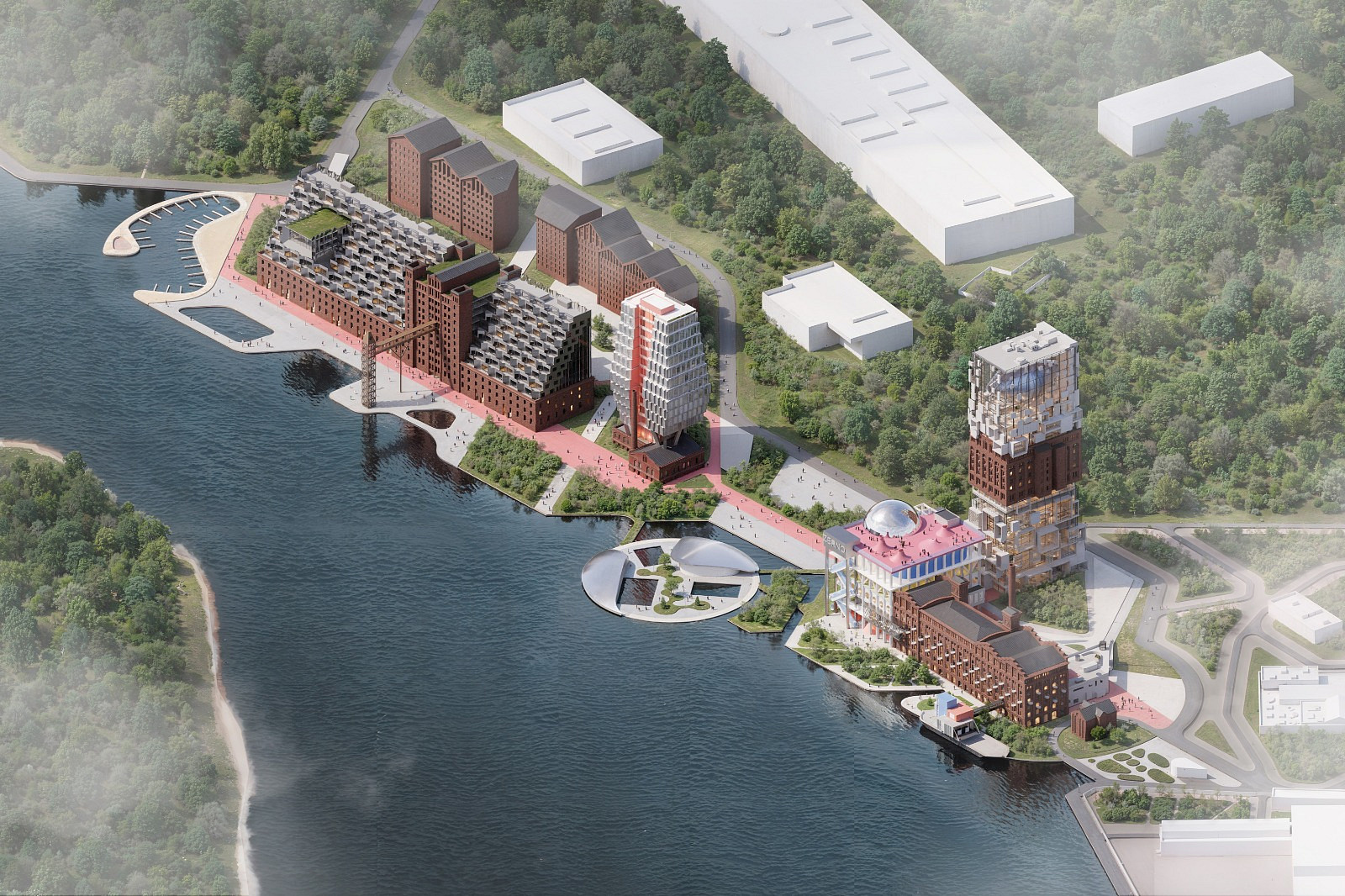
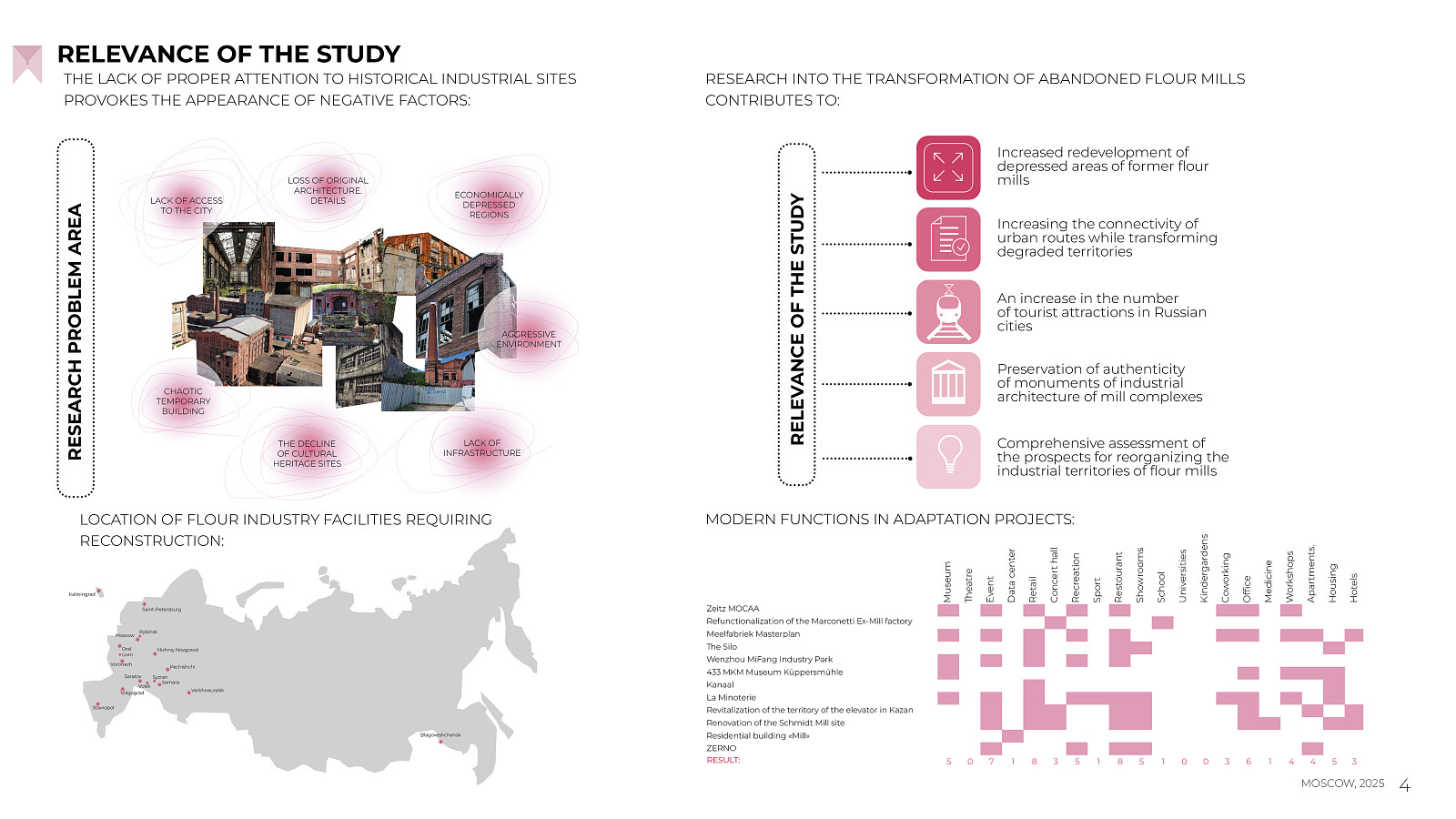
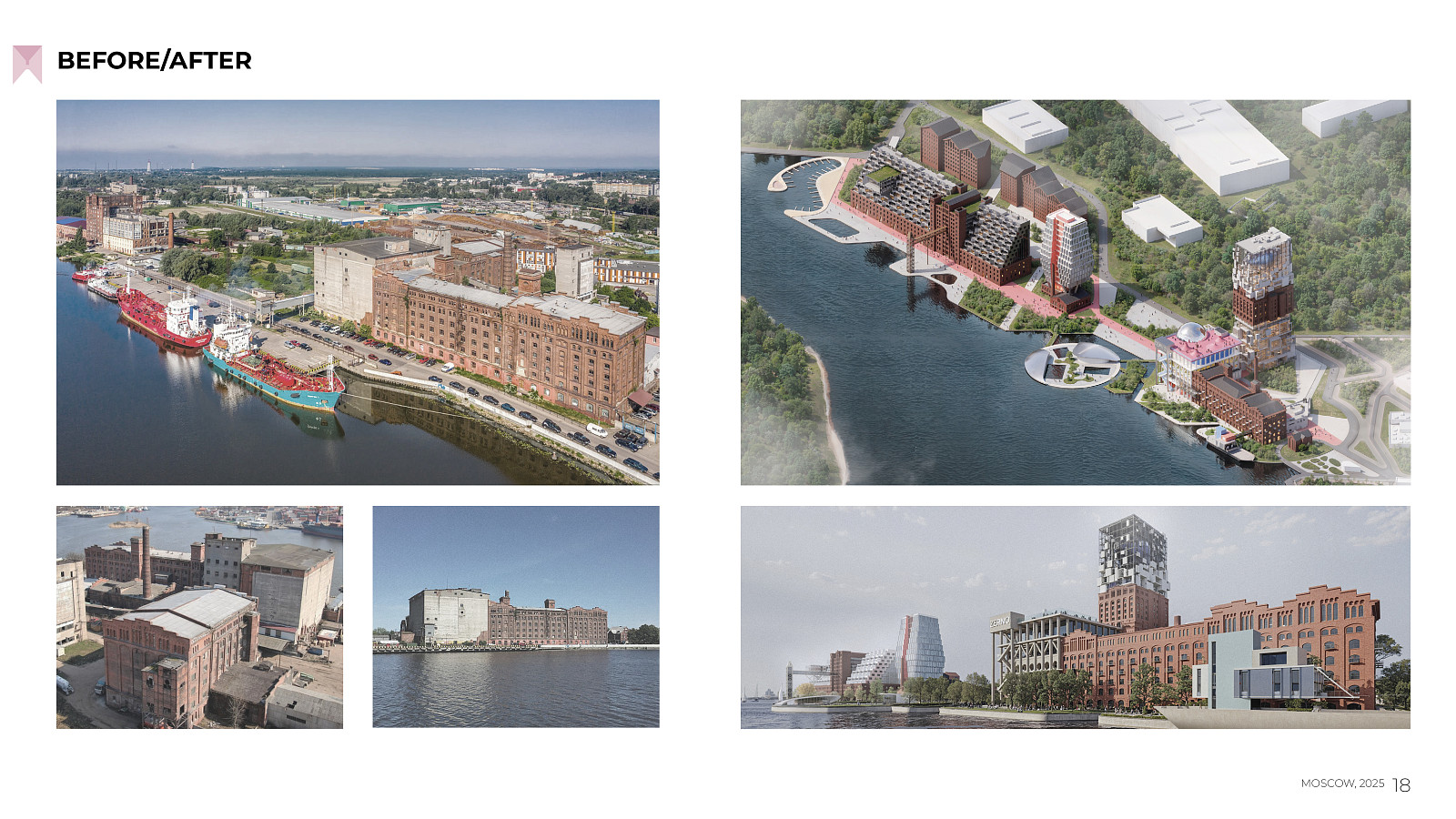
This dissertation will focus on strategies for reorganizing the industrial spaces of mill complexes, depending on their functional purpose, location and architectural appearance. Modern approaches to the renovation of industrial facilities will be considered, which will allow us to identify the most effective methods and strategies applicable to a specific example of a flour mill in Kaliningrad. As a result of innovations in flour production, a significant number of mills and grain elevators from the 19th and 20th centuries have been abandoned, despite the outstanding architectural and spatial characteristics of many of them. One of the key aspects of the study is the analysis of the existing condition of the plant, which will allow us to understand which elements of its infrastructure can be preserved and adapted for new functions, and which require a complete rethink.
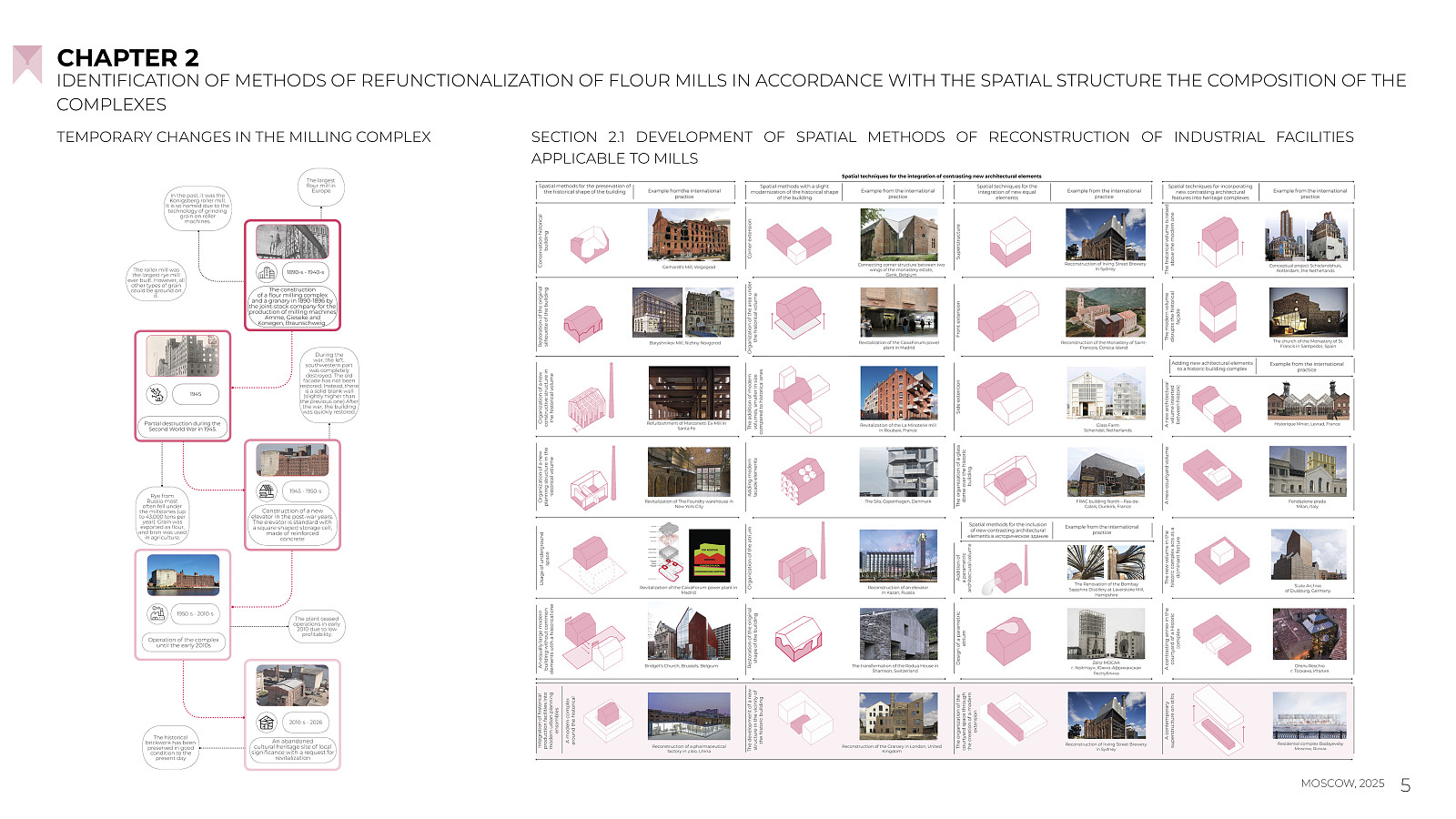
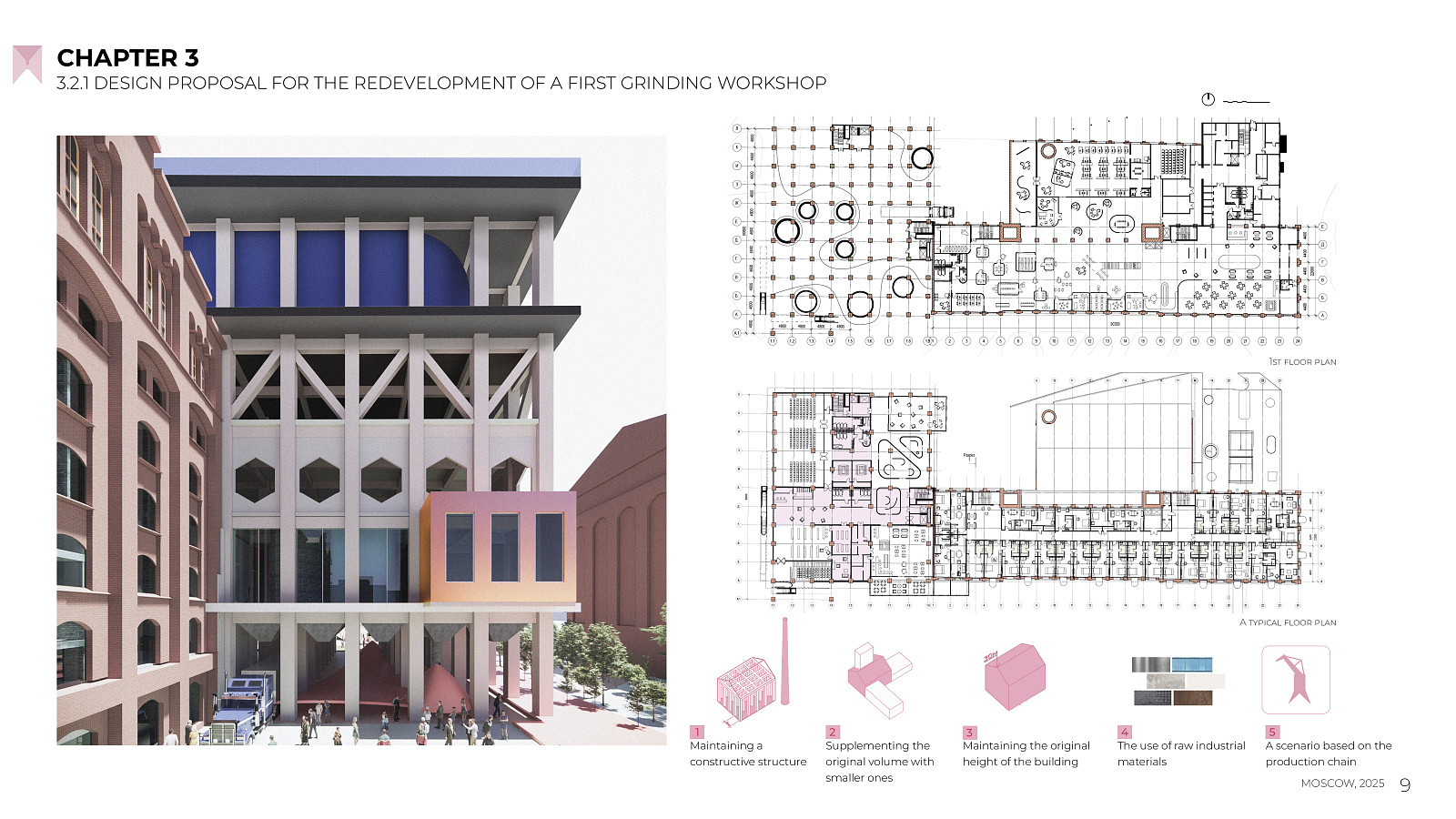
The ways of integrating a modern volume into the historical structure of an architectural monument are identified in accordance with examples from the world experience of reconstruction projects.
The principles are classified according to the degree of change in the appearance of the existing architectural ensemble:
1) The introduction of a new volume into the structural structure of an existing building
2) The dominance of historical volume over the implemented one
3) Equal–sized extension - continuity of the volume of the historical building
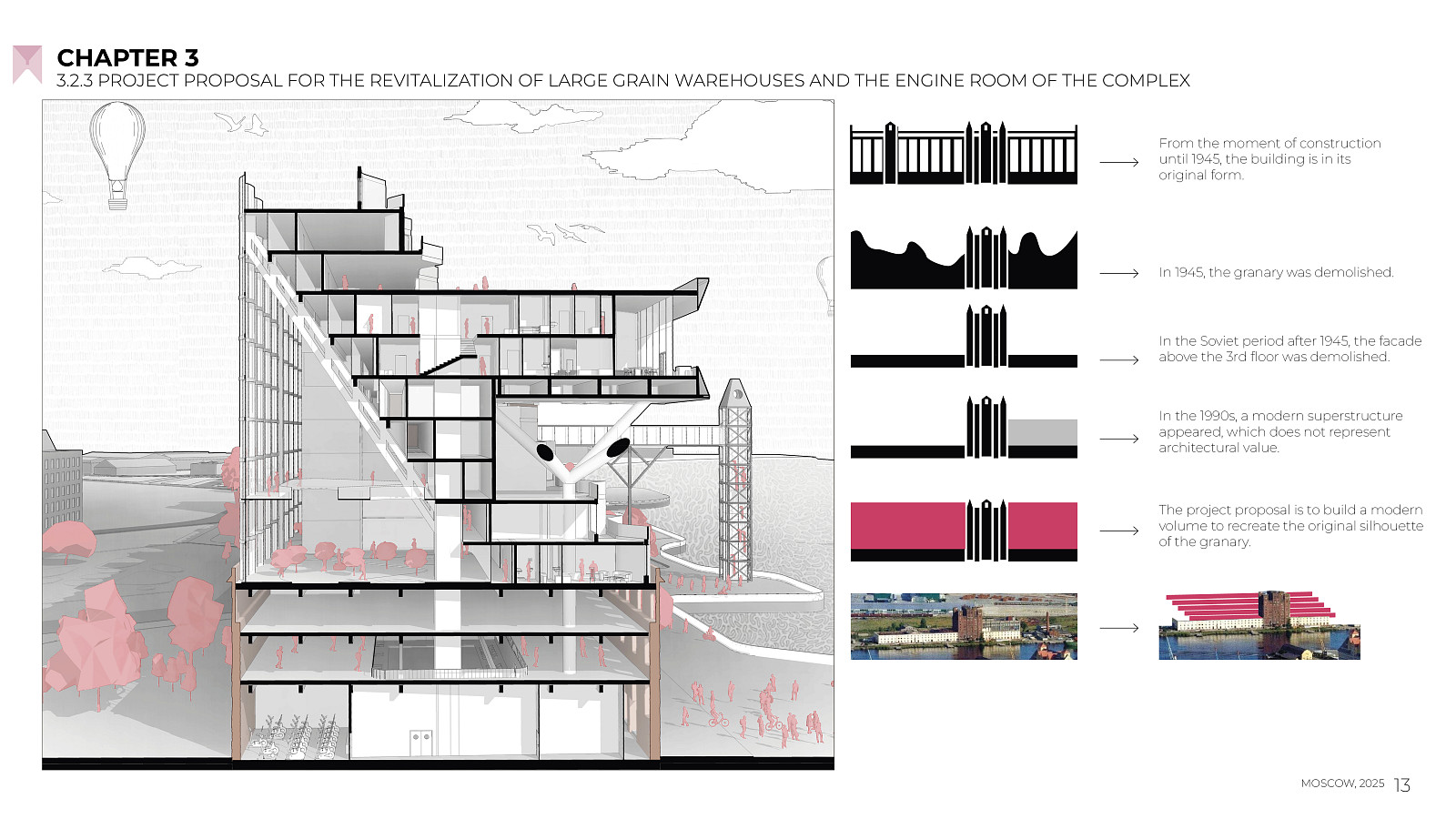
4) The dominance of the new volume over the historical one
Thus, by designing public spaces on the territories of abandoned flour mills, we can obtain unique multifunctional innovative clusters with a rich historical past and a special typology of spaces.
Popis projektu
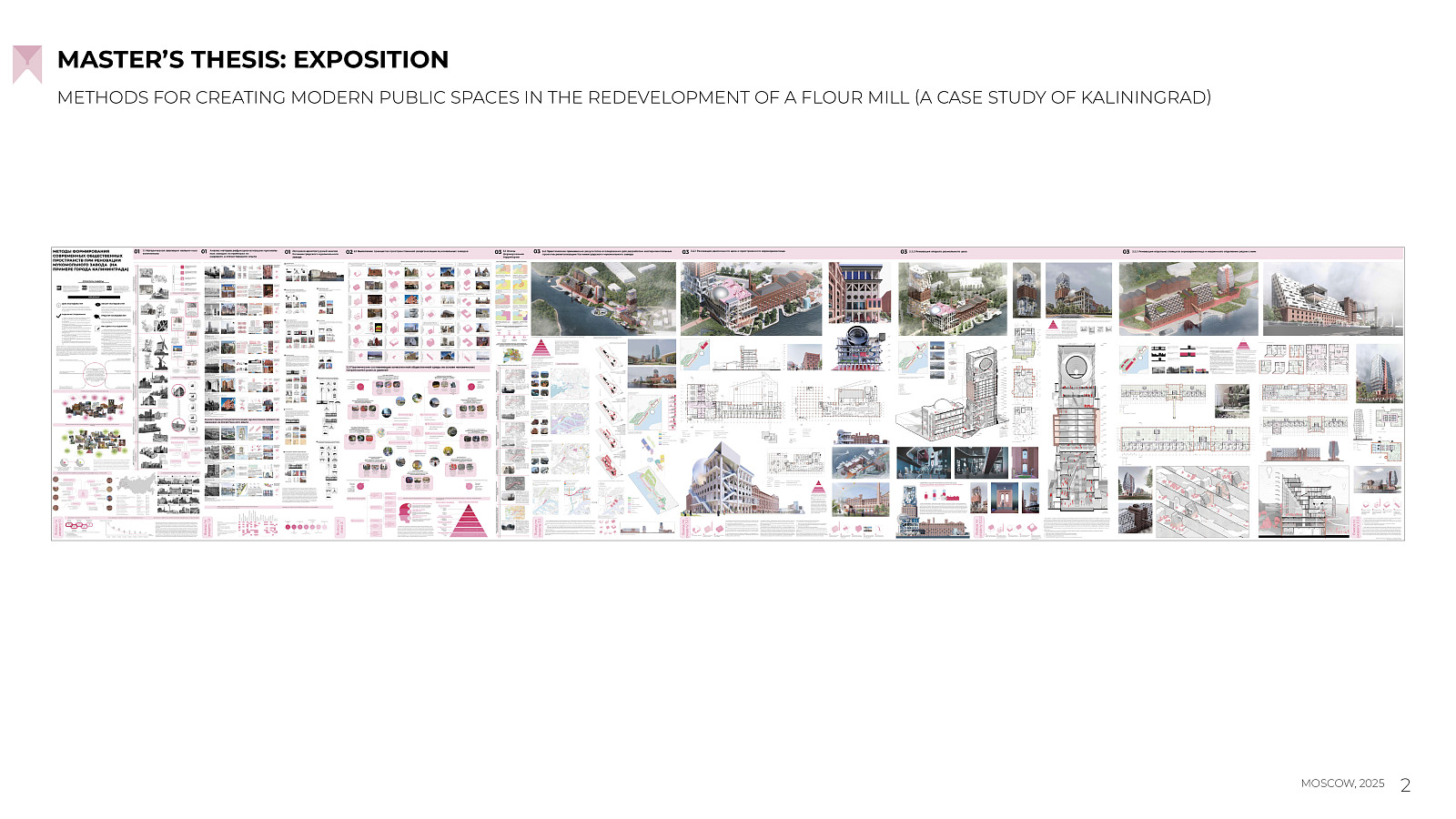
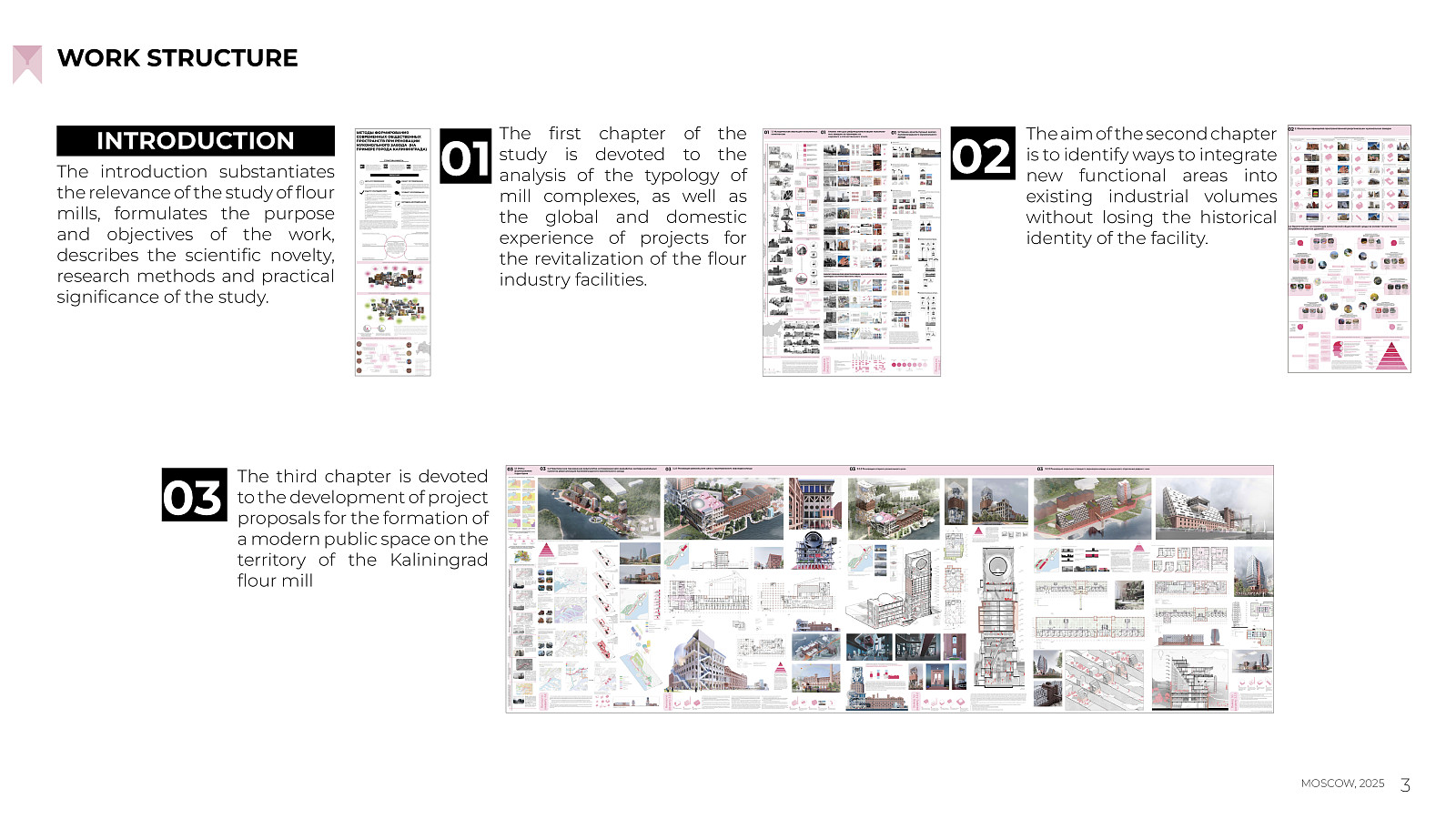
The dissertation consists of an introduction and three chapters. In the first and second chapters, a study is conducted in the field of flour mill renovation and key trends are identified.
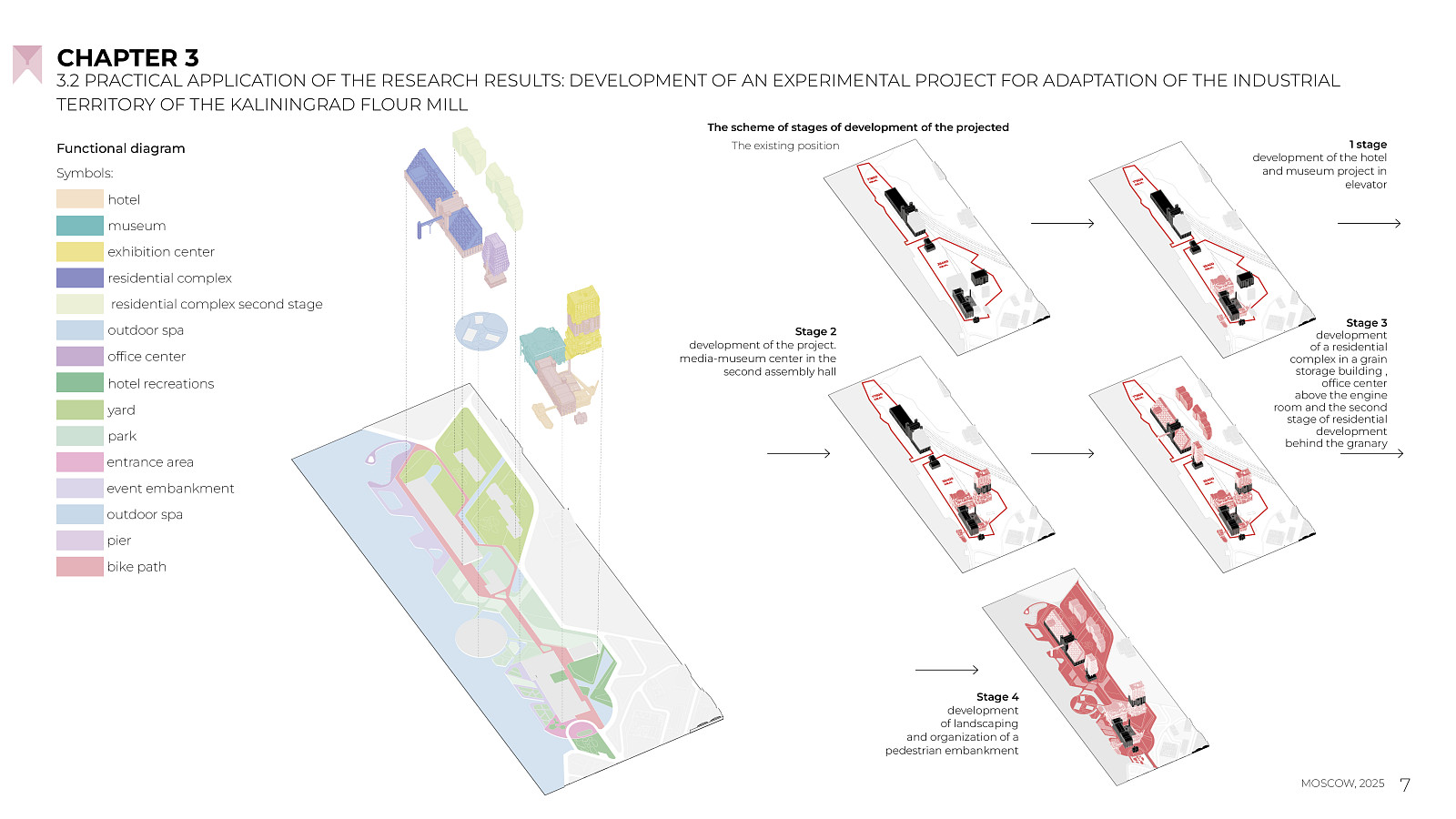
Chapter 3 offers a generalized concept for the development of the Kaliningrad flour mill territory and defines the stages of further development of the conceptual proposal, namely:
1. Development of a master plan for a multifunctional complex, taking into account its industrial specifics. The functional scheme of the complex is being developed.
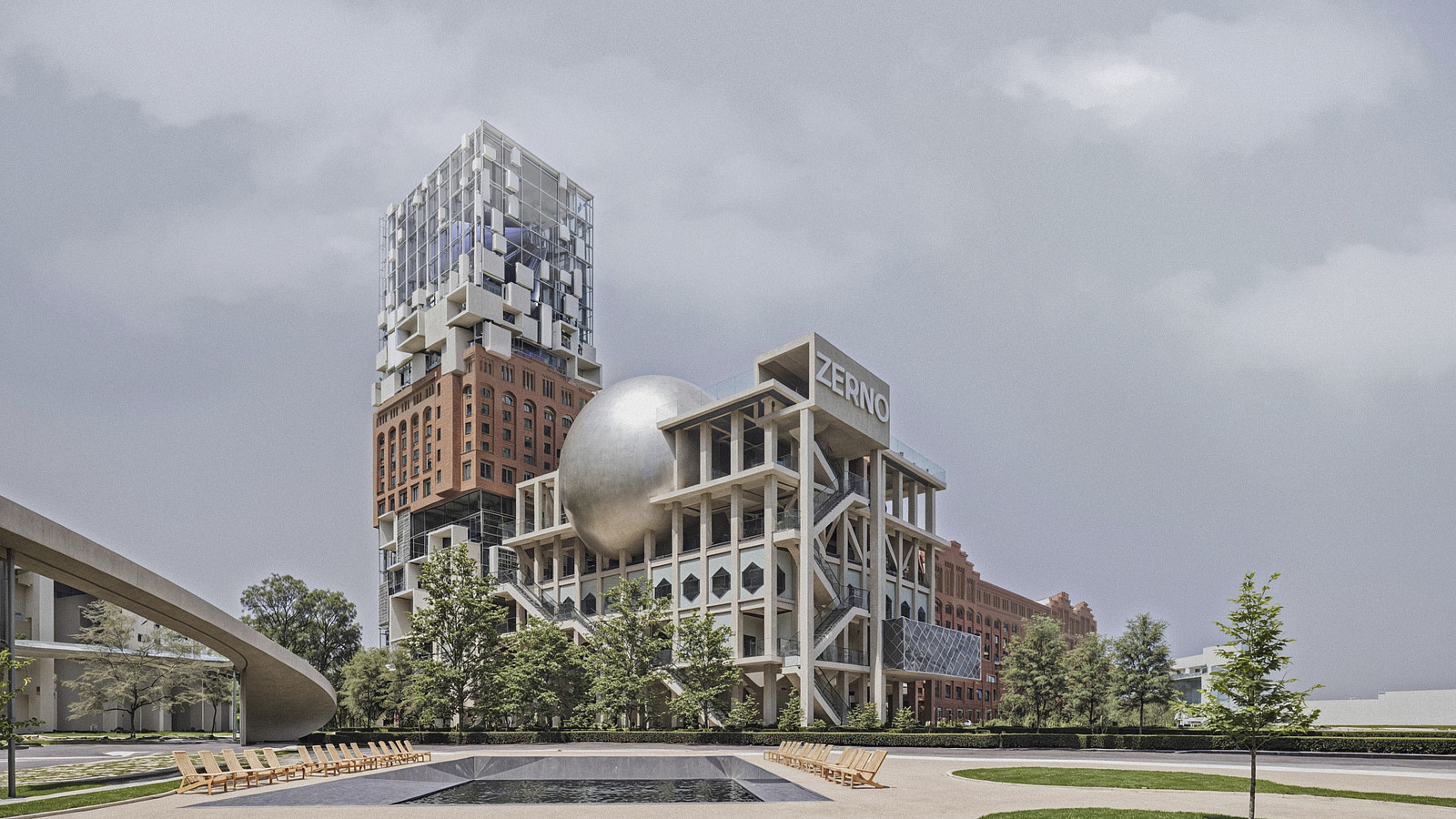
2. Development of a hotel and museum project in the elevator
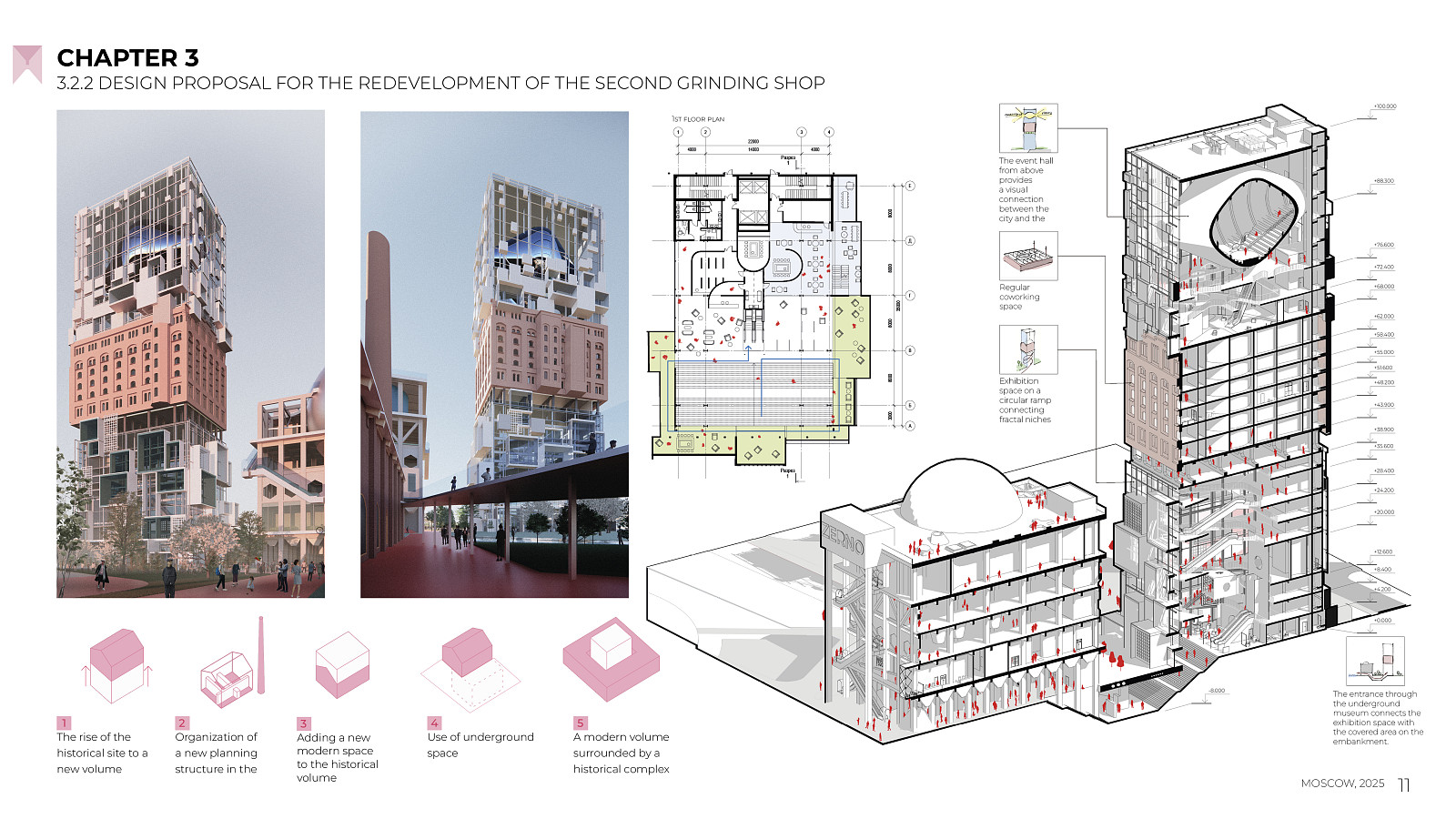
3. Development of a media art center project in the second grinding workshop
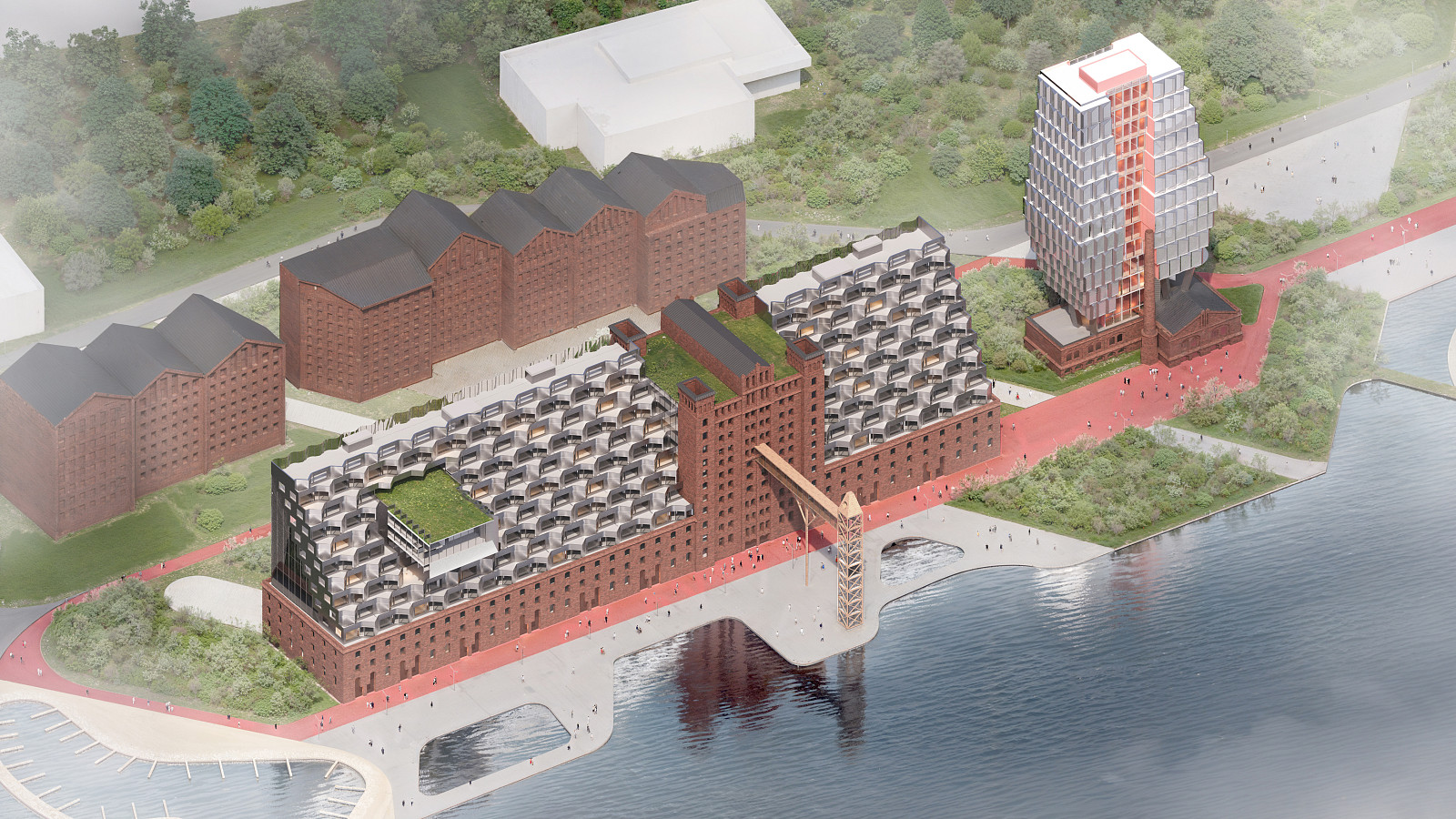
4. Development of a residential complex in the granary building, an office center above the engine room and the second stage of residential development behind the granary to organize a comfortable courtyard space.
Technické informace
Constructive solutions of an apartment building in a reconstructed granary building (Residential complex with terraces)
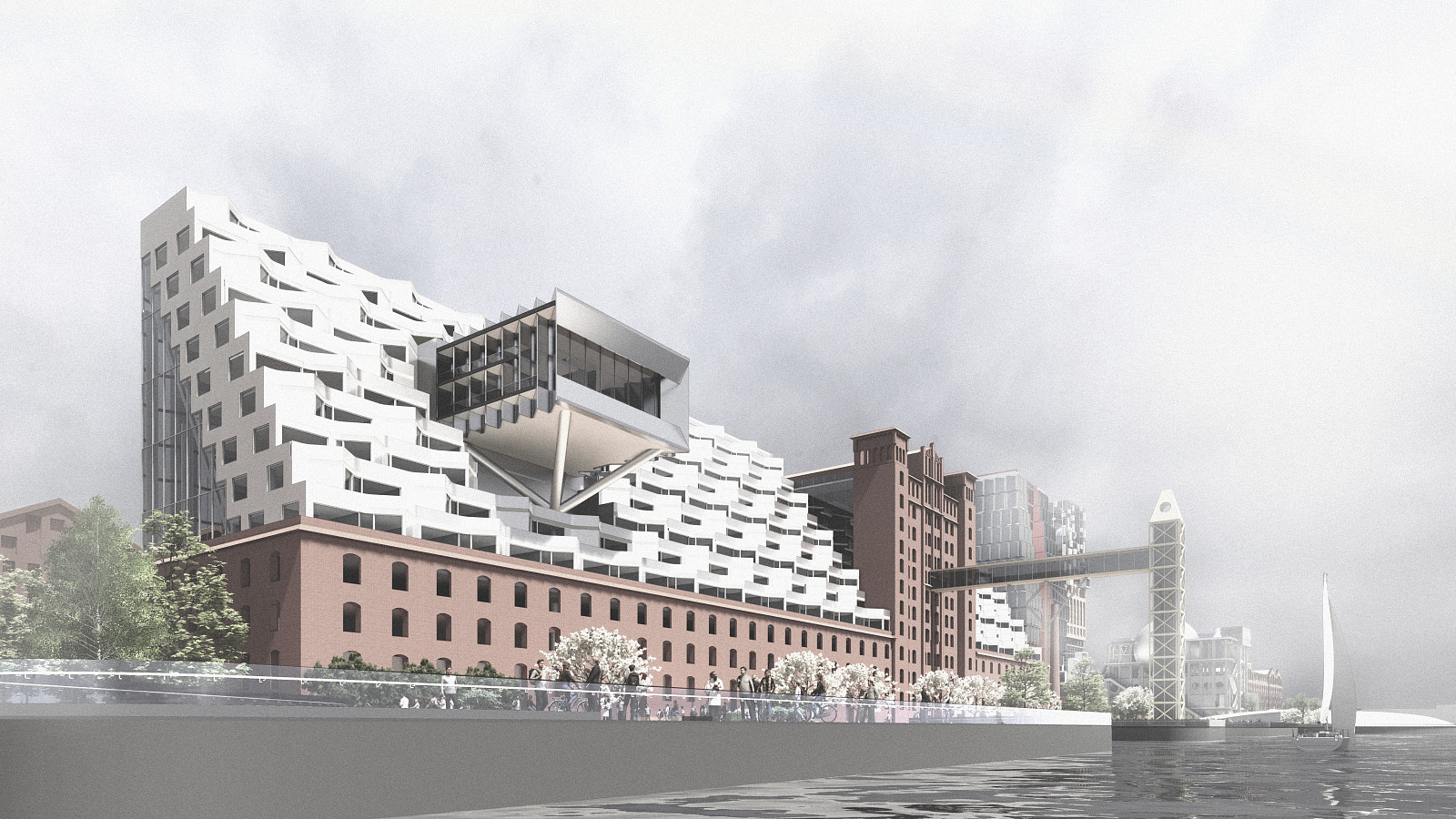
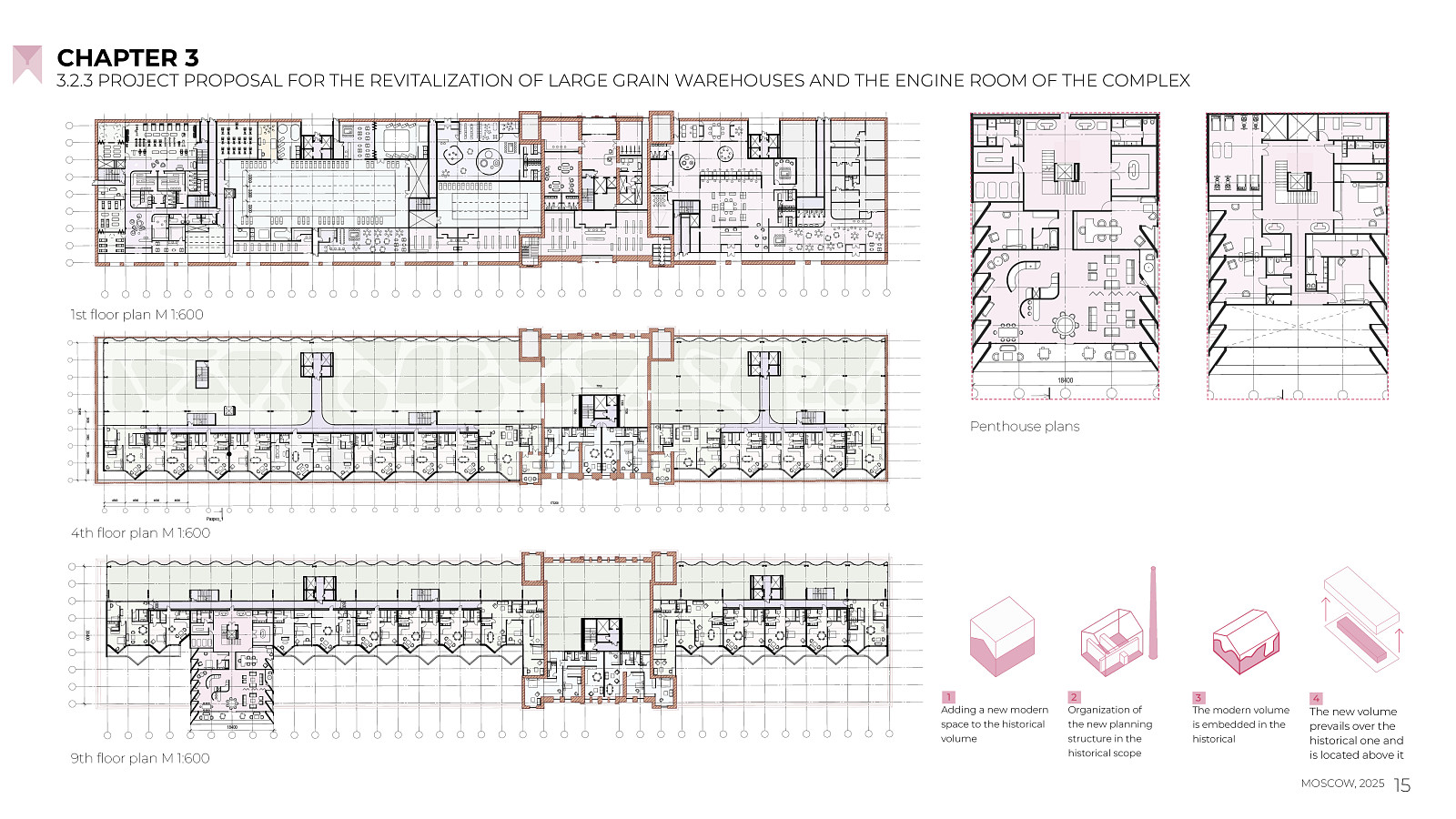
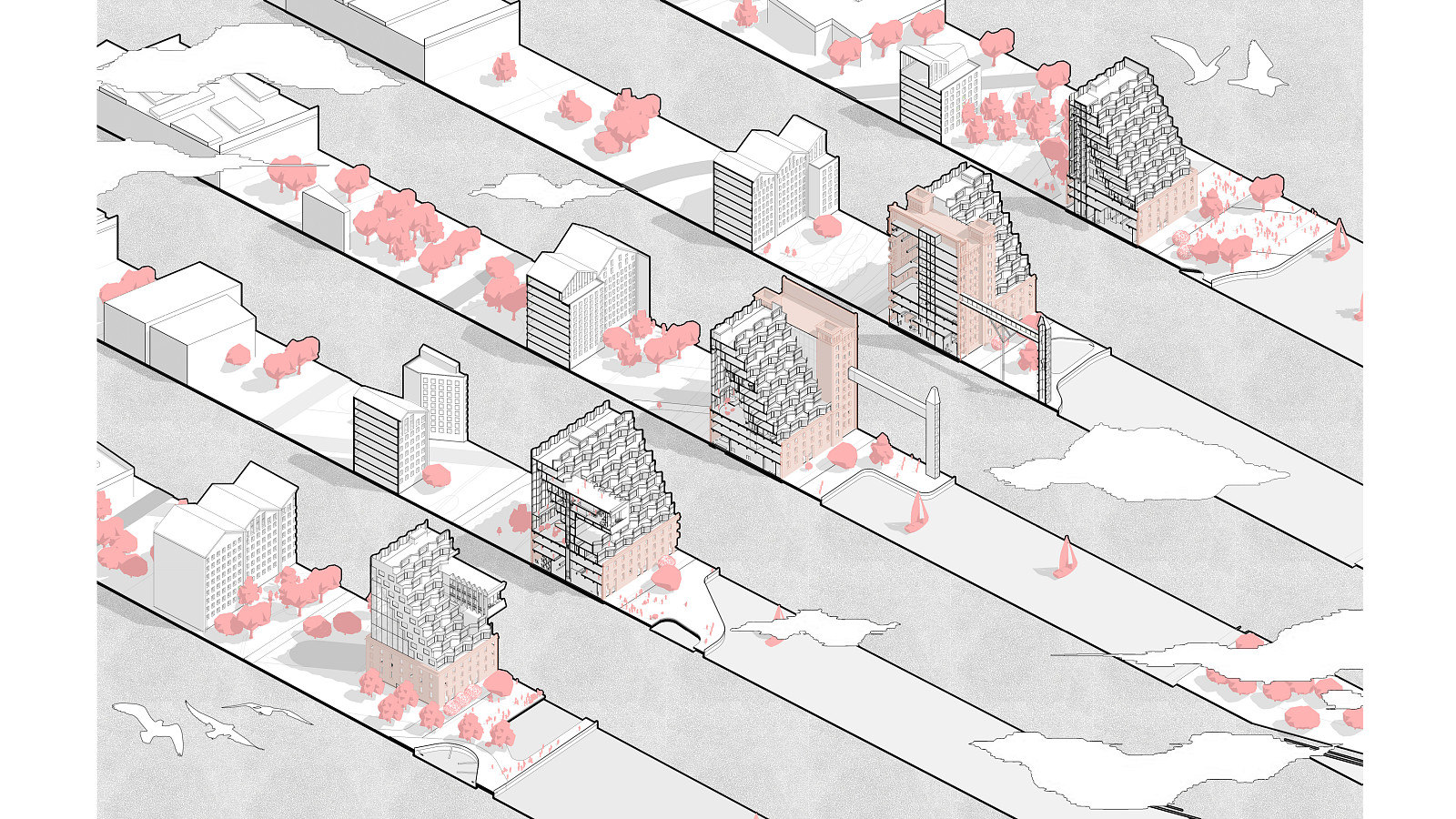
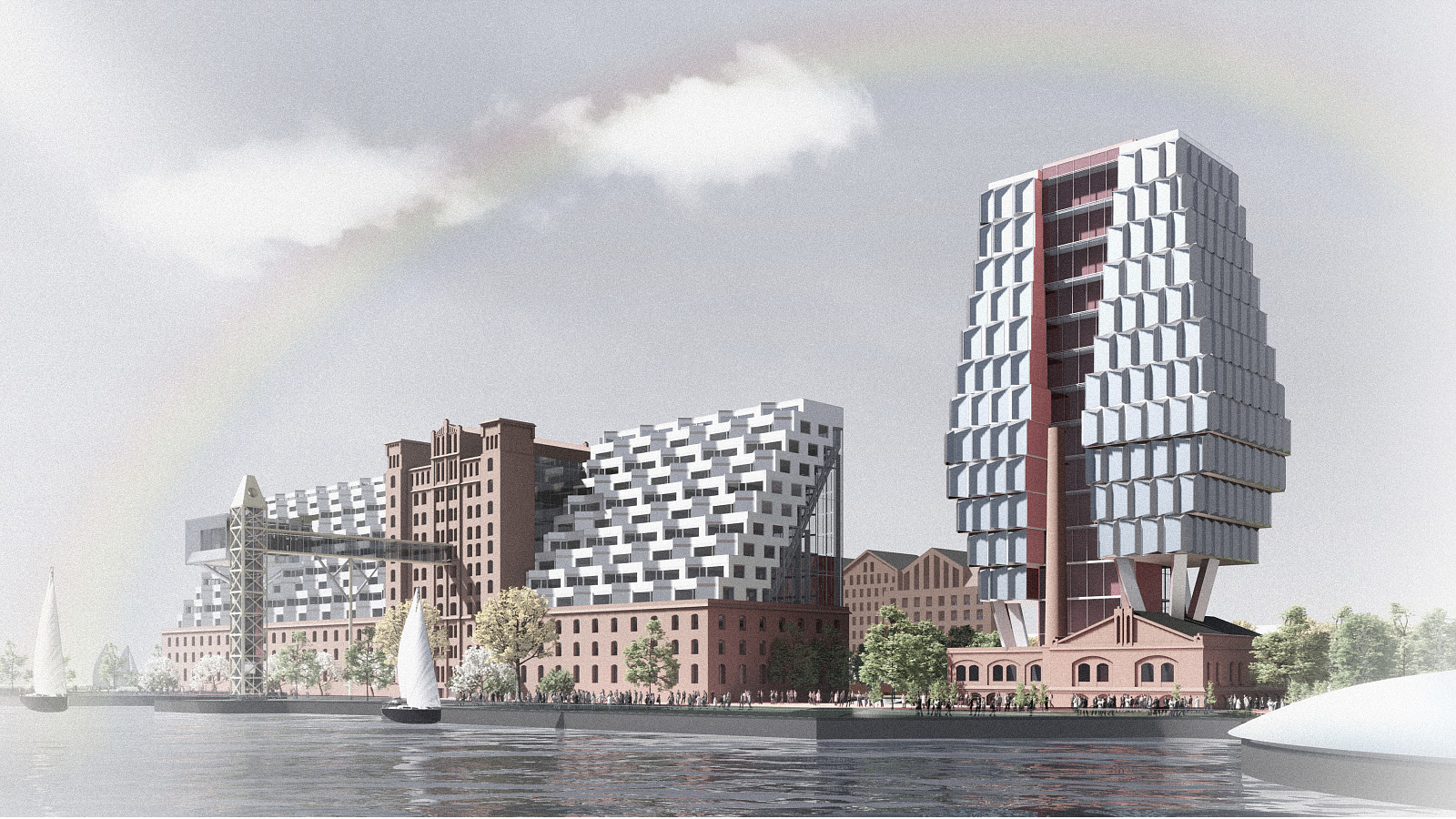
It is planned to erect a residential complex with a public part located on the first 3 floors of the building and including a fitness center, a swimming pool, workshops, a restaurant and shopping areas on the site of the projected construction. The winter garden is located on the 4th level of the building and the accommodation begins. The residential floors are located from the 4th to the 12th level and are organized according to the principle of gallery-type houses, the apartments are overlooking the embankment and the southeastern side of the world. The residential floors are arranged in steps, with a common vertical connection – an elevator hub.
• Type of constructive system
The structural system is a frame one, the exterior walls, including historical brickwork, are enclosing structures.
Pitch of inclined bearing pylons: 9200 mm
The pitch of the supporting columns in the public part of the building: 9200 mm by 7600 mm
• Foundation construction
Before strengthening the foundation, it is proposed to analyze the existing historical foundation of the granary :
• determine the soil quality (bearing capacity, groundwater level)
• assess the current condition (cracks, subsidence, brickwork quality)
• calculate the load from the new built-up volume with the residential part (determine how much it increases compared to the load from the historical volume)
Since the project provides for an increase in the load on the foundation by more than 30%, and Kaliningrad has rather weak soils, it is planned to install a slab foundation on a natural foundation, designed from monolithic reinforced concrete.
A flat foundation plate, 800 mm thick, with banquettes in the places where the columns rest.
A rolled waterproofing is designed under the foundation slab; the foundation slab is based on naturally formed soils.


Copyright © 2026 INSPIRELI | All rights reserved. Use of this website signifies your agreement to the Terms of Use, Privacy Policy, and use of cookies.