IN-terstice


Idea projektu
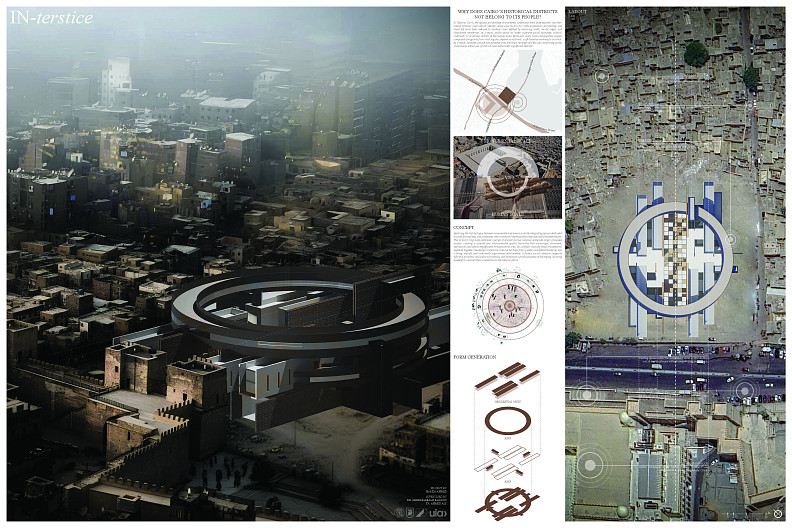
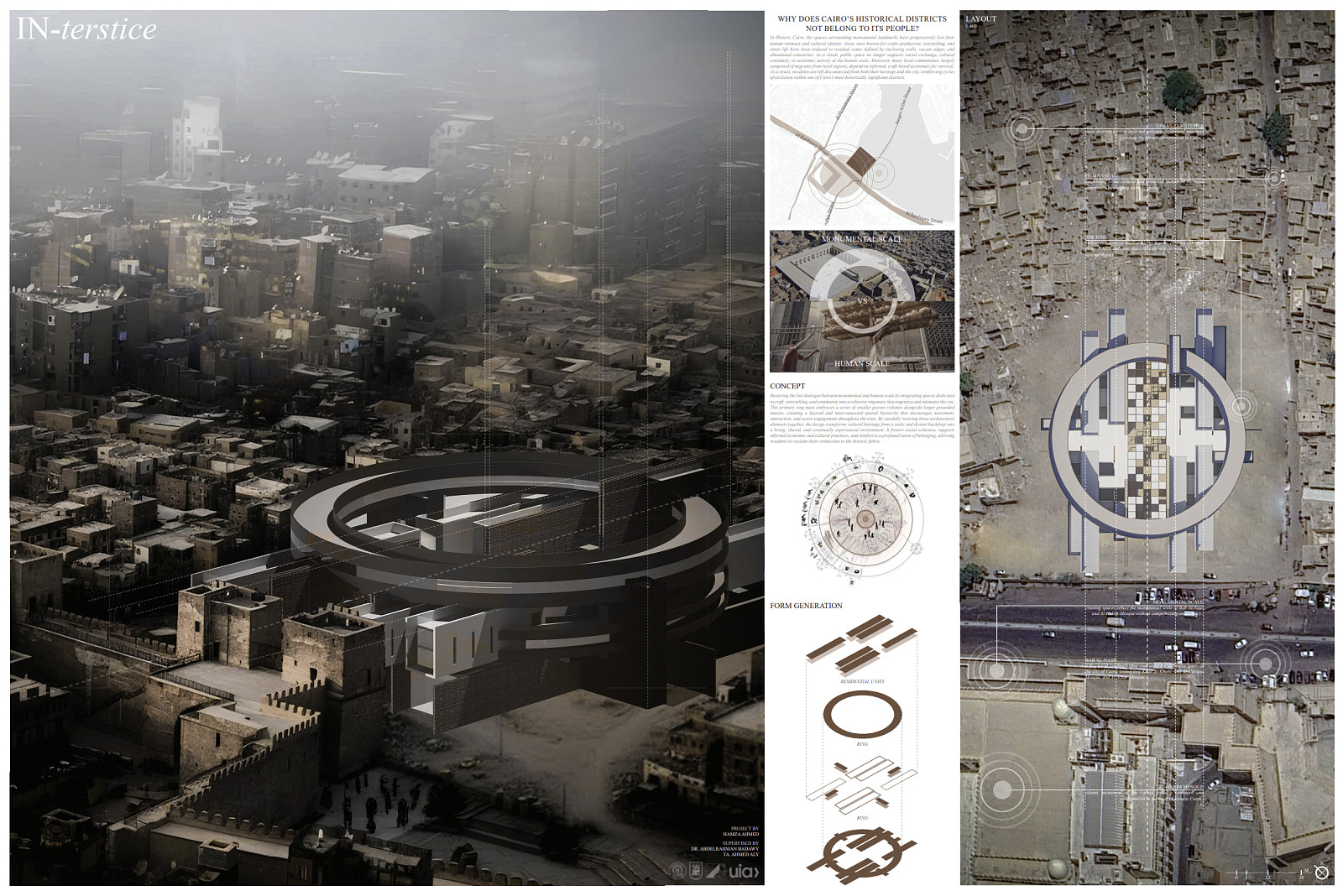
In Historic Cairo, the spaces surrounding monumental landmarks have progressively lost their human intimacy and cultural identity. Areas once known for crafts production, storytelling, and street life have been reduced to residual zones defined by enclosing walls, vacant edges, and abandoned cemeteries. As a result, public space no longer supports social exchange, cultural continuity, or economic activity at the human scale. Moreover, many local communities, largely composed of migrants from rural regions, depend on informal, craft-based economies for survival. As a result, residents are left disconnected from both their heritage and the city, reinforcing cycles of exclusion within one of Cairo’s most historically significant districts.
Popis projektu
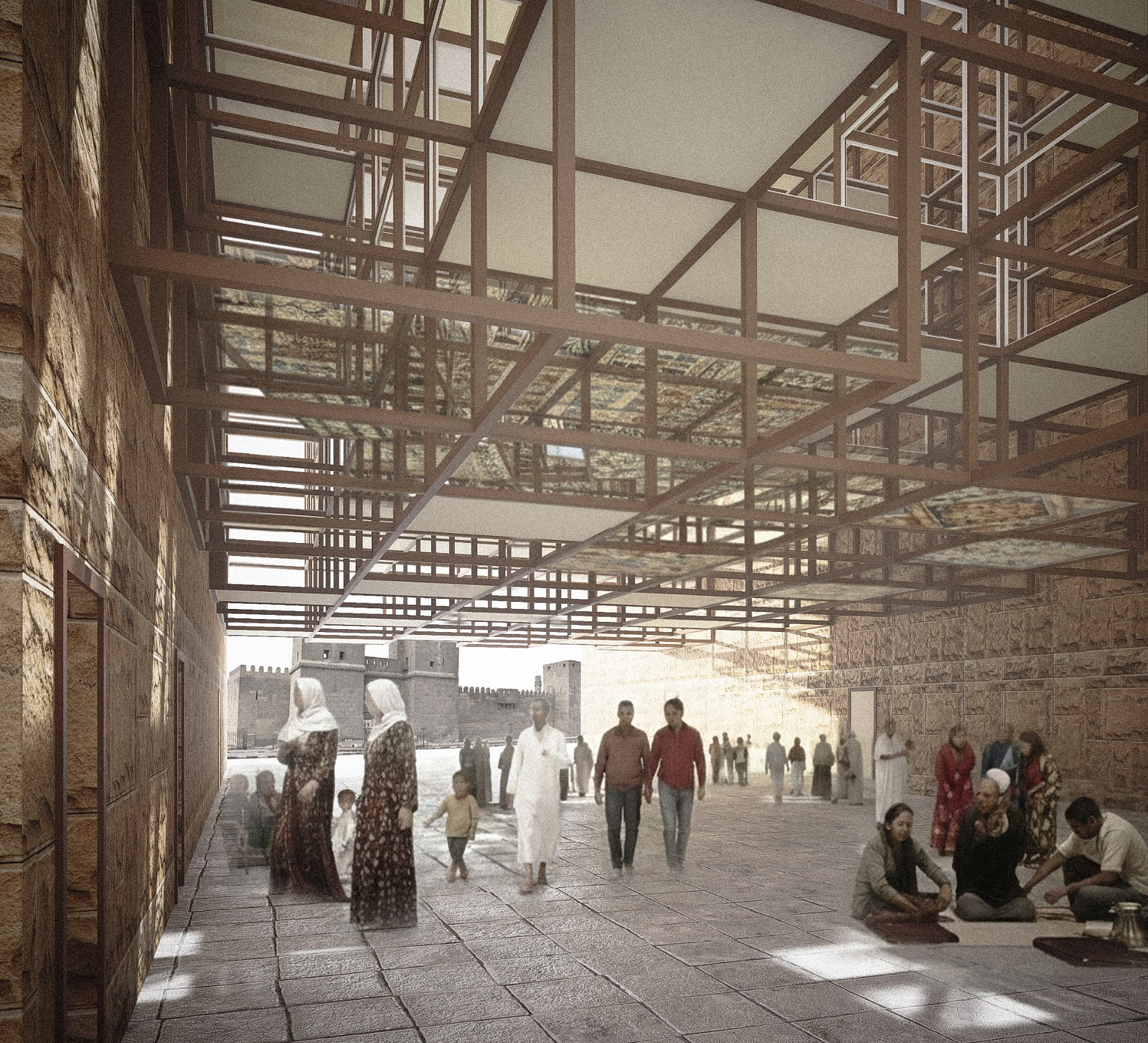
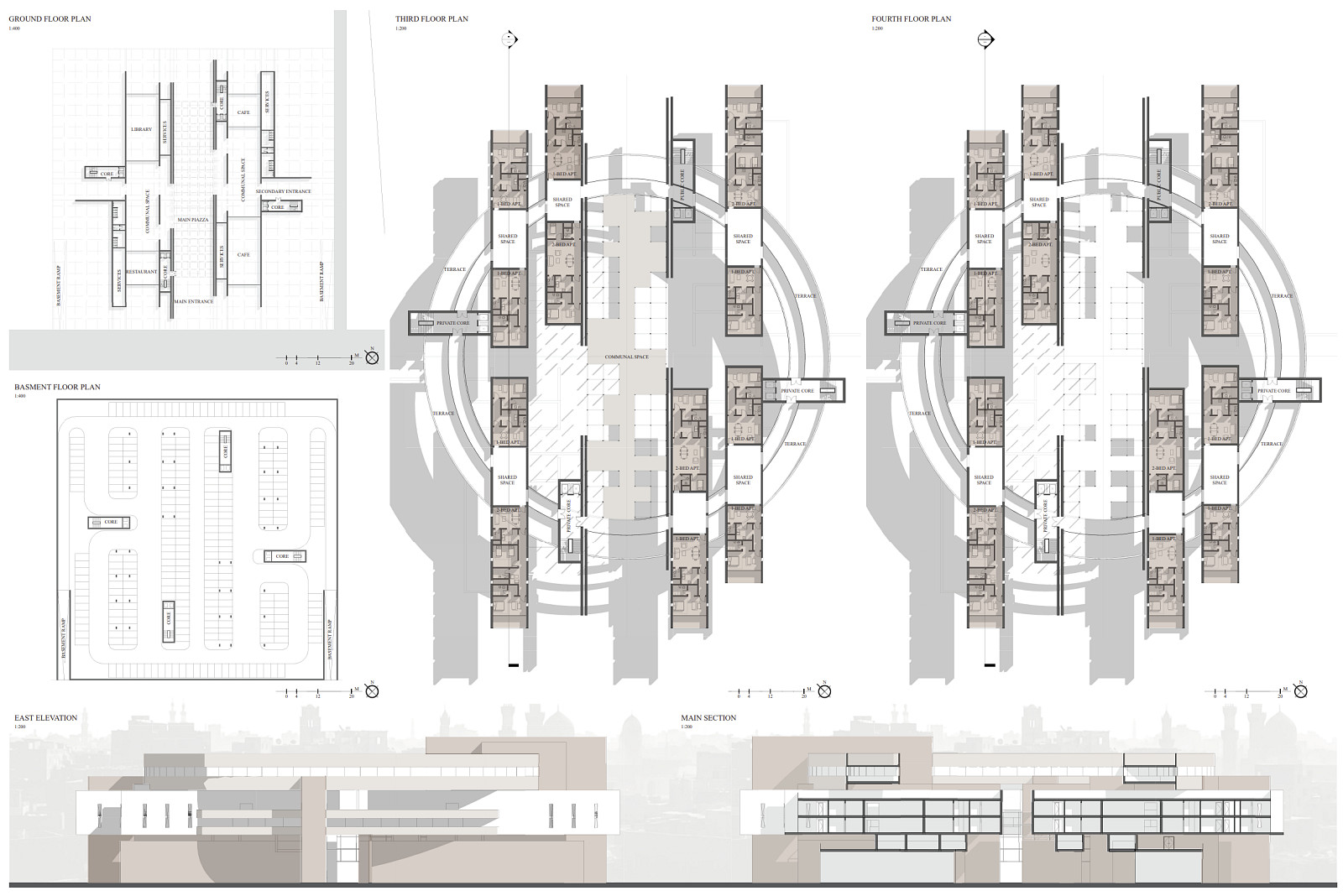
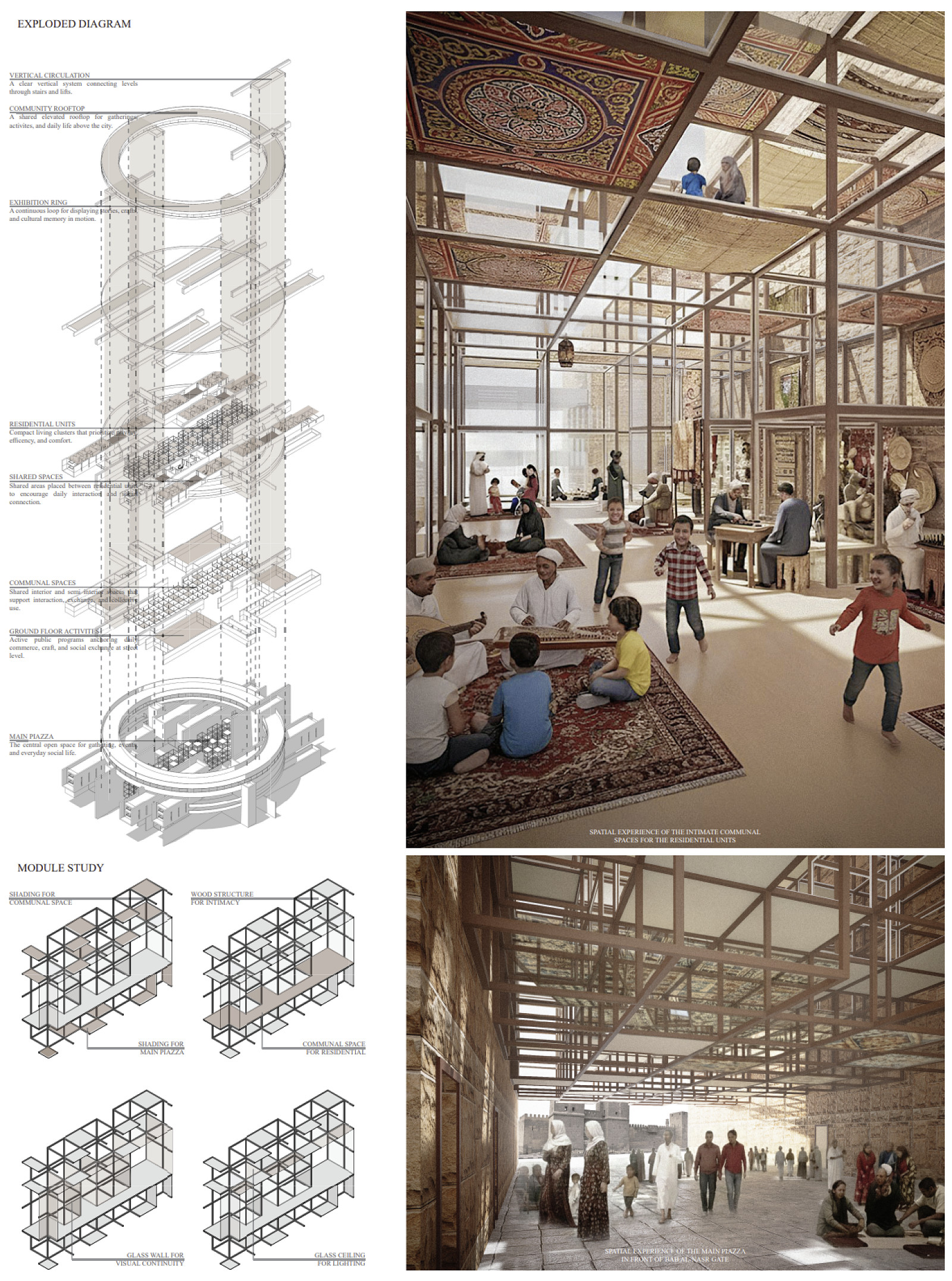
Restoring the lost dialogue between monumental and human scale by integrating spaces dedicated to craft, storytelling, and community into a cohesive ring mass that organizes and animates the site. This primary ring mass embraces a series of smaller porous volumes alongside larger grounded masses, creating a layered and interconnected spatial hierarchy that encourages movement, interaction, and active engagement throughout the area. By carefully weaving these architectural elements together, the design transforms cultural heritage from a static and distant backdrop into a living, shared, and continually experienced environment. It fosters social cohesion, supports informal economic and cultural practices, and reinforces a profound sense of belonging, allowing residents to reclaim their connection to the historic fabric.
Technické informace
The building is constructed as a culturally integrated urban intervention within the dense historic fabric of Cairo, organized around a continuous ring mass that mediates between monumental scale and human-scale activity while remaining porous and accessible. This ring acts as the primary structural and spatial organizer, incorporating exhibition, storytelling, and communal circulation spaces, and embracing a series of smaller craft workshops, learning spaces, and informal economic units alongside larger grounded masses housing permanent cultural and support functions. The spatial hierarchy is reinforced through interstitial courtyards, shaded passages, and multi-level circulation systems that ensure accessibility and continuous movement across the site. A modular structural system combining load-bearing walls and lightweight frames allows flexibility and future adaptation, while locally sourced materials such as stone, brick, timber, and metal screens respond to climate, heritage character, and passive environmental strategies. Through its layered massing and adaptable program, the building reactivates residual spaces, supports craft-based economies, and transforms cultural heritage from a static backdrop into a lived, everyday experience.
Dokumentace

Copyright © 2025 INSPIRELI | All rights reserved. Use of this website signifies your agreement to the Terms of Use, Privacy Policy, and use of cookies.