Second-level Music School in Szczecin's Nowe Miasto with Acoustic Climate modeling Elements


Idea projektu
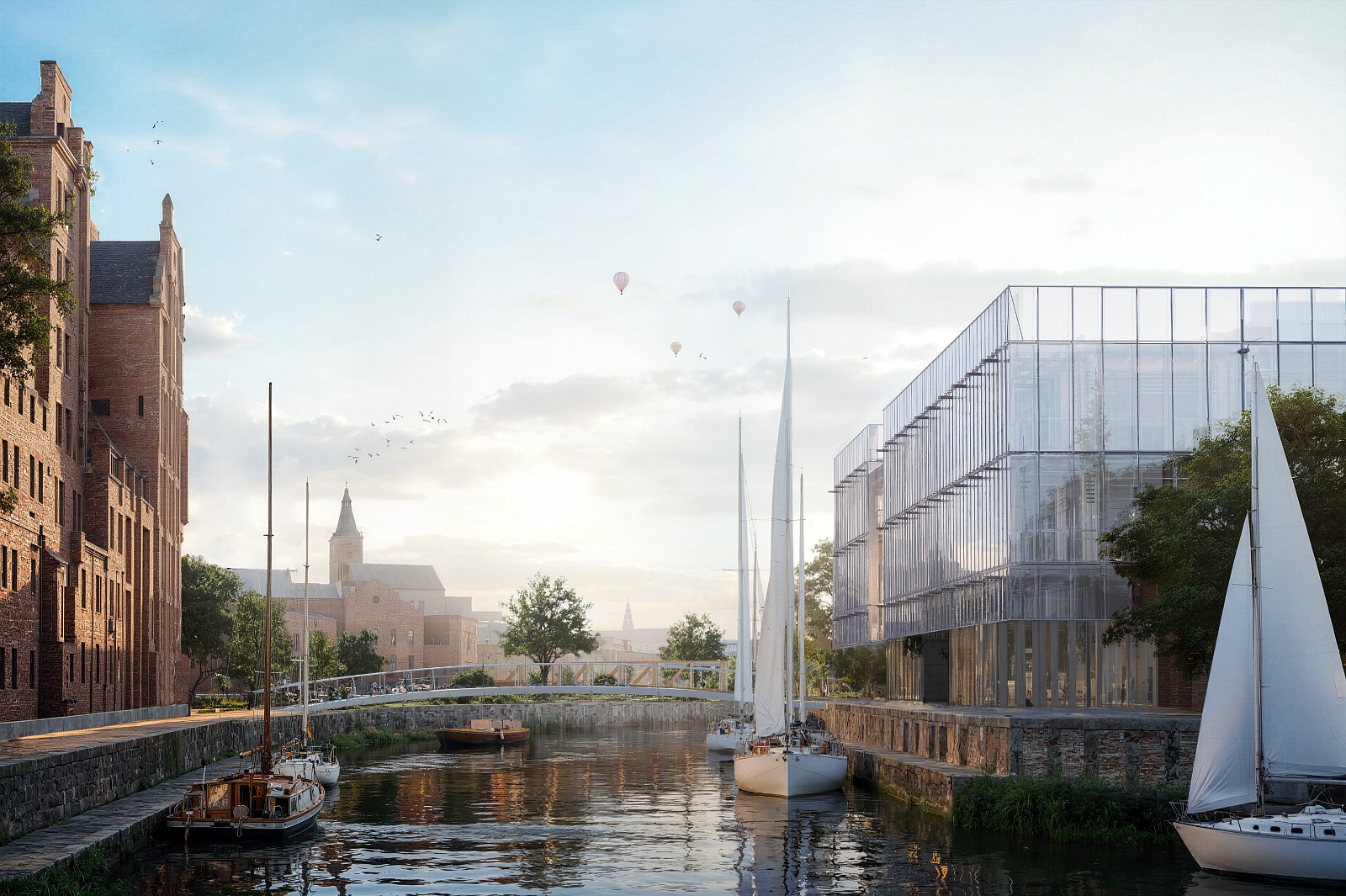
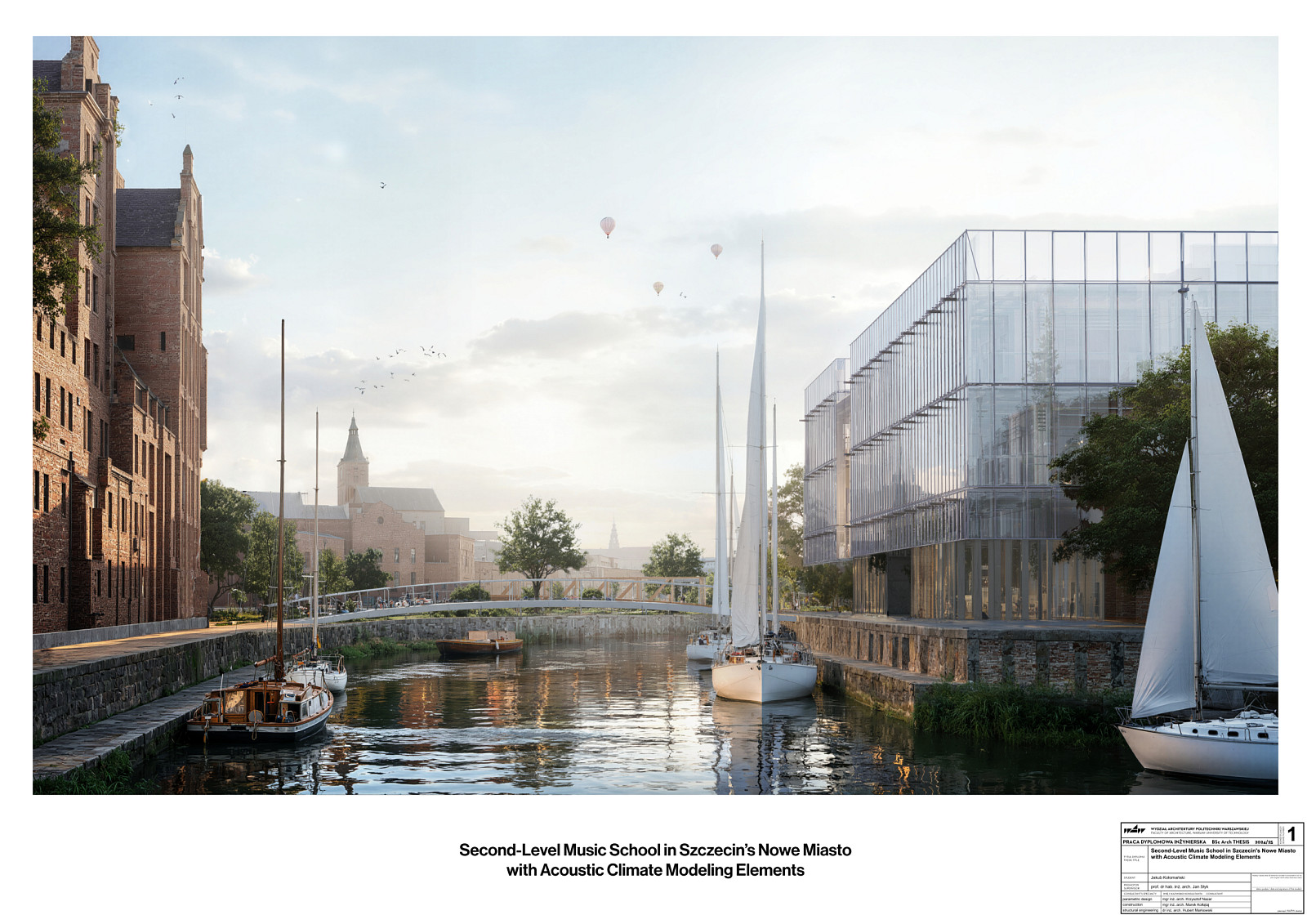
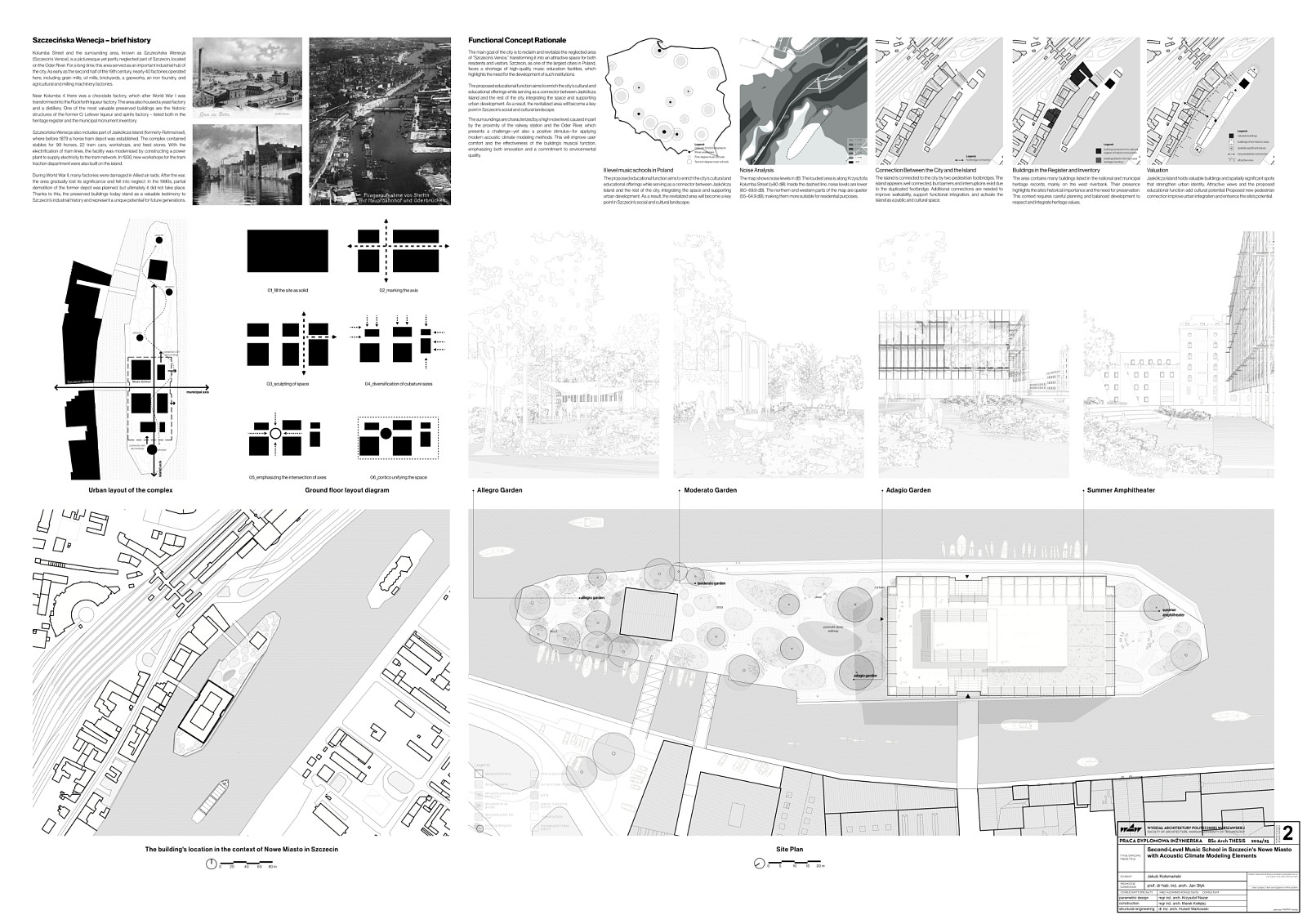
The project is a design of Secnd-Level Music School located on Jaskółcza Island in Szczecin, conceived as both an educational facility and an urban attractor. The concept emerges from a multi-layered analytical study of the site, including historical, spatial, functional, environmental, acoustic, and transportation contexts. The project responds to three identified issues: severe urban noise conditions, shortage of music education infrastructure in Szczecin, and the social and spatial degradation of the post-industrial waterfront district.
The design objective is to create an acoustically optimized learning and performance environment while restoring the cultural value of “Szczecin’s Venice” and reintegrating the island into the city’s public life. The project treats the school not only as an educational building but as a catalyst for urban revitalization, providing public cultural services, social integration spaces, and program flexibility throughout the day and year. The guiding approach is analytical and evidence-based, using environmental mapping, user behavior modelling, historical heritage assessment, and advanced acoustic optimization in the design of practice rooms and structural solutions.
Popis projektu
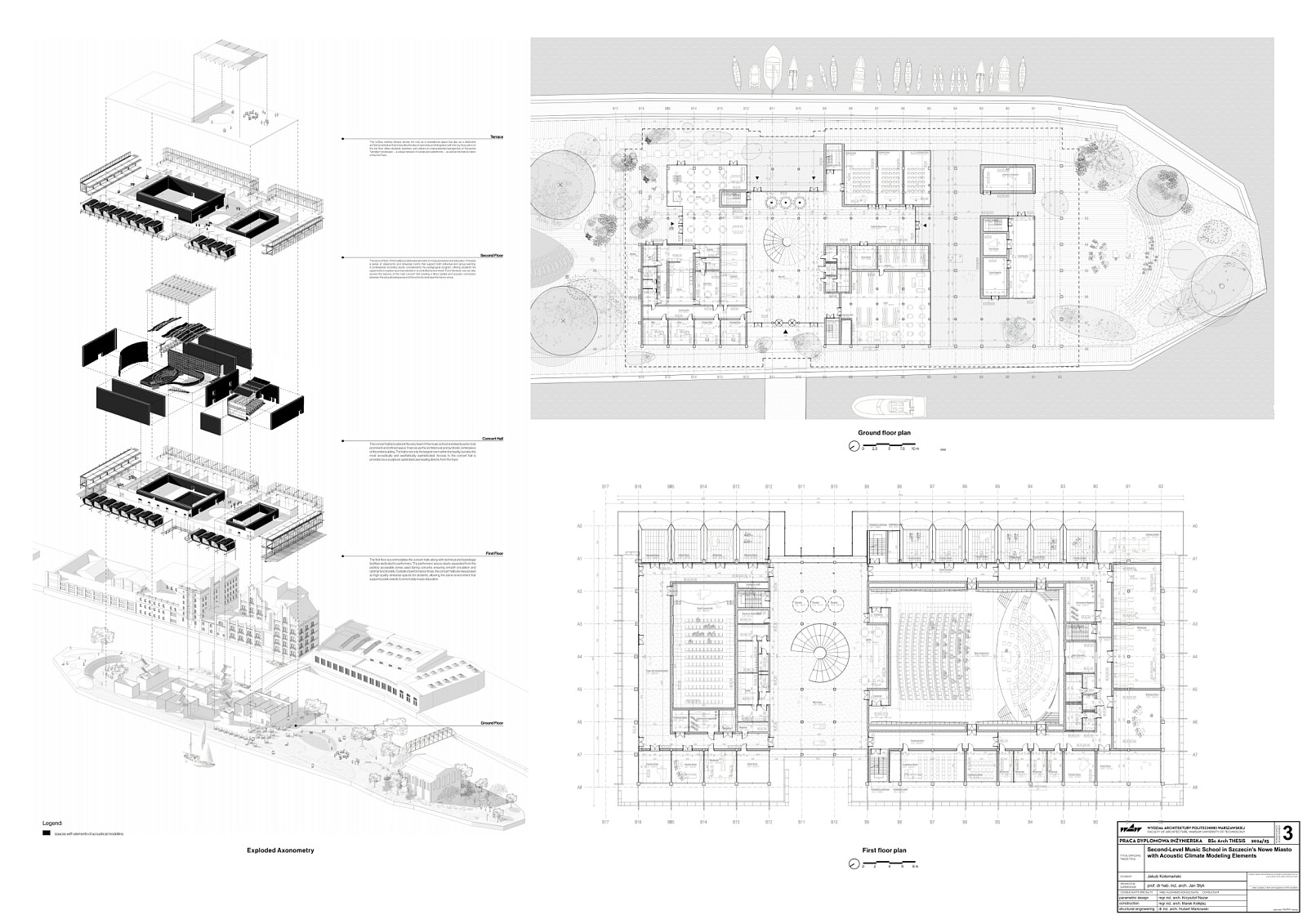
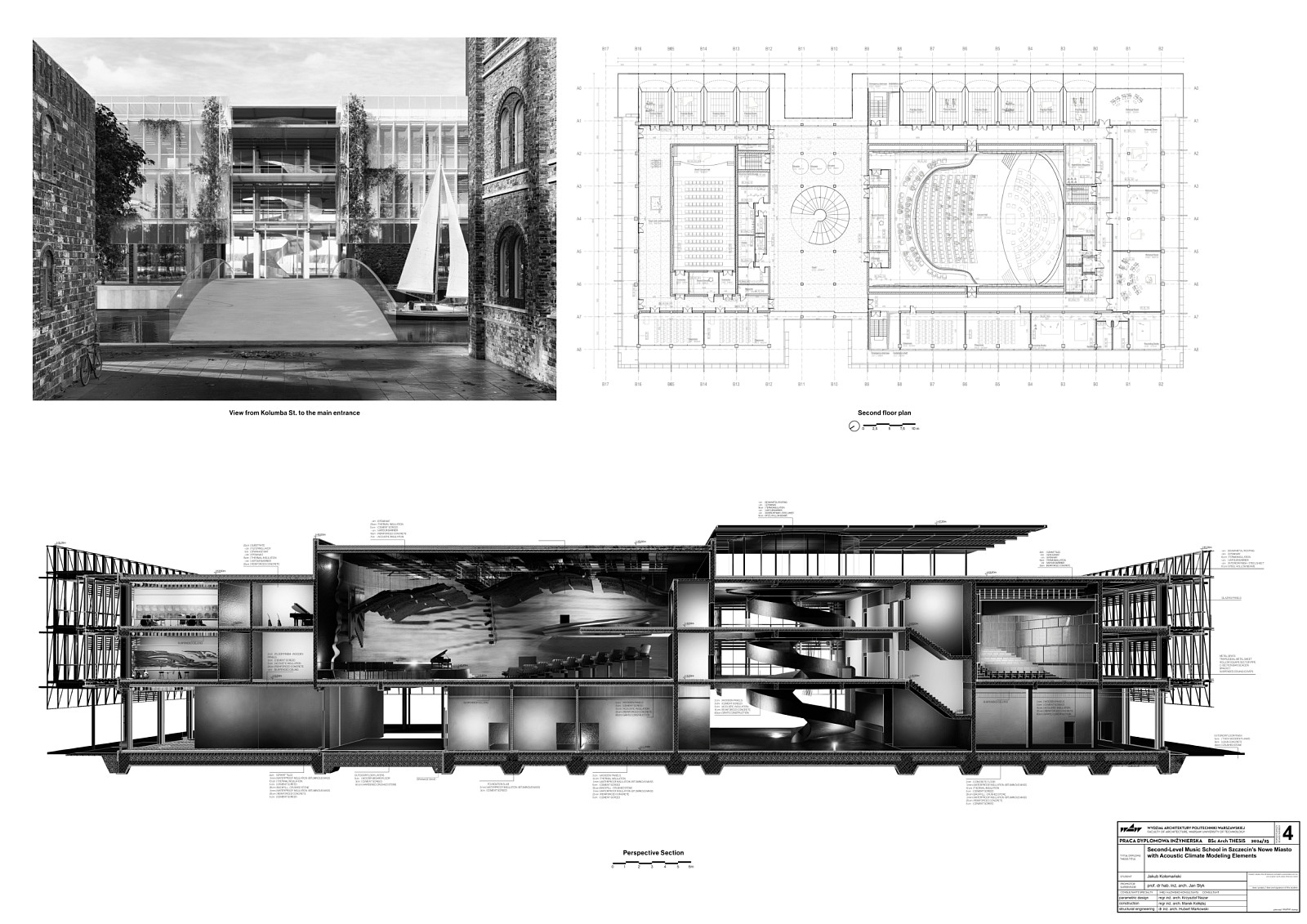
The project consists of an architectural and urban proposal for a Music High School and its surrounding public spaces on Jaskółcza Island. The program includes a main concert hall, a small concert hall, practice rooms, recording studios, classrooms, administration, exhibition areas, an audio-library, café, viewing terrace, and themed gardens organized along the island.
The spatial concept derives from conclusions of site analyses rather than formal composition alone. The project integrates:
adaptive re-use of a neglected post-industrial island,
protection and reinterpretation of listed heritage structures,
functional zoning based on time-dependent building use,
public accessibility through an open ground floor strategy,
ecological landscape transformation into music-themed gardens,
revitalization of the waterfront and pedestrian connections.
The building is intentionally programmed to operate in different temporal cycles. Commercial and cultural functions activate the building in the morning and early afternoon, while the school program dominates later hours, ensuring continuous and economically sustainable use. This temporal-functional strategy results directly from analytical investigation of potential user groups, mobility patterns, seasonal variations, and acoustic exposure conditions across the site.
The concert hall is positioned as the central “core” of the building, surrounded by technical, backstage, and rehearsal functions, while the double-skin façade and acoustic tube practice rooms represent a synthesis of architectural design with environmental and performance analysis.
Technické informace
The project applies a rigorously analytical technical approach, integrating geotechnical, structural, acoustic, climatic, and spatial performance data into the design process.
Key technical features include:
Structural system: mixed reinforced-concrete wall-and-column system with steel box trusses over concert halls, dimensioned for high live loads, suspended acoustic equipment, and balcony structures.
Foundation strategy: reinforced concrete foundation slab adapted to wet, marshy ground and uncertain groundwater conditions, with drainage and flood-risk mitigation through island edge reinforcement and Larsen piling.
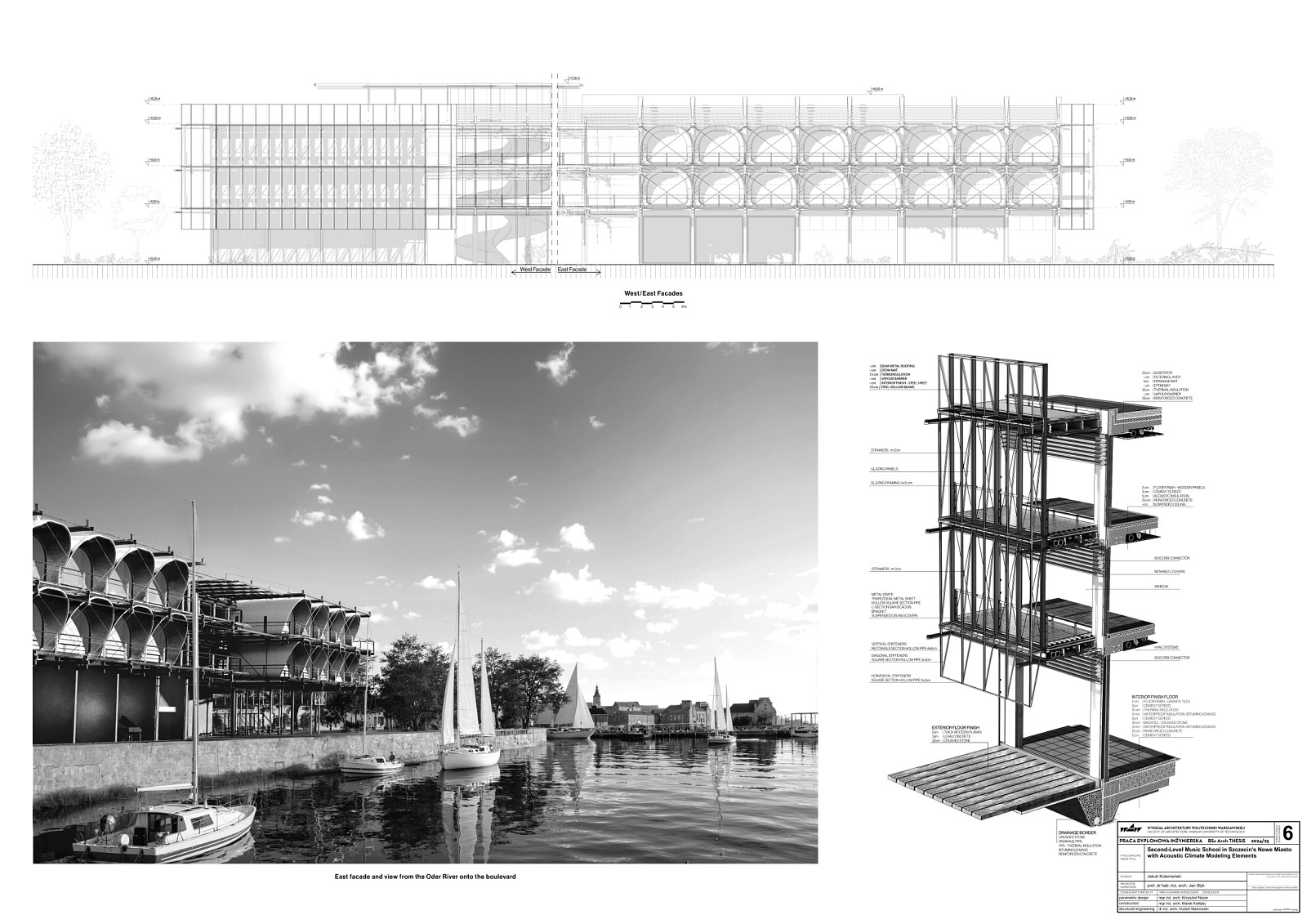
Double-skin façade system: external steel frame acting as thermal and acoustic buffer against railway and river noise, improving energy efficiency and interior acoustic comfort.
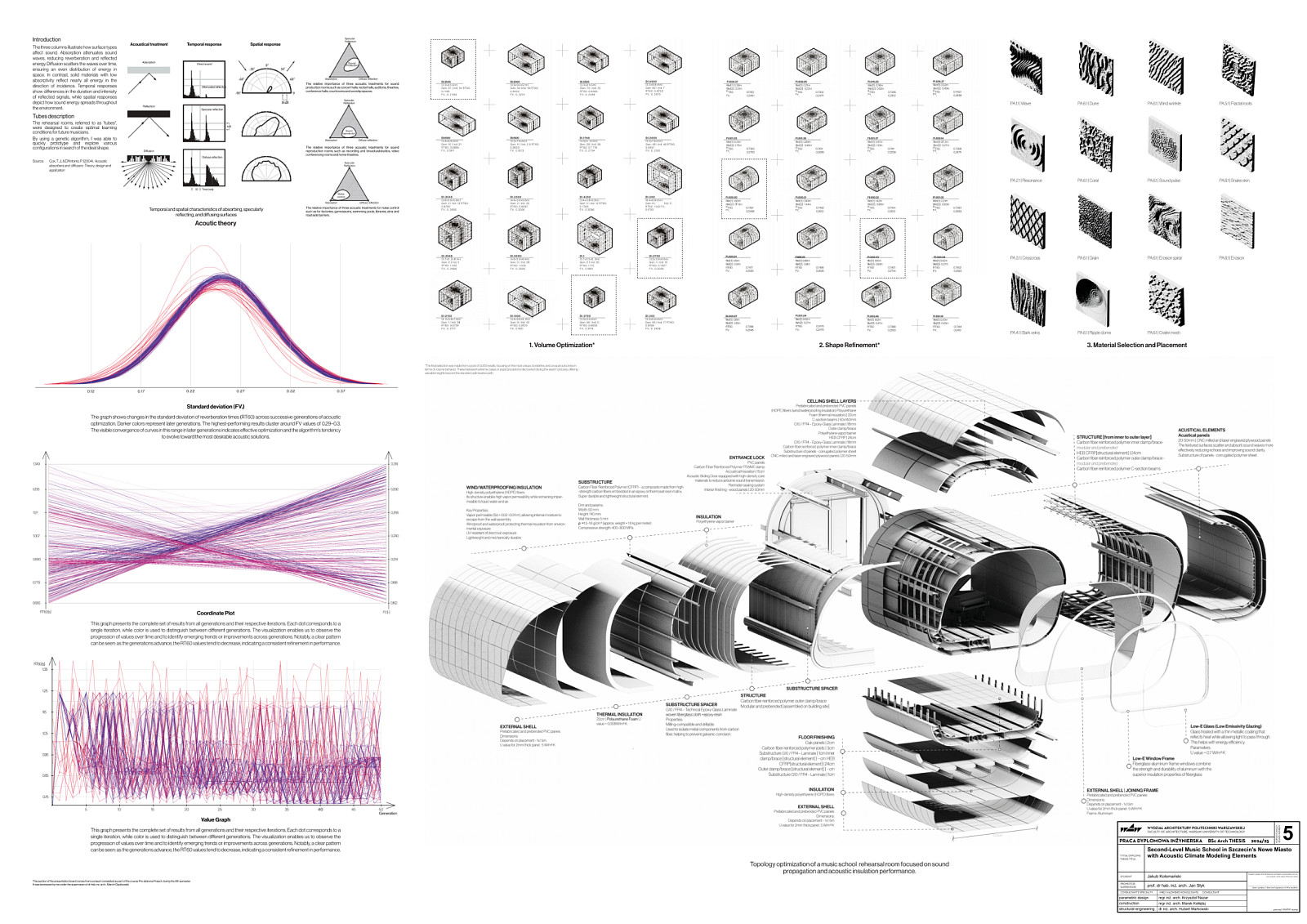
Acoustic optimization: practice rooms designed as prefabricated tube structures optimized using genetic algorithms to improve sound diffusion, minimize standing waves, and prevent sound transmission between rooms.
Roof and slab design: locally thickened slabs in high-load and anchoring zones, green roof areas, and reinforced surfaces in concert and foyer zones.
Building services: mechanical ventilation with heat recovery, air-conditioning, BMS coordination infrastructure, sprinkler and hydrant fire-safety systems, and accessibility-oriented circulation design.
Across all technical layers, decisions are derived from prior analytical assessments: transport exposure, hydrological risk, acoustic pollution, structural load distribution, user circulation, and temporal building use. The project treats technical solutions not as add-ons but as outcomes of a systematic, research-based design methodology.

Copyright © 2025 INSPIRELI | All rights reserved. Use of this website signifies your agreement to the Terms of Use, Privacy Policy, and use of cookies.