pavillion


Idea projektu
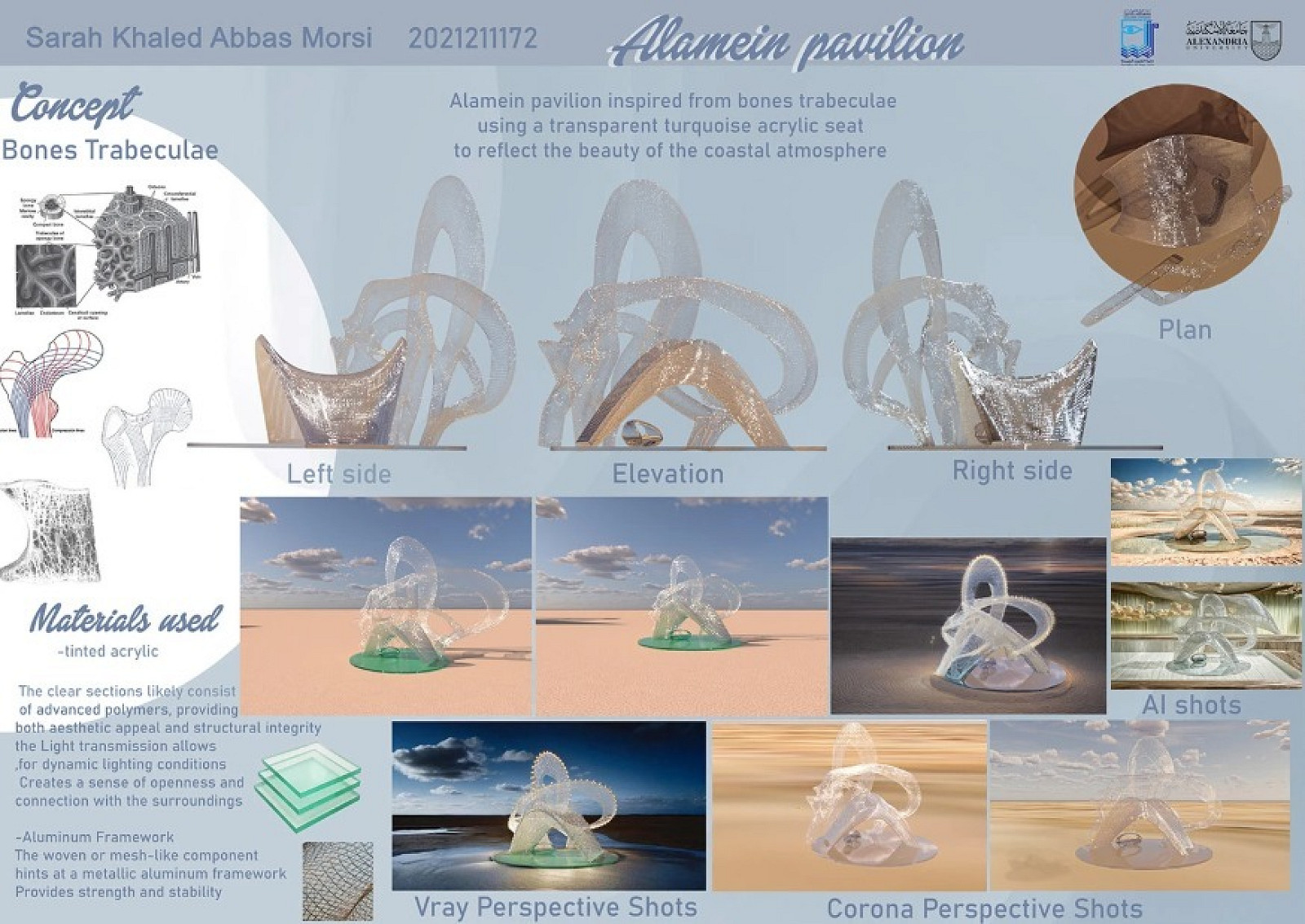
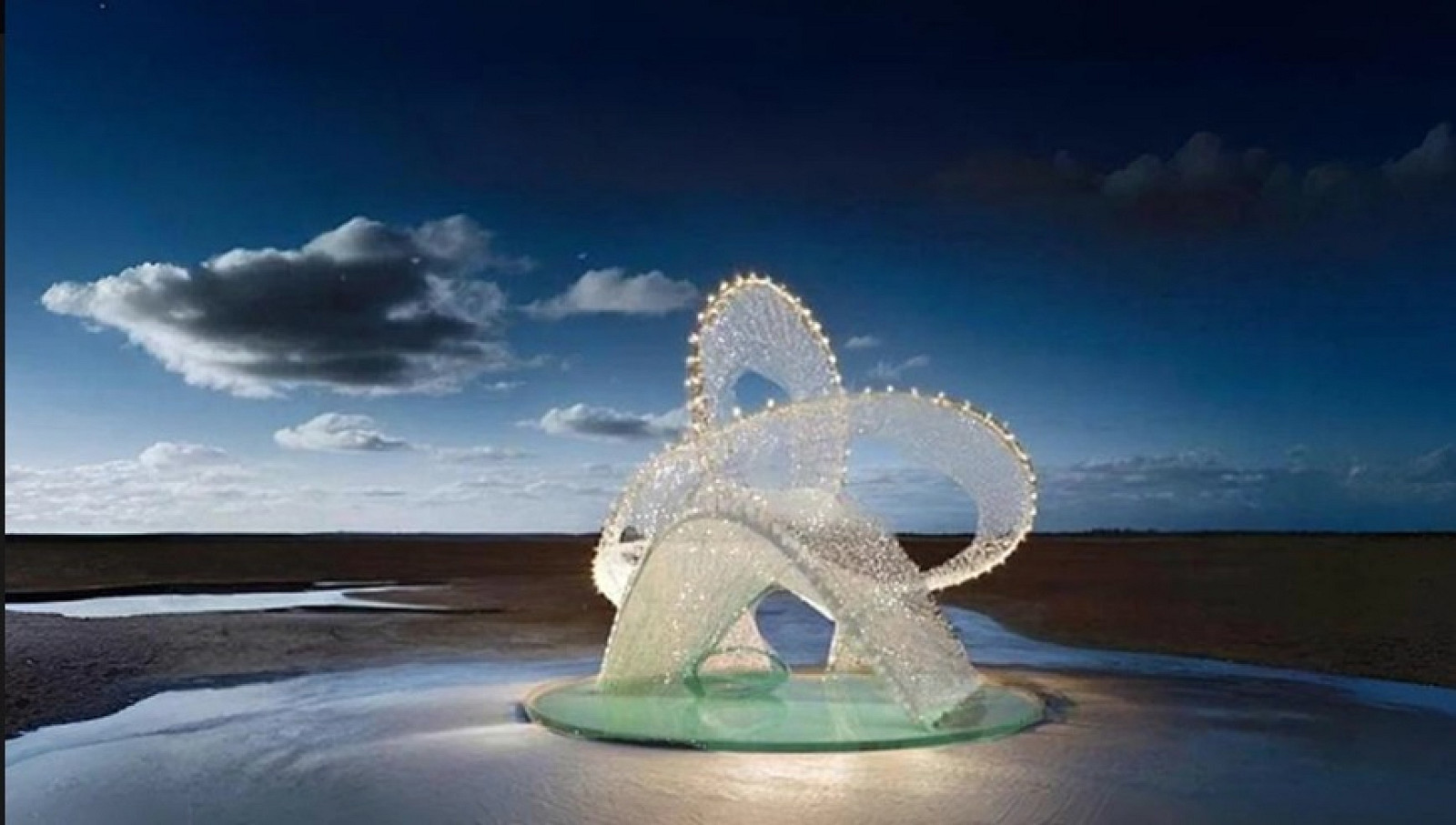
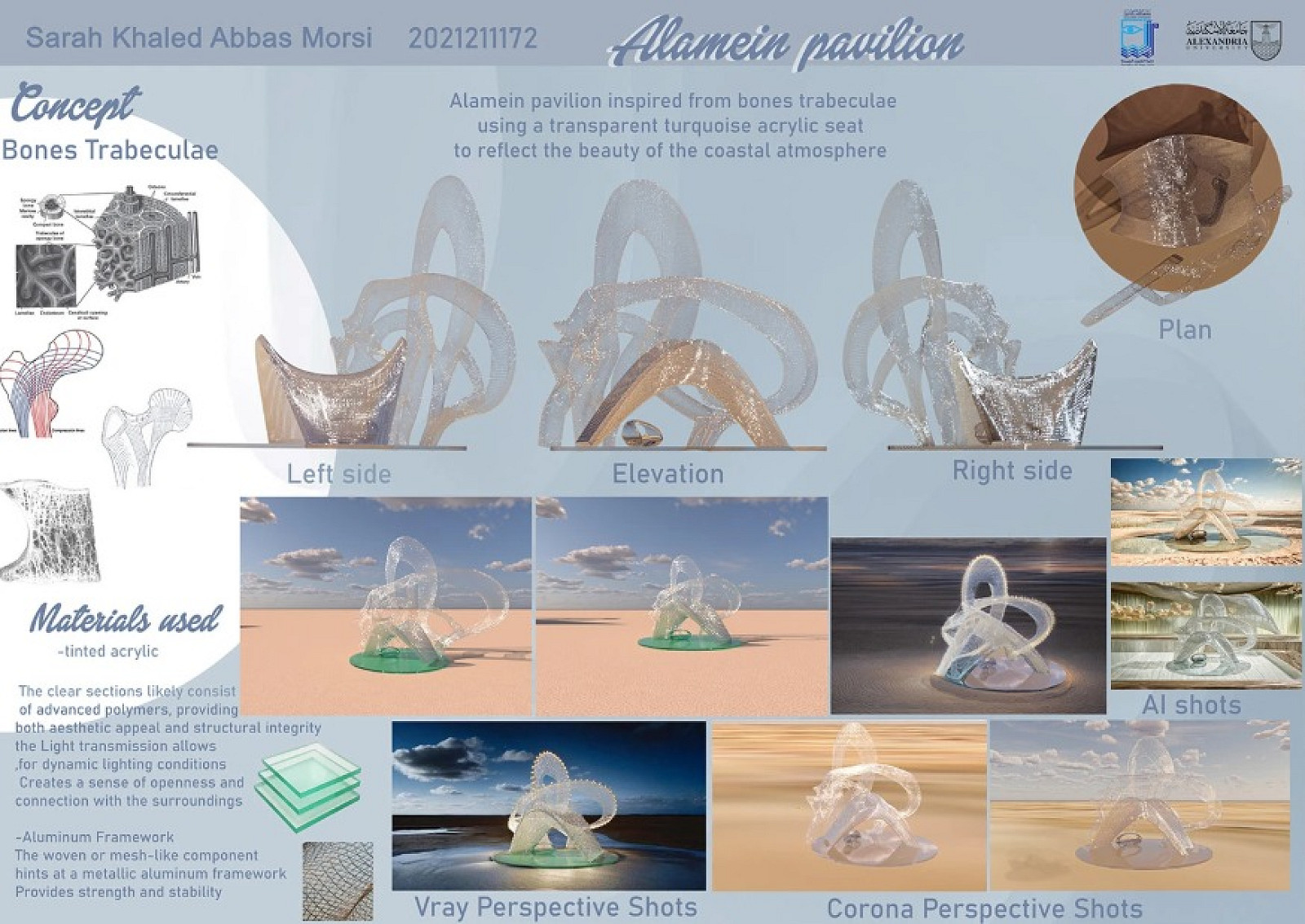
This project aims to create an iconic, sculptural pavilion inspired by the micro-structural patterns of bone trabeculae, translating their intricate network of interwoven lines into a contemporary architectural form. The design explores how natural biological systems can inform lightweight, visually dynamic structures while maintaining strength, balance, and aesthetic harmony.
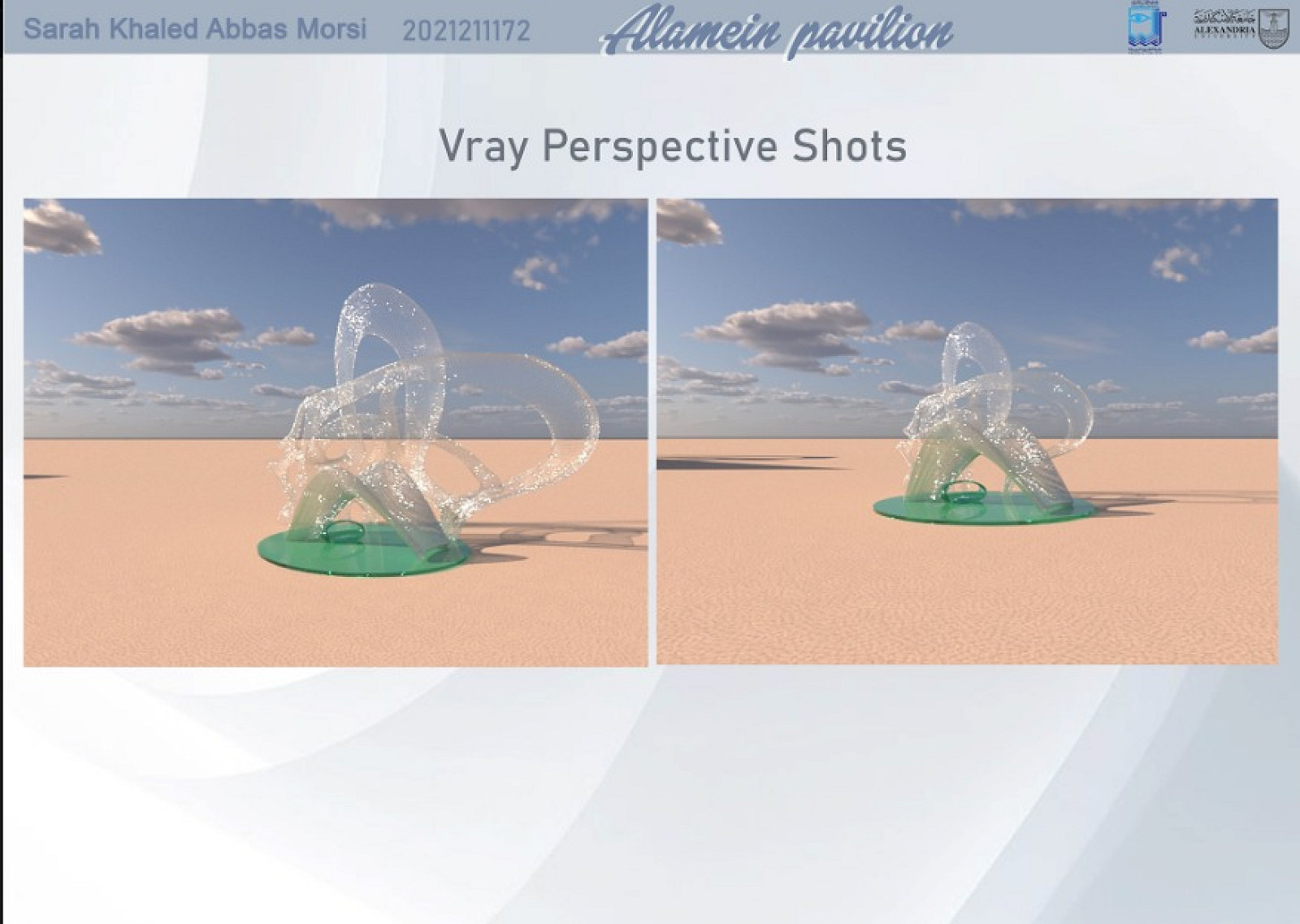
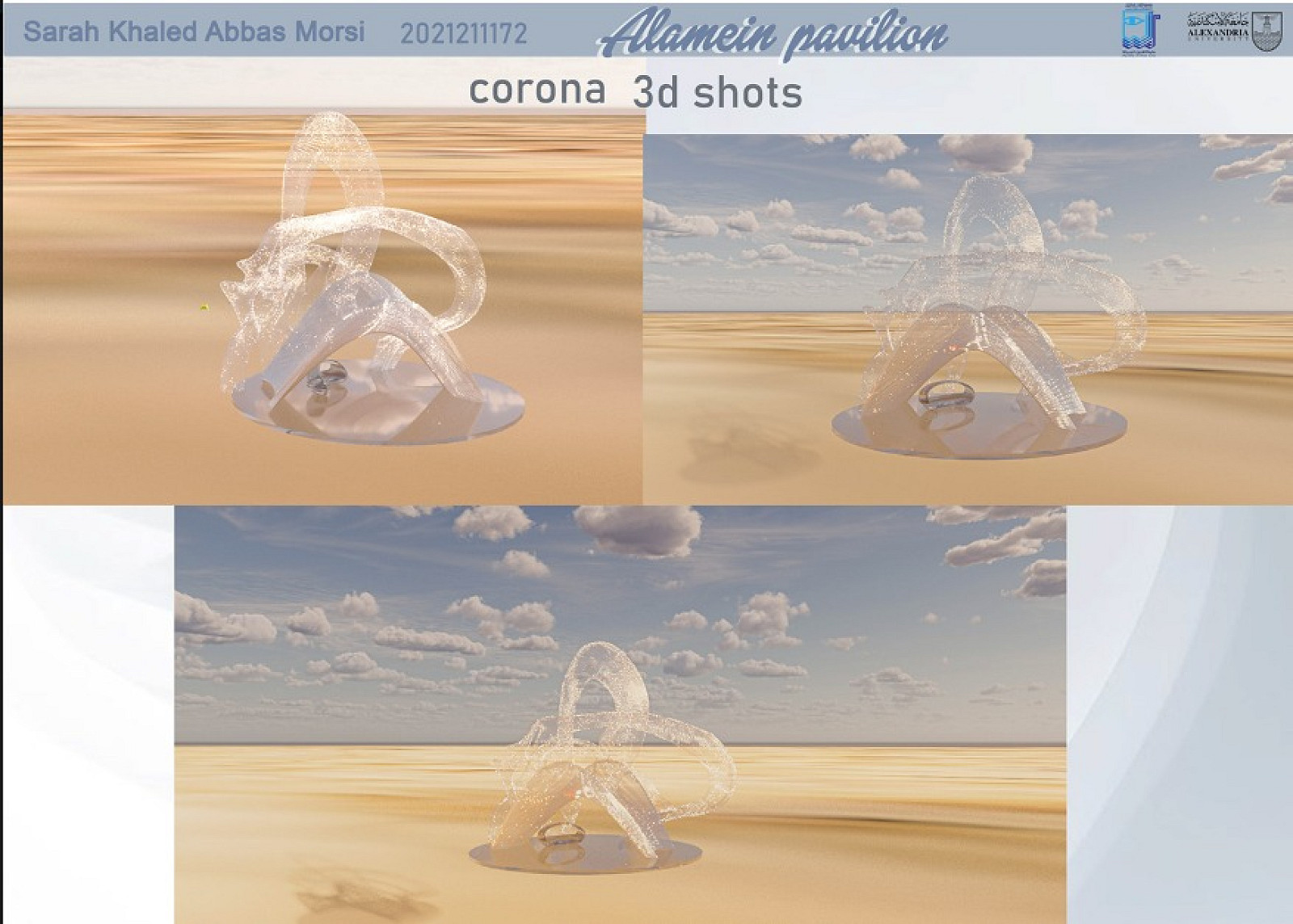
The pavilion reflects the coastal atmosphere of Alamein, utilizing transparent turquoise acrylic and metallic mesh elements to capture light, shadows, and reflections. These materials allow the structure to blend seamlessly with the surrounding sea and sky, creating an immersive spatial experience.
Popis projektu
The project proposes a sculptural pavilion inspired by the micro-structural geometry of bone trabeculae, aiming to translate natural biological patterns into an architectural installation suitable for the coastal environment of New Alamein. The scope of the project covers the conceptual development, material exploration, structural logic, and visualization of an experimental organic form.
1. Conceptual Development
Interpreting trabecular bone structures as a source of form-generation.
Extracting the principles of branching, porosity, and interwoven networks to create a dynamic pavilion geometry.
Establishing a narrative that links biological complexity with architectural expression.
2. Site and Contextual Response
Designing a pavilion that responds to the coastal atmosphere, light conditions, and environmental character of the Alamein shoreline.
Ensuring the structure harmonizes visually with sand, sea, and sky through transparency, color, and form.
3. Material Strategy
Utilizing tinted acrylic for its translucency, light diffusion ability, and modern aesthetic.
Implementing aluminum mesh and framework for structural stability while maintaining lightness and permeability.
Studying the optical behavior of materials to enhance reflections, shadows, and visual depth.
4. Structural and Formal Exploration
Developing a free-form organic pavilion through digital modeling.
Simulating the interlaced trabecular system into looping, branching, and intertwined architectural elements.
Ensuring that the structural gestures are both expressive and physically feasible.
5. Spatial and Experiential Qualities
Creating an open, accessible installation that encourages public interaction.
Emphasizing fluid movement, light transformation, and immersive visual experience.
Offering a contemplative space where visitors can observe the interplay of translucency, material texture, and natural light.
Technické informace
b. Aluminum Framework
Type: Internal supporting frame for acrylic and mesh units.
Properties:
Corrosion-resistant (suitable for marine environments)
High strength-to-weight ratio
Flexible for forming organic curves
Provides structural stability
c. Mesh Elements
Material: Aluminum or stainless-steel woven mesh.
Function:
Enhances texture and light play
Provides structural connection points
Adds translucency without visual heaviness
Construction System
Primary Structure: Aluminum frame shaped using CNC-bent elements to match organic curves.
Secondary Skin: Tinted acrylic sheets mounted on the frame using concealed fittings.
Mesh Integration: Mesh panels tensioned and fixed between curved supports.
Foundation:
Concrete or steel base plate embedded in sand
Anchoring points distributed to maintain stability against wind loads

Copyright © 2026 INSPIRELI | All rights reserved. Use of this website signifies your agreement to the Terms of Use, Privacy Policy, and use of cookies.