The Red Sea Pearl: Marine Life Research Center and Aquarium


 Marwa Abouhassan
Idea projektu
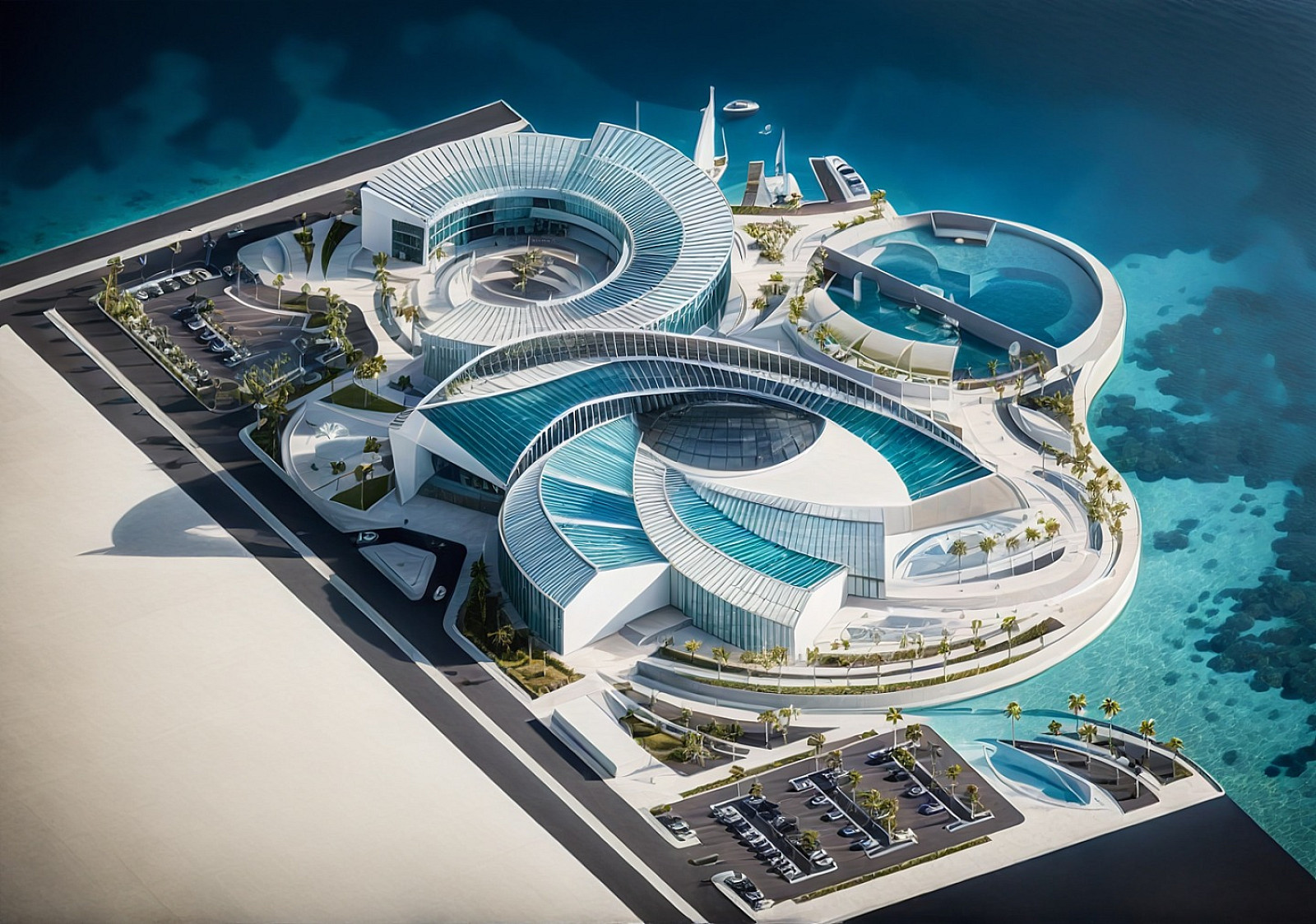
Beneath the surface of the world’s oceans lies an extraordinary realm of life, a mysterious world that compels us to explore, understand, and protect it. The Marine Life Research Center and Aquarium emerges as an architectural embodiment of this wonder, offering an immersive journey into the marine world. It is not merely a structure it is a bridge between human curiosity and the ocean’s enigmatic beauty. Through the seamless integration of architecture, technology, and nature, this facility creates an awe-inspiring, enlightening experience that deepens our connection to the sea.
Popis projektu
Vision 2030:
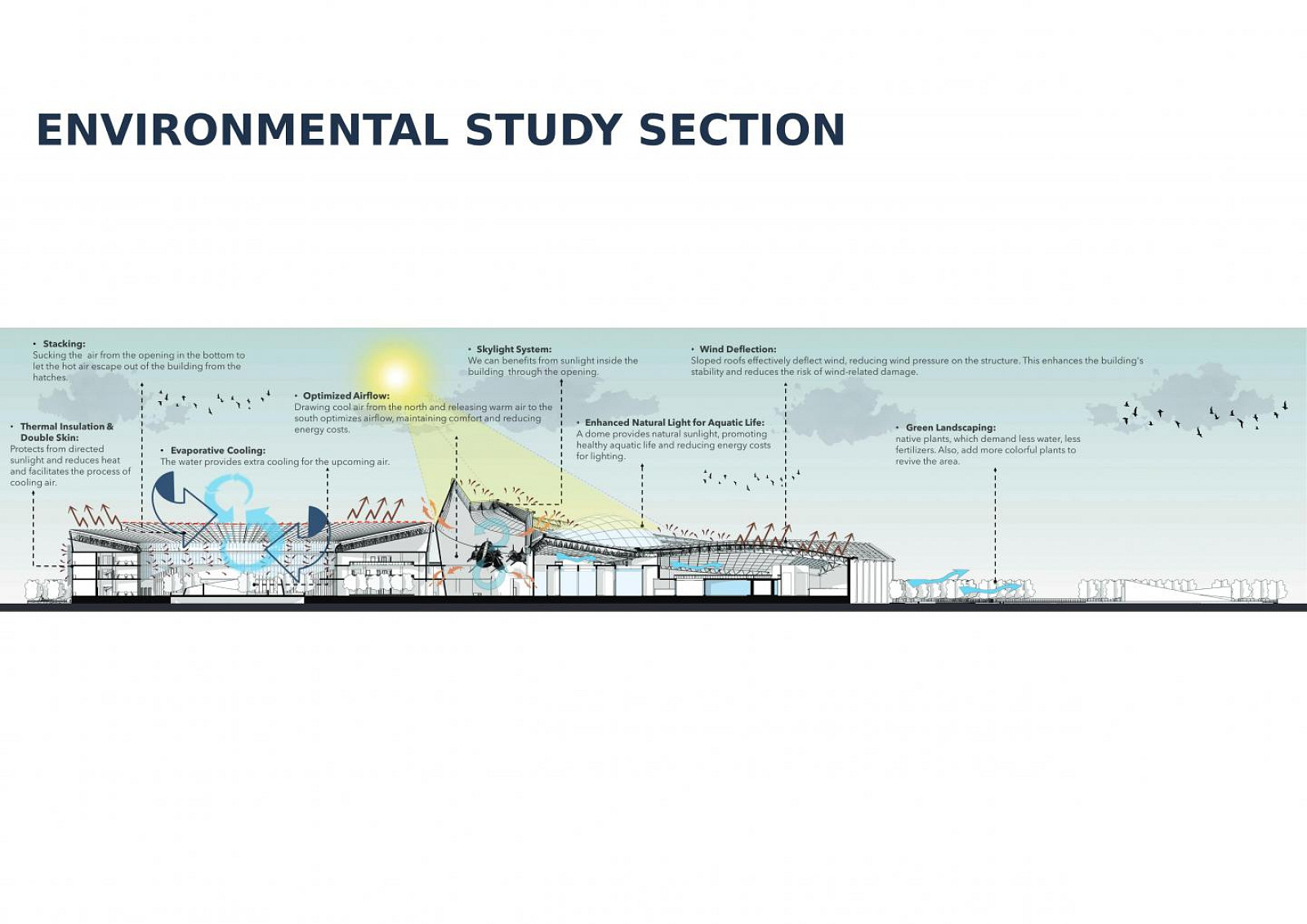
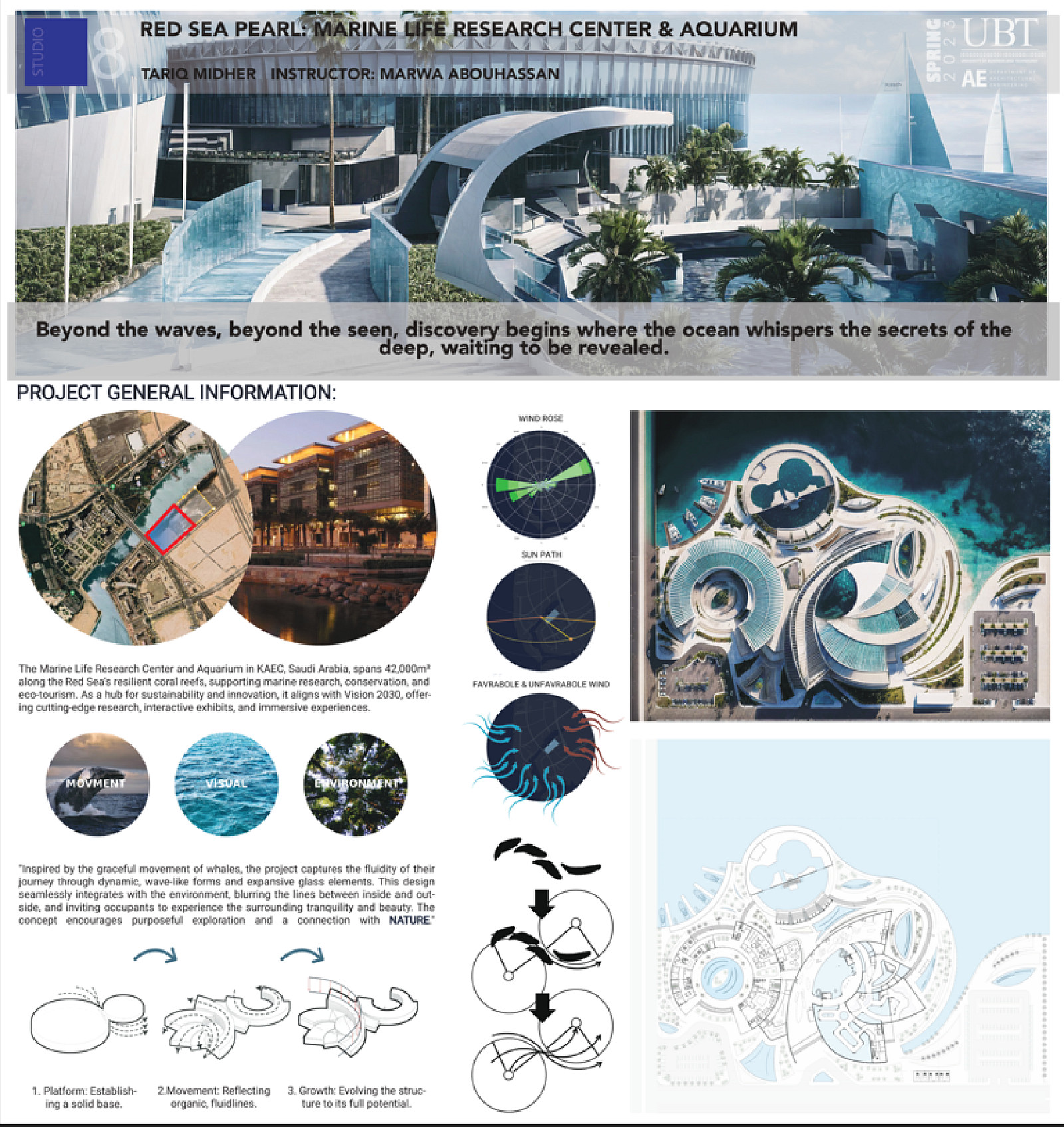
Rooted in the principles of Vision 2030, this project reflects a global commitment to sustainability and environmental stewardship. Vision 2030 emphasizes progress that harmonizes human development with nature, and this facility exemplifies that vision by seamlessly blending sustainable practices with unparalleled educational and recreational opportunities.
The Marine Life Research Center and Aquarium is designed to inspire environmental responsibility, encouraging visitors to engage with and protect the vital marine ecosystems that sustain life on Earth. It is a beacon of innovation, demonstrating that development can coexist with conservation, embodying the ethos of Vision 2030 for a greener, more sustainable future.
Conceptual Approach:
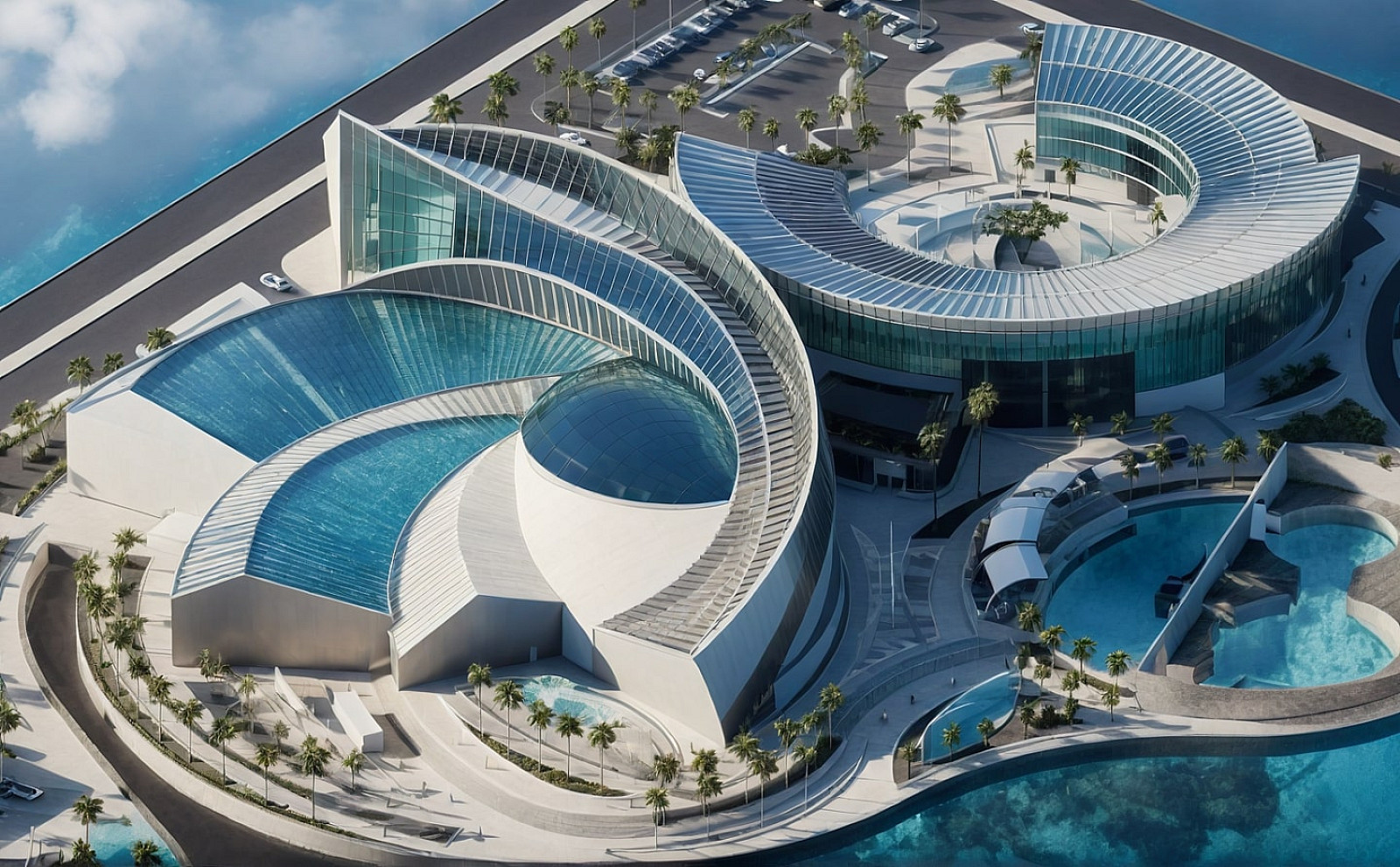
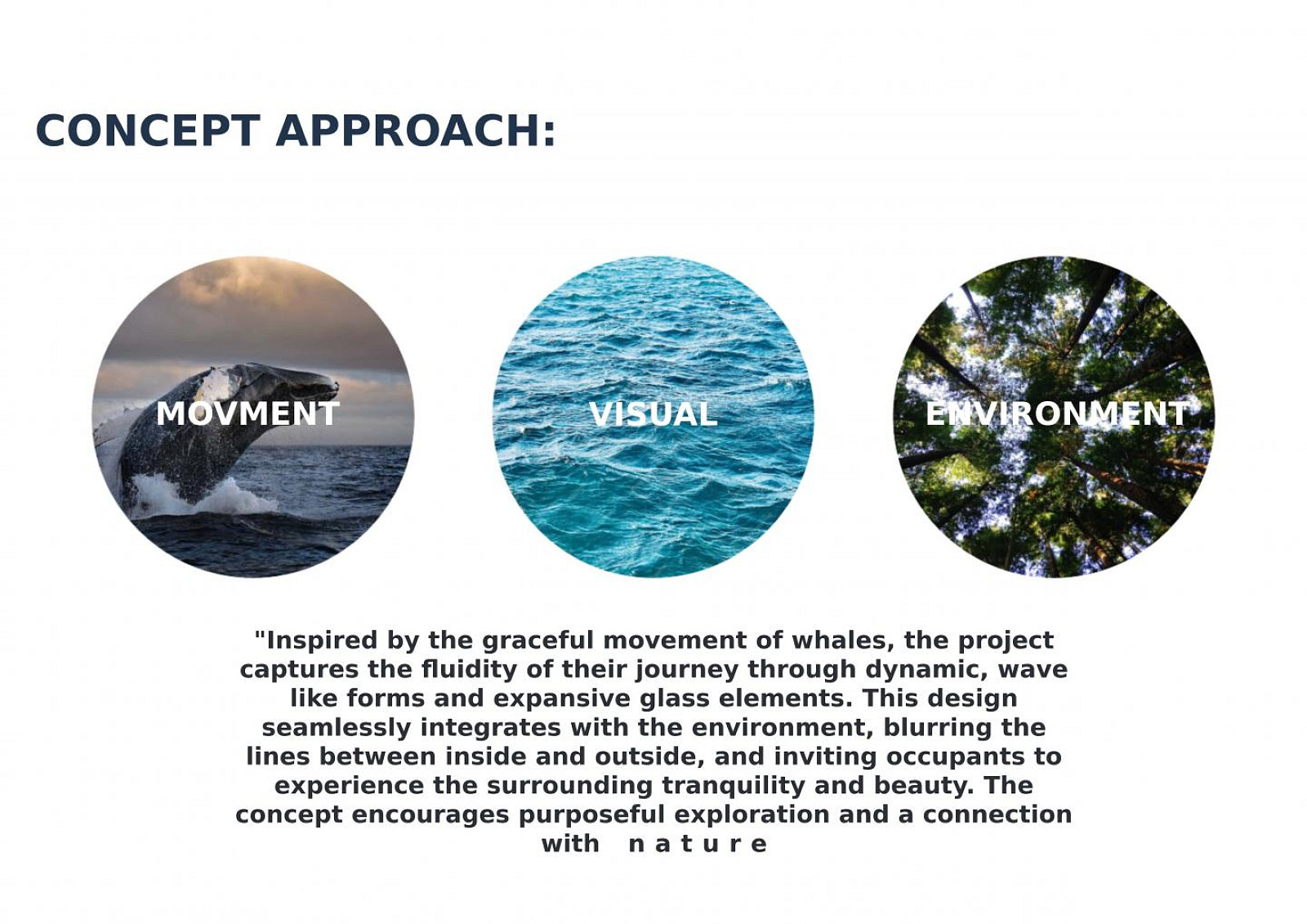
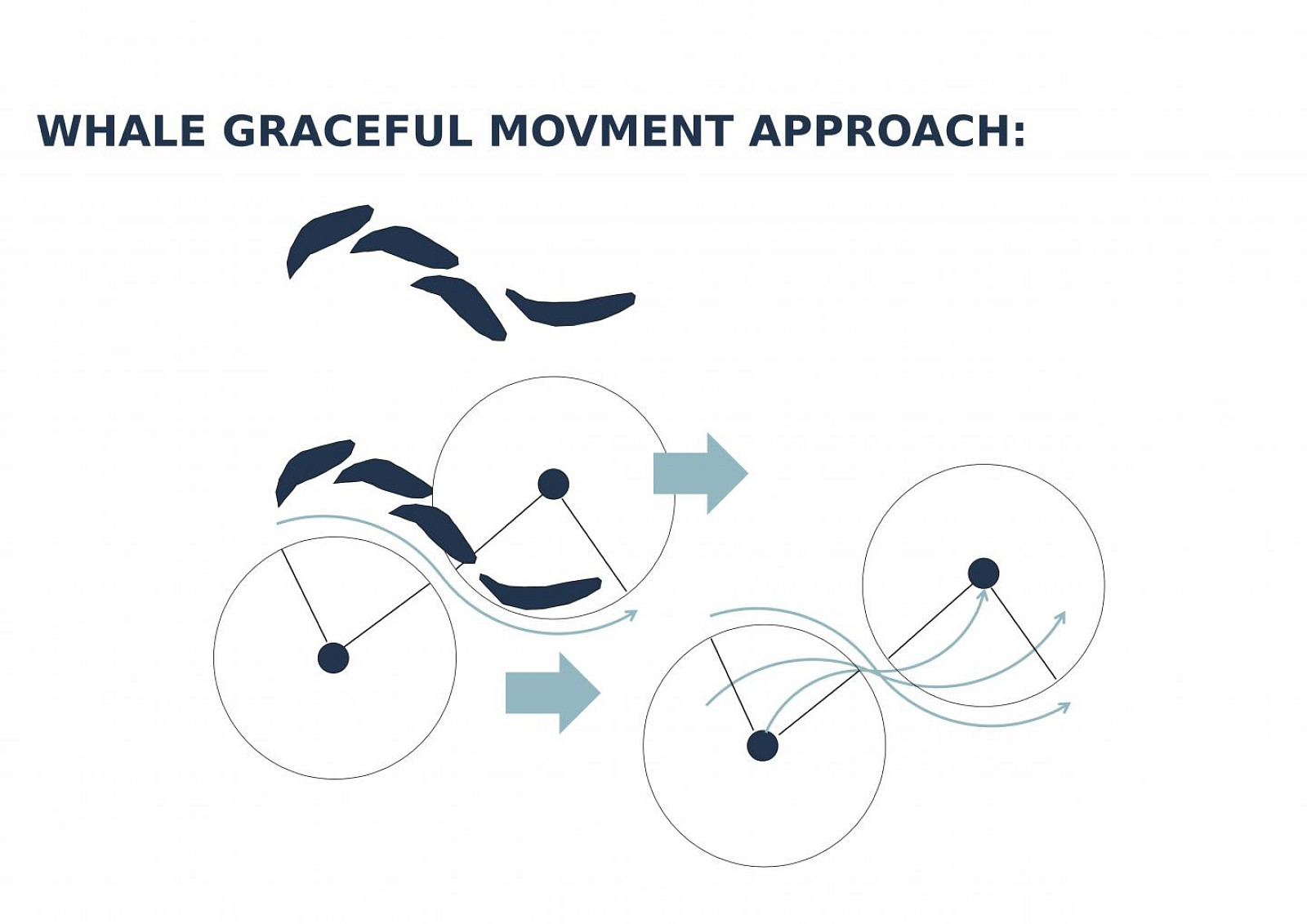
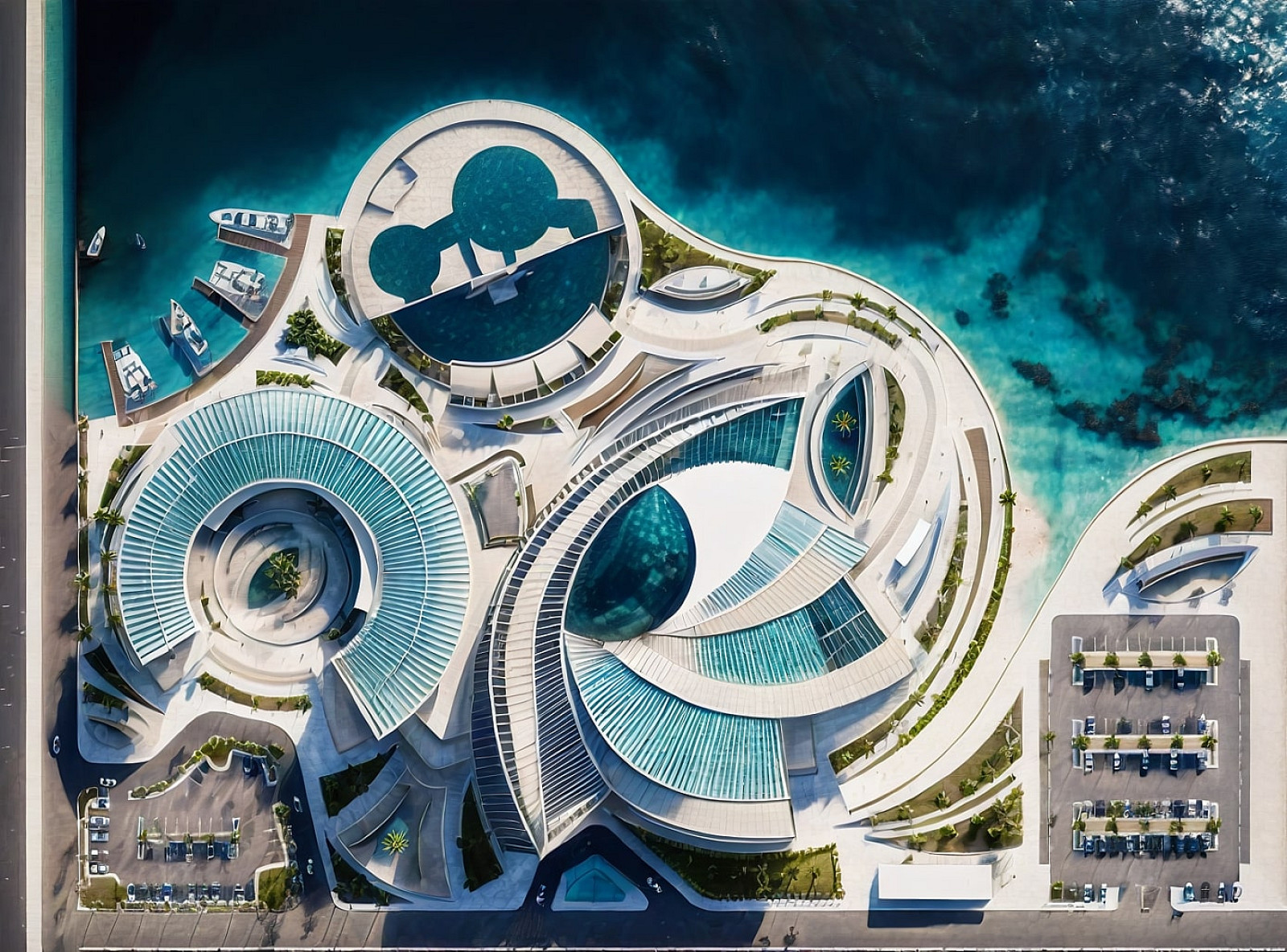
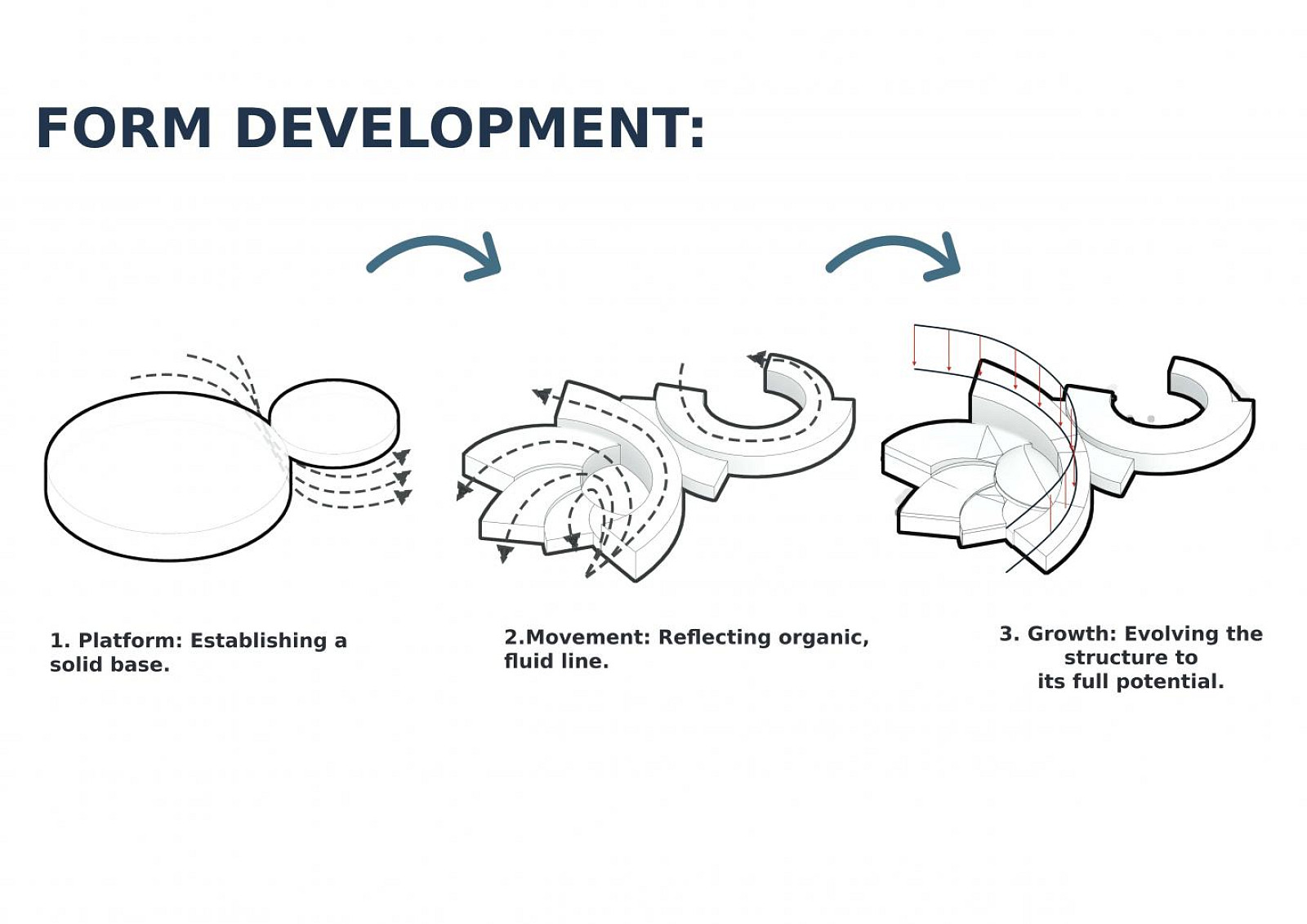
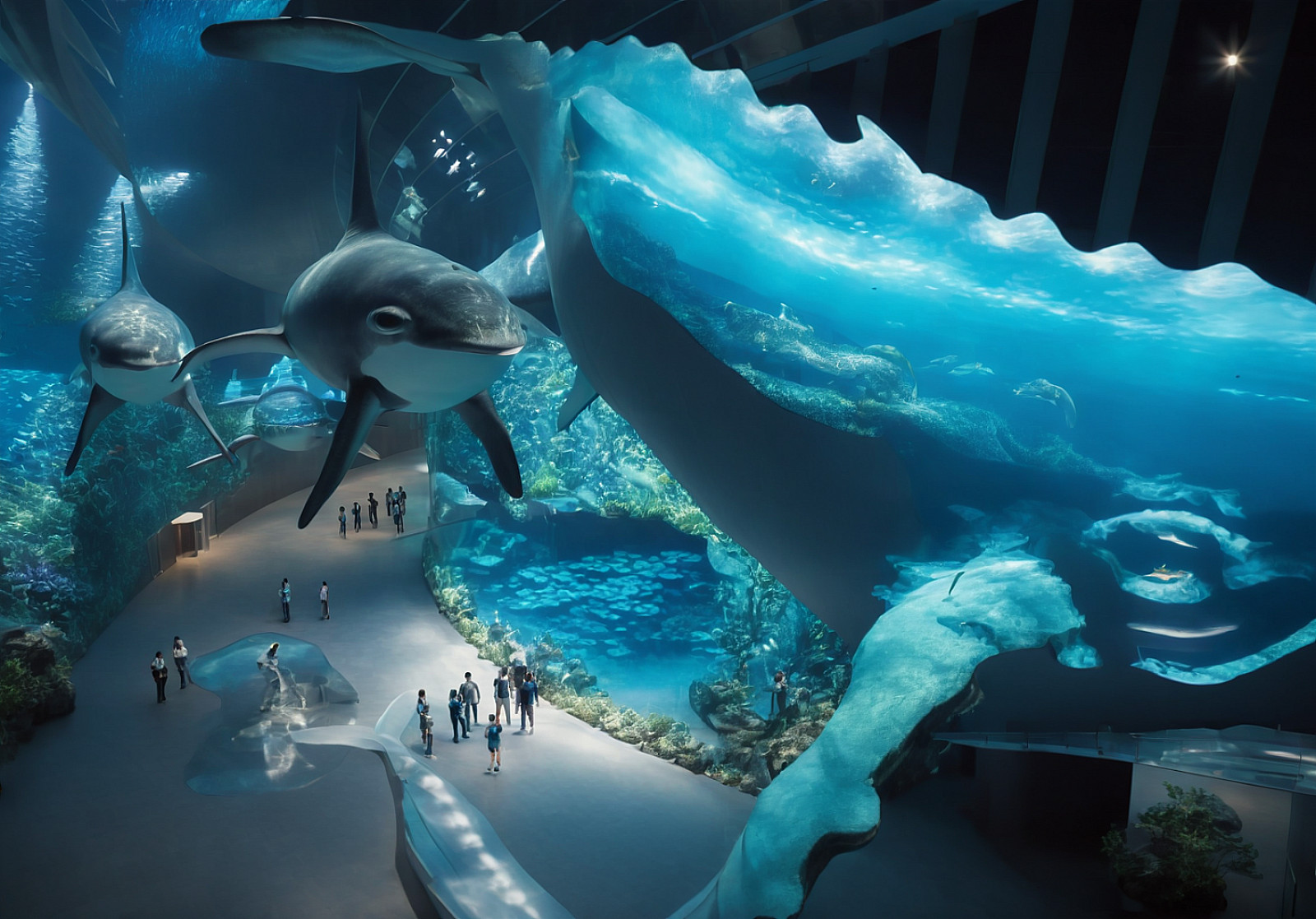
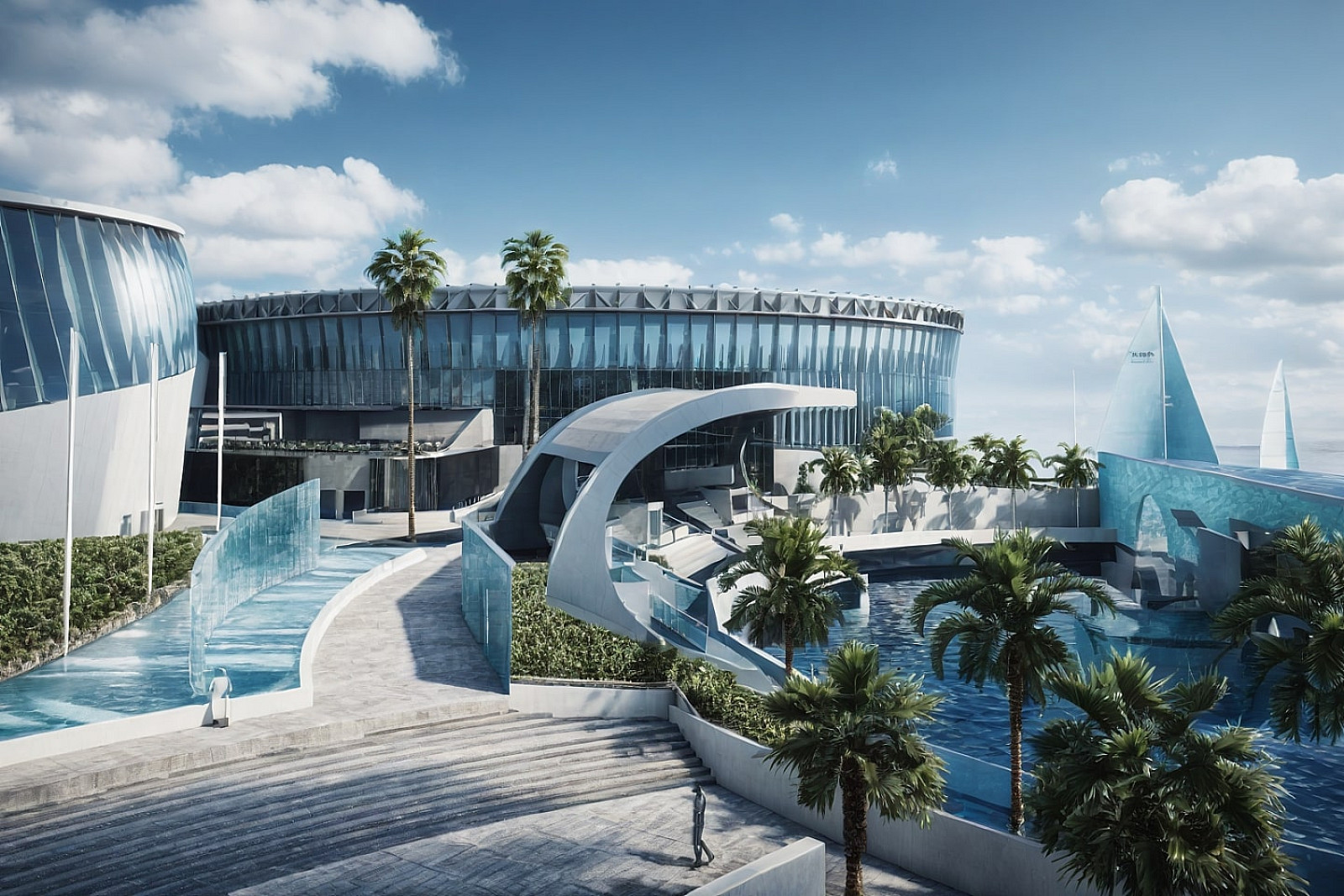
Inspired by the grace of marine life, particularly the majestic movements of whales, the design captures the fluidity and balance of the ocean. The sweeping curves and dynamic lines of the structure emulate the motion of ocean currents, while the architecture reflects the harmony of strength and elegance found in marine creatures. Every element of the design is imbued with the rhythm and beauty of the sea, creating a structure that is both iconic and harmonious.
Architectural Design and Visitor Experience:
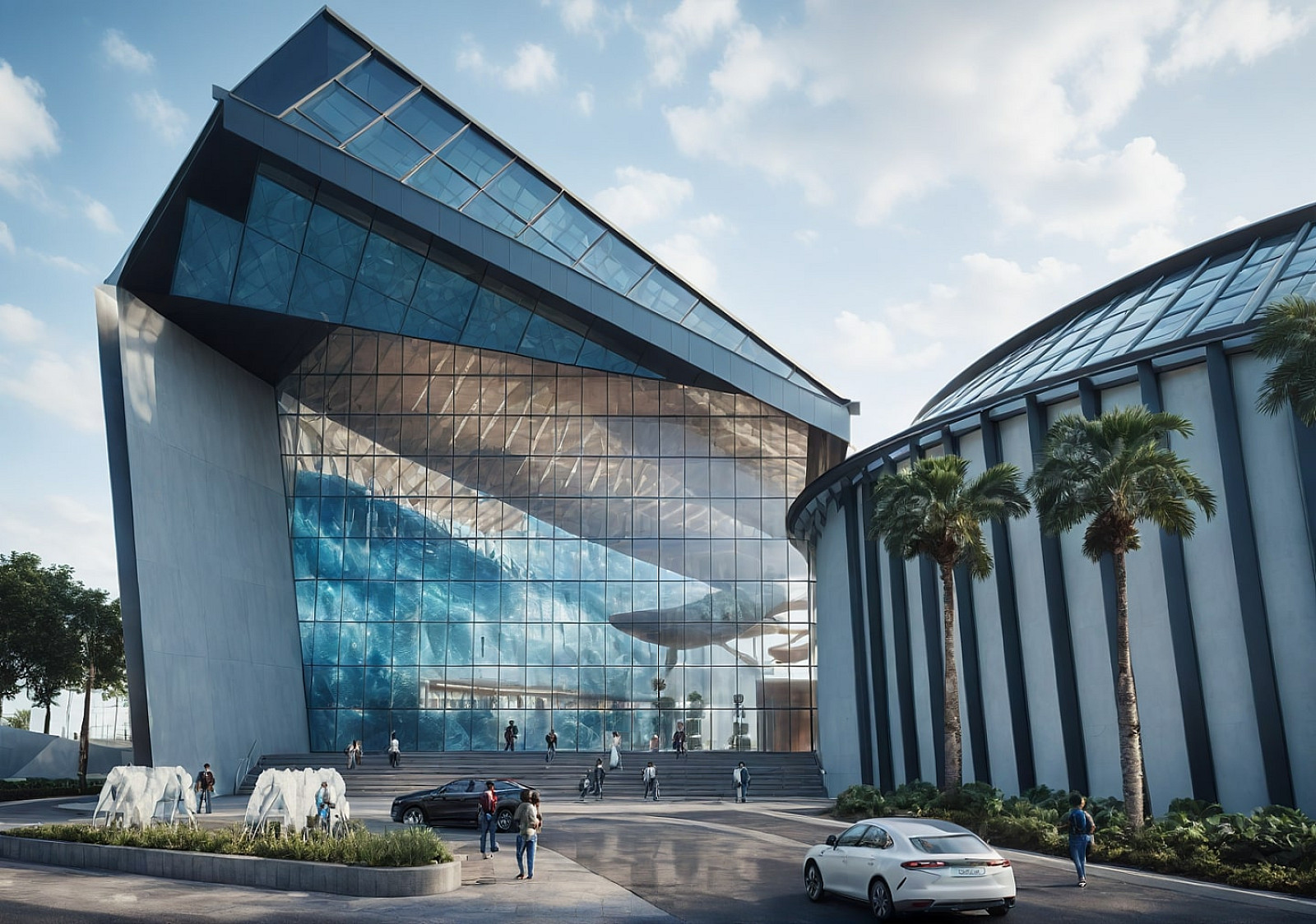
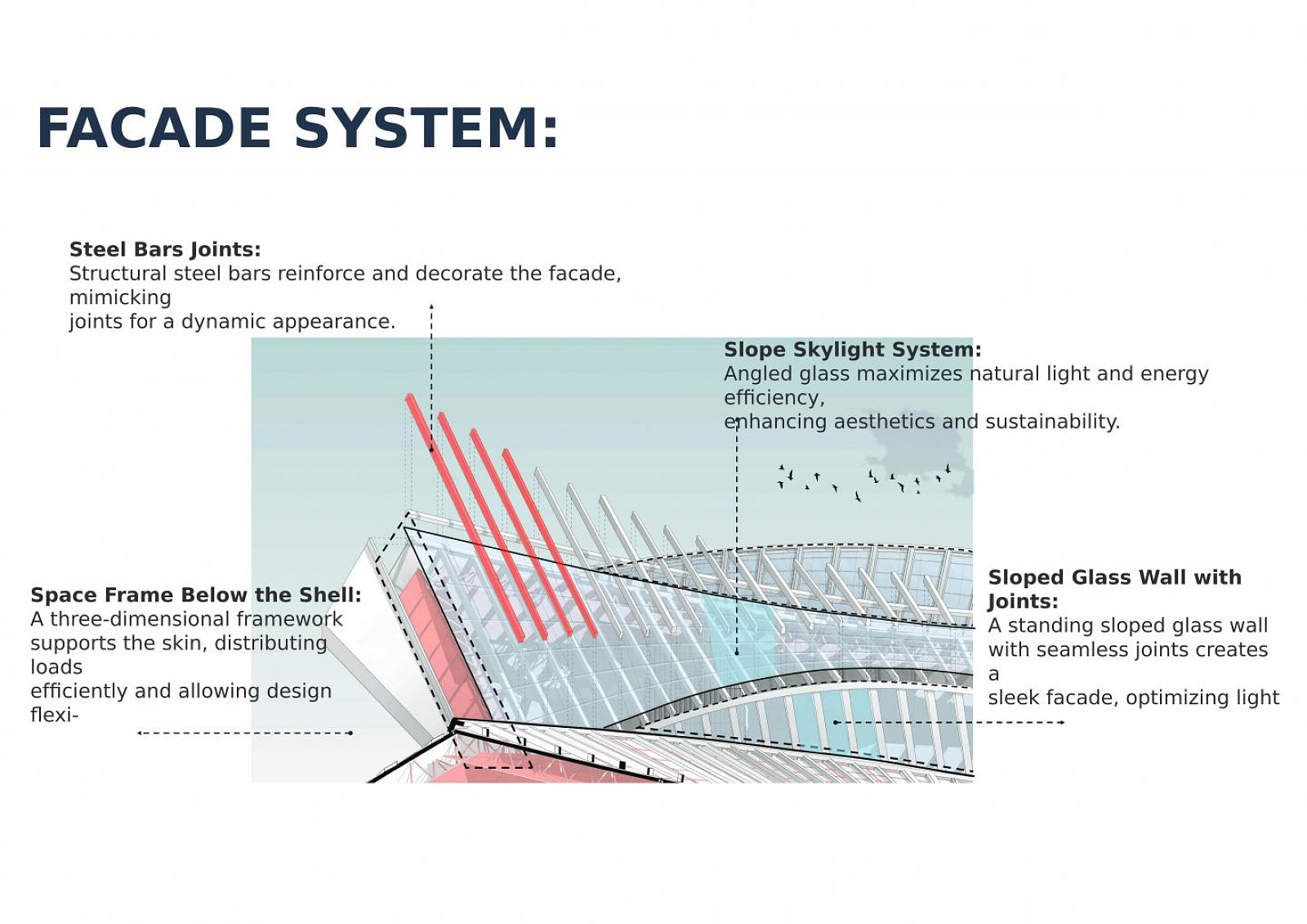
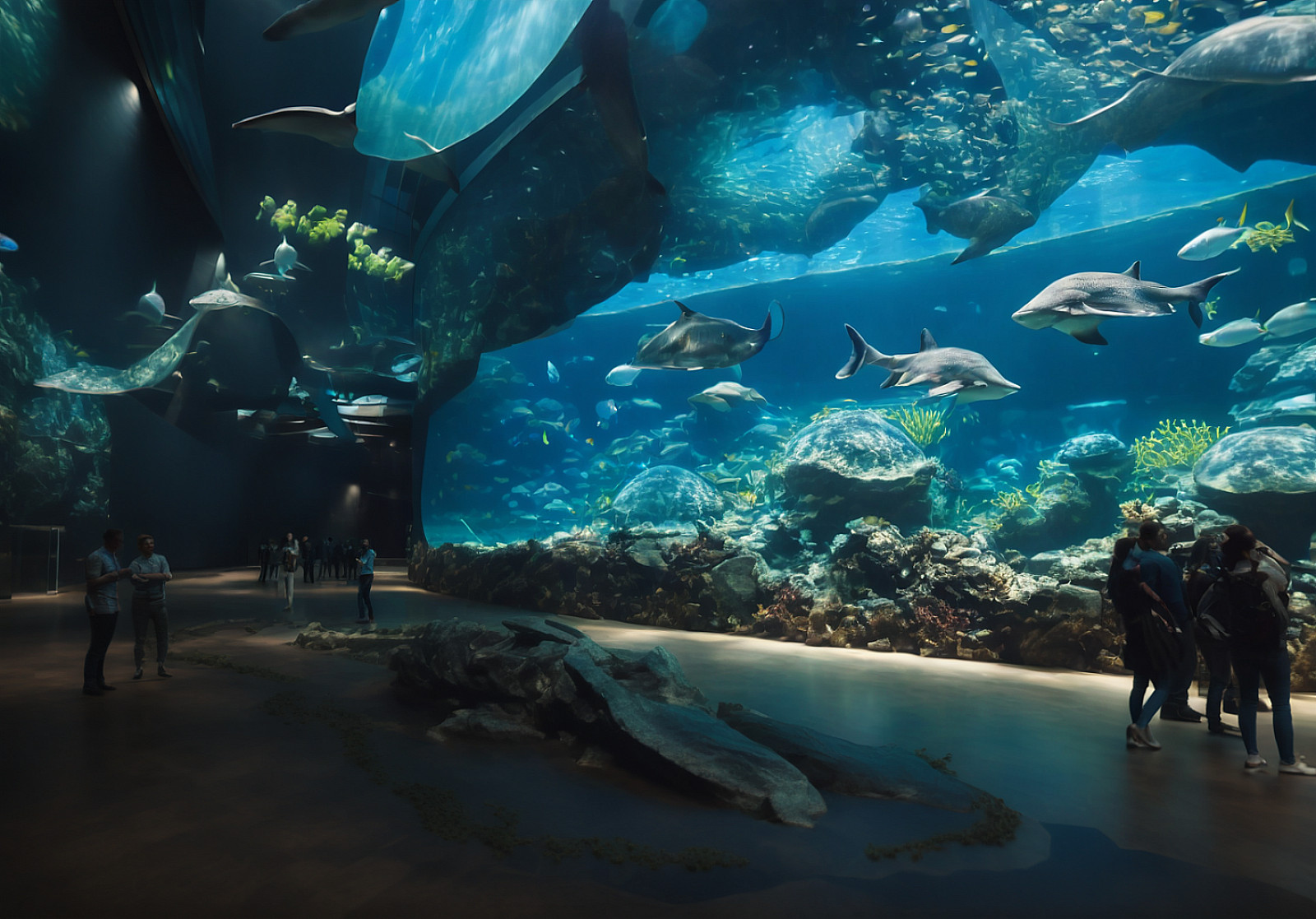
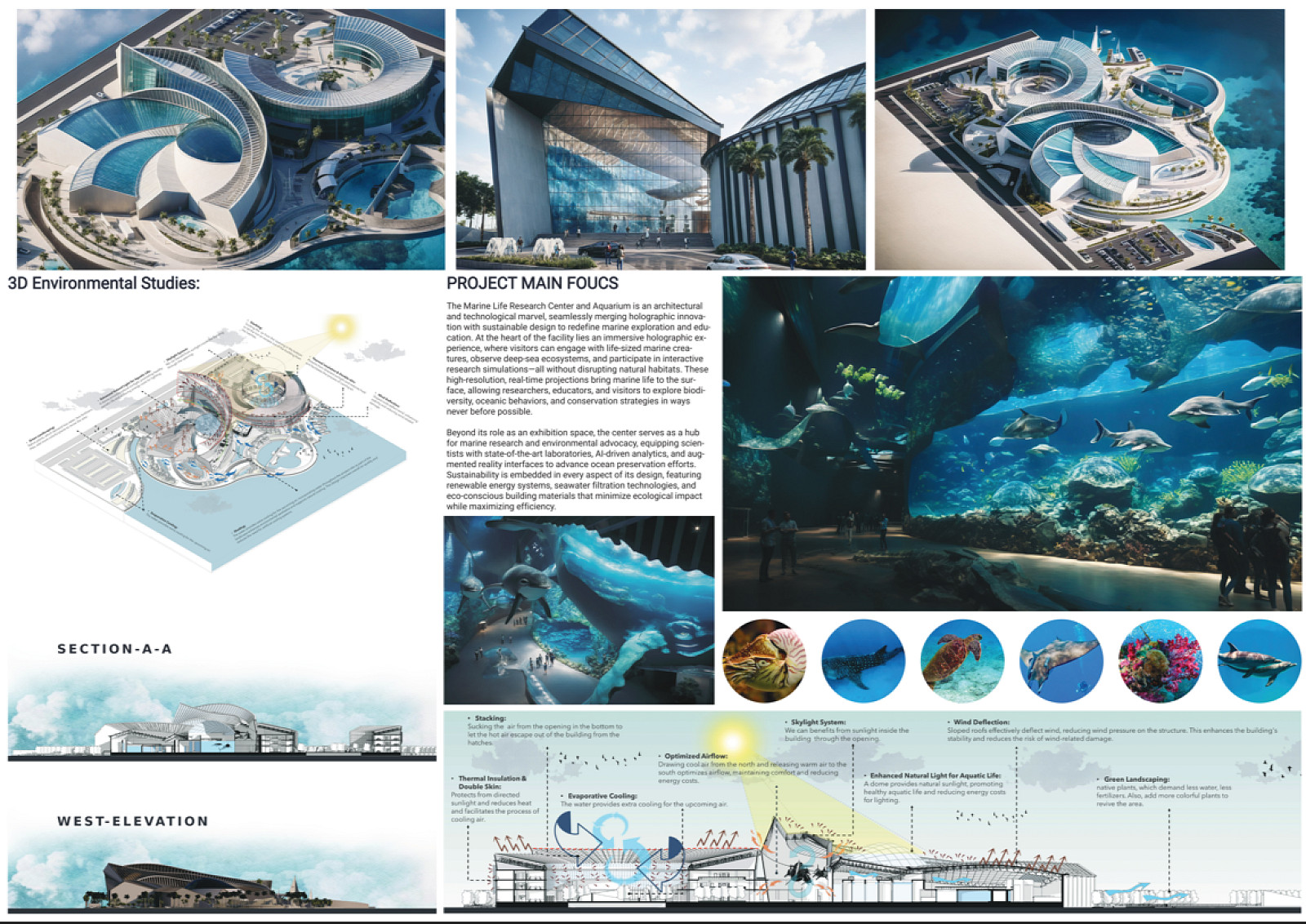
The design immerses visitors in an oceanic atmosphere, beginning with a shimmering facade that mirrors sunlight filtering through water. The building’s exterior features reflective and translucent materials that interact with light, creating a living surface that changes with time and weather. Inside, visitors are enveloped in soft, undulating forms, with natural light filtering through strategically placed skylights, mimicking the dappled effect of sunlight underwater.
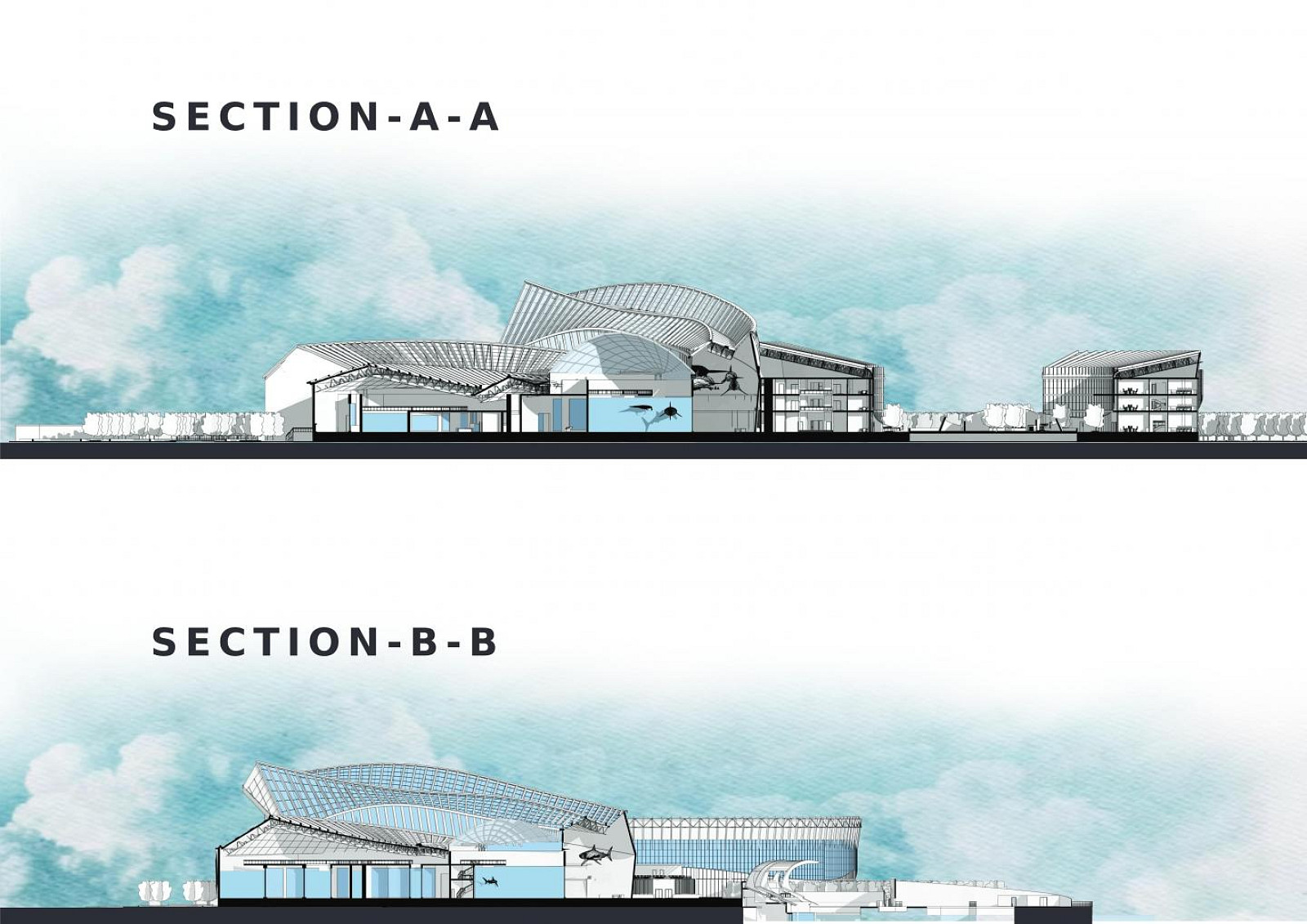
The heart of the experience is the Underwater Visitor Journey, which takes guests into a vibrant world of marine ecosystems. Highlights include the Dolphin Show Arena, a submerged amphitheater with unobstructed views of the aquatic performances, and the Virtual Reality Hall of Whales, where cutting-edge VR technology allows visitors to swim alongside whales, experiencing the ocean from their perspective. These spaces provide a powerful blend of education, entertainment, and inspiration, fostering a deep connection to marine life.
Circulation and Flow:
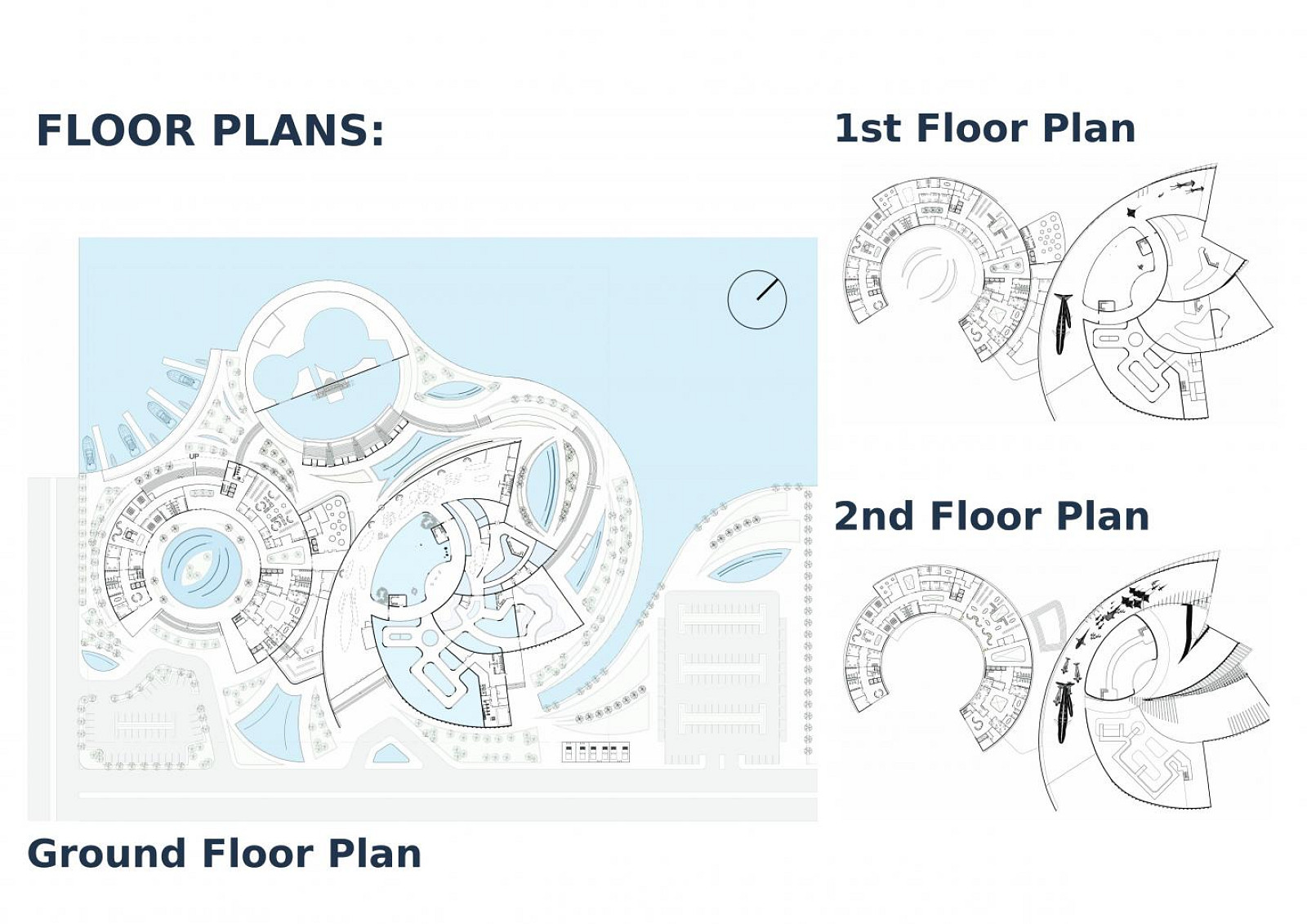
The facility’s layout ensures a seamless visitor experience, guiding guests through thematic zones dedicated to marine conservation and exploration. The circulation strategy reflects the natural flow of water, with gentle ramps, wide pathways, and interconnected spaces that encourage continuous exploration. The journey begins and ends in the central atrium, a dynamic space that serves as the building’s heart, connecting all zones and facilitating accessibility for all visitors.
Technické informace
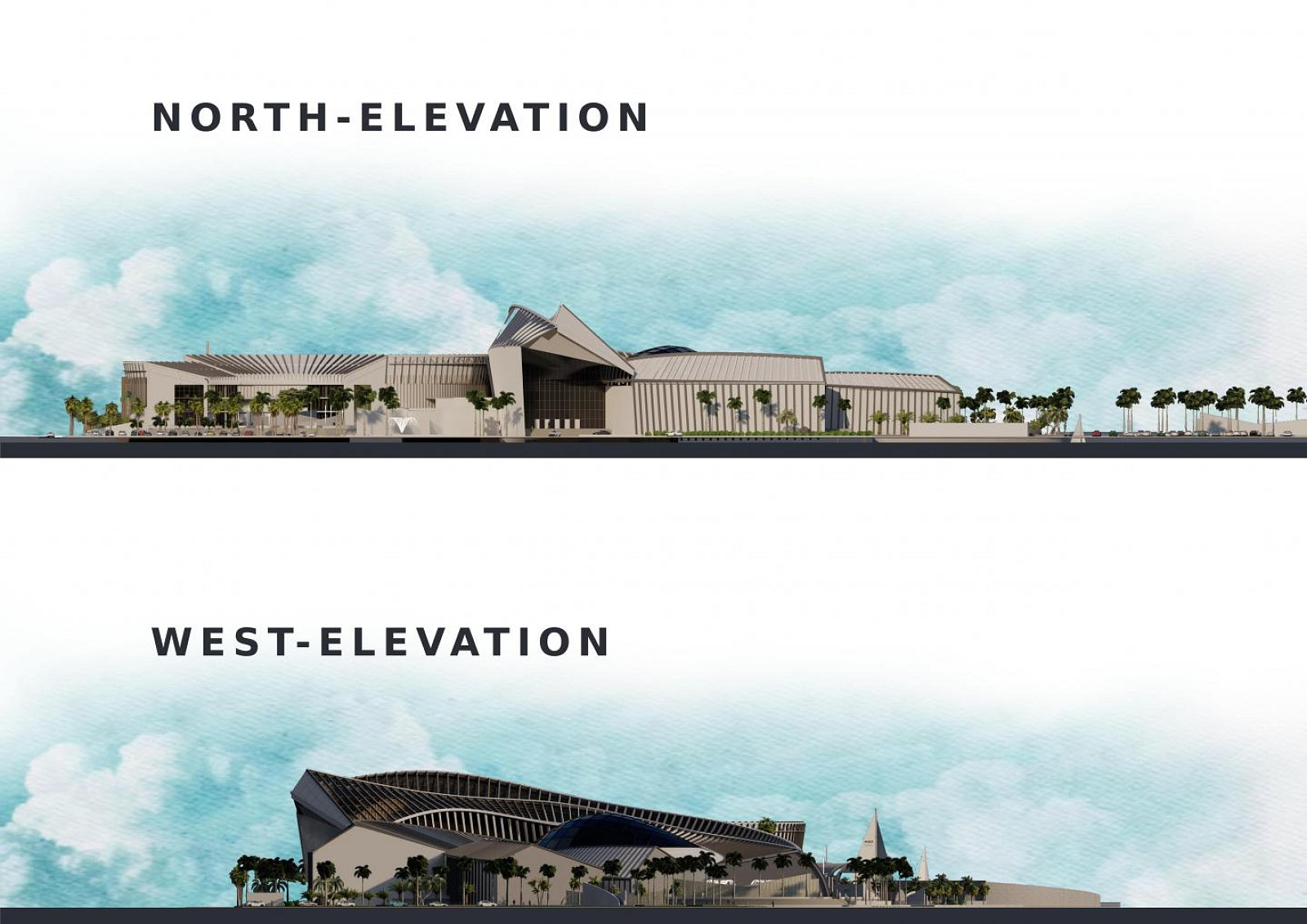
The Red Sea Pearl project was developed using a BIM-centered workflow integrating SketchUp, Revit, and D5 Render to ensure precision and coordination throughout the design process. The project began in SketchUp, where the initial massing model was created to define the primary building volumes, overall proportions, and façade geometry. This model was then imported into Revit, where architectural, structural, and MEP elements were coordinated to ensure a clash-free and accurate model. Material parameters and environmental settings were applied to support realistic visualization, while all plans, sections, and elevations were generated directly from the Revit model to maintain consistency and efficiency. Finally, high-fidelity renderings were produced in D5 Render, highlighting the design intent, lighting, and material qualities, providing a comprehensive technical representation of the project.

Copyright © 2026 INSPIRELI | All rights reserved. Use of this website signifies your agreement to the Terms of Use, Privacy Policy, and use of cookies.