Reviving the Cultural Heart of the city: Mawlana Bhashani Cultural Complex, Tangail.


Idea projektu
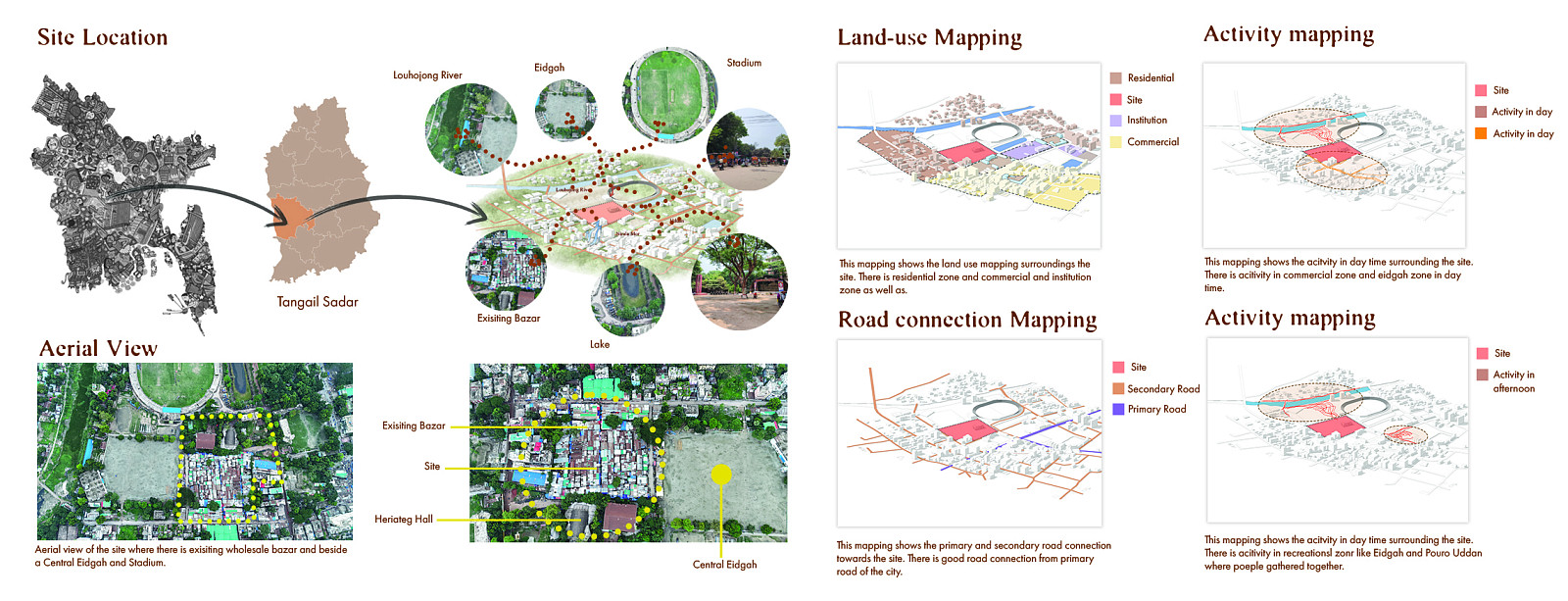
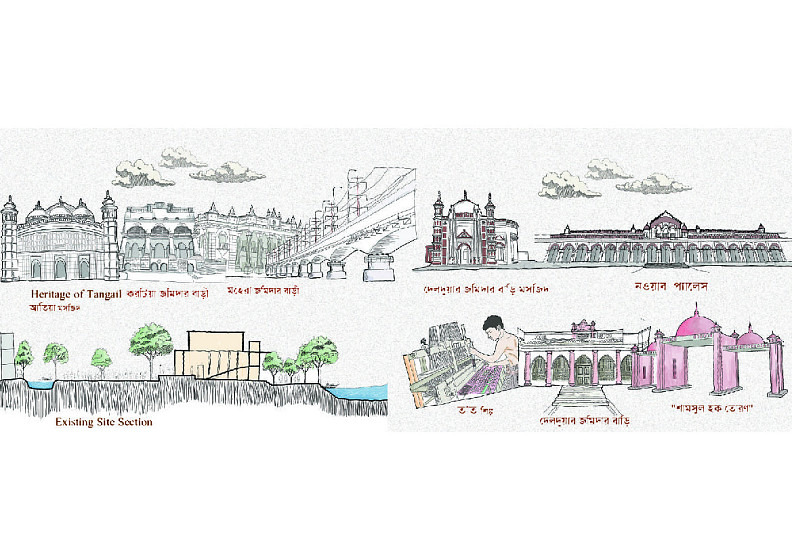
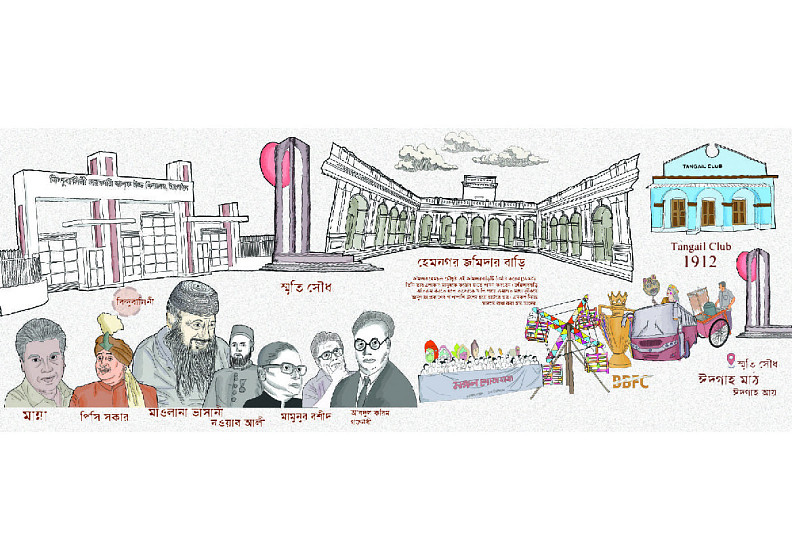
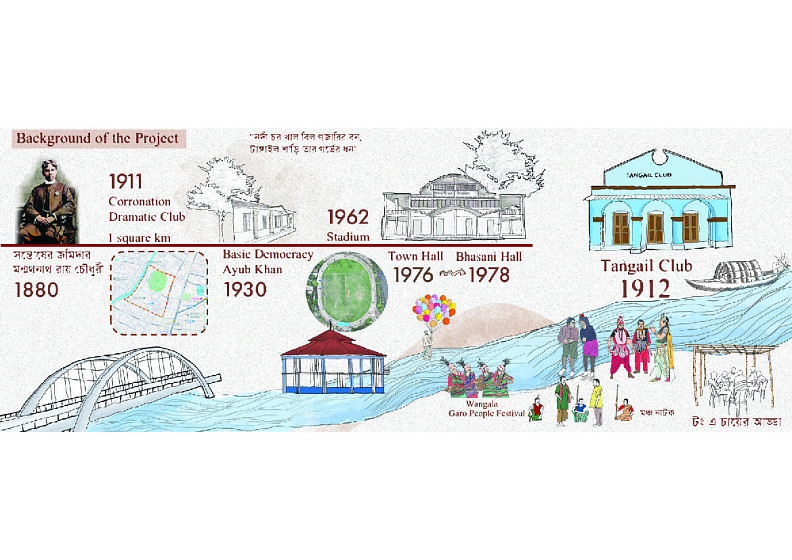
The idea of this project stems from the decline of Bhasani Hall once the cultural heart of Tangail now abandoned and overtaken by unsocial activities. The project recognizes the urgent need to restore a lost cultural anchor and reintroduce a platform where people can reconnect, learn, and celebrate their heritage. The aim is to revive the historical significance of the hall while transforming it into a contemporary cultural complex that supports artistic expression, community interaction, and cultural sustainability.
The concept “Reawakening the Cultural Heart” guides the design vision: embracing the memory of the past while meeting the future needs of a growing community. The project seeks to address three major issues in the city: lack of cultural activity, absence of community engagement space, and neglected public open areas. Through architecture, the proposal aspires to create a vibrant environment where people gather, participate, and rediscover the spirit of Tangail’s cultural identity.
Popis projektu
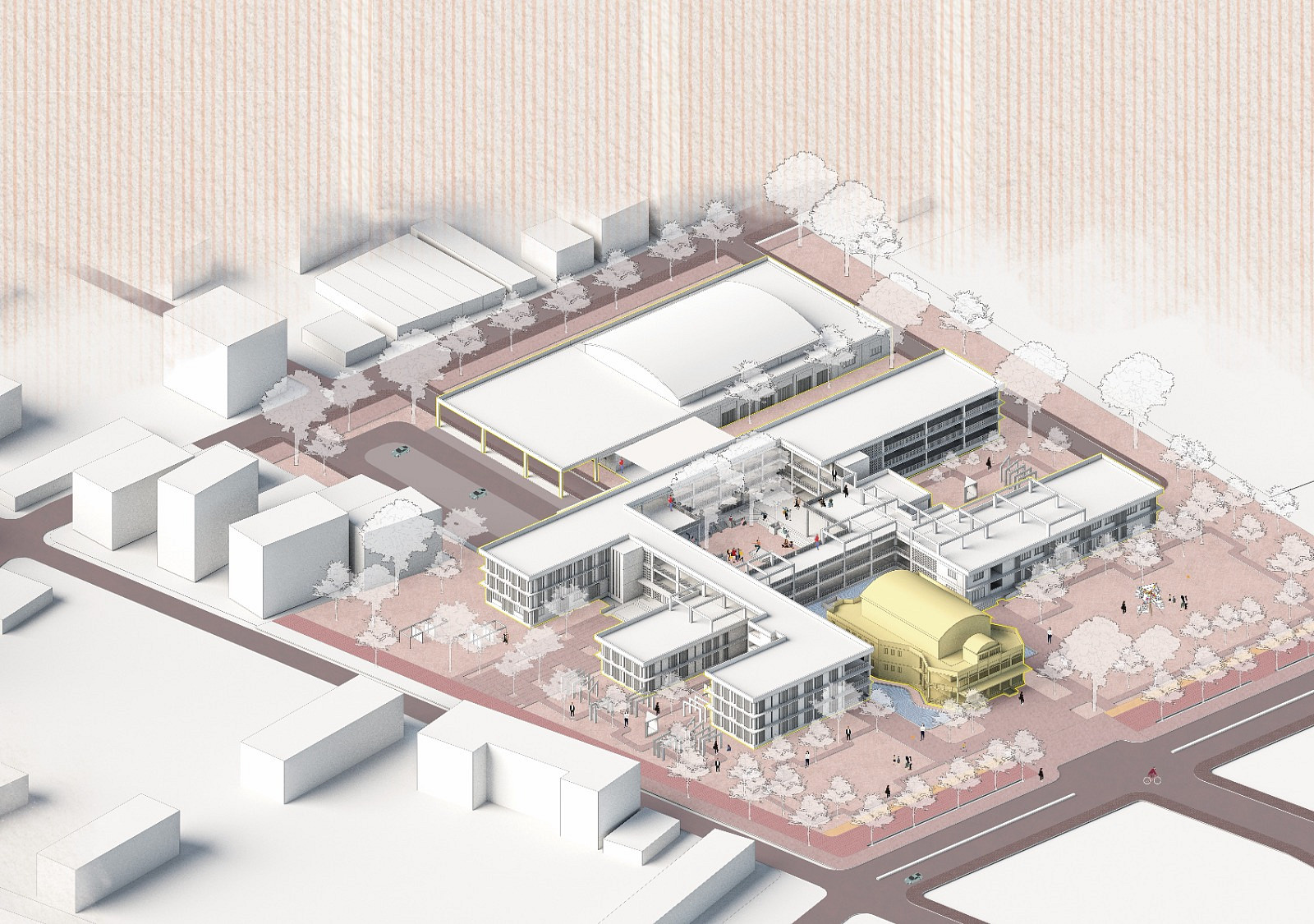
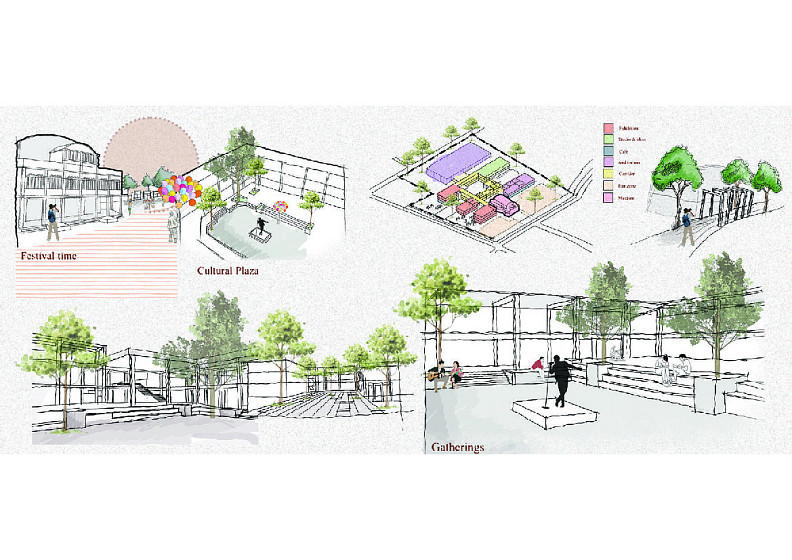
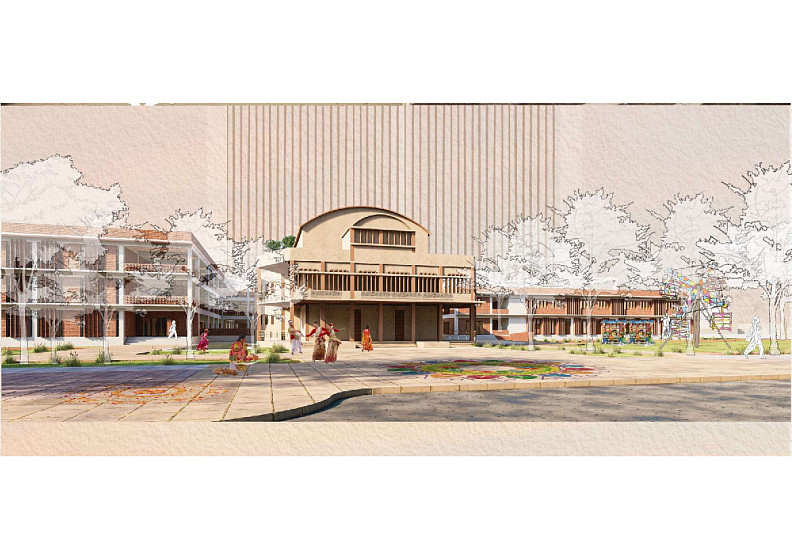
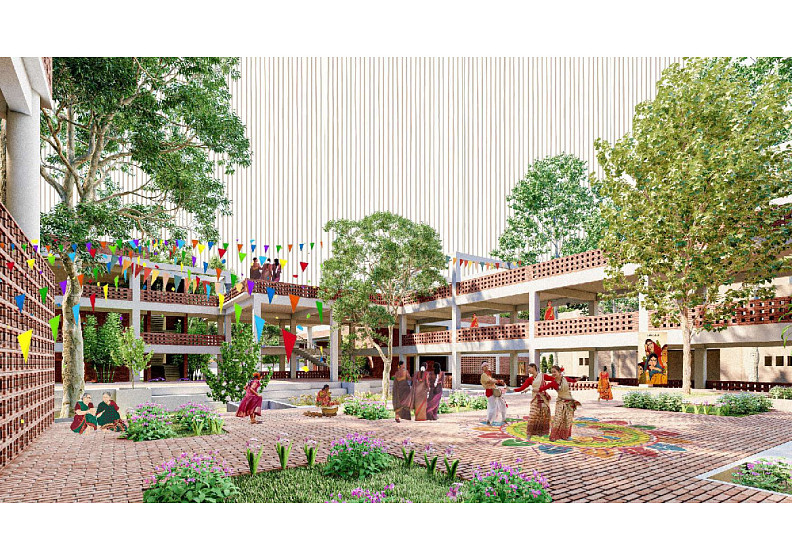
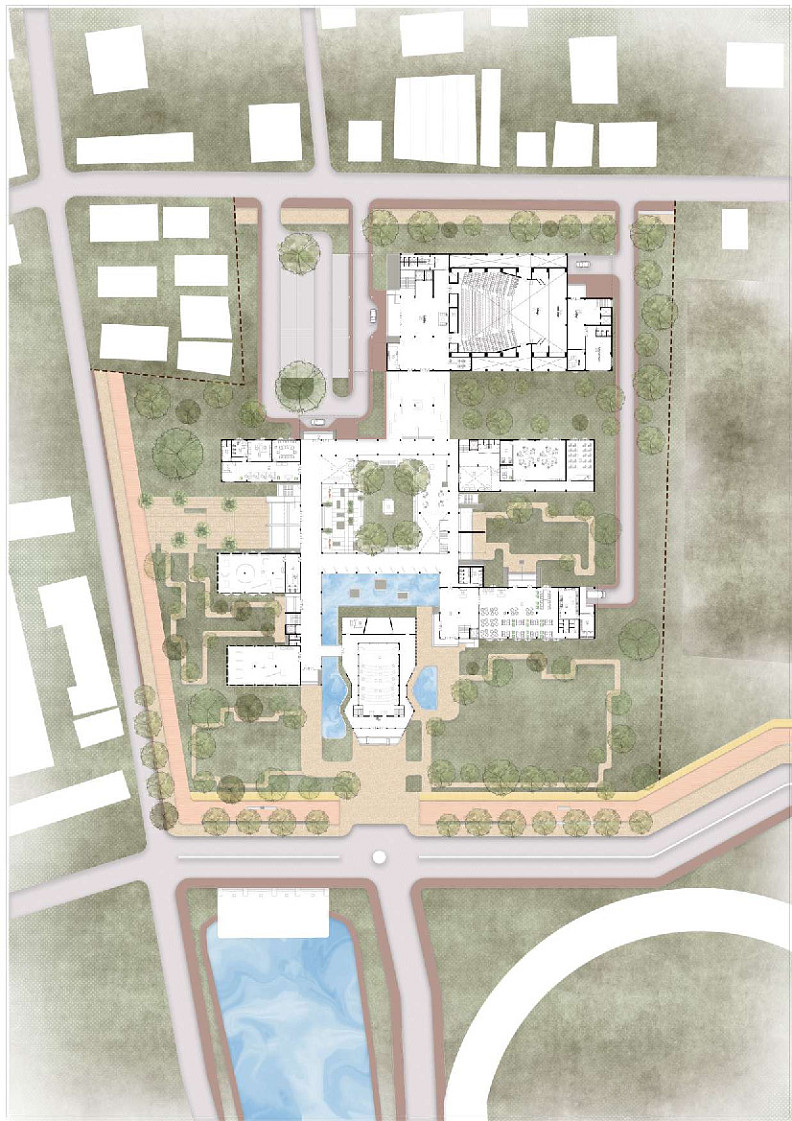
The Bhasani Cultural Complex consists of a series of interconnected cultural and public functions arranged around a central pedestrian plaza. The design includes an 800-seat auditorium, art galleries, exhibition halls, rehearsal studios, classrooms, workshops, administrative spaces, and a café. At the heart of the complex lies an open-air amphitheater and a public courtyard that connects the heritage Bhasani Hall with the new buildings.
The spatial arrangement creates an accessible, walkable cultural campus that encourages community interaction and daily use. Pathways, water features, shaded seating, and landscaped zones improve environmental comfort and promote public gathering. The heritage building is preserved as the symbolic core, surrounded by contemporary structures that respect its form and scale.
The project aims to function as a cultural, social, and educational hub supporting performances, festivals, exhibitions, training programs, youth activities, and creative workshops. The complex is designed to operate as a flexible platform for both traditional and modern cultural practices, ensuring continuity and innovation.
Technické informace
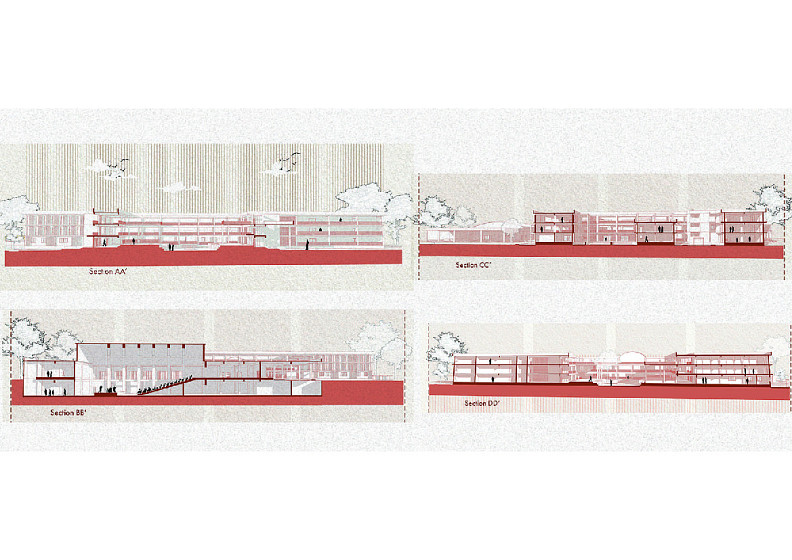
The complex is designed using a reinforced concrete structural system combined with locally available materials such as exposed brick, terracotta panels, and vertical louvers for climatic shading. Large roof overhangs and deep verandahs reduce heat gain and create transitional semi-outdoor spaces suited to the hot-humid climate of Tangail.
Natural ventilation strategies include open courtyards, cross-ventilated corridors, and shaded circulation decks. The landscape integrates rainwater percolation zones, porous paving, and vegetation to mitigate heat.
The auditorium incorporates acoustic wall panels, raked seating, and back-of-house facilities, while exhibition spaces follow modular grid systems for flexibility. The heritage structure is preserved using a minimal-intervention approach, ensuring structural stability while maintaining historical authenticity.
Overall, the project combines sustainable climatic design, heritage conservation, and modern construction techniques to create a durable, culturally responsive environment.
Dokumentace
Show PDF 1Show PDF 2Show PDF 3Show PDF 4Show PDF 5Show PDF 6Show PDF 7Show PDF 8

Copyright © 2026 INSPIRELI | All rights reserved. Use of this website signifies your agreement to the Terms of Use, Privacy Policy, and use of cookies.